Polyester Resin Adhesive Raw Material
CN → US| HS Code | Tariff Rate | Origin | Destination | Doc |
|---|---|---|---|---|
| 3824401000 | 41.5% | CN | US | Official Doc |
| 3824992500 | 41.5% | CN | US | Official Doc |
| 3907992000 | 35.0% | CN | US | Official Doc |
| 3907995050 | 41.5% | CN | US | Official Doc |
| 3907915000 | 41.5% | CN | US | Official Doc |
Product Images
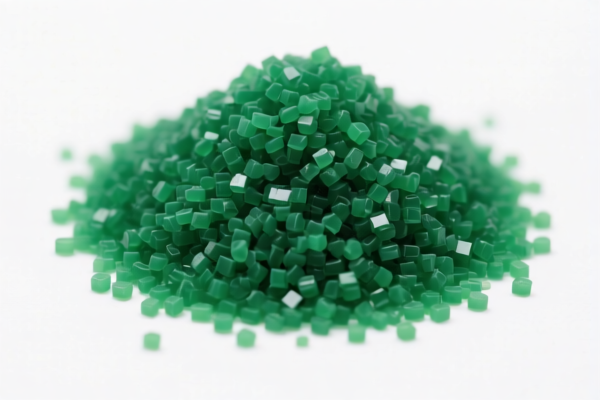

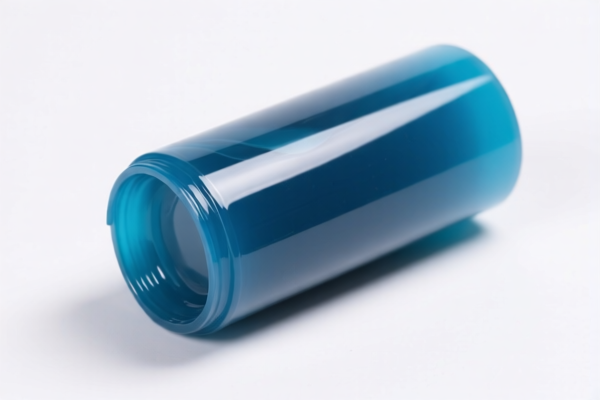
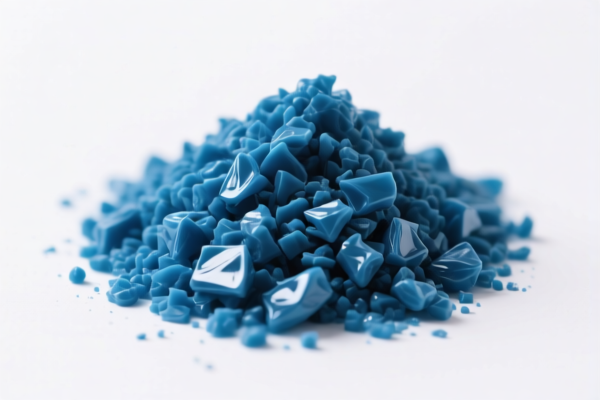
AI Analysis
🧪 Polyester Resin Adhesive Raw Material
🌐 HS Code Reference & Customs Clearance Guide | 2026 Latest Tariff Analysis | Professional-Level Entry Strategy
📌 I. Product Definition & Classification: What Exactly is "Polyester Resin Adhesive Raw Material"?
Polyester resin is a thermosetting polymer widely used in adhesives, coatings, composites (fiberglass), and casting. In international trade, the classification depends heavily on its physical state (liquid vs. solid pellets) and its chemical function (pre-reacted polymer vs. simple additive).
The core distinction for customs purposes: 1. Pre-formed Polymer (Primary Form): If it is a raw polyester polymer (solid flakes, chips, or liquid pre-polymer) intended for further processing, it falls under Chapter 39 (Plastics and Articles Thereof). 2. Chemical Additive/Mixture: If it is a specific curing agent, initiator, or a prepared mixture of chemicals for industrial use, it falls under Chapter 38 (Miscellaneous Chemical Products).
⚠️ Key Distinction Point:
- If the material is a pure polyester polymer in primary form (e.g., granules, powder, or viscous liquid before final curing) → HS Code 3907
- If the material is a curing agent, accelerator, or chemical mixture prepared for adhesive formulation → HS Code 3824
📦 II. HS Code Classification Details (2026 Latest Tariff Authority Comparison)
| HS Code | Product Description | Application Scenario | State/Type |
|---|---|---|---|
3824.40.10.00 |
Polyester resin curing agent raw material; belongs to chemical industry pre-mix additives/components | Curing agents, hardeners, or specific chemical components for adhesive formulation | ❌ Chemical Additive |
3824.99.25.00 |
Polyester resin curing agent raw material; classified as other chemical products, organic modified substances | Generic chemical preparations, organic modifiers not specified elsewhere | ❌ Chemical Mixture |
3907.99.20.00 |
Polyester resin raw material; belongs to primary form of polyesters (original state) | Pure polyester polymers, liquid or solid, not yet cured or mixed with other agents | ✅ Primary Polymer |
3907.99.50.50 |
Polyester resin raw material; belongs to other primary forms of polyesters | Other unspecified polyester forms, often generic or bulk raw polymer | ✅ Primary Polymer |
3907.91.50.00 |
Polyester resin corrosion-resistant raw material; belongs to other polyester primary products | Specialty polyesters with specific corrosion-resistant properties | ✅ Primary Polymer |
🔍 Critical Reminder:
- If your product is simply "Polyester Resin" (the base polymer) sold as raw material for manufacturing, it MUST be classified under 3907.
- If your product is a "Curing Agent" or "Additive" used with the resin to make an adhesive, it falls under 3824.
- Misclassification Risk: Declaring a curing agent as a polymer (3907) may lead to lower tariff assessment but higher scrutiny if the chemical composition differs significantly.
💰 III. 2026 Latest Tariff Rate Details (Including Surtaxes & Policy Add-ons)
✅ Applicable Country: United States (US)
✅ Country of Origin: China (CN)
✅ Effective Date: November 10, 2025 onwards (including subsequent imports)
🎯 1. 3824.40.10.00 — Polyester Resin Curing Agent / Chemical Additive
| Item | Content |
|---|---|
| Base Tariff Rate | 6.5% |
| Section 301 Surcharge | +25.0% |
| Section 122 Tariff | +10.0% (Specific to this subheading) |
| Total Effective Rate | 41.5% |
| Tax Calculation | CIF Value × 41.5% |
| De Minimis Exemption Available? | ❌ NO (Denied for Section 301/122 goods) |
| Legal Authority Path | Section 301: 9903.01.25 → Section 122: 9903.01.24 → USITC: 3824.40.10.00 |
📌 Explanation:
- The 25% comes from US Trade Act Section 301 (Targeting Chinese industrial inputs).
- The 10% is a specific Section 122 tariff applied to certain chemical preparations.
- Total 41.5% is a very high entry cost. Strict proof of "Chemical Additive" status is required to avoid being reclassified as a simpler base polymer with different tax implications.
🎯 2. 3824.99.25.00 — Other Chemical Products (Organic Modified)
| Item | Content |
|---|---|
| Base Tariff Rate | 6.5% |
| Section 301 Surcharge | +25.0% |
| Section 122 Tariff | +10.0% |
| Total Effective Rate | 41.5% |
| Tax Calculation | CIF Value × 41.5% |
| De Minimis Exemption Available? | ❌ NO |
| Legal Authority Path | Section 301: 9903.01.25 → Section 122: 9903.01.24 → USITC: 3824.99.25.00 |
📌 Note:
- Same high tariff structure as above.
- Use this code if the product is a complex organic modification that doesn't fit the specific "curing agent" definition of 3824.40.
🎯 3. 3907.99.20.00 — Polyester Resin (Primary Form)
| Item | Content |
|---|---|
| Base Tariff Rate | 0.0% |
| Section 301 Surcharge | +25.0% |
| Section 122 Tariff | +10.0% |
| Total Effective Rate | 35.0% |
| Tax Calculation | CIF Value × 35.0% |
| De Minimis Exemption Available? | ❌ NO |
| Legal Authority Path | Section 301: 9903.01.25 → Section 122: 9903.01.24 → USITC: 3907.99.20.00 |
📌 Explanation:
- Savings Alert: The base tariff is 0%, saving 6.5% compared to Chapter 38 goods.
- However, the 35% total rate is still high due to 301 and 122 surcharges.
- Requirement: Must prove the product is a primary form polyester (e.g., PET, PBT, unsaturated polyester) in raw form, NOT a finished adhesive mix.
🎯 4. 3907.99.50.50 — Other Primary Forms of Polyesters
| Item | Content |
|---|---|
| Base Tariff Rate | 6.5% |
| Section 301 Surcharge | +25.0% |
| Section 122 Tariff | +10.0% |
| Total Effective Rate | 41.5% |
| Tax Calculation | CIF Value × 41.5% |
| De Minimis Exemption Available? | ❌ NO |
| Legal Authority Path | Section 301: 9903.01.25 → Section 122: 9903.01.24 → USITC: 3907.99.50.50 |
📌 Note:
- Higher base rate than3907.99.20.00. Use only if the specific polyester type does not fit into3907.99.20.00.
🎯 5. 3907.91.50.00 — Polyester Resin for Corrosion Resistance
| Item | Content |
|---|---|
| Base Tariff Rate | 6.5% |
| Section 301 Surcharge | +25.0% |
| Section 122 Tariff | +10.0% |
| Total Effective Rate | 41.5% |
| Tax Calculation | CIF Value × 41.5% |
| De Minimis Exemption Available? | ❌ NO |
| Legal Authority Path | Section 301: 9903.01.25 → Section 122: 9903.01.24 → USITC: 3907.91.50.00 |
📌 Note:
- This is a specialty category. Only use if the polyester has specific, documented corrosion-resistant properties distinct from general-purpose polyesters.
🛠️ IV. Customs Clearance Practical Advice (Real-World Pitfall Avoidance)
✅ 1. Required Documentation Checklist (Essential)
| Document | Mandatory? | Description |
|---|---|---|
| ✅ Chemical Composition Report | ✔️ | Must detail % of polyester, solvents, catalysts, and hardeners. Crucial for distinguishing 3824 vs 3907. |
| ✅ Safety Data Sheet (SDS) | ✔️ | Must clearly label the product as "Raw Material," "Polymer," or "Curing Agent." |
| ✅ Technical Data Sheet (TDS) | ✔️ | Show physical state (liquid/solid), viscosity, and intended use. |
| ✅ Commercial Invoice | ✔️ | Use precise English description: e.g., "Unsaturated Polyester Resin, Primary Form" or "Polyester Curing Agent." Avoid vague terms like "Glue." |
| ✅ Packing List | ✔️ | Detail net/gross weight and package dimensions. |
| ✅ Certificate of Origin (CO) | ✔️ | Required to verify China origin and apply surcharges. |
✅ 2. Declaration Tips (Key Mnemonics)
🔥 “Resin is Polymer (39), Cure is Chemical (38); Names Must Match, Docs Must Pro!”
| Scenario | Correct Declaration | Wrong Declaration |
|---|---|---|
| Pure Polyester Resin (Liquid/Solid) | "Unsaturated Polyester Resin, Primary Form" → 3907.99.20.00 (35%) | "Polyester Adhesive" → Could be flagged as 3824 (41.5%) |
| Curing Agent / Hardener | "Methyl Ethyl Ketone Peroxide (Curing Agent)" → 3824.40.10.00 (41.5%) | "Resin Additive" (Vague) → Risk of reclassification |
| Mixed Adhesive (Ready-to-use) | "Prepared Polyurethane/Polyester Adhesive" → 3907.99.50.50 or 3824.99.25.00 | "Resin Raw Material" → Contradicts "Prepared" nature |
| Corrosion-Resistant Specialty Resin | "Anti-Corrosion Polyester Resin, Primary Form" → 3907.91.50.00 (41.5%) | "General Resin" → Wrong subheading, potential penalty |
✅ 3. Special Cases Handling
| Situation | Handling Advice |
|---|---|
| OEM Custom Resin | Provide client contract + formula sheet. Prove it's a "primary form" if claiming 3907. |
| Resin + Hardener in One Box | Split Declaration! Declare resin as 3907 and hardener as 3824 separately. Do NOT mix them into one line item. |
| "Sample" or "Free" Goods | Still subject to full duties. Declare accurately; "No Commercial Value" does not exempt from Section 301/122. |
| Hydrolyzable or Modified Polyester | Ensure SDS clearly states chemical structure. If significantly modified, it may shift from 3907 to 3824. |
🌍 V. Global Main Market Customs Comparison (2026 Latest)
| Country/Region | Recommended HS Code | Tariff (CN Origin) | Certification Requirement | Notes |
|---|---|---|---|---|
| 🇺🇸 USA | 3907.99.20.00 (Resin) or 3824.40.10.00 (Curing) |
35% - 41.5% | FDA (if food contact), SDS | High Surtaxes Apply. Precise chemical definition is critical. |
| 🇨🇳 China | 3907 or 3824 |
6.5% - 9% | CCC (if applicable), GB Standards | Lower baseline tariffs, but stricter environmental checks on imports. |
| 🇪🇺 EU | 3907 (Resin) |
6.5% | REACH Registration (EINECS/ELINCS) | REACH Compliance is Mandatory for all chemical imports. |
| 🇬🇧 UK | 3907 |
6.5% | UK REACH | Post-Brexit regulatory alignment with EU standards. |
| 🇯🇵 Japan | 3907 |
7.6% | CSCL, JIS Standards | No major surtaxes, but strict labeling requirements. |
📌 Conclusion:
- USA is the most challenging market due to the combination of base tariffs and Section 301/122 surcharges.
- Chemical Classification is Key: A 6.5% difference in base tariff can be significant, but the 35% vs 41.5% total rate is driven by policy.
- EU/UK: Focus on REACH/UK REACH compliance rather than tariff cost.
📌 VI. Common Mistakes & Pitfalls (Blood & Tears Lessons)
❌ Mistake 1: Declaring a Curing Agent as Polyester Resin
👉 Consequence: Customs may suspect undervaluation or misclassification. If caught, you face penalties + back taxes. If lucky, you get the lower 35% rate, but it's a compliance risk.
❌ Mistake 2: Declaring Ready-to-Use Adhesive as Raw Resin
👉 Consequence: Customs chemists test the sample. If they find hardeners/catalysts, they will reclassify to 3824 (41.5%) and issue a seizure notice.
❌ Mistake 3: Vague Description "Glue" or "Chemical"
👉 Consequence: Delays for inspection, higher storage fees, potential rejection.
❌ Mistake 4: Ignoring Section 122
👉 Consequence: Failing to declare Section 122 applicability leads to incorrect duty calculation and potential fraud allegations.
✅ Correct Practice:
"Unsaturated Polyester Resin, Liquid, Primary Form, CAS No. XXXXX, Not Prepared for Adhesive Use"
OR
"Methyl Ethyl Ketone Peroxide Solution (Curing Agent), Industrial Grade"
🎯 VII. Conclusion: Professional Declaration, Save Cost, Avoid Delays!
🎯 Remember the Mantra:
🔹 "Resin is 39, Cure is 38; Base 0% or 6.5% plus Surtaxes."
🔹 "Docs prove state, Chemical prove name; Guess wrong, Pay heavy."
📌 Tips:
- If your product is shipped from Vietnam, Malaysia, or Thailand, you may still face tariffs, but check for FTA/DEPA benefits.
- For USA imports, consider applying for a Customs Ruling if the product composition is complex. This provides legal certainty.
📣 Immediate Action:
📞 Contact a licensed customs broker + Provide SDS + Verify CAS Numbers
🚀 Ensure smooth clearance, minimize duty leakage, and protect your supply chain!
✨ Professional Customs, Starts with Accurate Classification!
💼 Every cent saved is a cent earned in your margin!
Customer Reviews
About HS Code Classification
The Harmonized System (HS) is an internationally standardized nomenclature developed by the World Customs Organization (WCO) to classify traded products. Over 200 countries use the HS system as the basis for customs tariffs, trade statistics, and import/export regulations.
Each HS code follows a hierarchical structure:
- Chapter (2 digits) — Broad category of goods (e.g., Chapter 84: Machinery and Mechanical Appliances)
- Heading (4 digits) — More specific grouping within the chapter
- Subheading (6 digits) — Internationally standardized breakdown, used by all WCO member countries
- National subdivisions (8-10 digits) — Country-specific extensions for further classification, such as US HTSUS 10-digit codes
Correct HS code classification is essential for smooth customs clearance, accurate duty payment, and compliance with trade regulations. Misclassification can lead to customs delays, overpayment of duties, or penalties.
When importing from CN to US, the applicable tariff rates may include:
- Most-Favored-Nation (MFN) rate — The standard duty rate applied to WTO members
- General rate — Applied to countries without trade agreements
- Trade remedy duties — Additional tariffs such as Section 301 (anti-dumping), Section 232 (national security), or countervailing duties
The information provided on this page is for reference purposes only. For official classification, please consult with your local customs authority or a licensed customs broker.