Polyester Resin Casting Curing Agent
CN → US| HS Code | Tariff Rate | Origin | Destination | Doc |
|---|---|---|---|---|
| 3824401000 | 41.5% | CN | US | Official Doc |
| 3824992500 | 41.5% | CN | US | Official Doc |
| 3909505000 | 41.3% | CN | US | Official Doc |
| 3909501000 | 35.0% | CN | US | Official Doc |
| 3824401000 | 41.5% | CN | US | Official Doc |
Product Images
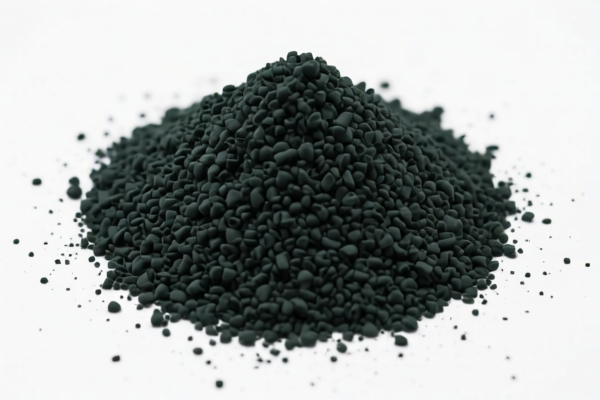
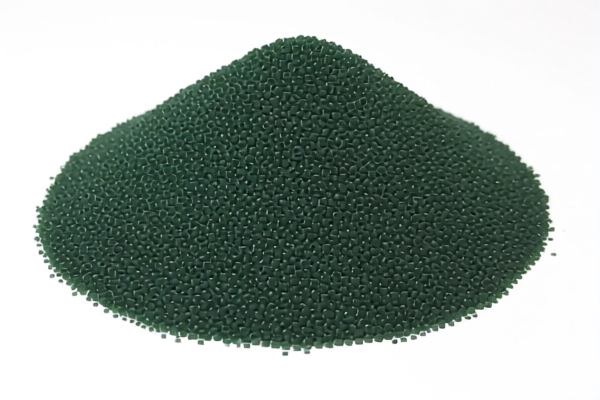
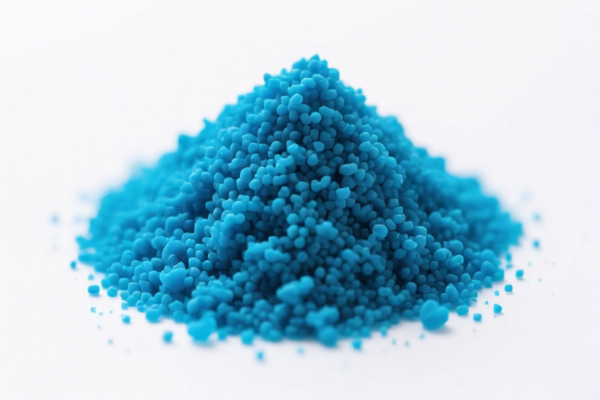
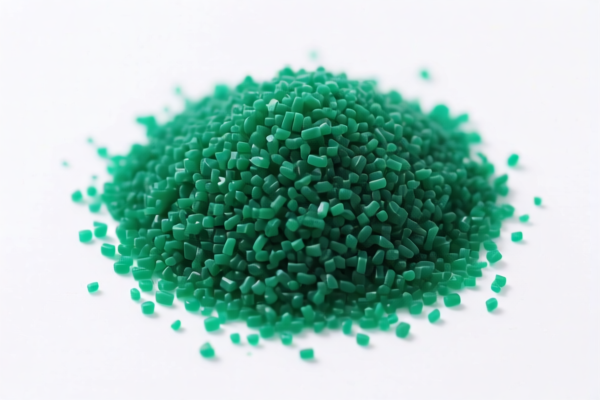
AI Analysis
🏭 Polyester Resin Casting Curing Agent: The Ultimate HS Code & Taxation Guide (2026)
🌐 HS Code Reference & Customs Clearance Strategy | 2026 Latest Tariff Analysis | Expert Compliance Guide
📌 I. Product Definition & Classification: Do You Really Know What You Are Shipping?
A Polyester Resin Casting Curing Agent is a critical chemical component used in composite manufacturing, particularly in casting, molding, and coating applications. In international trade, this product is often categorized under Chapter 38 (Miscellaneous Chemical Products) or Chapter 39 (Plastics and Articles Thereof), depending on its precise chemical composition and functional description.
Key Distinction: * Chemical Additive/Preparative: If described as a raw material, prepolymer, or additive for resin systems → Often falls under 3824. * Functional Polymer/Hardener: If explicitly linked to Polyurethane or specific resin types with clear functional definitions → May fall under 3909.
⚠️ Critical Classification Point:
- If the product is primarily a chemical additive/preparation for resin systems → 3824.40.10.00
- If the product is categorized as an organic modified substance under other chemical products → 3824.99.25.00
- If explicitly defined as a Polyurethane curing agent (even if used for polyester casting, misclassification risk exists) → 3909.50.50.00 or 3909.50.10.00
📦 II. HS Code Classification Matrix (2026 Latest Tariff Authority对照)
| HS Code | Product Description | Application Scenario | Tax Rate (Total) | Key Tax Details |
|---|---|---|---|---|
3824.40.10.00 |
Polyester Resin Curing Agent Raw Material; Chemical Industry Preparative Additive/Component | General casting, resin formulation, additive blending | 41.5% | Base: 6.5%, Section 301: 25%, Section 122: 10% |
3824.99.25.00 |
Polyester Resin Curing Agent Raw Material; Other Chemical Products, Organic Modified Substance | Specialty chemical blends, modified organic compounds | 41.5% | Base: 6.5%, Section 301: 25%, Section 122: 10% |
3909.50.50.00 |
Polyurethane Coating Curing Agent (for Casting); Functional Chemical | Polyurethane-based systems, functional chemical intermediates | 41.3% | Base: 6.3%, Section 301: 25%, Section 122: 10% |
3909.50.10.00 |
Polyurethane Coating Curing Agent (for Casting); Polyurethane Elasticity/Resin Category | Direct PU resin association, curing agent form | 35.0% | Base: 0.0%, Section 301: 25%, Section 122: 10% |
🔍 重点提醒 (Key Reminder):
-3824.40.10.00&3824.99.25.00are the most common for Polyester resins, but carry a 41.5% total duty. -3909.50.10.00offers the lowest rate (35.0%) but requires the product to be clearly defined as a Polyurethane curing agent. Misclassifying a Polyester product as Polyurethane can lead to severe customs penalties. -3909.50.50.00is a middle ground at 41.3%, often used for functional chemical descriptions.
💰 III. 2026 Latest Tariff Rate Breakdown (Detailed Tax Clauses)
✅ Applicable Country: United States (US)
✅ Origin: China (CN)
✅ Effective Date: 2025-11-10 onwards (for all subsequent imports)
🎯 1. 3824.40.10.00 —— Polyester Resin Curing Agent (Chemical Additive)
| Item | Detail |
|---|---|
| Base Duty Rate | 6.5% (ad valorem) |
| USITC Additional Duty (Section 301) | +25% |
| IEEPA Additional Duty (Section 122) | +10% |
| Total Duty Rate | 41.5% |
| Duty Calculation | CIF Value × 41.5% |
| De Minimis Exemption | ❌ NOT Eligible (deny_de_minimis) |
| Legal Basis Path | IEEPA:9903.01.25 → IEEPA:9903.01.24 → USITC:3824.40.10.00 → FOOTNOTE:9903.88.01 |
📌 Explanation:
- The 25% Section 301 duty is applied to chemical preparations under HTSUS 3824. - The 10% Section 122 duty is an additional levy on Chinese-origin chemical products. - Total 41.5% is a high tariff, requiring strict compliance and accurate documentation.
🎯 2. 3824.99.25.00 —— Other Chemical Products (Organic Modified)
| Item | Detail |
|---|---|
| Base Duty Rate | 6.5% |
| USITC Additional Duty | +25% |
| IEEPA Additional Duty | +10% |
| Total Duty Rate | 41.5% |
| Duty Calculation | CIF × 41.5% |
| De Minimis Exemption | ❌ Not Eligible |
| Legal Basis Path | IEEPA:9903.01.25 → IEEPA:9903.01.24 → USITC:3824.99.25.00 → FOOTNOTE:9903.88.01 |
📌 Note:
- This code is for organic modified substances that do not fit neatly into specific chemical subheadings. - Tariff structure is identical to3824.40.10.00.
🎯 3. 3909.50.50.00 —— Polyurethane Coating Curing Agent (Functional Chemical)
| Item | Detail |
|---|---|
| Base Duty Rate | 6.3% |
| USITC Additional Duty | +25% |
| IEEPA Additional Duty | +10% |
| Total Duty Rate | 41.3% |
| Duty Calculation | CIF × 41.3% |
| De Minimis Exemption | ❌ Not Eligible |
| Legal Basis Path | IEEPA:9903.01.25 → IEEPA:9903.01.24 → USITC:3909.50.50.00 → FOOTNOTE:9903.88.01 |
📌 Note:
- Slightly lower base rate (6.3% vs 6.5%) results in a 0.2% savings compared to 3824 codes. - Must ensure product is technically a Polyurethane curing agent.
🎯 4. 3909.50.10.00 —— Polyurethane Curing Agent (Resin/Elasticity Category)
| Item | Detail |
|---|---|
| Base Duty Rate | 0.0% |
| USITC Additional Duty | +25% |
| IEEPA Additional Duty | +10% |
| Total Duty Rate | 35.0% |
| Duty Calculation | CIF × 35.0% |
| De Minimis Exemption | ❌ Not Eligible |
| Legal Basis Path | IEEPA:9903.01.25 → IEEPA:9903.01.24 → USITC:3909.50.10.00 → FOOTNOTE:9903.88.01 |
📌 Note:
- This is the LOWEST TARIFF (35%) in the list. - CRITICAL: Only applicable if the product is legitimately a Polyurethane curing agent. Using this for Polyester resin is high-risk and considered misclassification.
🛠️ IV. Customs Clearance Practical Advice (Battle-Tested Pitfall Guide)
✅ 1. Required Documentation Checklist (Non-Negotiable)
| Document | Mandatory? | Description |
|---|---|---|
| ✅ Product Specification Sheet | ✔️ | Must include chemical composition, CAS numbers, physical state, and intended use. |
| ✅ Material Safety Data Sheet (MSDS) | ✔️ | Essential for chemical classification and safety compliance. |
| ✅ Technical Data Sheet (TDS) | ✔️ | Clarifies if it is a "curing agent," "hardener," or "additive." |
| ✅ Commercial Invoice | ✔️ | Must clearly state "Curing Agent for [Polyester/Polyurethane] Resin." Avoid vague terms like "Chemical Liquid." |
| ✅ Certificate of Origin (CO) | ✔️ | Required to confirm Chinese origin for Section 301/122 duties. |
| ✅ Packing List | ✔️ | Detail net/gross weight and packaging type. |
✅ 2. Declaration Strategy (Key Mnemonics)
🔥 “Correct Type, Correct Base, Avoid Misclassification Penalties!”
| Scenario | Correct Declaration | Wrong Action | Consequence |
|---|---|---|---|
| Polyester Resin Curing Agent | 3824.40.10.00 or 3824.99.25.00 |
Declare as 3909 (PU) |
Misclassification Penalty + Back Duty |
| Polyurethane Curing Agent | 3909.50.10.00 (Lowest Rate) |
Declare as 3824 (Higher Rate) |
Overpayment (Lost Profit) |
| Vague Description ("Chemical Liquid") | N/A | Avoid at all costs | Customs Detention & Inspection |
| Mixed Shipment (Resin + Curing Agent) | Declare Separately | Bundle into one HS Code | Complexity & Potential Error |
✅ 3. Special Situation Handling
| Situation | Handling Advice |
|---|---|
| OEM Custom Curing Agent | Provide Formula Breakdown (without proprietary secrets) to justify HS Code. |
| Product Used for Both Polyester & PU | Classify based on primary use or chemical structure. If primarily for polyester, use 3824. |
| Small Quantity Samples | Still subject to full duties. No de minimis exemption for these codes. |
| Re-export from Third Country | Ensure Country of Origin remains China to trigger Section 301/122. |
🌍 V. Global Market Comparison (2026 Latest)
| Country/Region | Recommended HS Code | Duty Rate | Certification | Notes |
|---|---|---|---|---|
| 🇺🇸 USA | 3824.40.10.00 / 3909.50.10.00 |
35%-41.5% | TSCA Compliance | High Tariff Environment |
| 🇨🇳 China | 3824.40.10.00 | ~0-5% | CCC (if applicable) | Import duty may be low, but export from CN faces US duties |
| 🇪🇺 EU | 3824.99.90 | ~6.5% | REACH Registration | No Section 301/122, but REACH is strict |
| 🇦🇺 Australia | 3824.99.90 | 5% | AICIS | Moderate duty, no major surcharges |
| 🇯🇵 Japan | 3824.99.90 | ~0-5% | Chemical Substances Control Law | Low duty, focus on safety data |
📌 Conclusion:
- The USA is the most challenging market due to Section 301 (25%) and Section 122 (10%) tariffs. - Total duties range from 35% to 41.5%. - Accurate classification between 3824 (Chemical Preparations) and 3909 (Polyurethanes) is critical for cost optimization.
📌 VI. Common Mistakes & Pitfalls (Lessons Learned the Hard Way)
❌ Mistake 1: Calling a Polyester Curing Agent a "Polyurethane Curing Agent" to get the 35% rate.
👉 Result: Customs audit reveals chemical mismatch → Seizure, fines, and blacklisting.
❌ Mistake 2: Using vague terms like "Resin Hardener" without specifying the resin type.
👉 Result: Customs assigns their own HS Code → Delays + Potential higher duty.
❌ Mistake 3: Assuming de minimis (Section 321) applies.
👉 Result: No de minimis exemption for these chemical codes from China. Every shipment is taxed.
❌ Mistake 4: Ignoring Section 122 tariffs.
👉 Result: Underestimating total landed cost by 10%.
✅ Correct Approach:
"Polyester Resin Curing Agent, Liquid, Organic Composition, CAS #XXXX-XX-X, For Casting Applications, TSCA Compliant, Model XYZ"
🎯 VII. Conclusion: Precision in Classification Saves Money!
🎯 Remember the Mantra:
🔹 "Polyester = 3824 (41.5%), PU = 3909 (35-41.3%). Don't Mix!"
🔹 "Section 301 + 122 = 35-41.5%. Plan for the Highest Rate!"
🔹 "No De Minimis. Every Dollar Counts!"
📌 Pro Tip:
If your curing agent can be technically justified as a Polyurethane-based product (even if used in diverse applications), pursuing 3909.50.10.00 can save 6.5% in duties. However, this requires robust technical documentation.
Recommendation: Apply for a Binding Ruling (Pre-classification) from US Customs and Border Protection (CBP) before large shipments.
📣 Immediate Action Required:
📞 Consult a Licensed Customs Broker
📄 Prepare MSDS & TDS
🔍 Verify Chemical Composition for Optimal HS Code
🚀 Ensure Smooth Customs Clearance and Maximize Profit Margins!
✨ Professional Classification Starts Here!
💼 Every Percent Saved is Pure Profit!
Customer Reviews
About HS Code Classification
The Harmonized System (HS) is an internationally standardized nomenclature developed by the World Customs Organization (WCO) to classify traded products. Over 200 countries use the HS system as the basis for customs tariffs, trade statistics, and import/export regulations.
Each HS code follows a hierarchical structure:
- Chapter (2 digits) — Broad category of goods (e.g., Chapter 84: Machinery and Mechanical Appliances)
- Heading (4 digits) — More specific grouping within the chapter
- Subheading (6 digits) — Internationally standardized breakdown, used by all WCO member countries
- National subdivisions (8-10 digits) — Country-specific extensions for further classification, such as US HTSUS 10-digit codes
Correct HS code classification is essential for smooth customs clearance, accurate duty payment, and compliance with trade regulations. Misclassification can lead to customs delays, overpayment of duties, or penalties.
When importing from CN to US, the applicable tariff rates may include:
- Most-Favored-Nation (MFN) rate — The standard duty rate applied to WTO members
- General rate — Applied to countries without trade agreements
- Trade remedy duties — Additional tariffs such as Section 301 (anti-dumping), Section 232 (national security), or countervailing duties
The information provided on this page is for reference purposes only. For official classification, please consult with your local customs authority or a licensed customs broker.