Polyester Resin for Coating
CN → US| HS Code | Tariff Rate | Origin | Destination | Doc |
|---|---|---|---|---|
| 3208100000 | 38.7% | CN | US | Official Doc |
| 3907210000 | 41.5% | CN | US | Official Doc |
| 3208900000 | 38.2% | CN | US | Official Doc |
| 3907290000 | 41.5% | CN | US | Official Doc |
Product Images
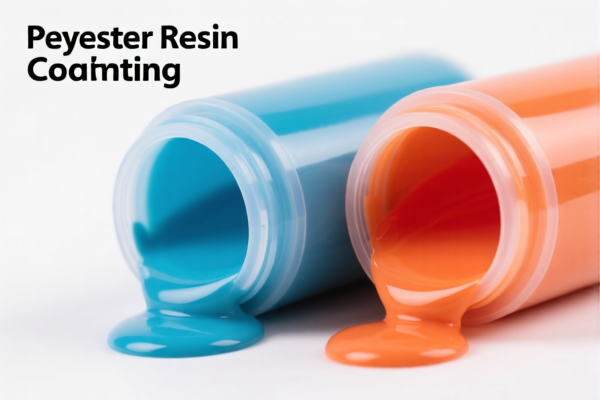
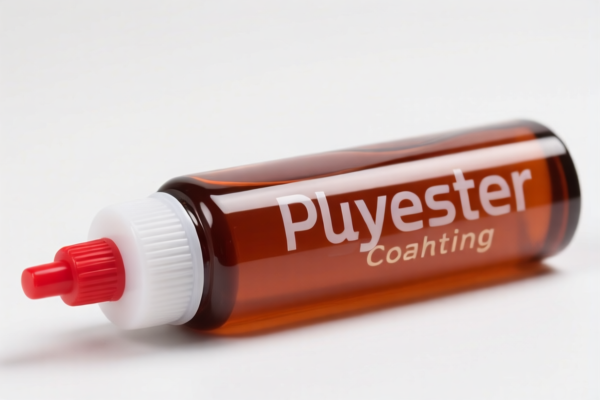
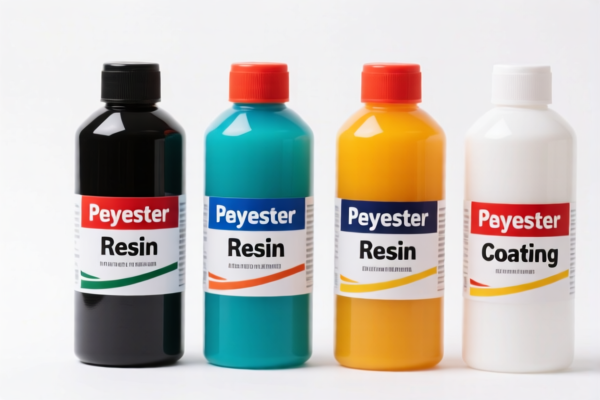
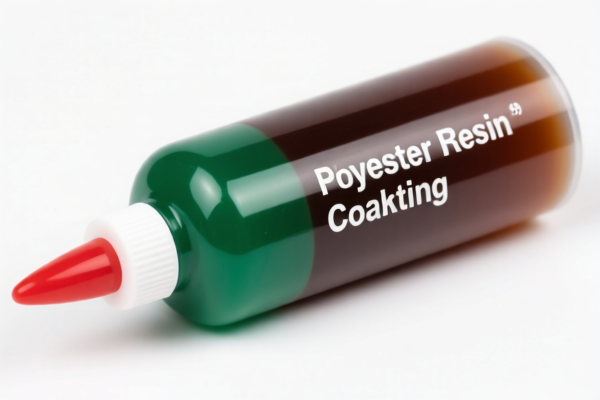
AI Analysis
🧪 Polyester Resin for Coating (2026 Customs Classification Guide)
🌐 HS Code Reference & Clearance Guide | 2026 Latest Tariff Analysis | Professional Clearance Strategy
📌 I. Product Definition & Classification: Do You Really Understand "Coating Resin"?
Polyester Resin for Coating refers to synthetic polymers derived from polyesters or polyethers, used primarily as the base component in paints, varnishes, and surface coatings. In international trade, the classification depends heavily on two factors: 1. Chemical Nature: Is it a finished coating (dispersed in a non-aqueous medium) or a raw resin (primary shape)? 2. Application Logic: Is it directly applied as a paint/lacquer, or is it an intermediate material?
⚠️ Key Distinction:
- If the product is already dispersed in solvents/resins to function as a paint/lacquer → Classify under Chapter 32 (Paints, Varnishes, etc.)
- If the product is pure resin/polymer in primary forms (granules, liquids, powders) used to make coatings later → Classify under Chapter 39 (Plastics and Articles Thereof)
📦 II. HS Code Classification Details (2026 Latest Tariff Authority Match)
Based on the provided data, the product matches four specific HS Codes. The difference lies in the specific chemical structure (Polyester vs. Polyether) and the physical state (Finished Coating vs. Raw Resin).
| HS Code | Product Description | Application Scenario | Tax Rate (Total) | Key Matching Logic |
|---|---|---|---|---|
3208.10.00.00 |
Paints, Varnishes... Based on Polyesters | Finished coating systems using polyester resins | 38.7% | Matches "Resin" material + "Coating Material" form (non-aqueous dispersion). Logical fit for synthetic polymer-based paints. |
3907.21.00.00 |
Polyacetals, Other Polyethers... Polyethers | Raw Polyether Resin (Primary Form) | 41.5% | Name explicitly contains "Polyether". Matches raw resin characteristics. No conflict with coating application logic. |
3208.90.00.00 |
Paints, Varnishes... Other Based on Synthetic Polymers | Finished coating systems using Polyether Resins | 38.2% | Infers material as Polyether Resin (Synthetic Polymer). Form fits "Paints/Varnishes" in non-aqueous media. |
3907.29.00.00 |
Other Polyethers (Not Acetals) | Raw Polyether Resin (Other/Unspecified Form) | 41.5% | Material "Polyether Resin" fits "Polyether" category. "Coating Material" implies semi-finished/raw state. Matches "Other Polyethers". |
🔍 Critical Insight:
- If it’s a Paint/Varnish: It belongs to Chapter 32 (3208.10or3208.90). Tax is 38.2% - 38.7%.
- If it’s Raw Resin: It belongs to Chapter 39 (3907.21or3907.29). Tax is 41.5%.
- Polyether vs. Polyester: If the name says "Polyester," lean toward3208.10. If it says "Polyether," lean toward3907.21/29or3208.90.
💰 III. 2026 Latest Tariff Rate Breakdown (Including Surcharges & Policy Add-ons)
✅ Applicable Country: United States (US)
✅ Origin: China (CN)
✅ Effective Time: From November 10, 2025 (Including subsequent imports)
🎯 1. 3208.10.00.00 & 3208.90.00.00 —— Paints, Varnishes (Finished Coating Base)
| Item | Content |
|---|---|
| Base Tariff | 3.2% - 3.7% (Ad Valorem) |
| Section 301 Surcharge | +25.0% (From USITC Footnote 9903.88.01) |
| Section 122 Tariff | +10.0% (Specific surcharge for certain goods) |
| Total Tariff | 38.2% - 38.7% |
| Tax Calculation | CIF Value × 38.2%~38.7% |
| De Minimis Exemption | ❌ Not Eligible (Deny de_minimis) |
| Legal Basis Path | USITC:3208.xx.xx.xx → FOOTNOTE:301 → SECTION122 |
📌 Explanation:
- The Base Tax is relatively low (3-4%), but the Section 301 (25%) and Section 122 (10%) surcharges drive the cost up. - This category is for finished or semi-finished coating materials.
🎯 2. 3907.21.00.00 & 3907.29.00.00 —— Polyethers (Raw Resin)
| Item | Content |
|---|---|
| Base Tariff | 6.5% (Ad Valorem) |
| Section 301 Surcharge | +25.0% (From USITC Footnote 9903.88.01) |
| Section 122 Tariff | +10.0% (Specific surcharge for certain goods) |
| Total Tariff | 41.5% |
| Tax Calculation | CIF Value × 41.5% |
| De Minimis Exemption | ❌ Not Eligible (Deny de_minimis) |
| Legal Basis Path | USITC:3907.xx.xx.xx → FOOTNOTE:301 → SECTION122 |
📌 Note:
- Raw resins have a higher base tariff (6.5%) compared to finished paints (3-4%). - The Section 301 (25%) and Section 122 (10%) apply equally. - Total 41.5% is significantly higher than the coating base. Classification choice is critical!
🛠️ IV. Customs Clearance Practical Advice (Combat Pitfall Guide)
✅ 1. Document Checklist (Missing Items Not Allowed)
| Document | Must Provide | Explanation |
|---|---|---|
| ✅ Technical Data Sheet (TDS) | ✔️ | Must specify: Is it a finished coating or raw resin? Solvent content? |
| ✅ Safety Data Sheet (SDS) | ✔️ | Shows chemical composition, crucial for HS Code determination. |
| ✅ Product Photos | ✔️ | Clear view of labeling, state (liquid/powder), and packaging. |
| ✅ Composition Analysis | ✔️ | % of Polyester vs. Polyether vs. Solvents. |
| ✅ Commercial Invoice | ✔️ | Must clearly state: "Polyester Resin for Coating" or "Polyether Resin Base". |
| ✅ Certificate of Origin (CO) | ✔️ | Essential for proving China origin and applying surcharges correctly. |
| ✅ Packing List | ✔️ | Detail net/gross weight, volume. |
✅ 2. Declaration Techniques (Key Mantra)
🔥 "Raw Resin vs. Coating Base: Know the State! Name Must Match Material!"
| Scenario | Correct Declaration | Wrong Practice |
|---|---|---|
| Pure Resin (No solvents/pigments) | 3907.21.00.00 or 3907.29.00.00 |
Declare as "Paint" → Risk of reclassification & penalty |
| Finished Coating Base (Dispersed) | 3208.10.00.00 or 3208.90.00.00 |
Declare as "Raw Plastic" → Risk of higher base tax |
| Mixed Material (Polyester + Polyether) | Choose the dominant component or 3208.90 (Other) |
Vague description "Resin Mix" → Customs delay |
| Unlabeled Drums | ❌ Never | Always provide TDS/SDS if labeling is unclear |
✅ 3. Special Case Handling
| Scenario | Handling Advice |
|---|---|
| OEM Private Label | Provide customer PO + Technical Spec to prove "Coating Base" function. |
| High Solvent Content | If >50% solvent, may still be 3208 (Paints/Varnishes). Confirm with TDS. |
| Powder Coatings | If solid resin for powder coating, it may be 3907. If pre-mixed with pigments, 3208. |
| Polyether vs. Polyester | Critical: If the name says "Polyether" but it's a finished paint, use 3208.90. If raw, use 3907. Do not mix up! |
🌍 V. Global Market Comparison (2026 Latest)
| Country/Region | Recommended HS Code | Tariff (China Origin) | Certification Required | Remarks |
|---|---|---|---|---|
| 🇺🇸 USA | 3208.10 / 3907.29 |
38.2% - 41.5% (incl. 301 & 122) | TSCA (EPA) | High tariff burden. Pre-ruling recommended. |
| 🇨🇳 China | 3208.10 / 3907.29 |
3.2% - 6.5% (Base only) | None for import (for use) | Low base tariff, no 301/122 surcharges. |
| 🇪🇺 EU | 3208.10 / 3907.29 |
0% - 5% (If REACH compliant) | REACH Registration | No major surcharges if compliant. |
| 🇦🇺 Australia | 3208.10 / 3907.29 |
5% (Base) | NICNAS / AICIS | Moderate cost, no 301/122. |
| 🇯🇵 Japan | 3208.10 / 3907.29 |
0% - 5% (Base) | PSIA / JIS | Competitive market, low base tariff. |
📌 Conclusion:
- USA is the most expensive market due to Section 301 (25%) + Section 122 (10%).
- EU/Asia have significantly lower barriers if chemical compliance (REACH/JIS) is met.
- Cost Savings: Consider shipping to non-US hubs (e.g., EU) for distribution if possible.
📌 VI. Common Errors & Pitfall Guide (Blood Lessons)
❌ Error 1: Declaring "Polyester Resin" as 3907 when it’s actually a finished paint base (3208)
👉 Consequence: Under-declaration of tariff (Base 3.7% vs 6.5%) → Customs Audit & Back Taxes!
❌ Error 2: Ignoring "Section 122" (10%) surcharge in cost calculation
👉 Consequence: Profit margin erosion → Unexpected Loss!
❌ Error 3: Confusing "Polyether" (3907.21/29) with "Polyester" (3208.10)
👉 Consequence: Misclassification → Delays & Penalties. Check chemical composition!
❌ Error 4: Claiming "De Minimis" for small shipments
👉 Consequence: Rejected. These goods are explicitly excluded from de minimis exemption for China-origin goods.
✅ Correct Action:
"Polyester Resin for Coating, Liquid, Non-Aqueous Dispersion, Base for Industrial Paints, TDS Attached, Model XYZ, TSCA Compliant"
🎯 VII. Conclusion: Precise Classification Saves Money!
🎯 Remember the Mantra:
🔹 "Raw Resin = Chapter 39 (41.5%), Paint Base = Chapter 32 (38.2-38.7%)"
🔹 "Check the Form! Liquid/Dispersion = Coating. Pure Polymer = Resin."
🔹 "Section 301 + 122 = 35% Surcharge on Top. Plan Your Cost Accordingly!"
📌 Pro Tip:
If your product is a raw polyether resin, consider if it can be modified to be a finished polyester coating base (3208.10) to save 2.8-3.3% in total tariff.
Strongly recommend applying for an Advance Ruling (CBP Ruling) before shipping to avoid clearance risks.
📣 Immediate Action:
📞 Contact Professional Customs Broker + Provide TDS/SDS + Apply for HS Code Advance Ruling
🚀 Ensure Smooth Clearance, Maximize Profit, Avoid Surprises!
✨ Professional Clearance Starts with Accurate Classification!
💼 Every Cent of Cost is Worth Precise Calculation!
Customer Reviews
About HS Code Classification
The Harmonized System (HS) is an internationally standardized nomenclature developed by the World Customs Organization (WCO) to classify traded products. Over 200 countries use the HS system as the basis for customs tariffs, trade statistics, and import/export regulations.
Each HS code follows a hierarchical structure:
- Chapter (2 digits) — Broad category of goods (e.g., Chapter 84: Machinery and Mechanical Appliances)
- Heading (4 digits) — More specific grouping within the chapter
- Subheading (6 digits) — Internationally standardized breakdown, used by all WCO member countries
- National subdivisions (8-10 digits) — Country-specific extensions for further classification, such as US HTSUS 10-digit codes
Correct HS code classification is essential for smooth customs clearance, accurate duty payment, and compliance with trade regulations. Misclassification can lead to customs delays, overpayment of duties, or penalties.
When importing from CN to US, the applicable tariff rates may include:
- Most-Favored-Nation (MFN) rate — The standard duty rate applied to WTO members
- General rate — Applied to countries without trade agreements
- Trade remedy duties — Additional tariffs such as Section 301 (anti-dumping), Section 232 (national security), or countervailing duties
The information provided on this page is for reference purposes only. For official classification, please consult with your local customs authority or a licensed customs broker.