Polyester Resin for Composite Materials
CN → USProduct Images


AI Analysis
🏗️ Polyester Resin for Composite Materials
🌐 HS Code Reference & Customs Clearance Guide | 2026 Latest Tariff Analysis | Professional Level Strategy
📌 I. Product Definition & Classification: What Exactly Is "Polyester Resin"?
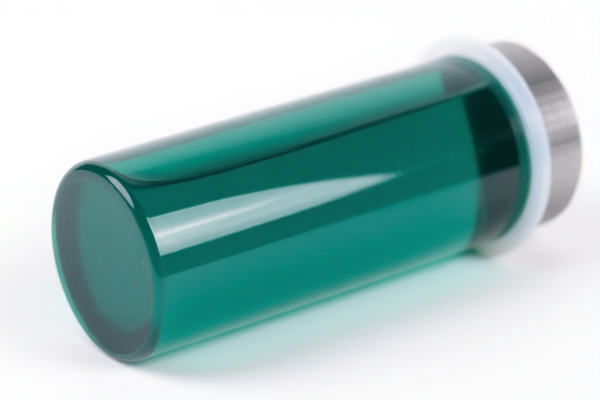
Unsaturated Polyester Resin (UPR) is a thermosetting polymer used extensively as the matrix material for reinforced plastics, particularly fiberglass-reinforced plastic (FRP). It is typically supplied as a viscous liquid, often with styrene or other vinyl monomers added for viscosity control and reactivity.
In international trade, the classification depends heavily on whether the resin is ready for use (with inhibitors, accelerators, or monomers mixed in) or a pure chemical intermediate.
⚠️ Key Distinction Point:
- If the product is a polymer in primary forms (liquid/powder) intended for further chemical processing → Chapter 39.
- If it is a preparations of plastics (mixed with additives, curing agents, or ready-to-use kits) → Chapter 39 (still, but different heading) or potentially Chapter 35 if it’s a specific binder, but usually 3906 or 3910.
- Crucial Note: Most commercial "Polyester Resins" are classified under 3906.90 (Other acrylic polymers) or 3910.00 (Unsaturated polyesters). 3910.00 is the most common for general composite resins.
📦 II. HS Code Classification Details (2026 Latest Tariff Authority Match)
| HS Code | Product Description | Application Scenario | Chemical Nature |
|---|---|---|---|
3910.00.00.00 |
Unsaturated Polyesters | Most common composite resins (vinyl ester, orthophthalic, isophthalic) | ✅ Pure polymer, may have inhibitors |
3906.90.00.00 |
Other acrylic polymers in primary forms | Acrylic resins, some modified polyesters | ❌ Not UPR |
3208.90.00.00 |
Paints and varnishes (including enamels and lacquers) based on synthetic polymers | Pre-colored resins ready for coating | ✅ Mixed with pigments/solvents |
3506.91.00.00 |
Prepared glues and other prepared adhesives | Resin mixed with hardeners/adhesives | ✅ Mixture |
🔍 Key Reminder:
-3910.00.00.00is the standard HS Code for "Polyester Resin" used in boat building, automotive parts, and construction.
- If the resin is mixed with styrene (which is common for viscosity), it is still generally classified as 3910.00.00.00 because the resin is the essential character. However, some customs authorities may scrutinize mixtures.
- If it is a pre-mixed kit (resin + hardener), it may be classified as 3506.91.00.00 (Prepared Adhesives) depending on the country, but 3910 is more common for bulk raw material.
💰 III. 2026 Latest Tariff Rate Details (Including Surcharges, Policy Add-ons)
✅ Applicable Country: United States (US)
✅ Country of Origin: China (CN)
✅ Effective Date: November 10, 2025 (including subsequent imports)
🎯 1. 3910.00.00.00 – Unsaturated Polyesters
| Item | Content |
|---|---|
| Base Tariff | 5.7% (ad valorem) |
| USITC Additional Duty | +7.5% (Section 301 List 4B) |
| IEEPA Additional Duty | +10% (for China/HK products, effective Nov 10, 2025) |
| Total Tariff Rate | 23.2% |
| Tax Calculation | CIF Value × 23.2% |
| De Minimis Exemption Eligibility | ❌ Not Eligible (deny_de_minimis) |
| Legal Basis Path | IEEPA:9903.01.25 → IEEPA:9903.01.24 → USITC:3910.00.00.00 → FOOTNOTE:9903.4B.01 |
📌 Explanation:
- "USITC Additional Duty 7.5%": From Section 301 tariffs under the "List 4B" (chemicals and plastics).
- "IEEPA 10%": The new International Emergency Economic Powers Act surcharge on Chinese goods, effective Nov 10, 2025.
- Total 23.2% is a high tariff for a raw material. Cost calculation must include this burden.📌 Note:
- Even if the resin is "green" or "low-VOC," it does not automatically qualify for exemption unless specifically listed.
- Mixtures with other chemicals (e.g., inhibitors) remain classified under 3910 as long as the polyester is the essential character.
🛠️ IV. Customs Clearance Practical Advice (Real-World Pitfall Avoidance Guide)
✅ 1. Preparation Checklist (Essential Documents)
| Material | Must Provide | Description |
|---|---|---|
| ✅ Product Spec Sheet | ✔️ | Must specify "Unsaturated Polyester Resin," chemical composition, and intended use (e.g., "For FRP laminates"). |
| ✅ Safety Data Sheet (SDS) | ✔️ | Critical for hazardous materials classification. Check for flammability and VOC content. |
| ✅ Chemical Structure Diagram | ✔️ | Proves it is an "Unsaturated Polyester" and not an epoxy or acrylic resin. |
| ✅ Commercial Invoice | ✔️ | Must clearly state "Unsaturated Polyester Resin" and not just "Chemical Liquid." |
| ✅ HS Code Confirmation Letter | ✔️ | If possible, obtain a prior ruling or confirmation from the manufacturer. |
| ✅ Packing List | ✔️ | Specify net/gross weight and number of containers (drums or IBCs). |
✅ 2. Declaration Tips (Key Mantra)
🔥 "Specify 'Unsaturated', not just 'Polyester'; List Inhibitors; Avoid 'Adhesive' Confusion!"
| Scenario | Correct Declaration | Wrong Practice |
|---|---|---|
| Bulk unsaturated polyester resin | 3910.00.00.00 + "Unsaturated Polyester Resin" |
Mislabel as "Paint" (3208) → Higher scrutiny |
| Resin mixed with inhibitors | 3910.00.00.00 |
Mislabel as "Prepared Adhesive" (3506) → Wrong tariff |
| Pre-mixed resin + hardener kit | Consult Customs: May be 3506.91.00.00 |
Assuming 3910 for kits → Potential misclassification |
| Epoxy Resin | 3907.99.00.00 |
Confusing with Polyester → 3910 |
✅ 3. Special Cases Handling
| Situation | Handling Advice |
|---|---|
| VOC Content High | May be subject to EPA regulations in the US. Ensure compliance with Clean Air Act. |
| Flammable Liquid | Must be declared as Class 3 Flammable Liquid. Requires UN number, proper packaging, and hazard labels. |
| Origin from Vietnam/Mexico | If processed substantially, may qualify for USMCA/FTA benefits. Check certificate of origin. |
| Sample/Small Quantity | Still subject to full tariff if value exceeds de minimis threshold ($800). |
🌍 V. Global Major Market Customs Comparison (2026 Latest)
| Country/Region | Recommended HS Code | Tariff | Certification Requirement | Notes |
|---|---|---|---|---|
| 🇺🇸 USA | 3910.00.00.00 |
23.2% (CN) | SDS, EPA Compliant | High tariff, strict hazmat checks |
| 🇨🇳 China | 3910.00.00.00 |
6.5% | CCC (if applicable) | Low tariff, standard import |
| 🇪🇺 EU | 3910.00.00.00 |
6.5% | REACH Registration | Mandatory REACH compliance |
| 🇬🇧 UK | 3910.00.00.00 |
6.5% | UKCA (if applicable) | Post-Brexit regulations apply |
| 🇦🇺 Australia | 3910.00.00.00 |
5.0% | GDSSTAN | Standard import |
📌 Conclusion:
- USA has the highest tariff burden for Chinese-origin polyester resin due to combined Section 301 and IEEPA duties.
- EU and UK require REACH registration, which is a significant compliance cost for chemical imports.
- China has lower tariffs, making it a potential hub for regional distribution if sourced from non-Chinese origins.
📌 VI. Common Errors & Pitfall Guide (Lessons from Tears)
❌ Error 1: Declaring "Polyester" without specifying "Unsaturated"
👉 Consequence: Customs may classify under general plastics (3920 or 3907) with different tariffs and regulations.
👉 Correction: Always use "Unsaturated Polyester Resin."
❌ Error 2: Confusing Polyester Resin with Epoxy Resin
👉 Consequence: Epoxy (3907.99) has different tariffs and hazard classifications.
👉 Correction: Provide chemical structure proof.
❌ Error 3: Mislabeling as "Glue" or "Adhesive"
👉 Consequence: Classified under 3506, which may have different regulatory requirements (e.g., FDA for food contact).
👉 Correction: Only use 3506 if it is a pre-mixed adhesive kit.
❌ Error 4: Ignoring Hazardous Material Requirements
👉 Consequence: Shipment held at port, fines, or return.
👉 Correction: Ensure proper UN packaging, labeling, and SDS are provided.
✅ Correct Practice:
"Unsaturated Polyester Resin, Liquid, for Fiberglass Reinforcement, Contains Methyl Ethyl Ketone Peroxide Inhibitor, UN 3082, Class 3 Flammable Liquid, HS Code 3910.00.00.00"
🎯 VII. Conclusion: Professional Declaration, Save Time, Reduce Costs!
🎯 Remember the Mantra:
🔹 "Unsaturated is Key, 3910 is Standard, Hazmat Rules Apply, 23.2% Tax Looms Large!"
🔹 "HS Code Determines Duty, Tariff Difference is Big, Declaration Accuracy Saves Money!"
📌 Pro Tip:
If your resin is originating from Vietnam, Mexico, or Thailand, you may qualify for IEEPA Exemption or USMCA/FTA Benefits, reducing the tariff to 0%~5%.
Recommend applying for an Advance Ruling to avoid clearance risks.
📣 Immediate Action:
📞 Contact a professional customs broker + Provide SDS + Apply for HS Code Advance Ruling
🚀 Ensure your polyester resin clears customs smoothly, efficiently, and profitably!
✨ Professional Clearance Starts with Accurate Classification!
💼 Every cent of your cost deserves precise calculation!
Customer Reviews
About HS Code Classification
The Harmonized System (HS) is an internationally standardized nomenclature developed by the World Customs Organization (WCO) to classify traded products. Over 200 countries use the HS system as the basis for customs tariffs, trade statistics, and import/export regulations.
Each HS code follows a hierarchical structure:
- Chapter (2 digits) — Broad category of goods (e.g., Chapter 84: Machinery and Mechanical Appliances)
- Heading (4 digits) — More specific grouping within the chapter
- Subheading (6 digits) — Internationally standardized breakdown, used by all WCO member countries
- National subdivisions (8-10 digits) — Country-specific extensions for further classification, such as US HTSUS 10-digit codes
Correct HS code classification is essential for smooth customs clearance, accurate duty payment, and compliance with trade regulations. Misclassification can lead to customs delays, overpayment of duties, or penalties.
When importing from CN to US, the applicable tariff rates may include:
- Most-Favored-Nation (MFN) rate — The standard duty rate applied to WTO members
- General rate — Applied to countries without trade agreements
- Trade remedy duties — Additional tariffs such as Section 301 (anti-dumping), Section 232 (national security), or countervailing duties
The information provided on this page is for reference purposes only. For official classification, please consult with your local customs authority or a licensed customs broker.