Polyester Resin for Impregnation
CN → USProduct Images
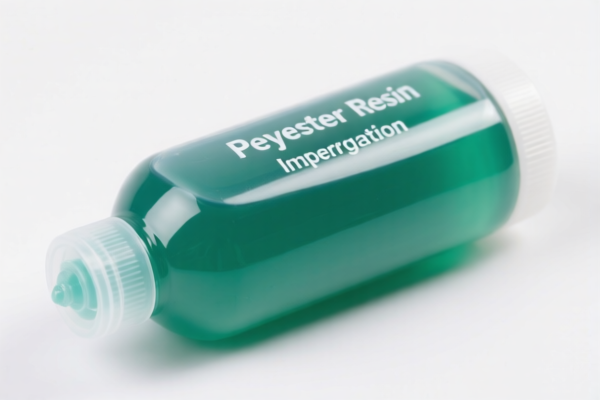
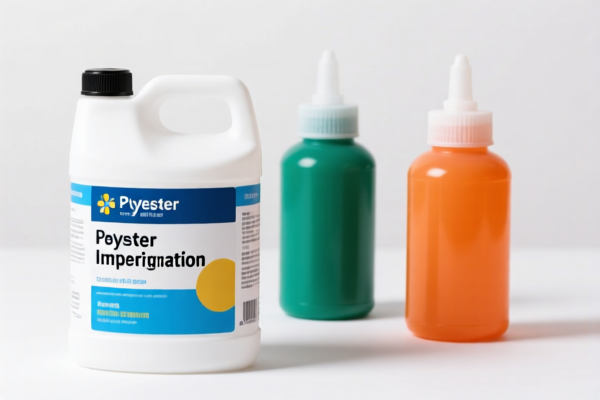
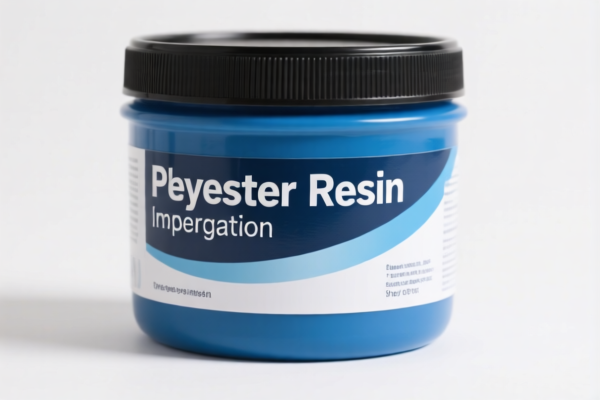
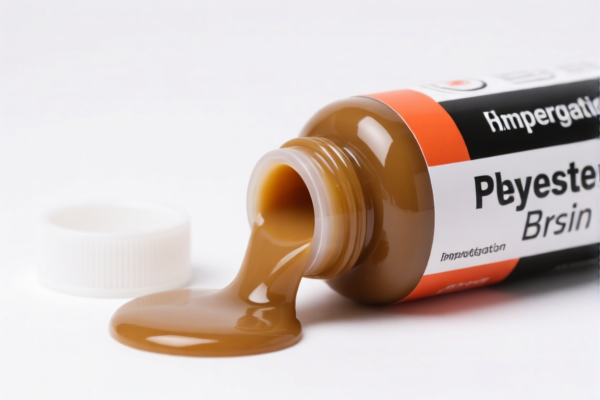
AI Analysis
🏭 Polyester Resin for Impregnation (The Industrial Backbone)
🌐 HS Code Reference & Customs Clearance Guide | 2026 Latest Tariff Analysis | Professional Clearance Strategy
📌 I. Product Definition & Classification: What is "Polyester Resin for Impregnation"?
Polyester Resin for Impregnation is a specialized synthetic thermosetting resin, typically unsaturated, designed to penetrate and saturate porous materials. Unlike cast resin, its primary function is penetration and bonding, commonly used in: - Glass Fiber Reinforced Plastics (GRP/FRP): Impregnating fiberglass for boats, pipes, and tanks. - Wood Preservation: Hardening and sealing wood fibers. - Construction Materials: Bonding stone, concrete, or reinforcing drywall.
⚠️ Key Distinction:
- If it is a liquid resin solution (not pre-cured) intended for saturating substrates →归类 to Resin (Chapter 39).
- If it is a pre-impregnated fabric (fiberglass already coated with resin) →归类 to Fabric (Chapter 54 or 59).
- ⚠️ Crucial Check: Is it "Ready for Use" as a chemical or a component? Most impregnation resins are liquid/paste and fall under Chapter 39.
📦 II. HS Code Classification Details (2026 Latest Tariff Authority)
| HS Code | Product Description | Application Scenario | State/Form |
|---|---|---|---|
3907.40.80.00 |
Unsaturated Polyester Resins, in Primary Forms | The most common category for impregnation resins. Includes ortho-, iso-, and terephthalic types. | Liquid/Paste |
3907.60.00.00 |
Poly (alkylene terephthalate)s | Less common for standard impregnation; more for engineering plastics. | Solid/Granules |
3907.90.50.00 |
Other Polyesters, in Primary Forms | If the resin is a specialized copolymer not covered in 3907.40. | Liquid/Paste |
3906.90.90.00 |
Acrylic Polymers | Incorrect Classification Risk: Some may confuse with acrylic impregnants. Stick to Polyester (3907). | - |
🔍 Critical Note:
-3907.40.80.00is the standard HS Code for "Unsaturated Polyester Resins for Impregnation."
- Ensure the product is NOT already mixed with hardeners (MEKP) in a way that makes it "ready-to-use paint/coating" (which might fall under Chapter 32). If it is a resin base requiring a catalyst, it remains 3907.
💰 III. 2026 Latest Tariff Rate Breakdown (Including Surcharges)
✅ Applicable Country: United States (US)
✅ Country of Origin: China (CN)
✅ Effective Date: From November 10, 2025 (including subsequent imports)
🎯 1. 3907.40.80.00 —— Unsaturated Polyester Resins
| Item | Content |
|---|---|
| Base Rate | 0% (ad valorem) |
| USITC Surcharge | +25% (from USITC Footnote 9903.40.80.00) |
| IEEPA Surcharge | +10% (for China/HK products, effective Nov 10, 2025) |
| Total Rate | 35% |
| Tax Calculation | CIF Value × 35% |
| De Minimis Eligible? | ❌ No (deny_de_minimis) |
| Legal Basis Path | IEEPA:9903.01.25 → IEEPA:9903.01.24 → USITC:3907.40.80.00 → FOOTNOTE:9903.88.01 |
📌 Explanation:
- "USITC Surcharge 25%" stems from Section 301 of the U.S. Trade Act;
- "IEEPA 10%" is the additional tariff under the International Emergency Economic Powers Act against Chinese goods;
- Total 35% is a high tariff, requiring advance planning!
🎯 2. 3907.90.50.00 —— Other Polyesters
| Item | Content |
|---|---|
| Base Rate | 0% |
| USITC Surcharge | +25% |
| IEEPA Surcharge | +10% |
| Total Rate | 35% |
| Tax Calculation | CIF × 35% |
| De Minimis Eligible? | ❌ No |
| Legal Basis Path | IEEPA:9903.01.25 → IEEPA:9903.01.24 → USITC:3907.90.50.00 → FOOTNOTE:9903.88.01 |
📌 Note:
- Same tariff as above; applies if the resin is a specialized polyester not classified under 3907.40.
🛠️ IV. Customs Clearance Practical Advice (Combat Pitfall Guide)
✅ 1. Documentation Checklist (Essential)
| Document | Mandatory | Explanation |
|---|---|---|
| ✅ MSDS (Safety Data Sheet) | ✔️ | Must classify as Dangerous Goods if flammable (Class 3). |
| ✅ Certificate of Analysis (COA) | ✔️ | Confirm it is Unsaturated Polyester Resin, not a finished coating. |
| ✅ Product Photos | ✔️ | Show container, label, and physical state (liquid/paste). |
| ✅ Commercial Invoice | ✔️ | Clearly state "Unsaturated Polyester Resin for Impregnation." |
| ✅ Bill of Lading | ✔️ | Ensure proper UN Number (e.g., UN 3082) if hazardous. |
| ✅ Non-Hazmat Letter (if applicable) | ✔️ | If flash point >60°C, may be non-hazardous, but verify. |
✅ 2. Declaration Tips (Key Mantras)
🔥 "Resin Base, Not Coating; Flash Point Matters; HS 3907 is Key!"
| Scenario | Correct Declaration | Wrong Practice |
|---|---|---|
| Liquid resin for soaking fiberglass | 3907.40.80.00 |
Misdeclare as "Paint" (Chapter 32) → Higher duty & EPA issues |
| Pre-impregnated fiberglass mat | 5903.20.20.00 (Textile) |
Misdeclare as "Resin" → Wrong Chapter |
| Resin + Hardener Kit (Ready-to-use) | Check if "Ready-to-Use" → Might be 3208/3209 | Misdeclare as pure resin → Risk of classification error |
| Solid polyester pellets | 3907.90.50.00 |
Misdeclare as 3907.40 (Liquid) → Inspection delay |
✅ 3. Special Case Handling
| Situation | Handling Advice |
|---|---|
| Flammable Resin (Flash Point <60°C) | Must declare as UN 3082 (Flammable Liquid, N.O.S.). Require IMDG/IATA compliant packaging. |
| Non-Flammable Resin (Flash Point >60°C) | Declare as Non-Hazardous. Lower shipping cost, but still 35% tariff. |
| Mixed with Fillers | If >50% resin by weight, still 3907. If mostly filler, may change classification. |
| OEM Custom Resin | Provide formulation data to customs broker to prove it’s not a "finished product." |
🌍 V. Global Customs Comparison (2026 Latest)
| Country/Region | Recommended HS Code | Tariff | Certification | Remarks |
|---|---|---|---|---|
| 🇺🇸 USA | 3907.40.80.00 |
35% (China) | EPA (if chemical) | High tariff due to IEEPA/301 |
| 🇨🇳 China | 3907.40.80.00 |
0% (Most FTA) | RoHS/REACH (if exporting) | No additional surcharges |
| 🇪🇺 EU | 3907.40.00 |
0% (Most FTA) | REACH Registration | Must register under REACH if >1 ton/year |
| 🇦🇺 Australia | 3907.40.00 |
5% | GHS Labeling | Moderate tariff |
| 🇯🇵 Japan | 3907.40.00 |
0% (JTEPA) | Chemical Substances Control Law | No additional surcharges |
📌 Conclusion:
- USA is the highest cost market for Chinese polyester resin due to 35% combined tariff.
- EU and Japan offer better duty rates if FTA applies, but REACH/Chemical compliance is stricter.
- Non-hazardous status can save significant shipping/logistics costs, even if tariff is the same.
📌 VI. Common Mistakes & Pitfall Guide (Lessons Learned)
❌ Mistake 1: Declaring liquid resin as "Paint" or "Coating" (Chapter 32)
👉 Consequence: EPA registration required, higher duty, potential penalties.
👉 Fix: Resin is a chemical intermediate, not a finished coating. Use HS 3907.
❌ Mistake 2: Ignoring Flash Point & Dangerous Goods classification
👉 Consequence: Shipping refusal, fines, or cargo seizure if declared as non-hazardous.
👉 Fix: Provide MSDS and UN Number. If flash point <60°C, it’s Class 3.
❌ Mistake 3: Confusing "Resin" with "Pre-impregnated Fabric"
👉 Consequence: Wrong HS Code (3907 vs 5903).
👉 Fix: If the substrate (fabric) is already coated, it’s Textile (Chapter 59/54). If resin is sold separately, it’s Resin (Chapter 39).
✅ Correct Practice:
"Unsaturated Polyester Resin, Liquid, Flash Point 65°C, Non-Hazardous, UN 3082 (if applicable), Model XYZ, for Fiberglass Impregnation"
🎯 VII. Conclusion: Professional Declaration, Cost Saving & Efficiency!
🎯 Remember the Mantra:
🔹 "Resin Base, Not Coating; Flash Point Dictates Logistics; HS 3907 is King!"
🔹 "Tariff 35% in USA, but Shipping Cost Depends on Hazard Class!"
📌 Pro Tip:
- If your resin is produced in Vietnam, Mexico, or Thailand, you may qualify for IEEPA Exemptions (tariff as low as 0-5%).
- Consider Advance Ruling from CBP to confirm Non-Hazardous status if flash point is borderline.
- REACH Registration is mandatory for EU imports (>1 ton/year). Plan early!
📣 Immediate Action:
📞 Contact a certified customs broker + Provide MSDS + Verify Flash Point
🚀 Ensure smooth clearance, avoid dangerous goods surcharges, and optimize your landed cost!
✨ Professional clearance starts with precise classification!
💼 Every dollar saved on logistics and duty counts!
Customer Reviews
About HS Code Classification
The Harmonized System (HS) is an internationally standardized nomenclature developed by the World Customs Organization (WCO) to classify traded products. Over 200 countries use the HS system as the basis for customs tariffs, trade statistics, and import/export regulations.
Each HS code follows a hierarchical structure:
- Chapter (2 digits) — Broad category of goods (e.g., Chapter 84: Machinery and Mechanical Appliances)
- Heading (4 digits) — More specific grouping within the chapter
- Subheading (6 digits) — Internationally standardized breakdown, used by all WCO member countries
- National subdivisions (8-10 digits) — Country-specific extensions for further classification, such as US HTSUS 10-digit codes
Correct HS code classification is essential for smooth customs clearance, accurate duty payment, and compliance with trade regulations. Misclassification can lead to customs delays, overpayment of duties, or penalties.
When importing from CN to US, the applicable tariff rates may include:
- Most-Favored-Nation (MFN) rate — The standard duty rate applied to WTO members
- General rate — Applied to countries without trade agreements
- Trade remedy duties — Additional tariffs such as Section 301 (anti-dumping), Section 232 (national security), or countervailing duties
The information provided on this page is for reference purposes only. For official classification, please consult with your local customs authority or a licensed customs broker.