Polyester Schoolbag
CN → US| HS Code | Tariff Rate | Origin | Destination | Doc |
|---|---|---|---|---|
| 4202923120 | 52.6% | CN | US | Official Doc |
| 6305390000 | 25.9% | CN | US | Official Doc |
| 4202923131 | 52.6% | CN | US | Official Doc |
| 3923290000 | 38.0% | CN | US | Official Doc |
| 6305330080 | 25.9% | CN | US | Official Doc |
| 4202128910 | 52.6% | CN | US | Official Doc |
Product Images
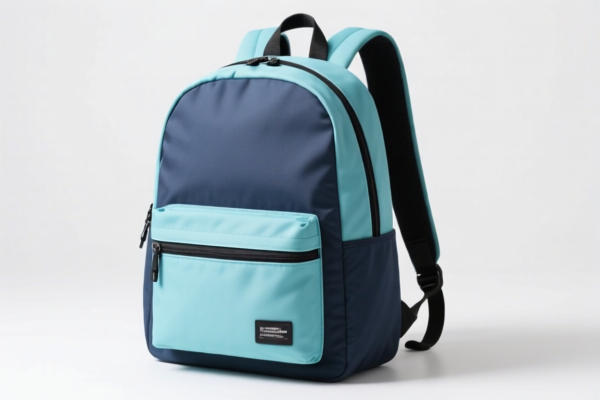
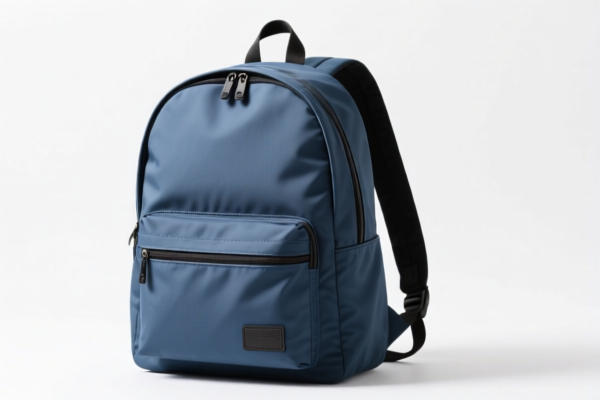
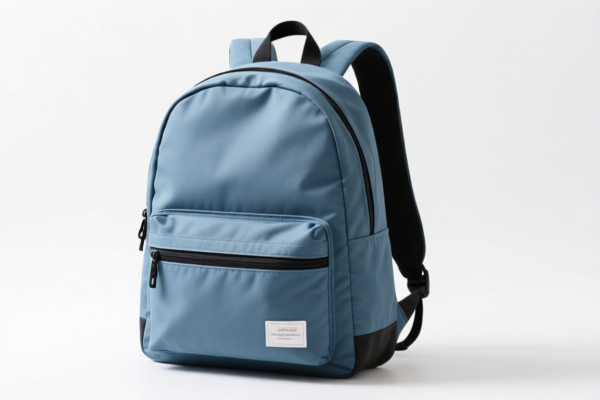
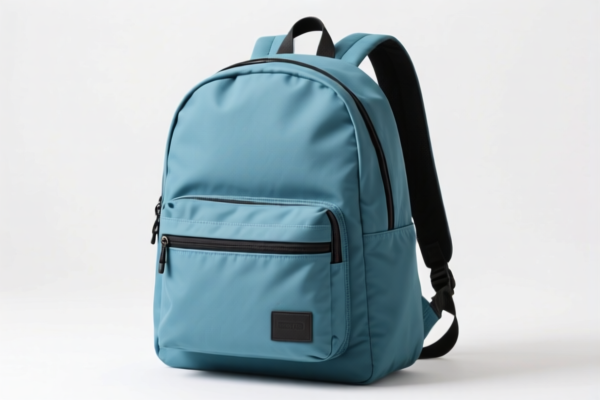
AI Analysis
🎒 Polyester Schoolbags (Backpacks & Sports Bags)
🌐 HS Code Reference & Customs Clearance Guide | 2026 Updated Tariff Analysis | Professional Entry Strategy
📌 I. Product Definition & Classification: Are You Sure You Know "Polyester Bags"?
Polyester schoolbags, backpacks, and sports bags are ubiquitous in global trade. However, in international customs classification, "Polyester" (the material) is NOT the determining factor. The function, structure, and specific material composition dictate the HS Code.
Misclassification here is the #1 cause of customs delays, penalties, and excessive tariffs.
⚠️ Key Distinction Points:
- If it is a container for carrying personal items (books, gym gear, travel items) → Chapter 42 (Articles of Leather/Travel Goods).
- If it is a sack, bag, or pouch for storage/transport of goods (non-personal-carrying structure) → Chapter 63 (Other Made-Up Articles).
- If it is deemed a plastic packaging article (thin, flexible, not structured as a bag) → Chapter 39 (Plastics).
📦 II. HS Code Classification Details (2026 Latest Tariff Authority)
Based on the provided data, here are the four possible classifications for "Polyester Schoolbags," depending on the specific design and material structure.
| HS Code | Product Description (Summary) | Key Classification Criteria | Material Type |
|---|---|---|---|
| 4202.92.31.20 | Polyester Sports Bag | Defined as an article for travel, sports, or similar use. Outer surface is synthetic fiber textile. | Synthetic Fiber Textile |
| 4202.92.31.31 | Polyester Sports Bag | Defined as an article for travel, sports, or similar use. Outer surface is artificial fiber textile. | Artificial Fiber Textile |
| 4202.12.89.10 | Fabric Schoolbag | Defined as a container made of textile materials. Specifically categorized as a "Schoolbag" (Backpack). | Textile Materials |
| 6305.39.00.00 | Polyester Bag | Defined as a bag/sack for packaging/storage, not structured for personal carrying. | Artificial Textile Material |
| 6305.33.00.80 | Polyester Bag | Defined as a bag/sack for packaging/storage. | Artificial Textile Material |
| 3923.29.00.00 | Polyester Bag | Classified as a plastic packaging article. Inferred as plastic/synthetic fiber范畴, flexible packaging. | Plastic/Synthetic Fiber (Packaging) |
🔍 Critical Note:
- Chapters 42 vs. 63: This is the most common dispute. Chapter 42 is for bags designed for personal use (backpacks, duffel bags, lunch boxes). Chapter 63 is for sacks, bags, and pouches used for storage or transport of goods (e.g., bulk packaging, laundry bags without rigid structure).
- Chapter 39: Rare for standard schoolbags. Only applies if the item is essentially a plastic sack or flexible packaging, lacking the structure of a typical bag.
💰 III. 2026 Latest Tariff Rates Explained (Including Surcharges & Policy Add-ons)
✅ Applicable Country: United States (US)
✅ Origin: China (CN)
✅ Effective Date: 2025 November 10 onwards (Including subsequent imports)
🎯 1. High-Tariff Categories: Chapter 42 (Personal Use Bags)
HS Codes: 4202.92.31.20, 4202.92.31.31, 4202.12.89.10
These items are classified as travel/sports/school bags and face the highest total tariffs due to their classification as finished articles of textile materials.
| Item | Content |
|---|---|
| Base Tariff | 17.6% (Ad Valorem) |
| Section 301 Surcharge | +25.0% (USITC Footnote) |
| 122 Clause Surcharge | +10.0% (IEEPA/China-specific) |
| Total Tariff Rate | 52.6% |
| Calculation | CIF Value × 52.6% |
| De Minimis Exemption? | ❌ NO (Not eligible for Section 321 de minimis) |
| Legal Path | IEEPA:9903.01.25 → Section 301 → USITC:4202.92.31.x0 → 122 Clause |
📌 Explanation:
- 17.6% Base: Standard US tariff for articles of other materials (textiles) for travel/sports.
- 25% Surcharge: From Section 301 of the Trade Act, targeting Chinese imports.
- 10% 122 Clause: Additional duty under 19 U.S.C. § 1677j or similar executive orders targeting Chinese goods.
- Total 52.6%: This is a very high cost. Many exporters lose margin here.
🎯 2. Mid-Tariff Category: Chapter 39 (Plastic Packaging)
HS Code: 3923.29.00.00
If the bag is deemed a plastic packaging article (e.g., a thin, flexible polyester sack used for shipping or bulk storage), it falls under Chapter 39.
| Item | Content |
|---|---|
| Base Tariff | 3.0% |
| Section 301 Surcharge | +25.0% |
| 122 Clause Surcharge | +10.0% |
| Total Tariff Rate | 38.0% |
| Calculation | CIF Value × 38.0% |
| De Minimis Exemption? | ❌ NO |
| Legal Path | IEEPA:9903.01.25 → Section 301 → USITC:3923.29.00.00 |
📌 Explanation:
- Lower base rate (3%) but still hit by full surcharges.
- Risk: If Customs determines the item is a "schoolbag" (Chapter 42) and you declared it as "plastic packaging" (Chapter 39), you face fraud penalties and back duties. Only use this if the item is clearly packaging, not a consumer bag.
🎯 3. Low-Tariff Category: Chapter 63 (Other Made-Up Articles)
HS Codes: 6305.39.00.00, 6305.33.00.80
These are classified as bags/sacks for packaging, not for personal carrying. Examples: Laundry bags, bulk storage sacks, non-structured pouches.
| Item | Content |
|---|---|
| Base Tariff | 8.4% |
| Section 301 Surcharge | +7.5% |
| 122 Clause Surcharge | +10.0% |
| Total Tariff Rate | 25.9% |
| Calculation | CIF Value × 25.9% |
| De Minimis Exemption? | ❌ NO |
| Legal Path | IEEPA:9903.01.25 → Section 301 → USITC:6305.3x.00.00 |
📌 Explanation:
- 8.4% Base: Lower than Chapter 42.
- 7.5% Section 301: Note that not all Chapter 63 items get 25%; some get lower surcharges (7.5%) depending on specific subheading history.
- Total 25.9%: Significantly cheaper than Chapter 42 (52.6%).
- Warning: Do NOT misdeclare a structured schoolbag as a "packaging sack" to save tax. This is a common audit trigger.
🛠️ IV. Customs Clearance Practical Advice (Pitfall Avoidance Guide)
✅ 1. Essential Documentation Checklist
| Document | Required? | Purpose |
|---|---|---|
| ✅ Product Specifications | ✔️ | Must detail: Material (Polyester/Polypropylene), Size, Weight, Usage (School/Sports/Packaging). |
| ✅ Photos (Clear) | ✔️ | Show straps, zippers, lining, and structure. Does it look like a backpack or a sack? |
| ✅ Commercial Invoice | ✔️ | Accurate description: "Polyester Backpack for School Use" vs. "Polyester Storage Sack". |
| ✅ Bill of Lading/Air Waybill | ✔️ | Consistent with invoice. |
| ✅ Origin Certificate | ✔️ | To prove China origin (triggers surcharges). |
✅ 2. Declaration Strategy: Choose the Right HS Code
| Scenario | Correct HS Code | Tariff | Risk |
|---|---|---|---|
| Structured Backpack with straps, padded back, for students | 4202.12.89.10 | 52.6% | High duty, but legally correct. |
| Duffel Bag/Sports Bag with straps, for gym/travel | 4202.92.31.20 / .31 |
52.6% | High duty, but legally correct. |
| Simple Sack/Bag with no rigid structure, for laundry or bulk storage | 6305.39.00.00 / .33 |
25.9% | Legally correct if it’s not a personal-carry bag. |
| Thin Plastic-like Bag used for packaging goods | 3923.29.00.00 | 38.0% | Correct only if it’s packaging, not a consumer bag. |
🔥 Golden Rule:
- "If it has shoulder straps and is meant to be carried on the back/shoulder for personal items → Chapter 42."
- "If it’s a sack, pouch, or bag for storing/transporting goods without personal carry structure → Chapter 63 or 39."
✅ 3. Special Cases & Avoidance Tips
| Situation | Advice |
|---|---|
| OEM Custom Bags | Provide design files. If the design is a backpack, declare as Chapter 42. |
| "Schoolbag" vs. "Backpack" | In US Customs, both are typically 4202. "Schoolbag" is a subset of "Travel/Sports/Similar Bags." |
| Mixed Containers | If a shipment has both backpacks (4202) and packaging sacks (6305), declare separately. Do not mix. |
| De Minimis (Section 321) | ❌ None of these HS codes are eligible for $800 de minimis exemption due to Section 301 and 122 clauses. Full duties apply. |
🌍 V. Global Market Comparison (2026)
| Country/Region | Recommended HS Code | Approx. Tariff (China Origin) | Notes |
|---|---|---|---|
| 🇺🇸 USA | 4202.12.89.10 (Backpack) | 52.6% | High due to Section 301 + 122. |
| 🇨🇳 China | 4202.12.89.10 | ~5-8% | Low import duty. No surcharges. |
| 🇪🇺 EU | 4202.92 (Bag) | ~4-6% | No Section 301 equivalent. |
| 🇬🇧 UK | 4202.92 | ~4-6% | Post-Brexit tariffs apply. |
| 🇦🇺 Australia | 4202.92 | ~5% | No major surcharges. |
📌 Conclusion:
- The US market is the most expensive due to political surcharges.
- If targeting the US, consider supply chain diversification (e.g., Vietnam, Bangladesh) to avoid China-specific surcharges, if possible.
📌 VI. Common Mistakes & Pitfalls (Lessons Learned)
❌ Mistake 1: Declaring a structured schoolbag as "Textile Bag" under Chapter 63 to get 25.9% instead of 52.6%.
👉 Consequence: Customs audit → Back taxes + Penalties + Possible seizure.
❌ Mistake 2: Using HS Code 3923 for a backpack.
👉 Consequence: Misclassification → 14.6% difference in tax + Legal risk. Chapter 39 is for plastics/packaging, not textile bags.
❌ Mistake 3: Assuming "Polyester" means "Plastic."
👉 Consequence: Polyester is a textile fiber. It belongs to Chapter 42 or 63, NOT Chapter 39 (unless it's a plastic film).
✅ Correct Approach:
"Polyester Backpack, for school use, with shoulder straps, zippers, and padding, Model XYZ."
🎯 VII. Conclusion: Precise Classification Saves Money
🎯 Key Takeaway:
🔹 "Backpacks = 52.6% Tax (US)"
🔹 "Sacks/Pouches = 25.9% Tax (US)"
🔹 "Plastic Packaging = 38.0% Tax (US)"
📌 Pro Tip:
If you are exporting to the US, ensure your product description and HS Code exactly match the product's physical structure.
- Structured, carried by human? → Chapter 42.
- Sack-like, for storage? → Chapter 63.
- Thin, for packaging? → Chapter 39.
📣 Immediate Action:
📞 Consult a Customs Broker before shipping.
📸 Provide Clear Photos of your bag’s structure.
📄 Apply for Advance Ruling if unsure.
✨ Professional Clearance, Starting from Accurate Classification!
💼 Every Percent of Tax Saves is Profit!
Customer Reviews
About HS Code Classification
The Harmonized System (HS) is an internationally standardized nomenclature developed by the World Customs Organization (WCO) to classify traded products. Over 200 countries use the HS system as the basis for customs tariffs, trade statistics, and import/export regulations.
Each HS code follows a hierarchical structure:
- Chapter (2 digits) — Broad category of goods (e.g., Chapter 84: Machinery and Mechanical Appliances)
- Heading (4 digits) — More specific grouping within the chapter
- Subheading (6 digits) — Internationally standardized breakdown, used by all WCO member countries
- National subdivisions (8-10 digits) — Country-specific extensions for further classification, such as US HTSUS 10-digit codes
Correct HS code classification is essential for smooth customs clearance, accurate duty payment, and compliance with trade regulations. Misclassification can lead to customs delays, overpayment of duties, or penalties.
When importing from CN to US, the applicable tariff rates may include:
- Most-Favored-Nation (MFN) rate — The standard duty rate applied to WTO members
- General rate — Applied to countries without trade agreements
- Trade remedy duties — Additional tariffs such as Section 301 (anti-dumping), Section 232 (national security), or countervailing duties
The information provided on this page is for reference purposes only. For official classification, please consult with your local customs authority or a licensed customs broker.