Polyester Shoulder Lunch Bag
CN → US| HS Code | Tariff Rate | Origin | Destination | Doc |
|---|---|---|---|---|
| 4202920809 | 42.0% | CN | US | Official Doc |
| 6305390000 | 25.9% | CN | US | Official Doc |
| 6305330080 | 25.9% | CN | US | Official Doc |
| 4202920807 | 42.0% | CN | US | Official Doc |
Product Images
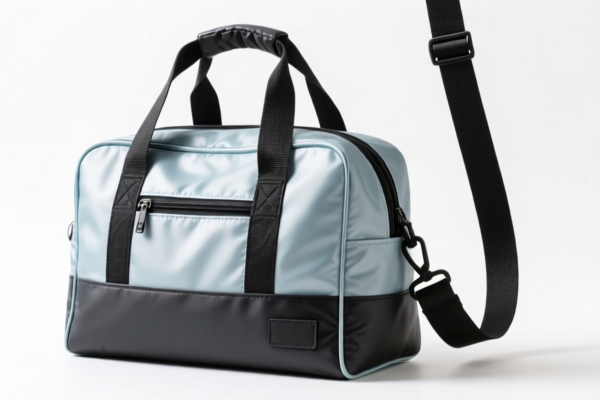
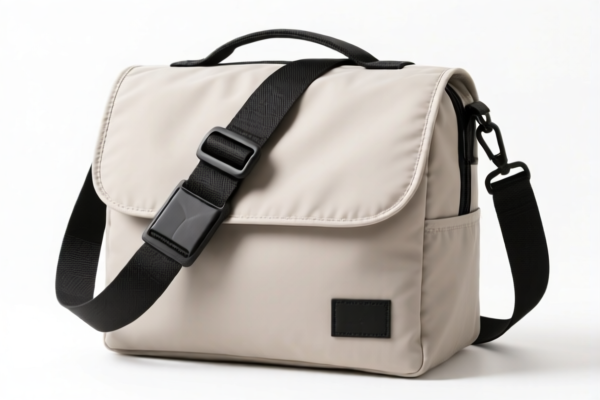
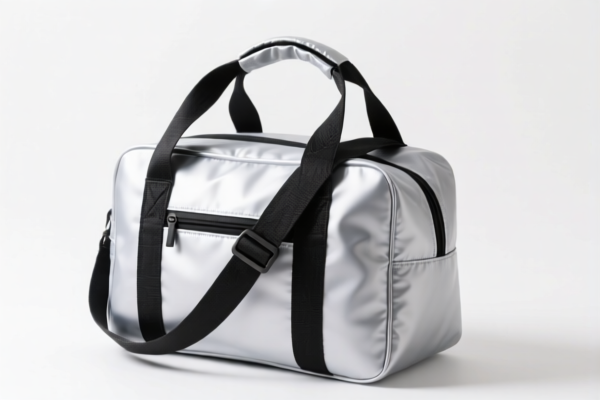
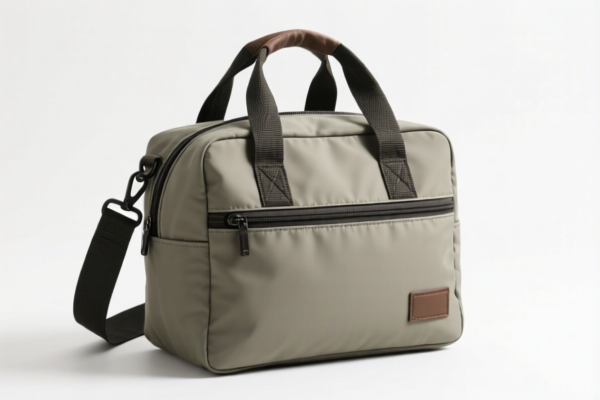
AI Analysis
🎒 Polyester Shoulder Lunch Bag
🌐 HS Code Reference & Customs Clearance Guide | 2026 Latest Tariff Analysis | Professional Customs Strategy
📌 I. Product Definition & Classification: Do You Really Understand "Lunch Bags"?
A Polyester Shoulder Lunch Bag is a portable container designed for storing food or beverages. In international trade, its classification is critical because it sits at the intersection of textiles and made-up articles. The key determinant is whether the bag is classified as a "bag of textiles" (Chapter 63) or a "container of leather/plastic/fabrics" (Chapter 42).
Two Main Classification Paths:
-
Textile-Based Classification (Chapter 63):
If the bag is made primarily of polyester (man-made textile material) and fits the general definition of a bag, it may fall under 6305 (Sacks and bags, for packaging of goods).- Sub-path A:
6305.39.00.00– Other sacks and bags, made of man-made textile materials. - Sub-path B:
6305.33.00.80– Other sacks and bags, made of man-made textile materials (specific variations).
- Sub-path A:
-
Finished Article Classification (Chapter 42):
If the bag is considered a finished consumer good with specific features (like insulation, structured shape, or specific lining) that distinguish it from generic packaging, it may fall under 4202 (Trunks, suitcases, vanity cases...).- Sub-path:
4202.92.08.09/4202.92.08.07– Bags with outer surface of plastic sheeting or of textile materials.
- Sub-path:
⚠️ Critical Distinction Point:
- If the bag is primarily for generic packaging or lacks specific "lunch bag" structural features → HS 6305 (Lower Base Duty).
- If the bag is a finished consumer product (e.g., insulated, branded, specific shape for personal use) → HS 4202 (Higher Base Duty, but potentially similar total due to different rates).
📦 II. HS Code Classification Details (2026 Latest Tariff Authority Comparison)
Based on the provided data, here are the four possible classifications for a Polyester Shoulder Lunch Bag:
| HS Code | Product Description | Applicability Scenario | Total Tax Rate |
|---|---|---|---|
4202.92.08.09 |
Polyester material lunch bag, fits food/beverage bag usage, finished consumer good | Finished lunch bag, insulated, branded, personal use | 42.0% |
6305.39.00.00 |
Polyester (man-made textile) lunch bag, fits bag definition | Generic polyester bag, simple design, textile-focused | 25.9% |
6305.33.00.80 |
Polyester material & bag form, fits man-made textile bag characteristics | Variations of textile bags, specific sub-category of 6305 | 25.9% |
4202.92.08.07 |
Polyester fiber lunch bag, artificial fiber material, meets classification req. | Finished article, artificial fiber focus, personal accessory | 42.0% |
🔍 Key Observation:
- HS 6305 Codes (6305.39.00.00,6305.33.00.80) have a lower total tax rate (25.9%) compared to HS 4202 Codes (4202.92.08.09,4202.92.08.07) which have a higher total tax rate (42.0%).
- The difference lies in the Base Duty: 8.4% (for 6305) vs. 7.0% (for 4202). However, the Total Tax is higher for 4202 due to the structure of the additional tariffs.
💰 III. 2026 Latest Tariff Rate Breakdown (Including Additional Tariffs)
✅ Applicable Country: United States (US)
✅ Origin: China (CN)
✅ Effective Date: 2025 November 10 onwards
🎯 1. HS Code 6305.39.00.00 & 6305.33.00.80 – Lower Total Tax (25.9%)
| Item | Content |
|---|---|
| Base Duty | 8.4% |
| Section 301 Additional Duty | +7.5% |
| Section 122 Duty (IEEPA) | +10.0% |
| Total Tax Rate | 25.9% |
| Tax Calculation | CIF Value × 25.9% |
| De Minimis Eligibility | ❌ Not Eligible (Due to Section 122/301) |
| Legal Basis Path | USITC:6305.39.00.00 → FOOTNOTE:301 → IEEPA:122 |
📌 Explanation:
- Base Duty (8.4%): Standard tariff for man-made textile bags.
- Section 301 (7.5%): Additional tariff on Chinese goods under Section 301 of the Trade Act.
- Section 122 (10%): Additional tariff under the International Emergency Economic Powers Act (IEEPA) targeting specific Chinese products.
- Total: 25.9% – This is the more favorable classification if the bag can be justified as a textile bag.
🎯 2. HS Code 4202.92.08.09 & 4202.92.08.07 – Higher Total Tax (42.0%)
| Item | Content |
|---|---|
| Base Duty | 7.0% |
| Section 301 Additional Duty | +25.0% |
| Section 122 Duty (IEEPA) | +10.0% |
| Total Tax Rate | 42.0% |
| Tax Calculation | CIF Value × 42.0% |
| De Minimis Eligibility | ❌ Not Eligible (Due to Section 122/301) |
| Legal Basis Path | USITC:4202.92.08.09 → FOOTNOTE:301 → IEEPA:122 |
📌 Explanation:
- Base Duty (7.0%): Slightly lower base duty than 6305, but...
- Section 301 (25.0%): Much higher additional tariff (25% vs 7.5%). This is the key driver.
- Section 122 (10%): Same 10% additional tariff.
- Total: 42.0% – This is the costly classification. It applies if the bag is classified as a "finished article" (Chapter 42) rather than a textile bag.⚠️ Key Insight:
Even though the base duty is lower for 4202 (7.0% vs 8.4%), the Section 301 tariff is significantly higher (25% vs 7.5%), resulting in a 16.1% higher total tax burden for the 4202 classification.
🛠️ IV. Customs Clearance Practical Advice (Real-World Pitfall Guide)
✅ 1. Preparation Checklist (Missing Items = Delays)
| Document | Required | Description |
|---|---|---|
| ✅ Product Specification Sheet | ✔️ | Material composition (e.g., 100% Polyester), dimensions, insulation status. |
| ✅ Product Photos | ✔️ | Clear images of the bag, including any labels, zippers, and interior lining. |
| ✅ Commercial Invoice | ✔️ | Must clearly state "Polyester Lunch Bag" or "Food Storage Bag". |
| ✅ Packing List | ✔️ | Number of units, gross weight, net weight. |
| ✅ Material Declaration | ✔️ | Confirm 100% polyester (man-made textile) to support HS 6305 classification. |
✅ 2. Classification Strategy (Key Tips)
🔥 "Textile Bag vs. Finished Article: Choose Wisely!"
| Scenario | Recommended HS Code | Reason |
|---|---|---|
| Simple Polyester Bag (No insulation, basic design) | 6305.39.00.00 or 6305.33.00.80 |
Fits "man-made textile bag" definition. Lower tax (25.9%). |
| Insulated/Branded Lunch Bag (High-end, structured) | 4202.92.08.09 or 4202.92.08.07 |
Considered a "finished article" or "personal accessory". Higher tax (42.0%). |
| Mixed Material Bag (Polyester + Leather Trim) | 4202.92.08.09 |
If leather is prominent, may fall under 4202. |
📌 Tip:
- To achieve the lower 25.9% rate, ensure the bag is described as a "textile bag for food storage" and provide evidence that it is made primarily of polyester textile material without significant non-textile components (like heavy plastic lining that dominates).
- If the bag is insulated, customs may argue it is a "finished article" (4202). In this case, consult a customs broker for a Pre-Ruling to confirm if 6305 still applies.
✅ 3. Special Cases
| Scenario | Handling Advice |
|---|---|
| OEM Branded Bags | Provide brand authorization letters. Classification depends on product features, not branding. |
| Insulated Bags | High risk of 4202 classification. Consider submitting a Binding Tariff Information (BTI) request or Advance Ruling to US CBP. |
| Gift Sets (Bag + Cutlery) | Classify the bag separately if declared separately. If bundled, the entire set may be classified as a gift set or the primary item (bag). |
🌍 V. Global Market Comparison (2026 Latest)
| Country/Region | Recommended HS Code | Duty Rate | Notes |
|---|---|---|---|
| 🇺🇸 USA | 6305.39.00.00 |
25.9% | Best option if eligible. |
| 🇺🇸 USA | 4202.92.08.09 |
42.0% | If classified as finished article. |
| 🇨🇳 China | 6305.39.00.00 |
~5% | Lower base duty, no Section 122/301. |
| 🇪🇺 EU | 6305.39.00.00 |
~6% | Standard textile duty. |
| 🇬🇧 UK | 6305.39.00.00 |
~6% | Post-Brexit tariffs. |
📌 Conclusion:
- USA is the most critical market due to the Section 301 and Section 122 tariffs.
- China, EU, UK do not impose these additional tariffs, so the base duty is the main cost.
- For USA imports, every percentage point matters. The 16.1% difference between 25.9% and 42.0% is significant.
📌 VI. Common Mistakes & Pitfalls (Lessons Learned)
❌ Mistake 1: Classifying a simple polyester bag as 4202 out of habit.
👉 Result: Paying 42.0% instead of 25.9%. Loss of profit margin.
❌ Mistake 2: Not declaring material composition clearly.
👉 Result: Customs may assign a higher duty rate due to uncertainty.
❌ Mistake 3: Ignoring Section 122 tariffs.
👉 Result: Unexpected 10% charge on top of existing tariffs.
✅ Correct Action:
"Classify as Textile Bag (6305) if possible to save 16.1%. Provide material proof. Always check for Section 301 & 122 applicability."
🎯 VII. Conclusion: Professional Classification, Cost Savings
🎯 Remember the Formula:
🔹 Textile Bag (6305) = 8.4% Base + 7.5% Sec 301 + 10% Sec 122 = 25.9%
🔹 Finished Article (4202) = 7.0% Base + 25% Sec 301 + 10% Sec 122 = 42.0%
🔹 Savings: 16.1% by choosing 6305.
📌 Pro Tip:
If your product is on the borderline, request a US Customs Border Protection (CBP) Advance Ruling. This provides legal certainty and prevents future audits.
✨ Professional Customs Clearance Starts with Accurate Classification!
💼 Your Bottom Line Depends on It!
Customer Reviews
About HS Code Classification
The Harmonized System (HS) is an internationally standardized nomenclature developed by the World Customs Organization (WCO) to classify traded products. Over 200 countries use the HS system as the basis for customs tariffs, trade statistics, and import/export regulations.
Each HS code follows a hierarchical structure:
- Chapter (2 digits) — Broad category of goods (e.g., Chapter 84: Machinery and Mechanical Appliances)
- Heading (4 digits) — More specific grouping within the chapter
- Subheading (6 digits) — Internationally standardized breakdown, used by all WCO member countries
- National subdivisions (8-10 digits) — Country-specific extensions for further classification, such as US HTSUS 10-digit codes
Correct HS code classification is essential for smooth customs clearance, accurate duty payment, and compliance with trade regulations. Misclassification can lead to customs delays, overpayment of duties, or penalties.
When importing from CN to US, the applicable tariff rates may include:
- Most-Favored-Nation (MFN) rate — The standard duty rate applied to WTO members
- General rate — Applied to countries without trade agreements
- Trade remedy duties — Additional tariffs such as Section 301 (anti-dumping), Section 232 (national security), or countervailing duties
The information provided on this page is for reference purposes only. For official classification, please consult with your local customs authority or a licensed customs broker.