Polyester Staple Fiber Multi strand Yarn
CN → US| HS Code | Tariff Rate | Origin | Destination | Doc |
|---|---|---|---|---|
| 5509220010 | 45.6% | CN | US | Official Doc |
| 5508200000 | 46.0% | CN | US | Official Doc |
| 5509220090 | 45.6% | CN | US | Official Doc |
| 5508100000 | 46.4% | CN | US | Official Doc |
| 5402336000 | 43.0% | CN | US | Official Doc |
Product Images
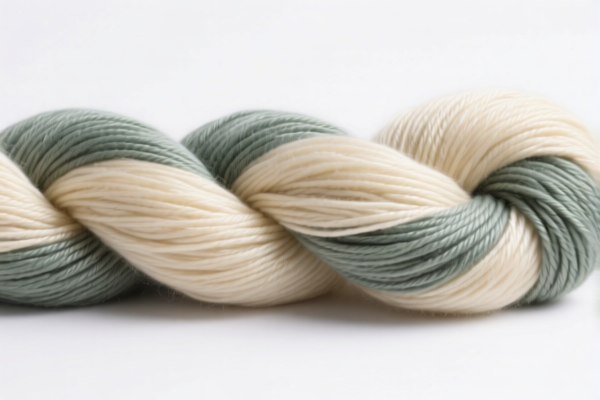
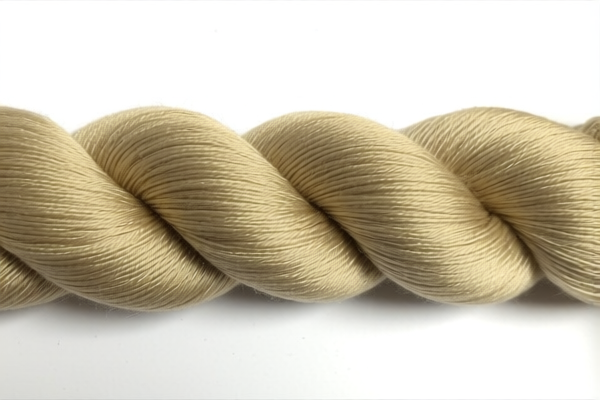
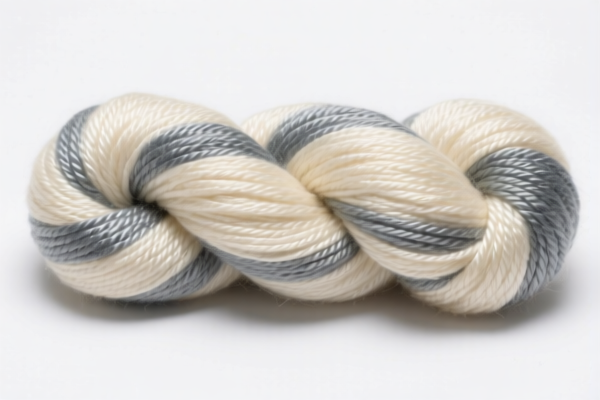
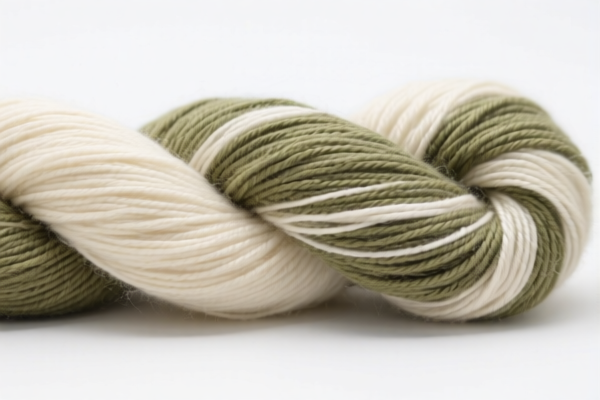
AI Analysis
🧵 Polyester Staple Fiber Multi-Strand Yarn
🌐 HS Code Reference & Customs Clearance Guide | 2026 Latest Tariff Analysis | Professional Clearance Strategy
📌 I. Product Definition & Classification: Do You Really Know "Polyester Staple Fiber Yarn"?
Polyester Staple Fiber Multi-Strand Yarn is a composite textile yarn used primarily in weaving, knitting, and sewing industries. In international trade, its classification depends strictly on two factors:
1. Fiber Type: Is it made from staple fibers (short cut fibers) or filament (continuous)?
2. Construction: Is it spun into single, plied (multi-strand), or cabled yarn?
⚠️ Key Distinction Point:
- If made from short polyester fibers spun into yarn → It belongs to Chapter 55 (Textile Fibers).
- If made from continuous filaments → It belongs to Chapter 54 (Man-Made Filaments).
- If specifically designed as sewing thread with specific construction → It may fall under 5508.
📦 II. HS Code Classification Details (Latest 2026 Tariff Reference)
Based on the provided data, here are the five most likely HS Codes for this product, along with their specific applicability and tax implications.
| HS Code | Product Description | Applicable Scenario | Primary Classification Logic |
|---|---|---|---|
5509.22.00.10 |
Polyester Staple Fiber Multi-Strand Yarn (≥85% Poly) | High-content polyester staple yarn, multi-ply, not specifically sewing thread | Staple Fiber Yarn (General Purpose) |
5508.20.00.00 |
Polyester Staple Fiber Multi-Strand Yarn (Sewing Thread Characteristics) | Yarn explicitly characterized as sewing thread | Sewing Thread (Specific Use) |
5509.22.00.90 |
Polyester Multi-Strand Yarn (Plaited/Braided, Not Z-twist Specific) | Plaited, braided, or cabled yarn, not fitting Z-twist special category | Other Man-Made Staple Fiber Yarn |
5508.10.00.00 |
Polyester Multi-Strand Yarn (Synthetic Staple Fiber) | General synthetic staple fiber multi-yarn, logical inference for broad category | Sewing Thread (General Synthetic) |
5402.33.60.00 |
Polyester Multi-Strand Yarn (Filament Based, Multi-Strand) | ERROR CHECK: If mistakenly classified as Filament (Chapter 54) instead of Staple (Chapter 55). Matches "fully consistent" if product is actually filament. | Filament Yarn (If Misclassified or Actually Filament) |
🔍 Critical Reminder:
- Staple vs. Filament: If your yarn is made from cut short fibers (like cotton-like polyester), it MUST go to Chapter 55 (5508 or 5509).
- Sewing Thread vs. Regular Yarn: If the yarn is specifically spun for sewing machines (high twist, specific strength), use 5508. If it is for weaving/knitting fabric, use 5509.
- Misclassification Risk: Using5402.33.60.00(Filament) for Staple Fiber yarn is a major error that leads to significant tax discrepancies and customs delays.
💰 III. 2026 Latest Tariff Rate Details (Including Surcharges & Policy Add-ons)
✅ Applicable Country: United States (US)
✅ Origin: China (CN)
✅ Effective Date: November 10, 2025 (and subsequent imports)
🎯 1. 5509.22.00.10 – Polyester Staple Fiber Multi-Strand Yarn (≥85% Poly)
| Item | Detail |
|---|---|
| Base Tariff | 10.6% |
| Section 301 Surcharge | +25.0% |
| 122 Provision Surcharge | +10.0% |
| Total Tax Rate | 45.6% |
| Tax Calculation | CIF Value × 45.6% |
| De Minimis Exemption | ❌ Not Eligible |
| Legal Path | Base Tariff → Section 301 → 122 Provision |
📌 Explanation:
- This code applies to high-content polyester staple yarns used in general textile manufacturing.
- The 45.6% total rate is substantial. It includes the standard US base tariff, the aggressive Section 301 tariff on Chinese goods, and the additional 122 provision surcharge.
🎯 2. 5508.20.00.00 – Polyester Staple Fiber Multi-Strand Yarn (Sewing Thread)
| Item | Detail |
|---|---|
| Base Tariff | 11.0% |
| Section 301 Surcharge | +25.0% |
| 122 Provision Surcharge | +10.0% |
| Total Tax Rate | 46.0% |
| Tax Calculation | CIF Value × 46.0% |
| De Minimis Exemption | ❌ Not Eligible |
| Legal Path | Base Tariff → Section 301 → 122 Provision |
📌 Note:
- Sewing threads often attract a slightly higher base tariff (11.0% vs. 10.6%) because they are considered a "finished" textile product ready for direct consumer/industrial use.
- Total tax: 46.0%, which is 0.4% higher than general staple yarn.
🎯 3. 5509.22.00.90 – Polyester Multi-Strand Yarn (Other, Not Z-twist)
| Item | Detail |
|---|---|
| Base Tariff | 10.6% |
| Section 301 Surcharge | +25.0% |
| 122 Provision Surcharge | +10.0% |
| Total Tax Rate | 45.6% |
| Tax Calculation | CIF Value × 45.6% |
| De Minimis Exemption | ❌ Not Eligible |
| Legal Path | Base Tariff → Section 301 → 122 Provision |
📌 Distinction:
- This code is for yarns that are plaited, braided, or cabled, but do not fall under specific Z-twist exclusions.
- Tax rate is identical to5509.22.00.10(45.6%).
🎯 4. 5508.10.00.00 – Polyester Multi-Strand Yarn (General Synthetic Staple)
| Item | Detail |
|---|---|
| Base Tariff | 11.4% |
| Section 301 Surcharge | +25.0% |
| 122 Provision Surcharge | +10.0% |
| Total Tax Rate | 46.4% |
| Tax Calculation | CIF Value × 46.4% |
| De Minimis Exemption | ❌ Not Eligible |
| Legal Path | Base Tariff → Section 301 → 122 Provision |
📌 Warning:
- This is the highest base tariff among the correct staple fiber options (11.4%).
- Total tax: 46.4%, the most expensive option for genuine staple fiber yarns.
- Use this only if the product firmly fits the "General Synthetic Staple" definition under 5508.10.
🎯 5. 5402.33.60.00 – Polyester Multi-Strand Yarn (Filament Based)
| Item | Detail |
|---|---|
| Base Tariff | 8.0% |
| Section 301 Surcharge | +25.0% |
| 122 Provision Surcharge | +10.0% |
| Total Tax Rate | 43.0% |
| Tax Calculation | CIF Value × 43.0% |
| De Minimis Exemption | ❌ Not Eligible |
| Legal Path | Base Tariff → Section 301 → 122 Provision |
⚠️ CRITICAL CAVEAT:
- This code has the lowest total tax (43.0%), BUT it applies only if your product is made from continuous filaments (Chapter 54), NOT staple fibers.
- If your product is truly "Staple Fiber" (short cuts), you CANNOT use this code. Misclassification as filament can lead to:
1. Audit penalties
2. Back taxes (difference between 43% and 45.6%-46.4%)
3. Seizure of goods
- Only use this if your product is explicitly Filament Yarn (smooth, continuous strands, like fishing line or satin fabric yarn).
🛠️ IV. Customs Clearance Practical Advice (Real-World Pitfall Guide)
✅ 1. Preparation Checklist (No Exceptions)
| Document | Required | Purpose |
|---|---|---|
| ✅ Product Specification Sheet | ✔️ | Must state: "Polyester Staple Fiber" vs. "Filament", Denier, Twist Direction (Z/S), Ply count. |
| ✅ Material Composition Proof | ✔️ | Lab test report confirming ≥85% Polyester content. |
| ✅ Product Photos | ✔️ | Close-up of fiber cross-section (staple = jagged, filament = smooth/round). |
| ✅ Commercial Invoice | ✔️ | Clearly describe as "Polyester Staple Fiber Multi-Strand Yarn", NOT just "Yarn". |
| ✅ Packing List | ✔️ | Weight, dimensions, number of spools/bobbins. |
✅ 2. Declaration Tips (Key Mantra)
🔥 "Staple vs. Filament is Life or Death! Z-twist matters, Sewing vs. Weaving defines the code!"
| Scenario | Correct HS Code | Wrong Code | Consequence |
|---|---|---|---|
| Staple Fiber, for Weaving | 5509.22.00.10 or 90 (45.6%) |
5402.33.60.00 |
Underpayment: Customs will assess back taxes + penalty. |
| Staple Fiber, for Sewing | 5508.20.00.00 (46.0%) |
5509.22.00.10 |
Overpayment: You paid 0.4% more than necessary. |
| Filament Yarn | 5402.33.60.00 (43.0%) |
5509.22.00.10 |
Misclassification: High risk of audit. |
| Generic "Polyester Yarn" | DO NOT USE | 5509... or 5402... |
Ambiguity: Customs will choose the highest duty or detain goods. |
✅ 3. Special Case Handling
| Situation | Recommendation |
|---|---|
| Z-Twist vs. S-Twist | If Z-twist is a key feature, check if a specific sub-code exists. If not, use 5509.22.00.90. |
| Blended Yarn (e.g., 80% Poly, 20% Cotton) | If staple fiber content is dominant, still likely 5509. But composition must be precise. |
| OEM Custom Yarn | Provide customer design specs. If it’s a "sewing thread" for a specific machine, use 5508. |
| Small Samples (De Minimis) | ❌ No Exemption. All rates above exclude de minimis. Even $100 shipment pays full tax. |
🌍 V. Global Market Comparison (2026 Update)
| Country/Region | Recommended HS Code | Estimated Tariff | Key Certification | Notes |
|---|---|---|---|---|
| 🇺🇸 USA | 5509.22.00.10 / 5508.20.00.00 |
45.6% - 46.4% | No special cert | Highest tariffs due to Section 301 + 122. |
| 🇨🇳 China (Import) | 5509.22.00.00 |
~10-15% | N/A | Lower base rates, no surcharges. |
| 🇪🇺 EU | 5509.42.00 / 5508.20 |
~8-10% | REACH | No Section 301 equivalent, but CE/RoHS may apply. |
| 🇬🇧 UK | 5509.22.00 |
~10% | N/A | Post-Brexit, similar to EU but no trade deal advantages for China. |
| 🇻🇳 Vietnam (Origin Shift) | 5509.22.00 |
0-5% (if qualified) | Certificate of Origin | Strategy: Process yarn in Vietnam to avoid US tariffs. |
📌 Conclusion:
- USA is the most expensive market due to layered tariffs.
- Tariff Engineering: If your product can be technically classified as Filament (5402...), you save 2.6%-3.4%. But do NOT lie.
- Supply Chain Shift: Many exporters now source from Vietnam, India, or Bangladesh to avoid Chinese-origin surcharges.
📌 VI. Common Errors & Pitfalls (Blood & Tears Lessons)
❌ Error 1: Labeling "Staple Fiber Yarn" as "Filament Yarn" to get 43% tax
👉 Result: Customs lab test shows staple cross-section → Fine + Back Taxes + Blacklist.
❌ Error 2: Using "Sewing Thread" code (5508) for weaving yarn
👉 Result: Overpaying 0.4%-0.8% on high-volume shipments. Small error, huge cumulative cost.
❌ Error 3: Ignoring the "122 Provision"
👉 Result: Forgetting to declare the 10% surcharge leads to payment failure at border.
❌ Error 4: Vague Description "Polyester Yarn"
👉 Result: Customs officer chooses the highest possible duty code. Always be specific.
✅ Correct Declaration Example:
"Polyester Staple Fiber Multi-Strand Yarn, 100% Polyester, 50s/2, Z-twist, for weaving, Model XYZ, Made in China"
🎯 VII. Conclusion: Precision is Profit
🎯 Remember:
🔹 "Staple goes to 55, Filament goes to 54."
🔹 "Sewing thread is 5508, Weaving yarn is 5509."
🔹 "US Tariffs are 45%+, Plan your price accordingly."
🔹 "One wrong digit = Thousands of dollars in penalties."
📌 Pro Tip:
If your volume is high, consider Advance Ruling with US Customs. Get a pre-determined HS code for your specific product to avoid disputes later.
📣 Immediate Action:
📞 Verify your fiber type: Staple or Filament?
📞 Determine your use: Sewing or Weaving?
🚀 Choose the correct HS Code: Don’t guess, calculate.
✨ Professional clearance starts with accurate classification!
💼 Every percentage point saved is pure profit!
Customer Reviews
About HS Code Classification
The Harmonized System (HS) is an internationally standardized nomenclature developed by the World Customs Organization (WCO) to classify traded products. Over 200 countries use the HS system as the basis for customs tariffs, trade statistics, and import/export regulations.
Each HS code follows a hierarchical structure:
- Chapter (2 digits) — Broad category of goods (e.g., Chapter 84: Machinery and Mechanical Appliances)
- Heading (4 digits) — More specific grouping within the chapter
- Subheading (6 digits) — Internationally standardized breakdown, used by all WCO member countries
- National subdivisions (8-10 digits) — Country-specific extensions for further classification, such as US HTSUS 10-digit codes
Correct HS code classification is essential for smooth customs clearance, accurate duty payment, and compliance with trade regulations. Misclassification can lead to customs delays, overpayment of duties, or penalties.
When importing from CN to US, the applicable tariff rates may include:
- Most-Favored-Nation (MFN) rate — The standard duty rate applied to WTO members
- General rate — Applied to countries without trade agreements
- Trade remedy duties — Additional tariffs such as Section 301 (anti-dumping), Section 232 (national security), or countervailing duties
The information provided on this page is for reference purposes only. For official classification, please consult with your local customs authority or a licensed customs broker.