Polyester Tear Resistant Backpack
CN → USProduct Images
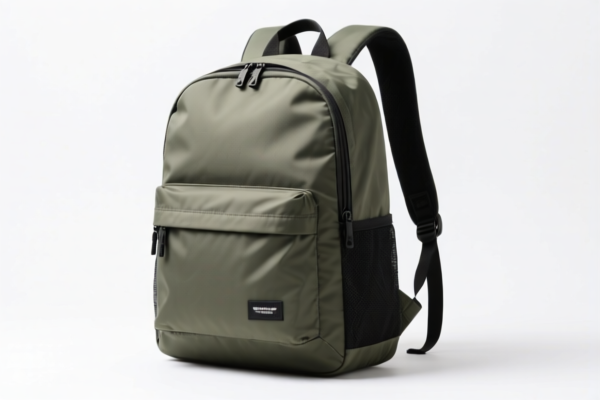
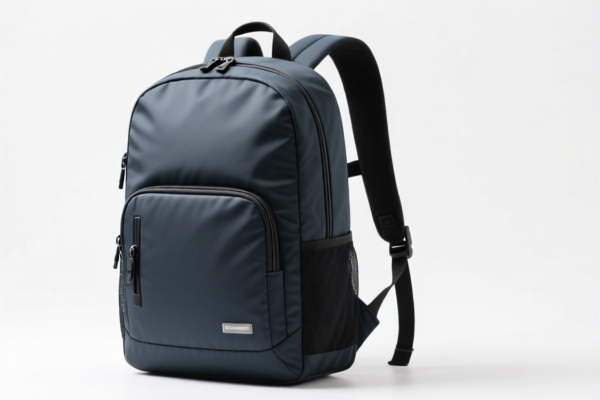
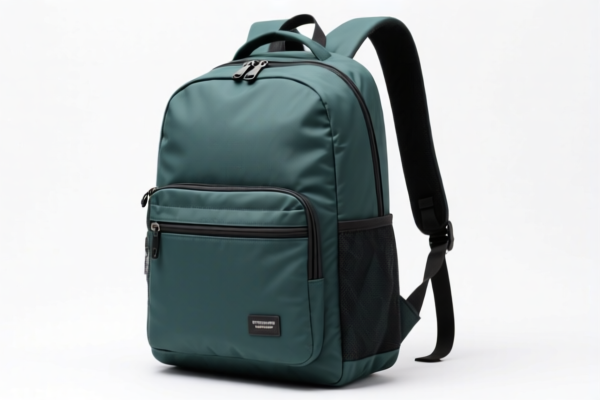
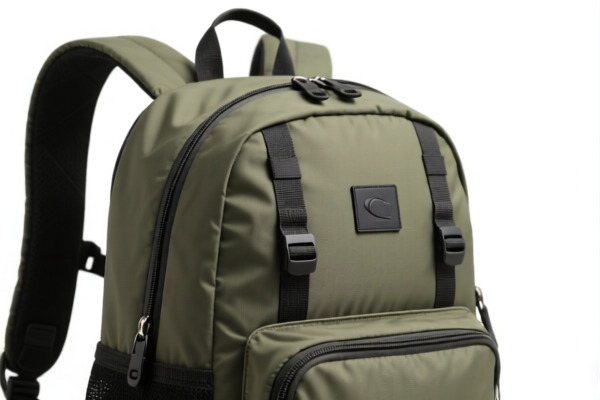
AI Analysis
🎒 Polyester Tear Resistant Backpack (Heavy-Duty Travel & Tactical Gear)
🌐 HS Code Reference & Customs Clearance Guide | 2026 Latest Tariff Analysis | Professional Clearance Strategy
📌 I. Product Definition & Classification: Do You Really Understand "Tear-Resistant Backpacks"?
A Polyester Tear Resistant Backpack is not just a simple bag; it is a specialized carrier designed for durability, often used in outdoor activities, military/tactical operations, or heavy-load commuting. In international trade, classification depends heavily on material composition, specific use, and structural features.
Key Distinctions: * Travel/Luggage Backpacks: Designed primarily for carrying clothes/documents for travel. Often falls under Heading 4202. * Technical/Tactical Backpacks: Designed for gear, equipment, or survival kits. May also fall under 4202 but with specific material notes. * Fashion/General Purpose: Simple polyester bags without complex luggage structures.
⚠️ Critical Classification Point:
- If the backpack is shaped for travel/luggage (rigid or semi-rigid frame, wheels, or specific luggage configuration) → 4202.92 / 4202.12
- If it is a simple carrier (soft, no luggage features) → 4202.92
- Material Matters: "Polyester" implies synthetic textile outer surface.
📦 II. HS Code Classification Details (2026 Latest Tariff Authority Comparison)
| HS Code | Product Description | Application Scenario | Outer Material | Luggage Features? |
|---|---|---|---|---|
4202.12.00.00 |
Travel bags, suitcases, vanity cases, etc. (with outer surface of textiles) | Premium travel backpacks, brand-name luggage | Polyester/Textile | ✅ Yes (Luggage type) |
4202.92.00.00 |
Articles of apparel and clothing accessories, n.e.s.; backpacks, handbags, etc. (with outer surface of textile materials) | General purpose, hiking, school, tactical, casual backpacks | Polyester/Textile | ❌ No (General carrier) |
4202.92.00.00 (Sub-type) |
Backpacks, n.e.s. (Polyester) | Most common "Tear Resistant" backpacks in commerce | Polyester | ❌ No |
6307.90.98.00 |
Other made-up articles (rarely applicable unless non-woven/unusual) | Non-standard, non-textile reinforced items | Non-standard | N/A |
🔍 Key Reminder:
- Most "Polyester Tear Resistant Backpacks" fall under4202.92.00.00because they are generally considered "backpacks" rather than "travel luggage" unless they have specific rigid frames or wheels. - Do NOT classify under Chapter 39 (Plastics) just because it's "tear-resistant." The primary material is polyester fabric, not plastic sheeting. - Do NOT classify under Chapter 63 unless it's a non-woven bag or a specific technical article not covered by Ch 42.
💰 III. 2026 Latest Tariff Rate Details (Including Additional Duties & Policy Add-ons)
✅ Applicable Country: United States (US)
✅ Country of Origin: China (CN)
✅ Effective Date: From November 10, 2025 (including subsequent imports)
🎯 1. 4202.92.00.00 —— Backpacks (Polyester/Textile Outer Surface)
| Item | Content |
|---|---|
| Base Tariff Rate | 0% (ad valorem) |
| USITC Additional Duty | +25% (from USITC Footnote 9903.88.01) |
| IEEPA Additional Duty | +10% (for China/HK products, from Nov 10, 2025) |
| Total Rate | 35% |
| Tax Calculation | CIF Value × 35% |
| De Minimis Eligibility | ❌ Not Eligible (deny_de_minimis) |
| Legal Basis Path | IEEPA:9903.01.25 → IEEPA:9903.01.24 → USITC:4202.92.00.00 → FOOTNOTE:9903.88.01 |
📌 Explanation:
- The 25% USITC tariff is part of Section 301 tariffs on specific goods from China, including textile bags. - The 10% IEEPA tariff is the new surcharge under the International Emergency Economic Powers Act targeting Chinese goods. - Total 35% is significantly high. This impacts profit margins for low-cost backpacks.
🎯 2. 4202.12.00.00 —— Travel Bags (Polyester/Textile)
| Item | Content |
|---|---|
| Base Tariff Rate | 0% |
| USITC Additional Duty | +25% |
| IEEPA Additional Duty | +10% |
| Total Rate | 35% |
| Tax Calculation | CIF × 35% |
| De Minimis Eligibility | ❌ Not Eligible |
| Legal Basis Path | Same as above |
📌 Note:
- Even if classified as "travel luggage," the tariff burden remains 35% for Chinese-origin polyester bags. - No tariff advantage for "high-end" vs. "standard" polyester backpacks in this category.
🛠️ IV. Customs Clearance Practical Advice (Battle-Tested Pitfall Avoidance Guide)
✅ 1. Required Documentation Checklist (No Exceptions)
| Document | Must Provide | Explanation |
|---|---|---|
| ✅ Product Specification Sheet | ✔️ | Include material composition (e.g., "100% Polyester Oxford Cloth"), dimensions, weight, capacity (Liters). |
| ✅ Photos (Clear & Detailed) | ✔️ | Show front, back, inside, zipper tags, and label. Highlight "Tear Resistant" if it's a key marketing feature. |
| ✅ Commercial Invoice | ✔️ | Must state: "Backpack, Polyester, Outer Surface Textile, HS 4202.92.00.00". |
| ✅ Packing List | ✔️ | Confirm no rigid frames/wheels if declaring as 4202.92. |
| ✅ Certificate of Origin (CO) | ✔️ | To prove origin (China). If from Vietnam/Mexico, may qualify for IEEPA exemption. |
✅ 2. Declaration Tips (Key Mantra)
🔥 “Material First, Use Second, Name Precise, Tariff Stable!”
| Scenario | Correct Declaration | Wrong Approach |
|---|---|---|
| Standard Polyester Backpack | 4202.92.00.00 |
Misdeclare as "Plastic Bag" → 35% + Penalty |
| Backpack with Wheels/Rigid Frame | 4202.12.00.00 |
Misdeclare as 4202.92 → No big difference, but accuracy matters |
| Non-Woven Polypropylene Bag | 4202.92 or 6307? |
❌ Don't guess! Check material. PP non-woven may still be 4202.92. |
| "Tear Resistant" Marketing Term | Do Not Declare | Use factual material: "Reinforced Polyester". Avoid vague terms. |
✅ 3. Special Situation Handling
| Situation | Handling Advice |
|---|---|
| OEM Custom Backpacks | Provide design drawings + material specs. Avoid "generic" descriptions. |
| Backpack with Metal Frames | If the frame is structural and makes it a "luggage" type, consider 4202.12. |
| Eco-Friendly Recycled Polyester | Still 4202.92.00.00. No tariff benefit unless origin changes. |
| Backpacks for Children | Same HS code. No tariff difference. |
🌍 V. Global Market Comparison (2026 Latest)
| Country/Region | Recommended HS Code | Tariff | Certification | Notes |
|---|---|---|---|---|
| 🇺🇸 USA | 4202.92.00.00 |
35% (China) | CPC (Children), CPSIA | High cost due to IEEPA+301 |
| 🇨🇳 China | 4202.92.00.00 |
5% | None | Import duty low |
| 🇪🇺 EU | 4202.92.00.00 |
4.5% | CE (if electronic) | No major political tariffs |
| 🇦🇺 Australia | 4202.92.00.00 |
5% | ACCC | Stable rates |
| 🇯🇵 Japan | 4202.92.00.00 |
9.5% | PSE (if electronics) | No political tariffs |
📌 Conclusion:
- USA is the most expensive market for Chinese polyester backpacks due to the 35% combined tariff. - EU and Asia remain preferred markets for cost efficiency. - Strategy: Consider near-shoring (Vietnam, Mexico, Bangladesh) to avoid IEEPA/Section 301 tariffs.
📌 VI. Common Mistakes & Pitfall Guide (Blood-Teaching Lessons)
❌ Mistake 1: Declaring as "Plastic Bag" (HS 3923)
👉 Consequence: Wrong classification → 35% tariff + penalty + delay.
❌ Mistake 2: Ignoring "Tear Resistant" as a material property
👉 Consequence: If it's a technical feature, provide a material test report to justify "Polyester" vs. "Nylon".
❌ Mistake 3: Using "Travel Bag" for non-luggage backpacks
👉 Consequence: No tariff benefit, but may trigger additional scrutiny for 4202.12.
✅ Correct Practice:
"Backpack, Polyester, Outer Surface: Textile, Inner Lining: Polyester, No Wheels, No Rigid Frame, Model XYZ"
🎯 VII. Conclusion: Professional Declaration, Time-Saving, Cost-Effective!
🎯 Remember the Mantra:
🔹 "Polyester Backpack = 4202.92.00.00"
🔹 "USA Tariff = 35% (China Origin)"
🔹 "No Wheels = Not Luggage, Just Backpack"
📌 Pro Tip:
If your backpacks are originally produced in Vietnam, Bangladesh, India, or Mexico, you may exempt IEEPA 10% tariff, reducing the rate to 25% (USITC only).
Recommend Advance Ruling or Pre-shipment Verification to avoid customs holds.
📣 Immediate Action:
📞 Contact a professional customs broker + Provide material specs + Apply for HS Code Pre-ruling
🚀 Let your backpacks clear customs smoothly, maximize profits, and expand globally!
✨ Professional Customs Clearance Starts with Accurate Classification!
💼 Every cent of your cost deserves precise calculation!
Customer Reviews
About HS Code Classification
The Harmonized System (HS) is an internationally standardized nomenclature developed by the World Customs Organization (WCO) to classify traded products. Over 200 countries use the HS system as the basis for customs tariffs, trade statistics, and import/export regulations.
Each HS code follows a hierarchical structure:
- Chapter (2 digits) — Broad category of goods (e.g., Chapter 84: Machinery and Mechanical Appliances)
- Heading (4 digits) — More specific grouping within the chapter
- Subheading (6 digits) — Internationally standardized breakdown, used by all WCO member countries
- National subdivisions (8-10 digits) — Country-specific extensions for further classification, such as US HTSUS 10-digit codes
Correct HS code classification is essential for smooth customs clearance, accurate duty payment, and compliance with trade regulations. Misclassification can lead to customs delays, overpayment of duties, or penalties.
When importing from CN to US, the applicable tariff rates may include:
- Most-Favored-Nation (MFN) rate — The standard duty rate applied to WTO members
- General rate — Applied to countries without trade agreements
- Trade remedy duties — Additional tariffs such as Section 301 (anti-dumping), Section 232 (national security), or countervailing duties
The information provided on this page is for reference purposes only. For official classification, please consult with your local customs authority or a licensed customs broker.