Polyester Transparent Foil
CN → US| HS Code | Tariff Rate | Origin | Destination | Doc |
|---|---|---|---|---|
| 3926909989 | 22.8% | CN | US | Official Doc |
| 3920100000 | 39.2% | CN | US | Official Doc |
| 3919102040 | 40.8% | CN | US | Official Doc |
| 3926909400 | 35.0% | CN | US | Official Doc |
| 3920992000 | 39.2% | CN | US | Official Doc |
Product Images
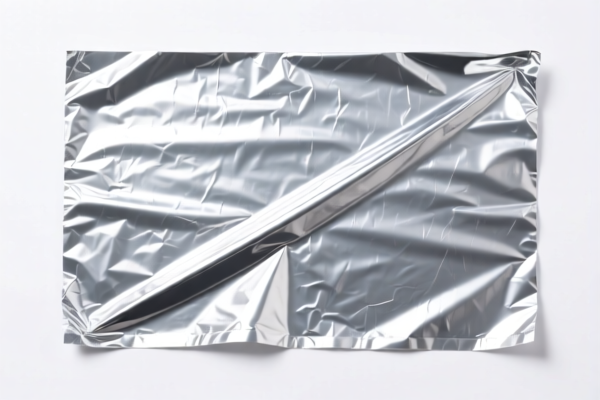
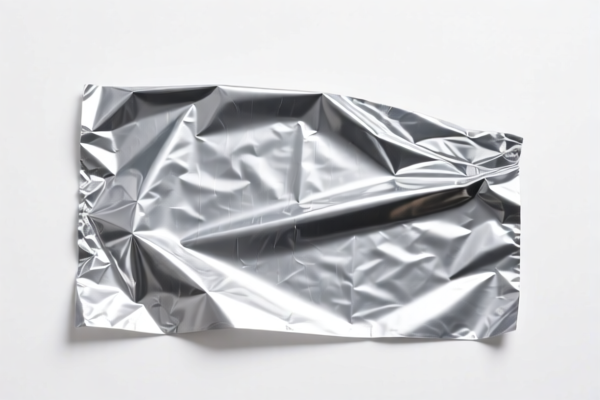
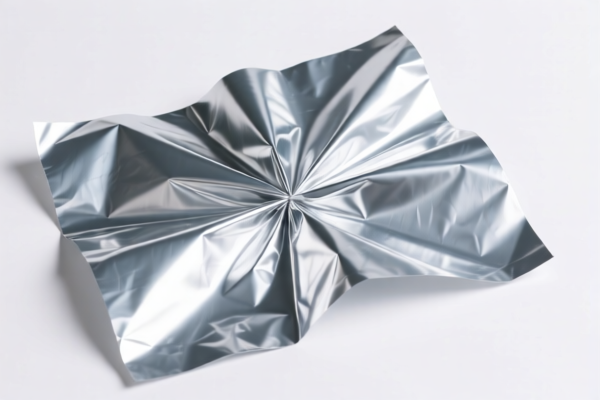

AI Analysis
🧪 Polyester Transparent Foil (PET Film)
🌐 HS Code Reference & Customs Clearance Guide | 2026 Latest Tariff Analysis | Professional Clearance Strategy
📌 I. Product Definition & Classification: What is "Polyester Transparent Foil"?
Polyester Transparent Foil, typically made from Polyethylene Terephthalate (PET), is a versatile plastic film used in packaging, electronics, insulation, and industrial applications. In international trade, its classification hinges on two key factors: 1. Material: Polyester (Polyethylene) falls under Chapter 39 (Plastics and Articles Thereof). 2. Form/Feature: Is it a self-adhesive roll (3919), a plain unprinted sheet/film (3920), or a general plastic article (3926)?
⚠️ Key Distinction Point:
- If the film is self-adhesive (has an adhesive coating on one or both sides) → It likely falls under 3919.10.
- If the film is plain, unprinted, non-adhesive (basic flat film) → It likely falls under 3920.10 (Polyethylene-based) or 3920.69 (if other plastics, but PET is often grouped here or under 3920.90 depending on specific polymer classification nuances in local tariffs). Note: The provided data assumes "Polyethylene" material classification for the purpose of these codes.
- If it is a finished accessory not primarily defined by its sheet form (e.g., a specific gasket or part) → It might fall under 3926.90.
📦 II. HS Code Classification Details (2026 Latest Tariff Authority Comparison)
| HS Code | Product Description | Application Scenario | Adhesive/Printed Status |
|---|---|---|---|
3926.90.99.89 |
Other articles of plastics and articles of other materials of heading 39.01 to 39.14 | General plastic accessories, parts, or items not specified elsewhere | ❓ General Article |
3920.10.00.00 |
Other plates, sheets, film, foil and strip, of polymers of ethylene | Plain PET/Polyethylene film, unprinted, non-adhesive | ❌ No Adhesive |
3919.10.20.40 |
Self-adhesive plates, sheets, film, foil, tape, strip and other flat shapes, of plastics, in rolls of a width exceeding 20 cm | Self-adhesive polyester film (e.g., labels, tapes) | ✅ Self-Adhesive |
3926.90.94.00 |
Other articles of plastics... (specific sub-category for thin sheets/films) | Specific plastic sheets or films not covered elsewhere | ❓ Specific Form |
3920.99.20.00 |
Other plates, sheets, film, foil and strip, of plastics... | Non-cellular, non-reinforced flexible plastic films/sheets | ❌ No Adhesive |
🔍 Crucial Reminder:
- 3920.10.00.00 is the most standard code for plain polyester/polyethylene films used in packaging or insulation.
- 3919.10.20.40 applies ONLY if the product is self-adhesive. Misdeclaring adhesive film as non-adhesive can lead to severe penalties.
- 3926.90 codes are "catch-all" categories for plastic articles that don't fit the specific definitions of Chapters 39.01–39.14 headings for sheets/films. They are less precise for raw films.
💰 III. 2026 Latest Tariff Rate Breakdown (Including Surcharges & Policy Add-ons)
✅ Applicable Country: United States (US)
✅ Origin: China (CN)
✅ Effective Time: From November 10, 2025 (including subsequent imports)
🎯 1. 3926.90.99.89 — Other Plastic Articles (General)
| Item | Content |
|---|---|
| Basic Duty Rate | 5.3% (ad valorem) |
| USITC Surcharge (Section 301) | +7.5% |
| 122 Clause Surcharge | +10% |
| Total Rate | 22.8% |
| Tax Calculation | CIF Value × 22.8% |
| De Minimis Eligibility | ❌ No (Subject to high tariffs) |
| Legal Path | Basic: 5.3% → 301: 7.5% → 122: 10% |
📌 Explanation:
- This code carries the lowest total tariff (22.8%) among the options provided, but it is a "residual" category.
- Use only if the product does not strictly fit the "film/plate" definitions of 3920 or "self-adhesive" of 3919.
- Risk: Customs may reclassify to 3920.10 if it is clearly a plain film, leading to a higher tax (39.2%).
🎯 2. 3920.10.00.00 — Plates, Sheets, Film, Foil of Polymers of Ethylene
| Item | Content |
|---|---|
| Basic Duty Rate | 4.2% |
| USITC Surcharge (Section 301) | +25.0% |
| 122 Clause Surcharge | +10% |
| Total Rate | 39.2% |
| Tax Calculation | CIF Value × 39.2% |
| De Minimis Eligibility | ❌ No |
| Legal Path | Basic: 4.2% → 301: 25.0% → 122: 10% |
📌 Explanation:
- This is the most accurate code for plain polyester/polyethylene film.
- Despite a lower basic rate (4.2%), the 25% Section 301 surcharge drives the total to 39.2%.
- Advantage: High classification accuracy reduces audit risk.
🎯 3. 3919.10.20.40 — Self-Adhesive Plastic Films/Rolls
| Item | Content |
|---|---|
| Basic Duty Rate | 5.8% |
| USITC Surcharge (Section 301) | +25.0% |
| 122 Clause Surcharge | +10% |
| Total Rate | 40.8% |
| Tax Calculation | CIF Value × 40.8% |
| De Minimis Eligibility | ❌ No |
| Legal Path | Basic: 5.8% → 301: 25.0% → 122: 10% |
📌 Explanation:
- Apply ONLY if the polyester foil has an adhesive backing.
- If declared as non-adhesive but found to be adhesive, this leads to false declaration penalties.
- Total rate is the highest (40.8%) among the options.
🎯 4. 3926.90.94.00 — Other Plastic Articles (Specific Sub-category)
| Item | Content |
|---|---|
| Basic Duty Rate | 0.0% |
| USITC Surcharge (Section 301) | +25.0% |
| 122 Clause Surcharge | +10% |
| Total Rate | 35.0% |
| Tax Calculation | CIF Value × 35.0% |
| De Minimis Eligibility | ❌ No |
| Legal Path | Basic: 0.0% → 301: 25.0% → 122: 10% |
📌 Explanation:
- Attractive 0% basic rate, but the 25% surcharge still applies.
- Total rate 35.0% is lower than3920.10(39.2%).
- Strategy: If the product can be legally justified as a "plastic article" rather than a "sheet/film," this offers savings. However, misclassification risk is high.
🎯 5. 3920.99.20.00 — Other Plates, Sheets, Film of Plastics
| Item | Content |
|---|---|
| Basic Duty Rate | 4.2% |
| USITC Surcharge (Section 301) | +25.0% |
| 122 Clause Surcharge | +10% |
| Total Rate | 39.2% |
| Tax Calculation | CIF Value × 39.2% |
| De Minimis Eligibility | ❌ No |
| Legal Path | Basic: 4.2% → 301: 25.0% → 122: 10% |
📌 Explanation:
- Similar to3920.10.00.00but for "other" plastics (if PET is classified here in this specific tariff schedule).
- Total rate 39.2%, same as3920.10.
- Use if3920.10is deemed too specific to "ethylene polymers" only and the product contains other plastic components.
🛠️ IV. Customs Clearance Practical Advice (Real-World Pitfall Avoidance)
✅ 1. Required Documentation Checklist (Non-Negotiable)
| Document | Required | Description |
|---|---|---|
| ✅ Product Specification Sheet | ✔️ | Material composition (100% PET?), thickness, width, roll length. |
| ✅ Physical Photos | ✔️ | Show surface (glossy/matte), edges, and any adhesive backing. |
| ✅ Commercial Invoice | ✔️ | Clearly state "Polyester Film, Non-Adhesive" OR "Self-Adhesive Polyester Film". |
| ✅ Packing List | ✔️ | Detail roll dimensions and core type. |
| ✅ Certificate of Origin | ✔️ | Essential for proving Chinese origin to apply surcharges. |
| ✅ MSDS / SDS | ✔️ | Although plastic, some facilities require safety data. |
✅ 2. Declaration Tips (Key Mantra)
🔥 "Adhesive Check, Film Form, Correct Chapter 39!"
| Scenario | Correct Declaration | Error Consequence |
|---|---|---|
| Plain PET Film (No glue) | 3920.10.00.00 or 3920.99.20.00 |
Misclassifying as 3919 (Adhesive) → 40.8% Tax + Penalty |
| Self-Adhesive Foil | 3919.10.20.40 |
Misclassifying as 3920 (Plain) → Audit Flag for Undeclared Adhesive |
| General Plastic Sheet/Part | 3926.90.99.89 |
Overusing 3926 for simple film → Reclassification to 3920 (Higher Tax) |
| Specific Plastic Accessory | 3926.90.94.00 |
Using for raw film → Disallowed if film definition fits better |
✅ 3. Special Case Handling
| Situation | Handling Suggestion |
|---|---|
| Laminated Film | If PET is bonded to another material, it may no longer be "pure plastic" and could fall under a different chapter. |
| Coated Film | If coated with functional layers (e.g., anti-static, conductive), ensure the primary function is still plastic film. |
| OEM Custom Size | Provide roll dimensions. Width > 20cm usually triggers the roll-specific headings (3919/3920). |
| Sample vs. Bulk | Ensure sample declaration matches bulk in material description to avoid discrepancies. |
🌍 V. Global Market Clearance Comparison (2026 Latest)
| Country/Region | Recommended HS Code | Tariff (China Origin) | Certification | Note |
|---|---|---|---|---|
| 🇺🇸 USA | 3920.10.00.00 |
39.2% | No specific | High tariff due to 301 & 122 clauses |
| 🇨🇳 China | 3920.10.00.00 |
~5% | No specific | Lower tariff for domestic/export |
| 🇪🇺 EU | 3920.10.00.00 |
~5-6% | REACH + RoHS | Standard plastic film duties |
| 🇬🇧 UK | 3920.10.00.00 |
~5-6% | UKCA | Post-Brexit alignment with EU trends |
| 🇯🇵 Japan | 3920.10.00.00 |
~6-7% | PSE (if electronic) | No high surcharges like US |
📌 Conclusion:
- The USA has the highest effective tariff (39.2%) for plain polyester film due to multiple surcharges.
- 3926.90.99.89 (22.8%) might seem cheaper, but risk of misclassification is significant. Only use if the product is truly a "plastic article" and not a standard film.
- 3919.10.20.40 (40.8%) is only for adhesive products.
📌 VI. Common Errors & Pitfall Guide (Lessons from Experience)
❌ Error 1: Declaring "Self-Adhesive Foil" as "Plain Film" (3920)
👉 Result: Customs detects adhesive residue → Reclassification to 3919 → Pay difference + Penalty for False Declaration.
❌ Error 2: Using 3926.90 for standard packaging film
👉 Result: Customs insists on 3920.10 → Back-tariff payment of ~16% (39.2% - 22.8%) + Delay.
❌ Error 3: Ignoring "122 Clause" Surcharge
👉 Result: Budgeting only for 301 (25%) → Unexpected 10% extra cost → Profit margin erosion.
❌ Error 4: Ambiguous Product Name ("Plastic Sheet")
👉 Result: Customs officer uses discretion → Likely picks highest tariff category (3919 or 3920) → Unpredictable costs.
✅ Correct Practice:
"Polyester (PET) Transparent Film, Non-Adhesive, Unprinted, Rolls, Width 100cm, Thickness 50mic"
OR
"Self-Adhesive Polyester Film Label Stock, Roll, 120cm Width"
🎯 VII. Conclusion: Precision in Classification Saves Money!
🎯 Remember the Mantra:
🔹 "Plain Film = 3920 (39.2%),
🔹 "Adhesive = 3919 (40.8%),
🔹 "General Part = 3926 (22.8%-35%),
🔹 "Wrong Code = Fine + Delay!"
📌 Pro Tip:
If the product is plain PET film, stick to 3920.10.00.00 for safety. The 39.2% tax is predictable. Avoid 3926 unless you have strong justification from a customs broker.
For adhesive products, 3919.10.20.40 is mandatory.
📣 Immediate Action:
📞 Consult a licensed US customs broker for Pre-Ruling if unsure about adhesive status.
📄 Ensure your invoice explicitly states "Non-Adhesive" or "Self-Adhesive" to avoid ambiguity.
🚀 Accurate HS Code = Predictable Cost = Smooth Clearance!
✨ Professional Customs Clearance Starts with Accurate Classification!
💼 Every percentage point matters in the age of high tariffs!
Customer Reviews
About HS Code Classification
The Harmonized System (HS) is an internationally standardized nomenclature developed by the World Customs Organization (WCO) to classify traded products. Over 200 countries use the HS system as the basis for customs tariffs, trade statistics, and import/export regulations.
Each HS code follows a hierarchical structure:
- Chapter (2 digits) — Broad category of goods (e.g., Chapter 84: Machinery and Mechanical Appliances)
- Heading (4 digits) — More specific grouping within the chapter
- Subheading (6 digits) — Internationally standardized breakdown, used by all WCO member countries
- National subdivisions (8-10 digits) — Country-specific extensions for further classification, such as US HTSUS 10-digit codes
Correct HS code classification is essential for smooth customs clearance, accurate duty payment, and compliance with trade regulations. Misclassification can lead to customs delays, overpayment of duties, or penalties.
When importing from CN to US, the applicable tariff rates may include:
- Most-Favored-Nation (MFN) rate — The standard duty rate applied to WTO members
- General rate — Applied to countries without trade agreements
- Trade remedy duties — Additional tariffs such as Section 301 (anti-dumping), Section 232 (national security), or countervailing duties
The information provided on this page is for reference purposes only. For official classification, please consult with your local customs authority or a licensed customs broker.