Polyester Washable Lunch Bag
CN → US| HS Code | Tariff Rate | Origin | Destination | Doc |
|---|---|---|---|---|
| 4202920807 | 42.0% | CN | US | Official Doc |
| 4202920809 | 42.0% | CN | US | Official Doc |
| 6307909891 | 24.5% | CN | US | Official Doc |
Product Images
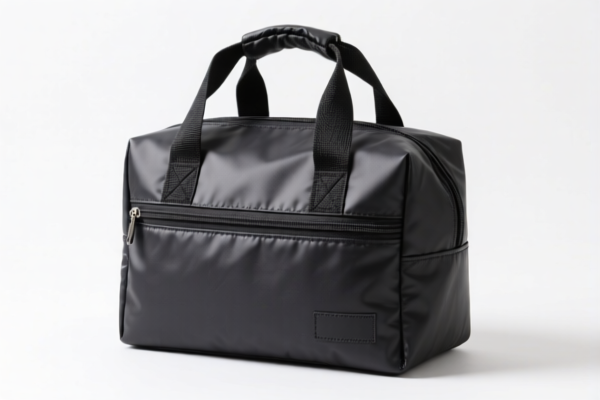
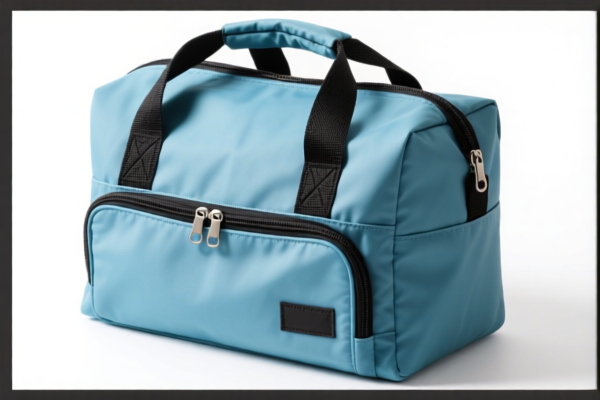
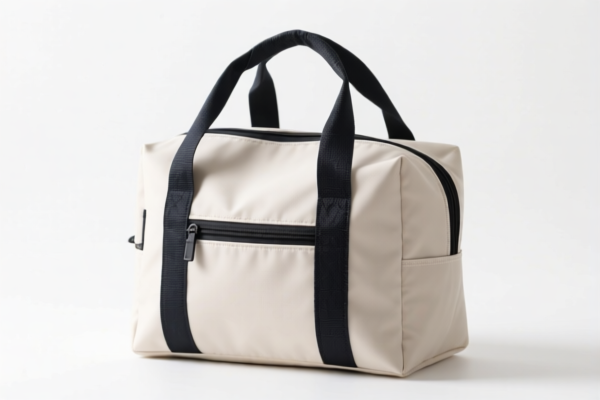
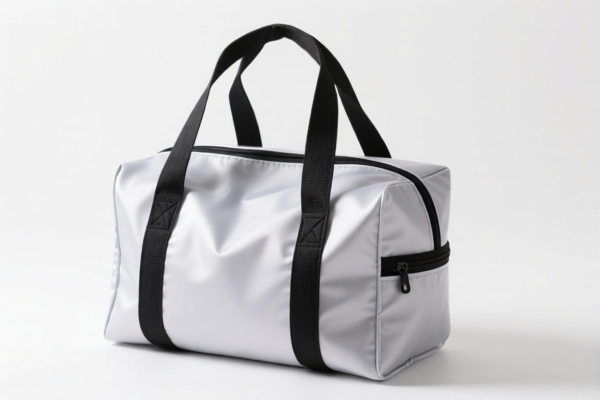
AI Analysis
🎒 Polyester Washable Lunch Bag (Insulated Food Carrier)
🌐 HS Code Reference & Customs Clearance Guide | 2026 Latest Tariff Analysis | Professional Entry Strategy
📌 I. Product Definition & Classification: Do You Really Understand "Lunch Bags"?
A Polyester Washable Lunch Bag is a soft-sided container designed primarily for the transport and temporary storage of food items. In international trade, its classification hinges on two key factors: material composition (Polyester/Synthetic Fiber) and function/form (Bag/Insulation).
Unlike hard containers or rigid packaging, these bags are classified as articles of apparel accessories, handbags, or similar containers, or broadly as other made-up textile articles, depending on the specific structure and insulation properties.
⚠️ Critical Distinction:
- If the bag is primarily for insulation/cooling and made of textile materials (like polyester) with an inner lining (often aluminum foil or plastic), it often falls under Heading 4202 (Articles of apparel accessories, handbags...) OR Heading 6307 (Other made-up articles) if deemed a general "other made-up textile article." - Key Differentiator:
- Heading 4202: Applies to bags specifically designed for carrying personal items, including insulated lunch bags, where the textile is the primary outer material.
- Heading 6307: Applies to "other made-up articles" of textile materials, often used when the item doesn't fit neatly into specific accessory categories or is considered a general utility item.
📦 II. HS Code Classification Details (2026 Latest Tariff Authority Comparison)
| HS Code | Product Description | Application Scenario | Material & Structure |
|---|---|---|---|
4202.92.08.07 |
Articles of apparel accessories, handbags, etc., with outer surface of synthetic fibers (Polyester) | Insulated lunch bags, food carriers with synthetic outer layer | ✅ Polyester outer, insulated inner |
4202.92.08.09 |
Other articles of apparel accessories, handbags, etc., with outer surface of synthetic fibers | Warmer/insulated lunch bags (thermal function emphasized) | ✅ Polyester outer, thermal insulation |
6307.90.98.91 |
Other made-up articles, including dress patterns, of textile materials | General utility bags, non-specific food carriers | ✅ Polyester, general "other made-up" category |
🔍 Key Insight:
-4202.92.08.07&09: These codes specifically target bags made of synthetic fibers (Polyester is a synthetic fiber). The distinction between.07and.09often lies in the specific use (general vs. thermal/warmth-insulated). Both are considered "bags" under Heading 4202.
-6307.90.98.91: This is a catch-all category for textile-made articles that don’t fit elsewhere. It is often used if the bag is not considered a "handbag" or "accessory" in the traditional sense but is still a "made-up textile article."
- Why Polyester? Polyester is explicitly classified as a synthetic fiber. If the outer surface is predominantly polyester, it triggers the synthetic fiber subheadings in both 4202 and 6307.
💰 III. 2026 Latest Tariff Rate Details (Including Additional Duties & Policy Surcharges)
✅ Applicable Country: United States (US)
✅ Country of Origin: China (CN)
✅ Effective Date: From November 10, 2025 (and subsequent imports)
🎯 1. 4202.92.08.07 — Synthetic Fiber Insulated Lunch Bag
| Item | Content |
|---|---|
| Basic Duty Rate | 7.0% (ad valorem) |
| Section 301 Surcharge | +25.0% |
| Section 122 Tariff | +10.0% |
| Total Tax Rate | 42.0% |
| Tax Calculation | CIF Value × 42.0% |
| De Minimis Exemption | ❌ Not Eligible (deny_de_minimis) |
| Legal Basis Path | USITC:4202.92.08.07 → Section 301: Footnote 9903.88.01 → Section 122: 10% surcharge |
📌 Explanation:
- 7.0% is the standard MFN (Most Favored Nation) duty for this subheading.
- 25.0% is the Section 301 additional tariff imposed on Chinese goods.
- 10.0% is the Section 122 tariff (related to trade policy adjustments).
- Total: 42.0%. This is a high-cost classification. Do not rely on de minimis (de minimis does not apply to Section 301 goods).
🎯 2. 4202.92.08.09 — Thermal/Warmth-Insulated Synthetic Fiber Lunch Bag
| Item | Content |
|---|---|
| Basic Duty Rate | 7.0% (ad valorem) |
| Section 301 Surcharge | +25.0% |
| Section 122 Tariff | +10.0% |
| Total Tax Rate | 42.0% |
| Tax Calculation | CIF Value × 42.0% |
| De Minimis Exemption | ❌ Not Eligible (deny_de_minimis) |
| Legal Basis Path | USITC:4202.92.08.09 → Section 301: Footnote 9903.88.01 → Section 122: 10% surcharge |
📌 Note:
- Identical tariff structure to.07.
- Even if marketed as "thermal" or "warmth-insulated," it falls under the same synthetic fiber bag category with the same high tariff burden.
🎯 3. 6307.90.98.91 — Other Made-Up Textile Article (Lunch Bag)
| Item | Content |
|---|---|
| Basic Duty Rate | 7.0% (ad valorem) |
| Section 301 Surcharge | +7.5% |
| Section 122 Tariff | +10.0% |
| Total Tax Rate | 24.5% |
| Tax Calculation | CIF Value × 24.5% |
| De Minimis Exemption | ❌ Not Eligible (deny_de_minimis) |
| Legal Basis Path | USITC:6307.90.98.91 → Section 301: Footnote 9903.88.01 → Section 122: 10% surcharge |
📌 Important:
- This code has a lower Section 301 surcharge (7.5%) compared to the 4202 codes (25%).
- Total: 24.5%. This is significantly cheaper than the 42.0% rate.
- Strategy: If your product is not strictly defined as a "handbag" or "accessory," classifying under 6307 can save 17.5% in tariffs. However, you must ensure the product description supports "other made-up article" rather than a specific bag type.
🛠️ IV. Customs Clearance Practical Advice (Real-World Pitfall Avoidance Guide)
✅ 1. Required Documentation Checklist (No Exceptions)
| Document | Required | Explanation |
|---|---|---|
| ✅ Product Specification Sheet | ✔️ | Include dimensions, material composition (e.g., 100% Polyester outer), insulation layer type (e.g., PE foam, aluminum foil). |
| ✅ Product Photos | ✔️ | Show the bag from all angles, including zippers, handles, and interior lining (to prove insulation). |
| ✅ Commercial Invoice | ✔️ | Clearly state: "Polyester Insulated Lunch Bag," "Made in China," and the correct HS Code. |
| ✅ Packing List | ✔️ | Detail quantities and weights. |
| ✅ Origin Certificate (CO) | ✔️ | If applicable, for potential FTZ benefits (though unlikely for China origin). |
✅ 2. Declaration Tactics (Key Mantra)
🔥 "Material is Key, Function Defines Code, Name Must Be Precise!"
| Scenario | Correct Declaration | Incorrect Practice |
|---|---|---|
| Bag with polyester outer + insulation | 4202.92.08.07 or 09 (if considered a bag) |
Declaring as "textile bag" without specifying insulation → Risk of reclassification |
| General utility textile pouch | 6307.90.98.91 |
Declaring as "handbag" → Higher 42% tariff |
| Insulated Bag | Clearly state "Insulated" or "Thermal" in description | Hiding insulation feature → Misdeclaration |
📌 Tip:
- If the bag is primarily for carrying personal items (laptop, wallet, lunch), use 4202.
- If the bag is a general container without a specific "accessory" design, consider 6307 for lower tariffs.
- Always specify "Polyester" in the description to justify the synthetic fiber subheading.
✅ 3. Special Circumstances Handling
| Scenario | Handling Advice |
|---|---|
| OEM Custom Bags | Provide design specs to justify "made-up article" vs. "standard bag." |
| Multi-Purpose Bag | If it can hold both lunch and non-food items, consider 6307 for potential savings, but ensure it’s not classified as a "handbag." |
| Small Samples | De minimis does NOT apply to Section 301 goods. Even small shipments will incur full tariffs. |
| Mixed Containers | If mixed with other goods, ensure lunch bags are clearly separated in the packing list to avoid mixed-rate issues. |
🌍 V. Global Market Comparison (2026 Latest)
| Country/Region | Recommended HS Code | Tariff (China Origin) | Certification | Notes |
|---|---|---|---|---|
| 🇺🇸 USA | 6307.90.98.91 |
24.5% | None | Lower Section 301 rate than 4202 |
| 🇺🇸 USA | 4202.92.08.07 |
42.0% | None | Higher tariff, consider if product is clearly a "bag" |
| 🇪🇺 EU | 4202.92.00 |
0-12% | CE (if applicable) | No Section 301/122 equivalent |
| 🇨🇳 China | 6307.90.90 |
10-14% | None | Import duty from US perspective |
📌 Conclusion:
- USA is the most expensive market due to Section 301 and Section 122 tariffs.
- Choosing6307over4202can save 17.5% in tariffs if the product description allows.
- Do not ignore de minimis limitations: Even small shipments are taxed fully.
📌 VI. Common Mistakes & Pitfall Guide (Lessons Learned)
❌ Mistake 1: Declaring a "Polyester Lunch Bag" as "Textile Bag" without specifying material.
👉 Consequence: Customs may apply a default higher rate or require reclassification.
❌ Mistake 2: Assuming "De Minimis" applies to small shipments.
👉 Consequence: Full 24.5%–42.0% tariff will be charged. No exemption!
❌ Mistake 3: Using vague terms like "Food Container" instead of "Insulated Lunch Bag."
👉 Consequence: Customs may classify under a different heading (e.g., 3926 for plastic) with different rates.
❌ Mistake 4: Ignoring the "Section 122" tariff.
👉 Consequence: Unexpected 10% surcharge on top of Section 301.
✅ Correct Approach:
"Insulated Lunch Bag, Polyester Outer, PE Foam Lining, Made in China, HS Code 6307.90.98.91"
🎯 VII. Conclusion: Professional Declaration, Save Costs, Ensure Smooth Clearance!
🎯 Remember the Mantra:
🔹 "Polyester = Synthetic Fiber"
🔹 "4202 = 42% Tariff"
🔹 "6307 = 24.5% Tariff"
🔹 "No De Minimis for China"
📌 Pro Tip:
- If your product is not a traditional "handbag," consider
6307.90.98.91to save 17.5% in tariffs.- Always provide clear photos showing the insulation layer.
- Apply for an Advance Ruling if you’re unsure about the classification.
📣 Take Action Now:
📞 Contact a professional customs broker + Provide product photos + Apply for HS Code Advance Ruling
🚀 Ensure your lunch bags clear customs smoothly, avoid unexpected costs, and maximize profit!
✨ Professional Customs Clearance Starts with Accurate Classification!
💼 Every penny of cost should be calculated precisely!
Customer Reviews
About HS Code Classification
The Harmonized System (HS) is an internationally standardized nomenclature developed by the World Customs Organization (WCO) to classify traded products. Over 200 countries use the HS system as the basis for customs tariffs, trade statistics, and import/export regulations.
Each HS code follows a hierarchical structure:
- Chapter (2 digits) — Broad category of goods (e.g., Chapter 84: Machinery and Mechanical Appliances)
- Heading (4 digits) — More specific grouping within the chapter
- Subheading (6 digits) — Internationally standardized breakdown, used by all WCO member countries
- National subdivisions (8-10 digits) — Country-specific extensions for further classification, such as US HTSUS 10-digit codes
Correct HS code classification is essential for smooth customs clearance, accurate duty payment, and compliance with trade regulations. Misclassification can lead to customs delays, overpayment of duties, or penalties.
When importing from CN to US, the applicable tariff rates may include:
- Most-Favored-Nation (MFN) rate — The standard duty rate applied to WTO members
- General rate — Applied to countries without trade agreements
- Trade remedy duties — Additional tariffs such as Section 301 (anti-dumping), Section 232 (national security), or countervailing duties
The information provided on this page is for reference purposes only. For official classification, please consult with your local customs authority or a licensed customs broker.