Polyether Resin Electronic Grade Mixture Material
CN → US| HS Code | Tariff Rate | Origin | Destination | Doc |
|---|---|---|---|---|
| 3911909150 | 41.5% | CN | US | Official Doc |
| 3911909110 | 41.5% | CN | US | Official Doc |
| 3907290000 | 41.5% | CN | US | Official Doc |
| 3824999397 | 40.0% | CN | US | Official Doc |
| 3824992900 | 41.5% | CN | US | Official Doc |
Product Images

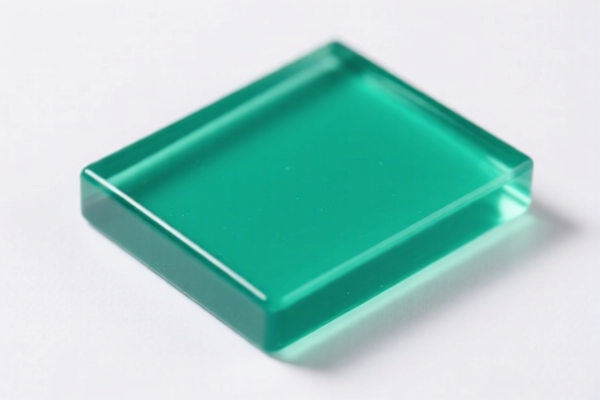

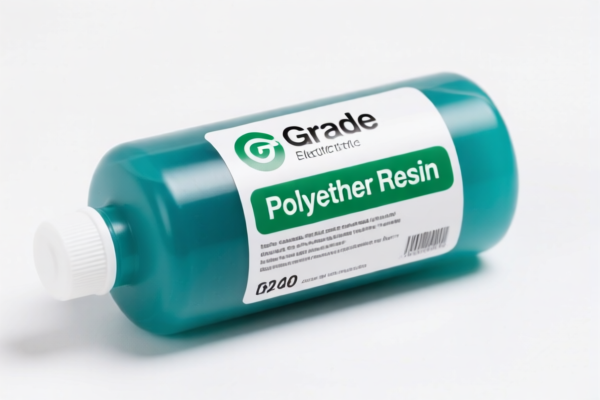
AI Analysis
🧪 Polyether Resin (Electronic Grade) – Ultimate HS Code & Customs Clearance Guide 2026
🌐 HS Code Reference & Customs Clearance Strategy | 2026 Latest Tariff Analysis | High-Purity Chemicals
📌 I. Product Definition: What is "Electronic Grade Polyether Resin"?
Polyether Resin is a high-performance polymer known for its excellent chemical resistance, thermal stability, and low moisture absorption.
"Electronic Grade" implies ultra-high purity (typically >99.9%), low ionic contamination, and specific rheological properties required for:
* Semiconductor packaging & encapsulation
* Circuit board (PCB/laminates) manufacturing
* Photolithography applications
* High-end adhesive formulations
In international trade, misclassification often leads to significant tariff penalties due to the complex interplay between Base Tariffs, Section 301 Duties, and Section 122 Tariffs.
⚠️ Critical Distinction:
- Is it a primary polymer (raw resin)? → Likely Chapter 39
- Is it a prepared chemical preparation (mixed with solvents/additives)? → Likely Chapter 38
- Electronic Grade does NOT automatically change the HS Code; it affects purity standards and documentation.
📦 II. HS Code Classification Details (2026 Tariff Schedule)
Based on the provided data, here are the 5 possible HS Codes for "Polyether Resin Electronic Grade Mixture Material". Each code has distinct legal justifications and tax implications.
| HS Code | Summary of Classification Logic | Total Tax Rate | Tax Breakdown |
|---|---|---|---|
3911.90.91.50 |
Primary Product Classification: Classified under resins in primary forms. High-purity electronic grade infers it is a raw material rather than a prepared mixture. | 41.5% | Base: 6.5% Section 301: 25.0% Section 122: 10% |
3911.90.91.10 |
Primary Product (No Conflict): Fits within 3911.90 scope. No conflict with thermoplastic/thermosetting definitions. Treated as a raw resin. | 41.5% | Base: 6.5% Section 301: 25.0% Section 122: 10% |
3907.29.00.00 |
Specific Polyether Classification: Explicitly includes polyethers under "Other polyethers". This is a more specific sub-heading than 3911. | 41.5% | Base: 6.5% Section 301: 25.0% Section 122: 10% |
3824.99.93.97 |
Prepared Chemical Product: Classified as a chemical preparation/mixture. The resin attribute fits a "catch-all" category for non-specified chemical mixes. | 40.0% | Base: 5.0% Section 301: 25.0% Section 122: 10% |
3824.99.29.00 |
Prepared Resin Mixture: Fits the catch-all rule for chemical resins with no obvious material conflict. Treated as a formulated product. | 41.5% | Base: 6.5% Section 301: 25.0% Section 122: 10% |
🔍 Key Insight:
- 3911/3907 (Raw Resin) vs 3824 (Prepared Mixture) is the critical decision point.
- If the product is 100% pure resin (no solvents, no additives), 3911/3907 is legally more accurate.
- If the product is mixed with solvents, catalysts, or fillers, 3824 may apply.
- Tax Difference:3824.99.93.97has a slightly lower base tariff (5.0% vs 6.5%), resulting in a 40.0% total vs 41.5%.
💰 III. 2026 Tariff Rate Detailed Explanation
✅ Applicable Country: United States (US)
✅ Origin: China (CN) (Assumed based on "Section 122" and "301" terminology)
✅ Effective Time: Current 2026 Tariff Structure
🎯 1. Raw Resin Classifications (3911.90.91.50, 3911.90.91.10, 3907.29.00.00)
| Item | Detail |
|---|---|
| Base Tariff (MFN) | 6.5% (Ad Valorem) |
| Section 301 Tariff (List 3/4A) | +25.0% |
| Section 122 Tariff | +10.0% |
| Total Effective Rate | 41.5% |
| De Minimis Exemption | ❌ NOT Eligible (Value > $800 threshold; chemical products often scrutinized) |
| Legal Basis | HTSUS 3911/3907 + USITC Footnotes + IEEPA Authorities |
📌 Explanation:
- Base 6.5%: Standard Most Favored Nation (MFN) rate for synthetic polymers.
- Section 301 (25%): Trump-era tariffs maintained for Chinese goods in Chapter 39.
- Section 122 (10%): Additional duty on Chinese imports under specific trade acts (e.g., UFLPA or specific bilateral agreements).
- Total 41.5%: This is a high-cost entry for electronic materials.
🎯 2. Prepared Chemical Mixtures (3824.99.93.97, 3824.99.29.00)
| Item | Detail |
|---|---|
| Base Tariff (MFN) | 5.0% (for .93.97) / 6.5% (for .29.00) |
| Section 301 Tariff (List 3/4A) | +25.0% |
| Section 122 Tariff | +10.0% |
| Total Effective Rate | 40.0% (.93.97) / 41.5% (.29.00) |
| De Minimis Exemption | ❌ NOT Eligible |
| Legal Basis | HTSUS 3824 + USITC Footnotes |
📌 Explanation:
- Savings Opportunity:3824.99.93.97offers a 1.5% savings (40.0% vs 41.5%) due to a lower base rate.
- Risk: Must prove the product is a "prepared preparation" (i.e., mixed/formulated) to justify Chapter 38. If audited as pure resin, you face penalties for misclassification.
🛠️ IV. Customs Clearance Practical Advice (Avoiding Pitfalls)
✅ 1. Documentation Checklist (Non-Negotiable)
| Document | Requirement | Purpose |
|---|---|---|
| Technical Data Sheet (TDS) | Must state Purity Level (e.g., 99.95%) and Composition (100% resin vs. mixed) | Proves if it’s a raw material (Ch 39) or preparation (Ch 38) |
| Safety Data Sheet (SDS) | GHS Compliant, Section 3: Composition | Confirms no hazardous mixtures that require extra permits |
| Certificate of Analysis (COA) | Batch-specific impurity levels (ionic content) | Critical for "Electronic Grade" justification |
| Commercial Invoice | Clearly describe as "Polyether Resin, Electronic Grade" | Avoids vague terms like "Chemical Mixture" |
| Proof of Origin | Certificate of Origin (CO) | Required for Section 301/122 application |
| Import License | May be required for chemical precursors | Check with BIS/DEA if applicable |
✅ 2. Classification Strategy (Key Decision Tree)
🔥 "Pure Resin = Ch 39; Mixed Resin = Ch 38"
| Scenario | Recommended HS Code | Why? |
|---|---|---|
| 100% Polyether, no additives | 3911.90.91.50 or 3907.29.00.00 |
Legally accurate as a primary product. Lower risk of audit challenge. |
| Polyether + Solvent/Catalyst | 3824.99.93.97 |
Meets definition of "prepared chemical preparation." Eligible for lower base rate. |
| Polyether + Filler/Reinforcement | 3824.99.29.00 |
Mixture rule applies. No single component defines the character as a resin. |
| Unclear Composition | Consult Customs Broker | Misclassification leads to 41.5%+ penalties. Never guess. |
✅ 3. Special Notes for "Electronic Grade"
- No Tariff Benefit for "Electronic Grade": The term does not reduce duties. It only requires stricter documentation.
- Section 122 Scrutiny: Chemical products are high-risk for Section 122 duties due to supply chain transparency requirements. Ensure full traceability of raw materials.
- De Minimis Risk: Do NOT use Section 321 (de minimis) for commercial shipments. Customs will reject this for chemical mixtures due to safety and IP concerns.
🌍 V. Global Market Comparison (2026)
| Region | HS Code | Duty Rate | Key Requirement |
|---|---|---|---|
| 🇺🇸 USA | 3911.90.91.50 |
41.5% | Section 301 + 122. Strict documentation. |
| 🇪🇺 EU | 3907.29.00 |
~5-7% | REACH Registration mandatory. No Section 301. |
| 🇨🇳 China | 3907.29.00 |
~6.5% | No Section 122. Import tax credit available. |
| 🇯🇵 Japan | 3907.29.00 |
~0-5% | FISC Approval for electronic materials. |
📌 Conclusion:
- USA is the most expensive market due to layered tariffs (301 + 122).
- EU/JP require chemical safety registrations (REACH/FISC) but have lower duties.
- Strategy: If shipping to the US, ensure exact composition is documented to defend Ch 39 vs Ch 38 classification.
📌 VI. Common Errors & Pitfalls (Learn from Mistakes)
❌ Error 1: Classifying as 3824 when it’s pure resin
👉 Risk: Customs may reclassify to 3911, apply 41.5%, and charge penalties for misdeclaration.
👉 Fix: Provide 100% composition TDS.
❌ Error 2: Using vague description "Resin Mixture"
👉 Risk: Customs may apply the highest possible duty (e.g., 89.5% if deemed "other articles").
👉 Fix: Use specific name: "Polyether Resin, Electronic Grade, 100% Pure."
❌ Error 3: Ignoring Section 122
👉 Risk: Underpayment by 10%.
👉 Fix: Always include Section 122 in tariff calculation for Chinese-origin goods.
❌ Error 4: Assuming "Electronic Grade" = Lower Duty
👉 Risk: No such rule exists.
👉 Fix: Focus on chemical composition (Chapter 39 vs 38).
🎯 VII. Final Recommendations: Save Money, Stay Compliant
🎯 Pro Tip:
✅ If Pure Resin: Use
3911.90.91.50or3907.29.00.00. Accept 41.5% total duty. It’s legally safer.
✅ If Mixed: Use3824.99.93.97. Save 1.5% (40.0% total). Ensure SDS proves mixture.
✅ Always: Provide TDS + COA + SDS for every shipment.
✅ Never: Ship as "De Minimis" for commercial quantities.
📌 Bottom Line:
"Composition is King. Documentation is Queen. Tariffs are inevitable. Compliance is non-negotiable."
📣 Action Required:
- Verify Composition: Is it 100% resin or mixed?
- Select HS Code:
3911/3907(Pure) or3824(Mixed).- Prepare Docs: TDS, COA, SDS, Invoice.
- Consult Broker: For pre-classification ruling if value is high.
✨ Customs Clearance, Simplified.
💼 Precision in Classification = Savings in Cost.
Customer Reviews
About HS Code Classification
The Harmonized System (HS) is an internationally standardized nomenclature developed by the World Customs Organization (WCO) to classify traded products. Over 200 countries use the HS system as the basis for customs tariffs, trade statistics, and import/export regulations.
Each HS code follows a hierarchical structure:
- Chapter (2 digits) — Broad category of goods (e.g., Chapter 84: Machinery and Mechanical Appliances)
- Heading (4 digits) — More specific grouping within the chapter
- Subheading (6 digits) — Internationally standardized breakdown, used by all WCO member countries
- National subdivisions (8-10 digits) — Country-specific extensions for further classification, such as US HTSUS 10-digit codes
Correct HS code classification is essential for smooth customs clearance, accurate duty payment, and compliance with trade regulations. Misclassification can lead to customs delays, overpayment of duties, or penalties.
When importing from CN to US, the applicable tariff rates may include:
- Most-Favored-Nation (MFN) rate — The standard duty rate applied to WTO members
- General rate — Applied to countries without trade agreements
- Trade remedy duties — Additional tariffs such as Section 301 (anti-dumping), Section 232 (national security), or countervailing duties
The information provided on this page is for reference purposes only. For official classification, please consult with your local customs authority or a licensed customs broker.