Polyether Resin Granules
CN → US| HS Code | Tariff Rate | Origin | Destination | Doc |
|---|---|---|---|---|
| 3907210000 | 41.5% | CN | US | Official Doc |
| 3907290000 | 41.5% | CN | US | Official Doc |
| 3907300000 | 41.1% | CN | US | Official Doc |
| 3911904500 | 40.8% | CN | US | Official Doc |
| 3911902500 | 41.1% | CN | US | Official Doc |
Product Images
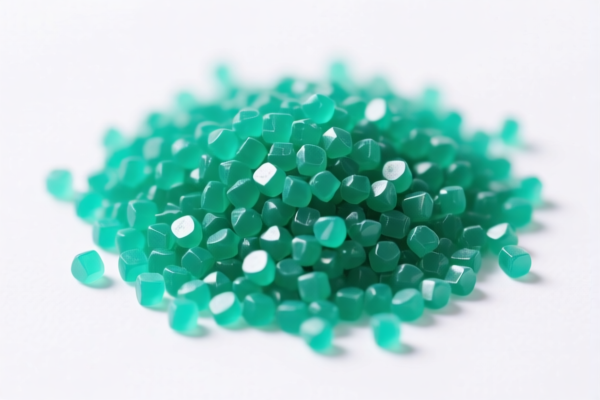

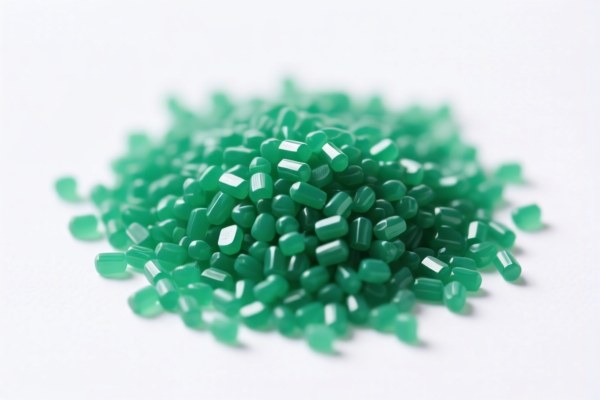
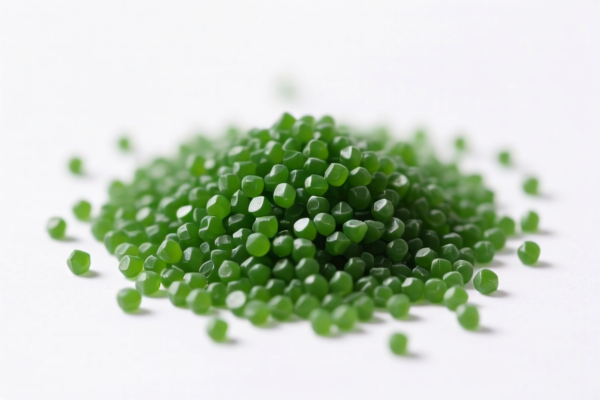
AI Analysis
🧪 Polyether Resin Granules (初级形态/Primary Forms)
🌐 HS Code Reference & Customs Clearance Guide | 2026 Tariff Breakdown | Strategic Import Strategy for US-China Trade
📌 I. Product Definition & Classification: What Exactly Are "Polyether Resin Granules"?
Polyether resins are a class of polymers characterized by ether linkages (-C-O-C-) in the main chain. In international trade, they are primarily classified under Chapter 39 (Plastics and Articles Thereof). The term "Granules" indicates the material is in a primary form (powders, granules, flakes, etc.), suitable for further processing (e.g., injection molding, extrusion).
The classification depends heavily on the chemical structure: 1. Simple Polyethers: Linear or branched chains derived from epoxides (like propylene oxide or ethylene oxide). 2. Polyarylate/Polyether Resins: Contain aromatic rings (benzene rings) in the backbone, often exhibiting higher thermal stability and mechanical strength. These may fall under specific sub-headings for "other resins" if they meet specific aromatic unit criteria.
⚠️ Key Distinction Point:
- If the resin is a simple polyether (aliphatic) → Look to Heading 3907.
- If the resin contains aromatic units (polyarylates) → It may qualify for Heading 3911 under specific "other polyethers" or "aromatic" definitions.
- Primary Form is Critical: Must be in granules/powder. If already molded into parts, it falls under Chapter 39 other headings (e.g., 3926).
📦 II. HS Code Classification Matrix (2026 Latest Tariff Data)
Based on the provided data, here are the five potential HS Codes for Polyether Resin Granules, ranging from standard polyethers to specialized aromatic variants.
| HS Code | Product Description | Key Characteristics | Applicable Scenario |
|---|---|---|---|
3907.21.00.00 |
Polyethers in primary forms; "Other polyethers" | Aliphatic polyethers, non-aromatic, primary form (granules). | Standard industrial polyethers (e.g., PEO, PPG) without aromatic rings. |
3907.29.00.00 |
Polyethers in primary forms; "Other polyethers" | Matches "other polyethers" material definition, no conflict with form/use. | Generic polyethers not specifically listed elsewhere in 3907.21. |
3907.30.00.00 |
Polyarylate resins; Epoxy-related polyethers | Contains aromatic structure but classified under epoxy/polyether related resins in 3907. | Aromatic polyethers that fall under the broader "epoxy-related" or specific polyarylate category in Ch 3907. |
3911.90.45.00 |
Polyarylate resins; Contains aromatic monomer units | Specific material feature: contains aromatic monomer units. | High-performance polyethers with significant aromatic content, classified under "Other Resins" (3911) due to specific aromatic derivation. |
3911.90.25.00 |
Polyarylate resins; Thermoplastic from aromatic monomers | Derived from aromatic monomers, thermoplastic, petroleum resin-like characteristics. | Specialized aromatic polyethers treated as "other thermoplastic resins" under 3911.90. |
🔍 Critical Note:
- 3907 vs. 3911: The split between 3907 (Epoxy/Polyethers) and 3911 (Other Resins) is nuanced. 3907.30 and 3911.90 both cover "Polyarylates" but differ in specific regulatory interpretation of "aromatic monomer units" vs. "epoxy-related".
- Granules = Primary Form: All listed codes require the product to be in primary form (granules/powder). If sold as pre-mixed compounds with additives beyond standard processing aids, re-evaluation is needed.
💰 III. 2026 Tariff Rate Breakdown (Detailed Tax Analysis)
✅ Applicable Country: United States (US)
✅ Origin: China (CN)
✅ Effective Date: Post-November 2025 (Current Data)
All five HS Codes carry significant tariffs due to Section 301 (USITC) and IEEPA (122-Clause) provisions targeting Chinese imports.
🎯 1. 3907.21.00.00 & 3907.29.00.00 — Standard Polyethers
| Item | Detail |
|---|---|
| Base Tariff | 6.5% (Most Favored Nation rate) |
| Section 301 Tariff (25%) | +25% (USITC Footnote: 9903.01.25) |
| IEEPA Clause 122 Tariff | +10% (Targeted Chinese materials) |
| Total Effective Rate | 41.5% |
| Calculation | CIF Value × 41.5% |
| De Minimis Exemption | ❌ Not Eligible (Value > $800 is taxable; below $800 is still subject to scrutiny but technically exempt from duty if qualified, but commercial shipments are rarely under $800) |
| Legal Path | 3907.21/29 → Section 301: 9903.01.25 → IEEPA: 9903.122 |
📌 Explanation:
- These are considered basic chemical intermediates.
- The 41.5% rate is steep. Importers must factor this into landed cost calculations.
- No quota restrictions apply, but duty is high.
🎯 2. 3907.30.00.00 — Polyarylate Resins (Epoxy-related)
| Item | Detail |
|---|---|
| Base Tariff | 6.1% |
| Section 301 Tariff (25%) | +25% (USITC Footnote: 9903.01.25) |
| IEEPA Clause 122 Tariff | +10% |
| Total Effective Rate | 41.1% |
| Calculation | CIF Value × 41.1% |
| De Minimis Exemption | ❌ Not Eligible |
| Legal Path | 3907.30 → Section 301: 9903.01.25 → IEEPA: 9903.122 |
📌 Explanation:
- Slightly 0.4% lower than standard polyethers due to a lower base rate (6.1% vs 6.5%).
- Classification requires proof that the resin is "epoxy-related" or specifically listed as polyarylate under 3907.30.
🎯 3. 3911.90.45.00 — Aromatic Polyethers (Monomer Unit Specific)
| Item | Detail |
|---|---|
| Base Tariff | 5.8% |
| Section 301 Tariff (25%) | +25% (USITC Footnote: 9903.01.25) |
| IEEPA Clause 122 Tariff | +10% |
| Total Effective Rate | 40.8% |
| Calculation | CIF Value × 40.8% |
| De Minimis Exemption | ❌ Not Eligible |
| Legal Path | 3911.90.45 → Section 301: 9903.01.25 → IEEPA: 9903.122 |
📌 Explanation:
- Lowest Total Rate (40.8%).
- Requires documentation proving the resin is derived from aromatic monomer units and fits the specific sub-heading 3911.90.45.
- This classification is often used for high-performance engineering plastics (e.g., PEEK-like precursors).
🎯 4. 3911.90.25.00 — Thermoplastic Aromatic Polyethers
| Item | Detail |
|---|---|
| Base Tariff | 6.1% |
| Section 301 Tariff (25%) | +25% (USITC Footnote: 9903.01.25) |
| IEEPA Clause 122 Tariff | +10% |
| Total Effective Rate | 41.1% |
| Calculation | CIF Value × 41.1% |
| De Minimis Exemption | ❌ Not Eligible |
| Legal Path | 3911.90.25 → Section 301: 9903.01.25 → IEEPA: 9903.122 |
📌 Explanation:
- Matches3907.30in total rate.
- Focuses on thermoplastic nature and petroleum resin-like features.
- Suitable if the resin is explicitly marketed as a thermoplastic derived from aromatic sources.
🛠️ IV. Customs Clearance Practical Advice (Actionable Strategies)
✅ 1. Documentation Checklist (Non-Negotiable)
| Document | Required? | Purpose |
|---|---|---|
| Material Safety Data Sheet (MSDS/SDS) | ✔️ Yes | To confirm chemical composition, especially aromatic content. |
| Product Specification Sheet | ✔️ Yes | Must state: "Primary Form," "Granules," "Polyether Resin," and "Aromatic/Aliphatic" status. |
| Certificate of Origin (CO) | ✔️ Yes | To prove Chinese origin (triggering tariffs) or other origin (if applicable). |
| Commercial Invoice | ✔️ Yes | Must accurately describe goods as "Polyether Resin Granules" with HS Code. |
| Packaging List | ✔️ Yes | Net weight must match duty calculation base (CIF). |
| Lab Test Report | ⚠️ Recommended | If disputing classification (e.g., 3907 vs 3911), a chemical analysis proving aromatic vs. aliphatic structure is critical. |
✅ 2. Classification Strategy & Risk Mitigation
| Scenario | Recommended HS Code | Risk Level | Mitigation |
|---|---|---|---|
| Standard Industrial Polyether | 3907.21.00.00 or 3907.29.00.00 |
🟡 Medium | Ensure no aromatic rings are present. Use CAS number to verify. |
| High-Performance Aromatic Polyether | 3911.90.45.00 |
🟢 Low (Best Rate) | Provide chemical structure diagram showing aromatic units. Claim lowest tax. |
| Unclear Structure | 3907.30.00.00 |
🔴 High | If unsure, conservative classification reduces audit risk. Prepare for 41.1%. |
| Mixed Shipments | Strict Segregation | 🔴 High | Do NOT mix 3907 and 3911 in one HS Code line. Declare separately to avoid customs flags. |
✅ 3. Cost Optimization Tips
-
Leverage the 0.4% Difference:
3911.90.45.00(40.8%) is the cheapest option. If your resin is aromatic, aggressively pursue this classification.- Example: On a $100,000 shipment, the difference between 41.5% and 40.8% is $700 savings. Scale this up, and it’s significant.
-
Avoid "De Minimis" Reliance:
- While shipments < $800 are theoretically exempt from duty, China-origin goods are often subject to stricter enforcement.
- Risk: CBP may still inspect and demand duties/penalties if misclassified. Do not rely on $800 exemption for bulk granules.
-
Pre-Ruling Request:
- For large, recurring imports, file an Advance Ruling (19 CFR Part 177) with CBP.
- Submit chemical specs and request binding classification. This provides legal protection against retroactive duty changes.
🌍 V. Global Market Comparison (2026)
| Destination | Recommended HS Code | Est. Duty Rate (China Origin) | Key Certification | Notes |
|---|---|---|---|---|
| 🇺🇸 USA | 3911.90.45.00 |
40.8% (Lowest in Ch 39) | None required for entry, but SDS mandatory | High barrier due to tariffs. |
| 🇨🇳 China | 3907.21.00.00 |
6.5% (Base) + VAT 13% | No import duty on many polymers | Domestic production dominates. |
| 🇪🇺 EU | 3907.21.00.00 |
6.5% (Most Favored Nation) | REACH Registration Required | EU has strict chemical regulations. REACH compliance is costly. |
| 🇬🇧 UK | 3907.21.00.00 |
6.5% | UK REACH | Post-Brexit rules apply. |
| 🇯🇵 Japan | 3907.21.00.00 |
6.0% | JIS/ISO Standards | Low tariff, but high quality scrutiny. |
📌 Insight:
- The US market is the most tariff-heavy.
- EU/UK have lower base duties but higher regulatory costs (REACH).
- For US importers, optimizing HS Code (e.g., to3911.90.45.00) is the most effective cost-saving lever.
📌 VI. Common Pitfalls & How to Avoid Them
❌ Pitfall 1: Mislabeling "Polyether" as "Polyester" or "Polycarbonate"
👉 Result: Wrong HS Code → Severe penalties + Back Duties.
✅ Fix: Use precise chemical names and CAS numbers on invoices.
❌ Pitfall 2: Claiming "Granules" are "Finished Parts"
👉 Result: Classification as 3926 (Other Plastic Articles) → Different, often higher, duties.
✅ Fix: Explicitly state "Primary Form (Granules)" in description.
❌ Pitfall 3: Ignoring Aromatic vs. Aliphatic Distinction
👉 Result: Missed opportunity to use 3911.90.45.00 (40.8%) instead of 3907.21 (41.5%).
✅ Fix: Get a lab report confirming aromatic structure if applicable.
❌ Pitfall 4: Assuming "Resin" = "Compound"
👉 Result: If fillers/additives > 10%, it may be classified as a "Compound" (3911.90.90 or similar), altering duty.
✅ Fix: Confirm additive content is minimal (processing aids only).
🎯 VII. Conclusion: Smart Classification for Lower Costs
🎯 Key Takeaways:
1. Always check for Aromatic Content: If your polyether contains aromatic rings, push for 3911.90.45.00 (40.8%) – the lowest tariff in the dataset.
2. Base Rate Matters: The 0.3-0.7% difference in base rates (5.8% vs 6.5%) adds up with Section 301 and IEEPA taxes.
3. Documentation is King: SDS and Spec Sheets must clearly define "Primary Form" and chemical structure.
💡 Pro Tip:
For large volume imports, negotiate with suppliers to provide a Statement of Composition confirming aromatic vs. aliphatic nature. This allows you to choose the most tax-efficient HS Code legally.
✨ Export Ready: Precision Classification Saves Thousands!
💼 Your Profit Margin Depends on Your HS Code Accuracy.
📞 Consult a Customs Broker for Advance Ruling if unsure.
Customer Reviews
About HS Code Classification
The Harmonized System (HS) is an internationally standardized nomenclature developed by the World Customs Organization (WCO) to classify traded products. Over 200 countries use the HS system as the basis for customs tariffs, trade statistics, and import/export regulations.
Each HS code follows a hierarchical structure:
- Chapter (2 digits) — Broad category of goods (e.g., Chapter 84: Machinery and Mechanical Appliances)
- Heading (4 digits) — More specific grouping within the chapter
- Subheading (6 digits) — Internationally standardized breakdown, used by all WCO member countries
- National subdivisions (8-10 digits) — Country-specific extensions for further classification, such as US HTSUS 10-digit codes
Correct HS code classification is essential for smooth customs clearance, accurate duty payment, and compliance with trade regulations. Misclassification can lead to customs delays, overpayment of duties, or penalties.
When importing from CN to US, the applicable tariff rates may include:
- Most-Favored-Nation (MFN) rate — The standard duty rate applied to WTO members
- General rate — Applied to countries without trade agreements
- Trade remedy duties — Additional tariffs such as Section 301 (anti-dumping), Section 232 (national security), or countervailing duties
The information provided on this page is for reference purposes only. For official classification, please consult with your local customs authority or a licensed customs broker.