Polyether Resin Resin Modified Grade
CN → US| HS Code | Tariff Rate | Origin | Destination | Doc |
|---|---|---|---|---|
| 3907210000 | 41.5% | CN | US | Official Doc |
| 3907290000 | 41.5% | CN | US | Official Doc |
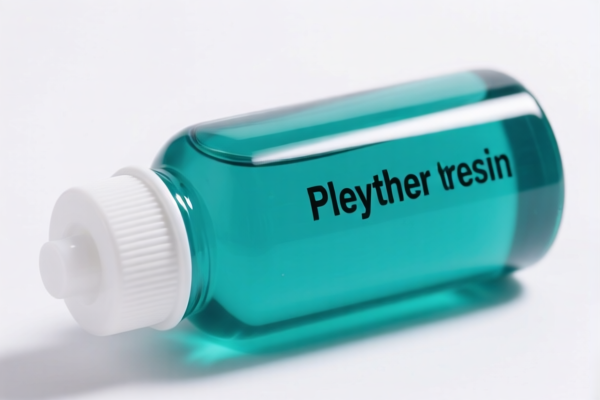
Product Images



AI Analysis
🧪 Polyether Resins & Modified Grades (Chemical Polymers)
🌐 HS Code Reference & Customs Clearance Guide | 2026 Latest Tariff Analysis | Professional Strategy for Chemical Imports
📌 I. Product Definition & Classification: What Exactly Are "Polyether Resins"?
Polyethers are a class of polymers containing ether linkages (C-O-C) in the backbone. In international trade, they are primarily categorized under Chapter 39 (Plastics and Articles Thereof). The term "Resin Modified Grade" typically refers to polyethers blended with other compounds (such as phosphonates, amines, or other functional groups) to enhance specific properties like flame retardancy, hardness, or chemical resistance.
In the context of US imports, these are classified as "in primary forms" (e.g., powders, liquids, granules), not finished plastic articles.
⚠️ Key Distinction Point:
- Pure Polyethers: Simple polyoxyalkylene chains → 3907.29.00.00
- Modified/Functional Polyethers: Polyethers with specific chemical modifications (e.g., methylphosphonate groups) → 3907.21.00.00
- Epoxides/Polyacetals: Often confused, but chemically distinct → 3907.20 (General category, specific subheadings vary)
📦 II. HS Code Classification Details (2026 Latest Tariff Authority)
| HS Code | Product Description | Application Scenario | Chemical Structure Note |
|---|---|---|---|
3907.21.00.00 |
Other polyethers: Bis(polyoxyethylene) methylphosphonate | Flame retardants, plasticizers, specialized resin modifiers | Contains phosphonate functional group |
3907.29.00.00 |
Other polyethers: Other | General polyether resins, PEG/PPG blends, non-modified polyethers | Standard ether linkages, no special modifier listed in .21 |
🔍 Critical Reminder:
- "Modified Grade" is the key trigger: If your product is explicitly a methylphosphonate derivative, it MUST be classified under 3907.21.00.00.
- If it is a general polyether (e.g., polyethylene glycol, polypropylene glycol) without the specific phosphonate modification, it falls under 3907.29.00.00.
- Do not classify as "Epoxide resins" (3907.20) unless the primary structure is epoxy, even if used in epoxy curing.
💰 III. 2026 Latest Tariff Rate Breakdown (Including Additional Taxes & Policy Surcharges)
✅ Applicable Country: United States (US)
✅ Country of Origin: China (CN)
✅ Effective Date: 2025/2026 (Subject to current USITC/USMCA/IEEPA rules)
🎯 1. 3907.21.00.00 — Bis(polyoxyethylene) methylphosphonate
| Item | Content |
|---|---|
| Base Duty Rate | 6.5% (Ad Valorem) |
| Section 301 Surcharge | +25.0% (China-specific) |
| Total Tax Rate | 31.5% |
| Tax Calculation | CIF Value × 31.5% |
| De Minimis Exemption | ❌ Not Applicable (Deny de minimis for China-origin goods) |
| Legal Basis Path | USITC:3907.21.00.00 → Section 301: Footnote 9903.88.01 |
📌 Explanation:
- The 6.5% is the standard Most Favored Nation (MFN) base duty for polyethers.
- The 25% is the Section 301 tariff imposed on Chinese chemical imports to counter unfair trade practices.
- Total: 31.5% is a significant cost factor. Accurate classification is critical because misclassification as a non-301 item (if eligible) or wrong HS code can lead to penalties.
🎯 2. 3907.29.00.00 — Other Polyethers
| Item | Content |
|---|---|
| Base Duty Rate | 6.5% (Ad Valorem) |
| Section 301 Surcharge | +25.0% (China-specific) |
| Total Tax Rate | 31.5% |
| Tax Calculation | CIF Value × 31.5% |
| De Minimis Exemption | ❌ Not Applicable |
| Legal Basis Path | USITC:3907.29.00.00 → Section 301: Footnote 9903.88.01 |
📌 Note:
- Even if the product is not a "modified" phosphonate, but a general polyether resin, the Section 301 25% surcharge still applies to Chinese-origin goods.
- There is no difference in total tax rate between.21and.29for Chinese imports in 2026.
- However, correct classification is required for regulatory compliance (e.g., TSCA reporting in the US).
🛠️ IV. Customs Clearance Practical Advice (Combat Pitfalls Guide)
✅ 1. Required Documentation Checklist (Non-Negotiable)
| Document | Must Provide | Explanation |
|---|---|---|
| ✅ Product Specification Sheet | ✔️ | Must clearly state chemical name, CAS number, and structure (e.g., "Bis(polyoxyethylene) methylphosphonate") |
| ✅ Safety Data Sheet (SDS) | ✔️ | Must list hazard classifications (flammability, toxicity) for ICS2/US CBP screening |
| ✅ Certificate of Origin | ✔️ | Proves China origin → triggers Section 301 |
| ✅ Commercial Invoice | ✔️ | Must use HS Code 3907.21.00.00 or 3907.29.00.00 explicitly |
| ✅ TSCA Certification | ✔️ | Mandatory for chemical imports to the US. Must certify under TSCA Section 12(b) |
| ✅ Structure Diagram | ✔️ | To prove if it is "modified" (phosphonate) or "other" (general polyether) |
✅ 2. Declaration Tips (Key Mantra)
🔥 "Structure Determines Code, Origin Determines Tax!"
| Scenario | Correct Declaration | Wrong Action |
|---|---|---|
| Modified Polyether (Phosphonate) | 3907.21.00.00 + "Bis(polyoxyethylene) methylphosphonate" |
Misclassify as "Other Polyethers" → Risk of penalty for false declaration |
| General Polyether Resin | 3907.29.00.00 + "Polyether Resin" |
Misclassify as "Epoxide" → 3907.20 may have different regulatory requirements |
| China Origin | Declare origin as China → Acknowledge 25% Surcharge | Hide origin → Fraud, seizure, and fines |
| Bulk vs. Retail | Declare as "In Primary Forms" | Declare as "Plastic Articles" → Wrong Chapter (39 vs 39/84/85) |
✅ 3. Special Situations Handling
| Situation | Handling Advice |
|---|---|
| TSCA Compliance | Critical: US EPA requires TSCA certification. Ensure your supplier provides a valid TSCA inventory status (Active/Inactive) |
| Mixed Shipments | If multiple polyethers are in one container, classify each separately by HS Code. Do not consolidate under one code |
| Modified vs. Unmodified | If unsure, provide CAS number and chemical structure. CBP may issue a Binding Ruling to confirm classification |
| Duty Drawback | If re-exporting within 3-5 years, check if Duty Drawback is applicable for the 6.5% base duty (not the 25% Section 301) |
🌍 V. Global Market Comparison (2026 Latest)
| Country/Region | Recommended HS Code | Tariff Rate (China Origin) | Certification Requirements | Notes |
|---|---|---|---|---|
| 🇺🇸 United States | 3907.21.00.00 / 3907.29.00.00 |
31.5% (6.5% + 25%) | TSCA + SDS + Labeling | High compliance burden |
| 🇨🇳 China | 3907.21.00.00 / 3907.29.00.00 |
6.5% (Base) | REACH (if exporting to EU) | No Section 301 |
| 🇪🇺 European Union | 3907.21.00 / 3907.29.00 |
6.5% | REACH Registration + CLP | No 25% surcharge |
| 🇦🇺 Australia | 3907.21.00 / 3907.29.00 |
5.0% | AICIS | Lower tariff |
| 🇯🇵 Japan | 3907.21.00 / 3907.29.00 |
6.0% | PSE (if electrical) | Low tariff |
📌 Conclusion:
- USA is the most expensive market due to Section 301 25% surcharge.
- EU and Japan offer lower tariffs but have stricter chemical safety regulations (REACH, PSE).
- TSCA (US) and REACH (EU) are the biggest non-tariff barriers.
📌 VI. Common Mistakes & Pitfalls Guide (Lessons from Blood)
❌ Mistake 1: Classifying "Modified Polyether" as "Epoxide Resin" (3907.20)
👉 Consequence: Incorrect HS Code → Audit, Penalty, and Delayed Clearance
👉 Fix: Check chemical structure. If no epoxy group, do not use 3907.20.
❌ Mistake 2: Ignoring TSCA Certification for US Imports
👉 Consequence: Goods held at customs, possible destruction or return.
👉 Fix: Obtain TSCA certification from supplier before shipment.
❌ Mistake 3: Using Generic Names like "Polyether Resin" on Invoice
👉 Consequence: CBP may reject declaration or apply highest possible duty.
👉 Fix: Use Specific Chemical Name + CAS Number.
❌ Mistake 4: Assuming "Resin Modified Grade" means it's a Finished Good
👉 Consequence: Misclassification as plastic articles (e.g., 3926) → Higher Duty.
👉 Fix: Declare as "In Primary Forms" (powder, liquid, etc.).
✅ Correct Approach:
"Bis(polyoxyethylene) methylphosphonate, CAS 123456-78-9, Powder, TSCA Compliant, HS 3907.21.00.00"
🎯 VII. Conclusion: Professional Classification Saves Money!
🎯 Remember the Mantra:
🔹 "Structure First, Origin Second, Tax Third!"
🔹 "HS Code 3907.21 for Phosphonates, 3907.29 for Others. 31.5% Total for China to US."
🔹 "TSCA is Mandatory. No TSCA, No Entry."
📌 Pro Tip:
If your product is not a phosphonate but a general polyether, it still faces 31.5% total duty from China to US. Consider third-country manufacturing (e.g., Vietnam, India) to avoid Section 301 if volume is high.
📣 Immediate Action:
📞 Verify CAS Number with Supplier
📄 Request TSCA Certification
📋 Apply for Advance Ruling if Unsure
🚀 Ensure Accurate Classification to Avoid 31.5% Surprise + Penalties!
✨ Professional Customs Clearance Starts with Precise Classification!
💼 Your Chemical Import Cost Depends on This 8-Digit Code!
Customer Reviews
About HS Code Classification
The Harmonized System (HS) is an internationally standardized nomenclature developed by the World Customs Organization (WCO) to classify traded products. Over 200 countries use the HS system as the basis for customs tariffs, trade statistics, and import/export regulations.
Each HS code follows a hierarchical structure:
- Chapter (2 digits) — Broad category of goods (e.g., Chapter 84: Machinery and Mechanical Appliances)
- Heading (4 digits) — More specific grouping within the chapter
- Subheading (6 digits) — Internationally standardized breakdown, used by all WCO member countries
- National subdivisions (8-10 digits) — Country-specific extensions for further classification, such as US HTSUS 10-digit codes
Correct HS code classification is essential for smooth customs clearance, accurate duty payment, and compliance with trade regulations. Misclassification can lead to customs delays, overpayment of duties, or penalties.
When importing from CN to US, the applicable tariff rates may include:
- Most-Favored-Nation (MFN) rate — The standard duty rate applied to WTO members
- General rate — Applied to countries without trade agreements
- Trade remedy duties — Additional tariffs such as Section 301 (anti-dumping), Section 232 (national security), or countervailing duties
The information provided on this page is for reference purposes only. For official classification, please consult with your local customs authority or a licensed customs broker.