Polyether Resin for Adhesives
CN → US| HS Code | Tariff Rate | Origin | Destination | Doc |
|---|---|---|---|---|
| 3907210000 | 41.5% | CN | US | Official Doc |
| 3907290000 | 41.5% | CN | US | Official Doc |
| 3208900000 | 38.2% | CN | US | Official Doc |
| 3208100000 | 38.7% | CN | US | Official Doc |
| 3907210000 | 41.5% | CN | US | Official Doc |
Product Images


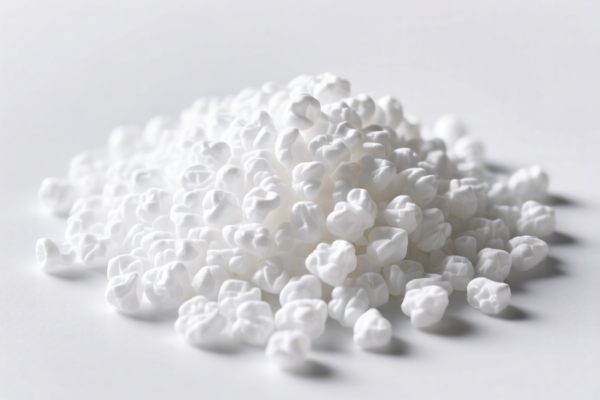
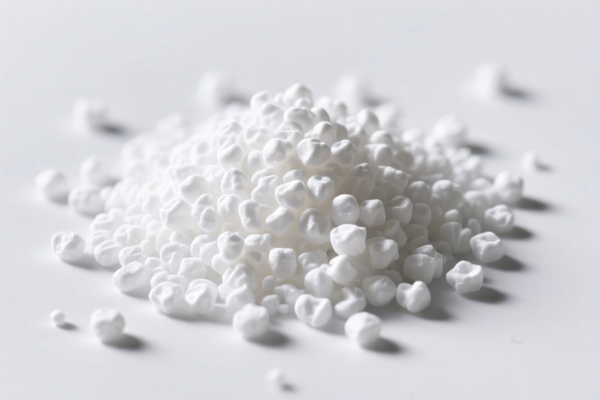
AI Analysis
🧪 Polyether Resin for Adhesives (Polyether Resin for Adhesives)
🌐 HS Code Reference & Customs Clearance Guide | 2026 Latest Tariff Analysis | Professional Clearance Strategy
📌 1. Product Definition and Classification: Do You Really Understand "Polyether Resin"?
Polyether resins are a class of synthetic polymers derived from polyols and epoxides (such as ethylene oxide or propylene oxide). In the context of international trade and adhesive applications, they serve as key raw materials for: * Adhesives and Sealants: Providing flexibility, water resistance, and bonding strength. * Coating Systems: Acting as binders or modifiers to enhance durability.
In customs classification, the distinction lies primarily in the physical state (primary form vs. other forms) and the specific chemical structure. The data provided highlights two main categories of polyether resins and two related coating materials, all subject to significant additional tariffs due to trade restrictions (Section 301 and Section 122).
⚠️ Key Distinction Point:
- If the product is in its primary form (unmodified polymer ready for further processing) → Classified under 3907.21.00.00
- If it is other polyether resin (modified or not in primary form) → Classified under 3907.29.00.00
- If it is a coating based on synthetic polymers → Classified under 3208.90.00.00 or 3208.10.00.00
📦 2. HS Code Classification Details (2026 Latest Tariff Authority对照)
| HS Code | Product Description | Application Scenario | Tax Rate (Total) |
|---|---|---|---|
3907.21.00.00 |
Polyether resins in primary forms; suitable for adhesives; primary form for coating materials compatible with adhesive uses | Raw material for adhesives; intermediate for coatings | 41.5% |
3907.29.00.00 |
Other polyether resins; meets material requirements for adhesives | Modified polyethers; non-primary form adhesives | 41.5% |
3208.90.00.00 |
Coating materials based on synthetic polymers; can be used in adhesive systems | Finished coating products; polymeric coatings | 38.2% |
3208.10.00.00 |
Synthetic polymer dispersions in non-aqueous media; suitable for adhesive scenarios | Solvent-based polymer dispersions for adhesives | 38.7% |
🔍 Key Reminder:
- Both polyether resin codes (3907.21and3907.29) incur the highest total tax rate of 41.5% due to the combination of basic tariff and additional duties. - Coating-related codes (3208) have slightly lower total rates (38.2% - 38.7%) but are still subject to significant additional tariffs. - All listed products are subject to Section 301 tariffs (25%) and Section 122 tariffs (10%), in addition to the basic tariff.
💰 3. 2026 Latest Tariff Rate Details (Including Additional Taxes and Policy Add-ons)
✅ Applicable Country: United States (US)
✅ Origin: China (CN)
✅ Effective Time: Ongoing (as per current trade regulations)
🎯 1. 3907.21.00.00 —— Polyether Resins in Primary Forms
| Item | Details |
|---|---|
| Basic Tariff | 6.5% |
| Section 301 Additional Tariff | +25.0% |
| Section 122 Tariff | +10.0% |
| Total Tax Rate | 41.5% |
| Tax Calculation | CIF Value × 41.5% |
| De Minimis Exemption Available? | ❌ No (High risk of denial for de minimis claims due to high value and specific origin) |
| Legal Basis Path | USITC:3907.21.00.00 → Section 301: Footnote 9903.88.01 → Section 122: Authority for Additional Duties |
📌 Explanation:
- The 6.5% is the standard Most Favored Nation (MFN) duty for polyether resins in primary form. - The 25% is the Section 301 additional duty targeting Chinese imports of chemical products. - The 10% is the Section 122 tariff, often applied to specific industrial inputs. - Total 41.5% is a high-cost item. Importers must carefully calculate landed costs and consider supply chain alternatives.
🎯 2. 3907.29.00.00 —— Other Polyether Resins
| Item | Details |
|---|---|
| Basic Tariff | 6.5% |
| Section 301 Additional Tariff | +25.0% |
| Section 122 Tariff | +10.0% |
| Total Tax Rate | 41.5% |
| Tax Calculation | CIF Value × 41.5% |
| De Minimis Exemption Available? | ❌ No |
| Legal Basis Path | USITC:3907.29.00.00 → Section 301: Footnote 9903.88.01 → Section 122: Authority for Additional Duties |
📌 Note:
- Same tax structure as3907.21.00.00.
- Applies to polyether resins that are not in their primary form (e.g., modified, blended, or partially processed).
- Cost impact is identical, so classification accuracy is critical for inventory and accounting purposes.
🎯 3. 3208.90.00.00 —— Coating Materials Based on Synthetic Polymers
| Item | Details |
|---|---|
| Basic Tariff | 3.2% |
| Section 301 Additional Tariff | +25.0% |
| Section 122 Tariff | +10.0% |
| Total Tax Rate | 38.2% |
| Tax Calculation | CIF Value × 38.2% |
| De Minimis Exemption Available? | ❌ No |
| Legal Basis Path | USITC:3208.90.00.00 → Section 301: Footnote 9903.88.01 → Section 122: Authority for Additional Duties |
📌 Note:
- Slightly lower total tax than polyether resins due to a lower basic tariff (3.2% vs. 6.5%).
- Still subject to heavy additional duties.
🎯 4. 3208.10.00.00 —— Synthetic Polymer Dispersions in Non-Aqueous Media
| Item | Details |
|---|---|
| Basic Tariff | 3.7% |
| Section 301 Additional Tariff | +25.0% |
| Section 122 Tariff | +10.0% |
| Total Tax Rate | 38.7% |
| Tax Calculation | CIF Value × 38.7% |
| De Minimis Exemption Available? | ❌ No |
| Legal Basis Path | USITC:3208.10.00.00 → Section 301: Footnote 9903.88.01 → Section 122: Authority for Additional Duties |
📌 Note:
- Basic tariff is 3.7%, leading to a total of 38.7%.
- Applies specifically to non-aqueous dispersions of synthetic polymers.
🛠️ 4. Customs Clearance Practical Advice (Battle-Tested Pitfall Avoidance Guide)
✅ 1. Documentation Checklist (All Items Required)
| Document | Must Provide | Explanation |
|---|---|---|
| ✅ Product Specification Sheet | ✔️ | Details chemical composition, molecular weight, and intended use (adhesive/coating). |
| ✅ Certificate of Analysis (COA) | ✔️ | Proves product matches declared HS Code characteristics. |
| ✅ Commercial Invoice | ✔️ | Clearly state "Polyether Resin for Adhesives" or "Synthetic Polymer Coating." Avoid vague terms like "Chemical." |
| ✅ Packing List | ✔️ | Detail net/gross weight and packaging type. |
| ✅ Origin Certificate | ✔️ | If not from China, may allow exemption from Section 301/122 duties. |
| ✅ Safety Data Sheet (SDS) | ✔️ | Required for chemical imports; confirms hazardous or non-hazardous status. |
✅ 2. Declaration Tips (Key Mnemonics)
🔥 “Classify by Form, Declare by Use, Tariff is High, Plan Ahead!”
| Scenario | Correct Declaration | Wrong Practice |
|---|---|---|
| Raw Polyether Resin (Primary Form) | 3907.21.00.00 |
Misdeclare as coating → Risk of audit and penalties. |
| Modified Polyether Resin | 3907.29.00.00 |
Misdeclare as primary form → No difference in tax, but incorrect reporting. |
| Finished Coating Product | 3208.90.00.00 or 3208.10.00.00 |
Misdeclare as raw resin → Incorrect valuation and potential penalties. |
| Non-Chinese Origin | Declare correct HS + Origin | Assume all products from China → Unnecessary tax burden if origin is different. |
✅ 3. Special Circumstances Handling
| Scenario | Handling Advice |
|---|---|
| OEM Adhesive Formulation | Provide formulation details to prove if it’s a raw material (3907) or a finished product (3208). |
| Mixed Shipments | Separate declaration for polyether resins and coating products to avoid confusion and ensure correct tax application. |
| Section 301 Exemptions | Check if your specific HS code has an exclusion list (though currently, most chemical products do not). |
| Supply Chain Diversification | Consider sourcing from non-Chinese countries (e.g., Vietnam, India) to avoid Section 301 and Section 122 tariffs. |
🌍 5. Global Market Clearance Comparison (2026 Latest)
| Country/Region | Recommended HS Code | Tariff (China Origin) | Certification Requirements | Notes |
|---|---|---|---|---|
| 🇺🇸 United States | 3907.21.00.00 / 3907.29.00.00 |
41.5% | SDS, Compliance with TSCA | High tariffs due to Section 301 & 122. |
| 🇨🇳 China | 3907.21.00.00 / 3907.29.00.00 |
~6.5% | No additional duties | Lower basic tariff, no additional duties. |
| 🇪🇺 European Union | 3907.21.00.00 / 3907.29.00.00 |
~6.5% | REACH Compliance | No Section 301/122 equivalent duties. |
| 🇮🇳 India | 3907.21.00.00 / 3907.29.00.00 |
~7.5% | BIS Certification if applicable | Check for anti-dumping duties. |
| 🇯🇵 Japan | 3907.21.00.00 / 3907.29.00.00 |
~6.0% | Fertilizer Control Law if applicable | Generally low tariffs, no additional duties. |
📌 Conclusion:
- The US market imposes the highest barriers due to combined Section 301 (25%) and Section 122 (10%) tariffs on top of the basic duty. - Alternative markets like the EU, Japan, and China offer significantly lower tariff burdens. - Supply chain relocation to non-Chinese origins is a critical strategy for US-bound imports of these chemical products.
📌 6. Common Mistakes & Pitfall Avoidance Guide (Lessons Learned)
❌ Mistake 1: Misclassifying "Finished Adhesive" as "Raw Polyether Resin"
👉 Consequence: If declared as 3907 but actually a finished product (3208), you may face under-declaration penalties and back taxes.
❌ Mistake 2: Ignoring Section 122 Tariffs
👉 Consequence: Failing to account for the 10% Section 122 duty leads to unexpected costs at customs.
❌ Mistake 3: Vague Product Descriptions
👉 Consequence: Customs may delay shipment for further inspection, leading to storage fees and demurrage.
❌ Mistake 4: Assuming De Minimis Applies
👉 Consequence: High-value chemical shipments are often excluded from de minimis exemptions, leading to full duty collection.
✅ Correct Approach:
"Polyether Resin, Primary Form, CAS No. XXXXX, for Adhesive Applications, Manufactured in China, Subject to Section 301 & 122 Duties"
🎯 7. Conclusion: Professional Declaration, Cost Efficiency!
🎯 Remember the Mnemonics:
🔹 "Primary Form 3907.21, Other Form 3907.29, Coating 3208, All High Tariffs!"
🔹 "41.5% for Resins, 38% for Coatings, Plan Your Supply Chain!"
🔹 "US Market: 301 + 122 = High Cost, Consider Non-CN Origins!"
📌 Pro Tip:
If your polyether resins or coating materials are originating from countries other than China (e.g., US, EU, Japan), you can avoid Section 301 and Section 122 tariffs, significantly reducing your landed cost.
Recommend applying for a Pre-Ruling from CBP to confirm the correct HS Code and duty rate before shipment.
📣 Immediate Action:
📞 Contact a professional customs broker + Provide Product Specifications + Apply for HS Code Pre-Ruling
🚀 Ensure your polyether resins and adhesives clear customs smoothly, minimize costs, and maximize profit!
✨ Professional Clearance Starts with Accurate Classification!
💼 Every cent of your cost deserves precise calculation!
Customer Reviews
About HS Code Classification
The Harmonized System (HS) is an internationally standardized nomenclature developed by the World Customs Organization (WCO) to classify traded products. Over 200 countries use the HS system as the basis for customs tariffs, trade statistics, and import/export regulations.
Each HS code follows a hierarchical structure:
- Chapter (2 digits) — Broad category of goods (e.g., Chapter 84: Machinery and Mechanical Appliances)
- Heading (4 digits) — More specific grouping within the chapter
- Subheading (6 digits) — Internationally standardized breakdown, used by all WCO member countries
- National subdivisions (8-10 digits) — Country-specific extensions for further classification, such as US HTSUS 10-digit codes
Correct HS code classification is essential for smooth customs clearance, accurate duty payment, and compliance with trade regulations. Misclassification can lead to customs delays, overpayment of duties, or penalties.
When importing from CN to US, the applicable tariff rates may include:
- Most-Favored-Nation (MFN) rate — The standard duty rate applied to WTO members
- General rate — Applied to countries without trade agreements
- Trade remedy duties — Additional tariffs such as Section 301 (anti-dumping), Section 232 (national security), or countervailing duties
The information provided on this page is for reference purposes only. For official classification, please consult with your local customs authority or a licensed customs broker.