Polyetheretherketone Copolymer
CN → US| HS Code | Tariff Rate | Origin | Destination | Doc |
|---|---|---|---|---|
| 3506915000 | 37.1% | CN | US | Official Doc |
| 3907210000 | 41.5% | CN | US | Official Doc |
| 3824992900 | 41.5% | CN | US | Official Doc |
| 3907290000 | 41.5% | CN | US | Official Doc |
| 3506990000 | 37.1% | CN | US | Official Doc |
Product Images
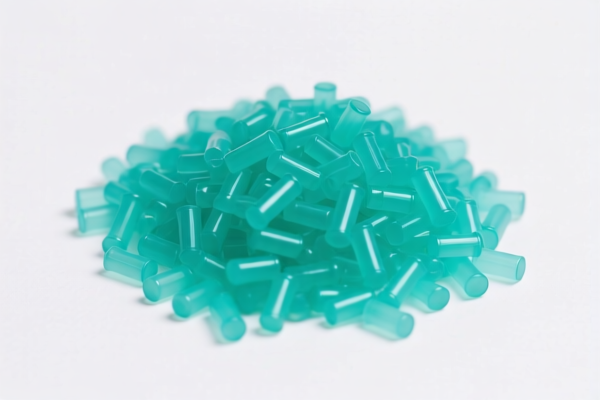

AI Analysis
🧪 Polyetheretherketone Copolymer (PEEK Copolymer)
🌐 HS Code Reference & Customs Clearance Guide | 2026 Latest Tariff Analysis | Professional Level Clearance Strategy
📌 I. Product Definition and Classification: Do You Really Understand "Polyetheretherketone Copolymer"?
Polyetheretherketone (PEEK) is a high-performance semi-crystalline thermoplastic. A Copolymer variant modifies the standard homopolymer structure to improve specific properties like flexibility, impact resistance, or processing speed. In international trade, PEEK copolymers are typically classified based on their state (raw material vs. finished product) and chemical composition (pure polymer vs. mixture/adhesive).
⚠️ Key Distinction Point:
- If the product is a pure polymer resin (powder, pellets, primary forms) → It usually falls under Chapter 39 (Plastics).
- If the product is a mixture containing adhesives or prepared for bonding → It may fall under Chapter 35 (Albuminoidal substances; prepared binders).
- If the product is a general chemical mixture without specific adhesive function → It may fall under Chapter 38 (Miscellaneous chemical products).
📦 II. HS Code Classification Details (2026 Latest Tariff Authority Comparison)
Based on the provided data for "Polyether Adhesive Mixture" (聚醚粘合剂混合物) derived from Polyether-based materials, here are the precise classifications and tax breakdowns for US Customs entry (China Origin):
| HS Code | Product Description | Application Scenario | Total Tax Rate (China Origin) | Tax Breakdown |
|---|---|---|---|---|
3506.91.50.00 |
Polyether Adhesive Mixture: Material conforms to polymer category, used as an adhesive mixture. | Prepared binders for polymer bonding; specialized adhesive formulations. | 37.1% | Base: 2.1% + Section 301: 25.0% + Section 122: 10.0% |
3907.21.00.00 |
Polyether Adhesive Mixture: Material belongs to polyether class, form is primary chemical mixture. | Raw polyether resins or primary forms used as chemical intermediates. | 41.5% | Base: 6.5% + Section 301: 25.0% + Section 122: 10.0% |
3824.99.29.00 |
Polyether Adhesive Mixture: Material is a polyether-based chemical substance, form is a mixture. | Miscellaneous chemical products; general mixtures not specifically described elsewhere. | 41.5% | Base: 6.5% + Section 301: 25.0% + Section 122: 10.0% |
3907.29.00.00 |
Polyether Adhesive Mixture: Material explicitly defined as polyether, form falls under chemical raw materials category. | Other polyethers, primary forms, not specified in 3907.21. | 41.5% | Base: 6.5% + Section 301: 25.0% + Section 122: 10.0% |
3506.99.00.00 |
Polyether Adhesive Mixture: Material is chemically synthetic, purpose is prepared adhesive/glue. | Other prepared adhesives; generic prepared glues not elsewhere specified. | 37.1% | Base: 2.1% + Section 301: 25.0% + Section 122: 10.0% |
🔍 Critical Reminder:
- Adhesive vs. Raw Material: If the PEEK copolymer is mixed with other substances to create a bonding agent, it is more likely classified under 3506 (Adhesives) or 3824 (Miscellaneous Chemicals) rather than pure plastics (Chapter 39).
- Tax Discrepancy: Classifying as an Adhesive (3506) results in a lower total tax (37.1%) compared to Chemical/Plastic Mixtures (41.5%). Proper documentation must prove the "adhesive" nature to leverage the lower rate.
- Section 122 Tariff: The 10% tariff under Section 122 applies to specific US trade policy additions, increasing the burden on these chemical products.
💰 III. 2026 Latest Tariff Rate Breakdown (Including Surcharges & Policy Add-ons)
✅ Applicable Country: United States (US)
✅ Origin: China (CN)
✅ Effective Time: Ongoing (Includes subsequent imports under current trade policies)
🎯 1. 3506.91.50.00 & 3506.99.00.00 —— Adhesive Mixtures (Lower Tax Bracket)
| Item | Content |
|---|---|
| Base Tariff | 2.1% (ad valorem) |
| Section 301 Surcharge | +25.0% (From US Trade Law Section 301) |
| Section 122 Surcharge | +10.0% (Specific US Trade Policy Addition) |
| Total Effective Tax Rate | 37.1% |
| Tax Calculation | CIF Value × 37.1% |
| De Minimis Exemption | ❌ Not Eligible (High tariff rates negate de minimis benefits for commercial shipments) |
| Legal Basis Path | HTSUS:3506.91 / 3506.99 → USITC:3506.91.50.00 / 3506.99.00.00 → SECTION:301 → SECTION:122 |
📌 Explanation:
- The 2.1% base rate is relatively low for chemical/adhesive products, but the 35% combined surcharge (301 + 122) significantly impacts cost.
- Why choose this? If your product is explicitly an adhesive, this classification saves 4.4% compared to Chapter 39/38 classifications.
🎯 2. 3907.21.00.00, 3907.29.00.00, 3824.99.29.00 —— Polyether Resins & Chemical Mixtures (Higher Tax Bracket)
| Item | Content |
|---|---|
| Base Tariff | 6.5% (ad valorem) |
| Section 301 Surcharge | +25.0% (From US Trade Law Section 301) |
| Section 122 Surcharge | +10.0% (Specific US Trade Policy Addition) |
| Total Effective Tax Rate | 41.5% |
| Tax Calculation | CIF Value × 41.5% |
| De Minimis Exemption | ❌ Not Eligible |
| Legal Basis Path | HTSUS:3907 / 3824 → USITC:3907.21.00.00 etc. → SECTION:301 → SECTION:122 |
📌 Note:
- These classifications apply if the PEEK copolymer is not primarily functioning as an adhesive but as a chemical raw material or general mixture.
- The 6.5% base rate is higher than adhesives, and with the same 35% surcharge, the total cost is higher.
- Misclassification Risk: Declaring an adhesive as a "polyether resin" to avoid adhesive duties (if any existed) is risky; Customs will scrutinize the product's actual use.
🛠️ IV. Customs Clearance Practical Advice (Real-World Pitfall Avoidance Guide)
✅ 1. Required Documentation Checklist (None Can Be Omitted)
| Document | Must Provide | Description |
|---|---|---|
| ✅ Product Technical Data Sheet (TDS) | ✔️ | Specifies composition, whether it is an adhesive, and polyether content. |
| ✅ Formulation/Recipe | ✔️ | Critical for determining if it is a "prepared adhesive" (Ch 35) or "chemical mixture" (Ch 38/39). |
| ✅ Product Photos (Including Label) | ✔️ | Clear display of model, brand, and usage instructions (e.g., "For Bonding"). |
| ✅ Safety Data Sheet (SDS) | ✔️ | Must confirm hazardous material status and chemical composition. |
| ✅ Commercial Invoice | ✔️ | Must explicitly state "Polyether Adhesive Mixture" or "PEEK Copolymer Resin", not just "Chemical". |
| ✅ Certificate of Origin (CO) | ✔️ | Essential for proving China origin and applying correct Section 301/122 rates. |
| ✅ Packing List | ✔️ | Details gross/net weight, dimensions, and packaging type. |
✅ 2. Declaration Tips (Key Mantras)
🔥 “Adhesive vs. Resin, Describe Use Clearly. Base Rate Matters, Surcharge is Fixed!”
| Scenario | Correct Declaration Method | Wrong Practice |
|---|---|---|
| Product is primarily used for bonding | 3506.91.50.00 or 3506.99.00.00 (Tax: 37.1%) |
Misdeclare as 3907 → Higher Tax (41.5%) or Penalty |
| Product is pure resin/powder for further processing | 3907.21.00.00 or 3907.29.00.00 (Tax: 41.5%) |
Misdeclare as Adhesive → Customs Rejection for False Statement |
| Product is a general chemical mix | 3824.99.29.00 (Tax: 41.5%) |
Use vague terms like "Polymer" → Delays |
| PEEK Copolymer specifically | Ensure description highlights "Polyether" and "Copolymer" | Generic "Plastic" → Incorrect Classification |
✅ 3. Special Case Handling
| Situation | Handling Advice |
|---|---|
| OEM Custom Adhesive | Provide client order + formulation proof to justify Ch 35 classification. |
| PEEK Copolymer for 3D Printing | If it is filament/powder not for bonding, it is Ch 39 (3907), not Ch 35. |
| High-Value Industrial Bonding | Consider applying for HTSUS Exclusions if applicable (though rare for Ch 35/39). |
| Mixed Shipments | Separate adhesive products from raw resin products in the declaration to avoid confusion. |
🌍 V. Global Market Customs Comparison (2026 Latest)
| Country/Region | Recommended HS Code | Tariff (China Origin) | Certification Requirements | Notes |
|---|---|---|---|---|
| 🇺🇸 USA | 3506.91.50.00 (if adhesive) |
37.1% | SDS, FDA (if food contact) | 41.5% if classified as resin. High scrutiny. |
| 🇨🇳 China | 3506.91.00 (Import) |
~5-7% | CCC (if applicable) | Lower base rates, no Section 301/122. |
| 🇪🇺 EU | 3506.10 (Adhesives) |
0-6.5% | REACH, CLP | No Section 301 equivalent, but strict REACH compliance. |
| 🇯🇵 Japan | 3506.90 |
0-3% | JIS, ISO | Low tariffs, high technical standards. |
| 🇦🇺 Australia | 3506.90 |
5% | ADR (if hazardous) | Moderate tariffs. |
📌 Conclusion:
- The US is the most challenging market due to the 35% surcharge (301 + 122).
- Correct classification is critical: Choosing3506(Adhesive) over3907(Resin) saves 4.4% in total tax.
- Documentation must be precise: Vague descriptions lead to Customs delays and potential reclassification.
📌 VI. Common Mistakes & Pitfall Avoidance (Lessons Learned)
❌ Mistake 1: Declaring "PEEK Copolymer" without specifying if it is an adhesive or raw resin.
👉 Consequence: Customs may assign the higher tax rate (41.5%) or demand extensive testing.
❌ Mistake 2: Using "Polymer" as the only description.
👉 Consequence: Ambiguity leads to delays. Must specify "Adhesive Mixture" or "Primary Form".
❌ Mistake 3: Ignoring Section 122 Tariff.
👉 Consequence: Underestimating costs by 10%. Total tax is not just 25% (Section 301).
❌ Mistake 4: Assuming De Minimis applies.
👉 Consequence: Commercial shipments with high value are not exempt. Taxes apply regardless of package size.
✅ Correct Practice:
"Polyether Adhesive Mixture, PEEK-based Copolymer, Prepared for Bonding, Non-Hazardous, Model XYZ, SDS Available"
🎯 VII. Conclusion: Professional Declaration, Save Time, Reduce Costs!
🎯 Remember the Mantra:
🔹 "Adhesive is 37%, Resin is 41%. Choose wisely, pay less!"
🔹 "SDS and Formula are Key. Without them, Customs will delay!"
📌 Tip:
If your product is strictly a raw resin for manufacturing (not an adhesive), do not force it into 3506. Use 3907 but ensure all documentation proves it is not a prepared adhesive.
For adhesive applications, 3506 is the safer, lower-tax route if the product qualifies.
📣 Immediate Action:
📞 Contact a Professional Customs Broker + Provide Product Formula + Apply for Advance Ruling
🚀 Let your PEEK Copolymer clear customs smoothly, efficiently, and profitably!
✨ Professional Clearance Starts with Accurate Classification!
💼 Every Cent of Tax is Worth Precise Calculation!
Customer Reviews
About HS Code Classification
The Harmonized System (HS) is an internationally standardized nomenclature developed by the World Customs Organization (WCO) to classify traded products. Over 200 countries use the HS system as the basis for customs tariffs, trade statistics, and import/export regulations.
Each HS code follows a hierarchical structure:
- Chapter (2 digits) — Broad category of goods (e.g., Chapter 84: Machinery and Mechanical Appliances)
- Heading (4 digits) — More specific grouping within the chapter
- Subheading (6 digits) — Internationally standardized breakdown, used by all WCO member countries
- National subdivisions (8-10 digits) — Country-specific extensions for further classification, such as US HTSUS 10-digit codes
Correct HS code classification is essential for smooth customs clearance, accurate duty payment, and compliance with trade regulations. Misclassification can lead to customs delays, overpayment of duties, or penalties.
When importing from CN to US, the applicable tariff rates may include:
- Most-Favored-Nation (MFN) rate — The standard duty rate applied to WTO members
- General rate — Applied to countries without trade agreements
- Trade remedy duties — Additional tariffs such as Section 301 (anti-dumping), Section 232 (national security), or countervailing duties
The information provided on this page is for reference purposes only. For official classification, please consult with your local customs authority or a licensed customs broker.