Polyethylene Backing Fiber Reinforced Tape
CN → US| HS Code | Tariff Rate | Origin | Destination | Doc |
|---|---|---|---|---|
| 3919102010 | 40.8% | CN | US | Official Doc |
| 5603110070 | 35.0% | CN | US | Official Doc |
| 5603120070 | 35.0% | CN | US | Official Doc |
| 3919905020 | 40.8% | CN | US | Official Doc |
| 3926905500 | 40.1% | CN | US | Official Doc |
Product Images
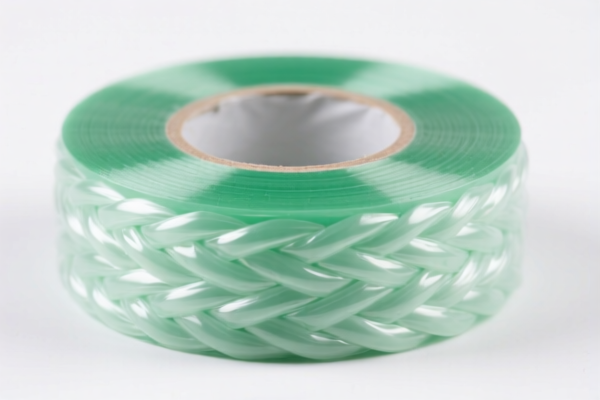
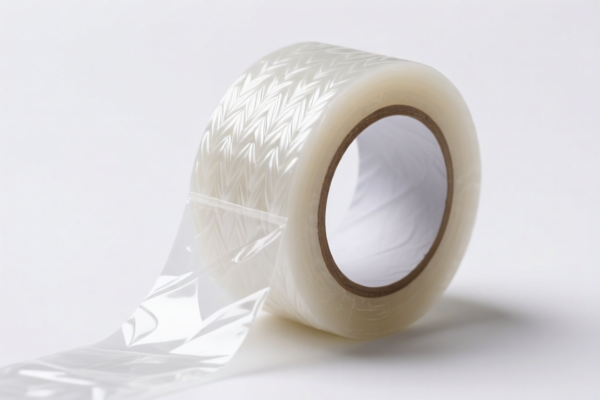
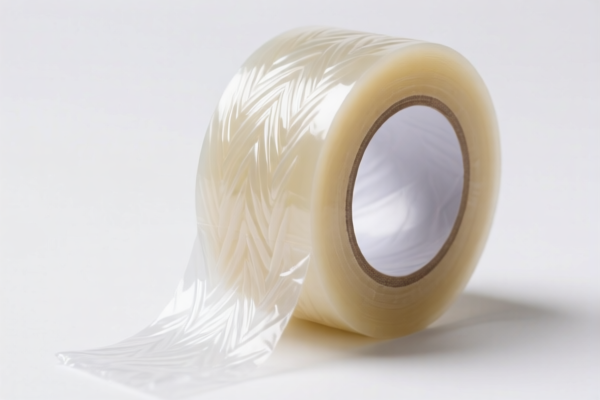
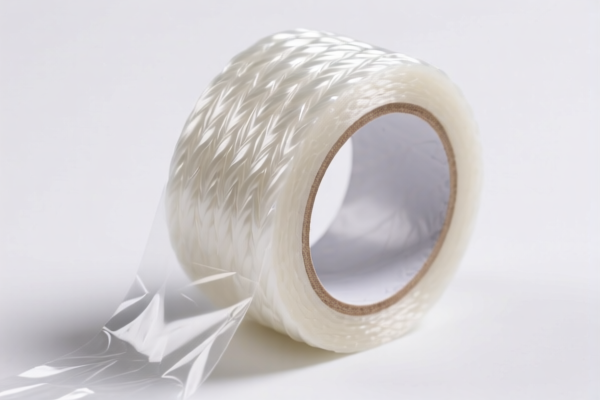
AI Analysis
🧱 Fiber Reinforced Tape with Polyethylene Backing
🌐 HS Code Reference & Customs Clearance Guide | 2026 Latest Tariff Analysis | Professional Clearance Strategy
📌 1. Product Definition & Classification: Do You Really Understand "Fiber Reinforced Tape"?
This product is a composite tape consisting of a polyethylene (PE) backing reinforced with fibers. In international trade, its classification depends heavily on the specific material composition of the "fibers" (synthetic vs. artificial/man-made) and its form (roll, self-adhesive).
Key Distinction Points: * Form Factor: It is typically a roll, self-adhesive tape, which strongly points towards Chapter 39 (Plastics). * Material Composition: The presence of "Fiber Reinforced" suggests it may fall under plastic products (if the PE is the primary material) or textile/fiber products (if the fiber is the dominant feature). * Confusion Risk: Misclassification between Chapter 39 (Plastics) and Chapter 56 (Non-wovens/Fibers) is common. However, the self-adhesive tape characteristic often favors Chapter 39, specifically heading 3919.
📦 2. HS Code Classification Details (2026 Latest Tariff Authority对照)
Based on the provided data, here are the four possible HS Codes and their rationales:
| HS Code | Product Description | Rationale for Classification | Key Characteristics |
|---|---|---|---|
3919.10.20.10 |
Self-adhesive plates, sheets, film, foil, tape, strip and other flat shapes, of plastics, whether or not in rolls. | Exact Match. The summary states: "Fiber reinforced" matches the material enhancement method of "fiber-reinforced tape". The form (roll, self-adhesive) fits perfectly. | 🏆 Highest Confidence Material: Plastic (PE) + Fiber Form: Self-adhesive Tape Usage: Reinforcement |
3919.90.50.20 |
Other self-adhesive plates, sheets, film, foil, tape, strip and other flat shapes, of plastics. | Good Match. The summary confirms: "Material (fiber reinforced) and form (tape) are fully compliant." This is a broader category for plastic tapes not specifically listed under .10. | ✅ Valid Alternative Material: Plastic (PE) + Fiber Form: Tape Note: Slightly broader than .10.20.10 |
5603.11.00.70 |
Non-woven fabrics and articles thereof, weighing not more than 25 g/m², of man-made filaments. | Inferred. The summary infers the material is "man-made filaments/synthetic fibers." It fits the "non-woven/fiber" product characteristic without material/use conflict. | ⚠️ Less Likely for Tape Material: Man-made Filaments Form: Non-woven/Fiber Product Note: Less likely if it's a clear plastic tape with fiber backing. |
5603.12.00.70 |
Non-woven fabrics and articles thereof, weighing more than 25 g/m² but not more than 70 g/m², of man-made filaments. | Inferred. Based on "fiber" in the name, it fits the material characteristics of non-woven fabric made from man-made filaments/fibers. | ⚠️ Less Likely for Tape Material: Man-made Filaments Form: Non-woven Note: Similar to above, ignores the "plastic tape" aspect. |
3926.90.55.00 |
Other articles of plastics and articles of other materials of heading 3901 to 3914. | Fallback Option. The summary matches: "Contains fibers" with "containing textile fibers." Tape is a common form in the "other" category if it doesn't fit 3919. | 🆘 Last Resort Material: Plastic + Textile Fibers Form: Other Article Note: Use if 3919 is rejected. |
🔍 Key Insight:
-3919.10.20.10is the most precise classification because it specifically addresses self-adhesive tapes made of plastics with fiber reinforcement.
- Codes5603.11.00.70and5603.12.00.70ignore the polyethylene (plastic) backing and the self-adhesive nature, focusing only on the fiber content. This is risky for a tape product.
-3926.90.55.00is a broader "other" category and should only be used if the specific 3919 classification is disputed.
💰 3. 2026 Latest Tariff Rate Breakdown (Including Surcharges & Policy Add-ons)
✅ Applicable Country: United States (US)
✅ Origin: China (CN)
✅ Effective Date: From November 10, 2025 (including subsequent imports)
🎯 1. 3919.10.20.10 —— Self-adhesive Tape, of Plastics (Fiber Reinforced)
| Item | Details |
|---|---|
| Base Tariff Rate | 5.8% (ad valorem) |
| USITC Surcharge (Section 301) | +25.0% |
| IEEPA Surcharge (122 Clause) | +10.0% |
| Total Tax Rate | 40.8% |
| Tax Calculation | CIF Value × 40.8% |
| De Minimis Exemption | ❌ Not Available (deny_de_minimis) |
| Legal Basis Path | IEEPA:9903.01.25 → IEEPA:9903.01.24 → USITC:3919.10.20.10 → FOOTNOTE:9903.88.01 |
📌 Explanation:
- The 5.8% base rate is the standard MFN duty for plastic tapes.
- The 25% surcharge is from the US Trade Act Section 301 list.
- The 10% surcharge is from the International Emergency Economic Powers Act (IEEPA) targeting Chinese products.
- Total 40.8% is a high tariff, requiring careful cost planning.
🎯 2. 3919.90.50.20 —— Other Self-adhesive Tape, of Plastics
| Item | Details |
|---|---|
| Base Tariff Rate | 5.8% (ad valorem) |
| USITC Surcharge (Section 301) | +25.0% |
| IEEPA Surcharge (122 Clause) | +10.0% |
| Total Tax Rate | 40.8% |
| Tax Calculation | CIF Value × 40.8% |
| De Minimis Exemption | ❌ Not Available (deny_de_minimis) |
| Legal Basis Path | IEEPA:9903.01.25 → IEEPA:9903.01.24 → USITC:3919.90.50.20 → FOOTNOTE:9903.88.01 |
📌 Note:
- Same tax burden as3919.10.20.10.
- Ensure your product description clearly states "Self-adhesive" to avoid misclassification into Chapter 56.
🎯 3. 5603.11.00.70 & 5603.12.00.70 —— Non-woven Fabrics (Man-made Filaments)
| Item | Details |
|---|---|
| Base Tariff Rate | 0.0% (ad valorem) |
| USITC Surcharge (Section 301) | +25.0% |
| IEEPA Surcharge (122 Clause) | +10.0% |
| Total Tax Rate | 35.0% |
| Tax Calculation | CIF Value × 35.0% |
| De Minimis Exemption | ❌ Not Available (deny_de_minimis) |
| Legal Basis Path | IEEPA:9903.01.25 → IEEPA:9903.01.24 → USITC:5603.xx.xx.xx → FOOTNOTE:9903.88.01 |
📌 Note:
- Although the base rate is 0%, the surcharges still apply, bringing the total to 35.0%.
- This is 5.8% lower than the plastic tape classification, BUT it carries a high risk of customs rejection because "tape" is not typically classified as "non-woven fabric" if it has a plastic backing and adhesive.
🎯 4. 3926.90.55.00 —— Other Articles of Plastics (Containing Textile Fibers)
| Item | Details |
|---|---|
| Base Tariff Rate | 5.1% (ad valorem) |
| USITC Surcharge (Section 301) | +25.0% |
| IEEPA Surcharge (122 Clause) | +10.0% |
| Total Tax Rate | 40.1% |
| Tax Calculation | CIF Value × 40.1% |
| De Minimis Exemption | ❌ Not Available (deny_de_minimis) |
| Legal Basis Path | IEEPA:9903.01.25 → IEEPA:9903.01.24 → USITC:3926.90.55.00 → FOOTNOTE:9903.88.01 |
📌 Note:
- This is the lowest total rate (40.1%) among the plastic-related classifications.
- However, it is a "catch-all" category. If customs determines the product is primarily a "tape," they will force classification under 3919, which has a higher base rate (5.8% vs 5.1%).
🛠️ 4. Customs Clearance Practical Advice (Battle-Proven Pitfall Guide)
✅ 1. Required Documentation Checklist (Non-negotiable)
| Document | Must Provide? | Description |
|---|---|---|
| ✅ Product Specification Sheet | ✔️ | Must detail: Base material (Polyethylene), Reinforcement (Fiber type: synthetic/artificial), Adhesive type, Roll dimensions. |
| ✅ Product Photos (Clear Label) | ✔️ | Show the roll, the cross-section (if possible), and the label indicating "Self-adhesive" and "Fiber Reinforced." |
| ✅ Commercial Invoice | ✔️ | Clearly state: "Fiber Reinforced Tape, Polyethylene Backing, Self-Adhesive." Avoid vague terms like "Plastic Sheet." |
| ✅ Packing List | ✔️ | Indicate net/gross weight and quantity. |
| ✅ Third-Party Test Report | ✔️ | Optional but recommended: To prove the material composition (PE vs. Fiber ratio) if customs challenges the classification. |
| ✅ Certificate of Origin (CO) | ✔️ | If applicable for other markets (not US). |
✅ 2. Declaration Tips (Key Mantra)
🔥 "Plastic Base + Adhesive = 3919, Not 5603!"
| Scenario | Correct Declaration | Wrong Practice |
|---|---|---|
| Roll, Self-Adhesive, PE Backing | 3919.10.20.10 |
Declare as "Non-woven Fabric" → 5603.11.00.70 → High Risk of Rejection |
| Fiber Reinforced, No Adhesive | Consider 5603.11.00.70 |
Declare as "Self-adhesive Tape" → Misclassification |
| Tape with Unknown Base | 3926.90.55.00 |
Vague description → Customs Delay |
✅ 3. Special Case Handling
| Situation | Handling Advice |
|---|---|
| OEM Custom Tape | Provide customer order + design specs. Avoid being classified as "General Purpose" if it has specific industrial use. |
| Mixed Material (PE + Glass Fiber) | Clearly state "Glass Fiber Reinforced Polyethylene Tape." This supports 3919.10.20.10. |
| Importing for Personal Use | Not applicable for commercial shipments. For de minimis (if allowed), note that all these codes deny de minimis exemption. |
| Dispute with Customs | If customs insists on 5603, provide evidence that the product is a tape (self-adhesive, roll form) and not a fabric sheet. |
🌍 5. Global Market Customs Comparison (2026 Latest)
| Country/Region | Recommended HS Code | Tariff Rate | Certification Requirement | Notes |
|---|---|---|---|---|
| 🇺🇸 United States | 3919.10.20.10 |
40.8% (China Origin) | FCC/ROHS (if electronic use) | High tariff due to Section 301 + IEEPA. |
| 🇨🇳 China | 3919.10.20.10 |
~5-6% | CCC (if applicable) | Standard import duty. |
| 🇪🇺 European Union | 3919.10.00 |
~6.5% | CE (if applicable) | No Section 301 equivalent. |
| 🇦🇺 Australia | 3919.10.00 |
~5% | RCM (if applicable) | Moderate duty. |
| 🇯🇵 Japan | 3919.10.00 |
~6-8% | PSE (if applicable) | No surcharges. |
📌 Conclusion:
- The US market is the most challenging due to the 40.8% total tariff.
- Ensure your product is clearly described as a plastic-based self-adhesive tape to avoid being misclassified into the 35.0% category (which is lower but risky).
- Cost Calculation: Factor in the 40.8% duty when pricing for the US market.
📌 6. Common Errors & Pitfall Guide (Lessons from Blood)
❌ Error 1: Declaring "Fiber Tape" as "Non-woven Fabric" (5603.11.00.70) to save on base duty.
👉 Consequence: Customs rejects it because it's a tape (3919), not a fabric. Penalty + Delay.
❌ Error 2: Omitting "Self-adhesive" in the description.
👉 Consequence: Customs may classify it as a generic plastic article (3926.90.55.00), which has a slightly lower rate (40.1%) but higher scrutiny.
❌ Error 3: Not providing clear material composition.
👉 Consequence: Customs cannot distinguish between "Plastic Backing" and "Fabric Backing," leading to prolonged inspection.
✅ Correct Declaration Example:
"Self-Adhesive Tape, Polyethylene Backing, Reinforced with Synthetic Fibers, Roll Form, for Industrial Use, Model XYZ, HS Code 3919.10.20.10"
🎯 7. Conclusion: Precise Classification Saves Money!
🎯 Remember the Mantra:
🔹 "Plastic + Adhesive = 3919, Base 5.8%, Total 40.8%."
🔹 "Don't risk 'Fabric' classification; it's 35.0% but high rejection risk."
🔹 "Clear description is key to smooth clearance."
📌 Pro Tip:
If your product is originating from Vietnam, Mexico, Thailand, or Malaysia, you may qualify for IEEPA Exemptions, reducing the tariff to 0%~5%.
Recommendation: Apply for an Advance Ruling before shipment to confirm the HS Code and avoid customs disputes.
📣 Immediate Action:
📞 Contact a professional customs broker + Provide product photos + Apply for HS Code Advance Ruling
🚀 Ensure your Fiber Reinforced Tape clears customs smoothly, efficiently, and cost-effectively!
✨ Professional Clearance Starts with Accurate Classification!
💼 Every Dollar of Cost Deserves Precise Calculation!
Customer Reviews
About HS Code Classification
The Harmonized System (HS) is an internationally standardized nomenclature developed by the World Customs Organization (WCO) to classify traded products. Over 200 countries use the HS system as the basis for customs tariffs, trade statistics, and import/export regulations.
Each HS code follows a hierarchical structure:
- Chapter (2 digits) — Broad category of goods (e.g., Chapter 84: Machinery and Mechanical Appliances)
- Heading (4 digits) — More specific grouping within the chapter
- Subheading (6 digits) — Internationally standardized breakdown, used by all WCO member countries
- National subdivisions (8-10 digits) — Country-specific extensions for further classification, such as US HTSUS 10-digit codes
Correct HS code classification is essential for smooth customs clearance, accurate duty payment, and compliance with trade regulations. Misclassification can lead to customs delays, overpayment of duties, or penalties.
When importing from CN to US, the applicable tariff rates may include:
- Most-Favored-Nation (MFN) rate — The standard duty rate applied to WTO members
- General rate — Applied to countries without trade agreements
- Trade remedy duties — Additional tariffs such as Section 301 (anti-dumping), Section 232 (national security), or countervailing duties
The information provided on this page is for reference purposes only. For official classification, please consult with your local customs authority or a licensed customs broker.