Polyethylene Bag (with Drawstring)
CN → US| HS Code | Tariff Rate | Origin | Destination | Doc |
|---|---|---|---|---|
| 3923210085 | 38.0% | CN | US | Official Doc |
| 3923210095 | 38.0% | CN | US | Official Doc |
Product Images
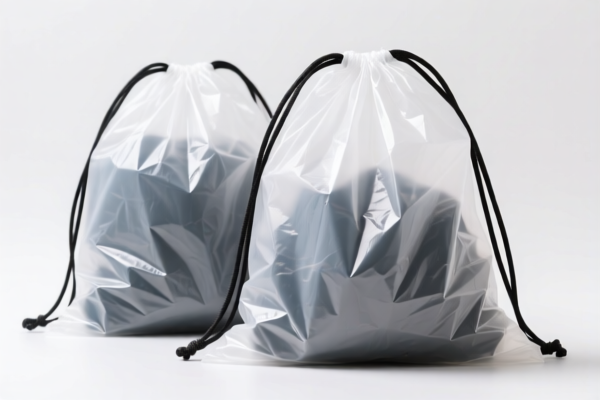
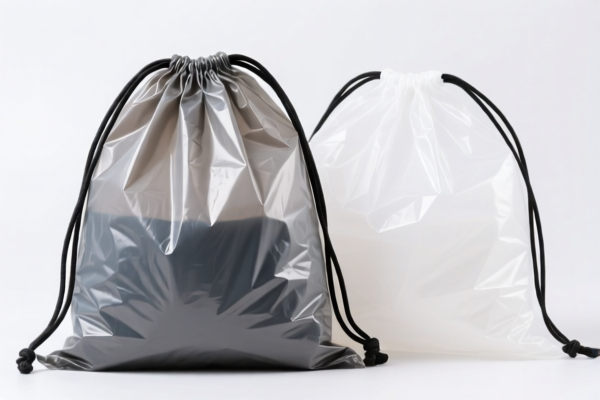
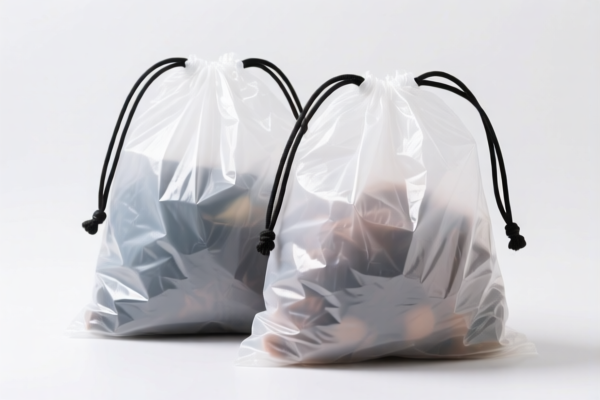
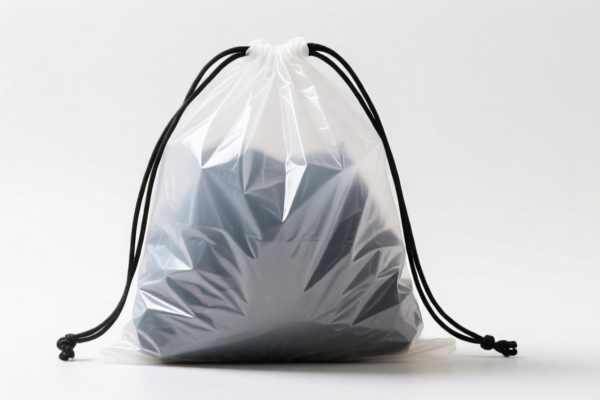
AI Analysis
🛍️ Polyethylene Retail Carrier Bag (with Drawstring/Handles)
🌐 HS Code Reference & Customs Clearance Guide | 2026 Latest Tariff Analysis | Professional Clearance Strategy
📌 I. Product Definition & Classification: Is It Just a "Bag"?
The Polyethylene Retail Carrier Bag (PRCB) is the most common packaging material in global retail. However, in international trade, its classification hinges on specific physical attributes: material composition, presence of handles/drawstrings, and dimensions.
Under the 2026 Harmonized System (HS), plastic sacks and bags are primarily classified under Heading 3923. Specifically, bags made of polymers of ethylene (polyethylene) fall under subheading 3923.21.
⚠️ Key Distinction Point:
- If the bag is made of Polypropylene (PP) or Polyester (PET) → It falls under 3923.29 (Other plastics).
- If the bag is made of Polyethylene (PE) AND has handles or drawstrings AND meets specific size criteria → It falls under 3923.21.00.85 or 3923.21.00.95.
- Crucial Constraint: The bag must NOT have any length or width shorter than 6 inches (152.4 mm) OR longer than 40 inches (1,016 mm).
- Note: The source data implies that bags meeting these dimensional constraints are subject to the specific subheadings listed below. Bags outside these dimensions or lacking handles may fall into different "Other" categories, but based on the provided data, we focus on the PRCB with handles/drawstrings.
📦 II. HS Code Classification Details (2026 Latest Tariff Authority Reference)
Based strictly on the provided <DATA>, the product is classified under two specific subheadings within 3923.21 (Sacks and bags of polymers of ethylene). The distinction between the two is generally based on further specificity (often "With Handles" vs. "Other" within the handle category, though the provided text groups "Polyethylene retail carrier bags (PRCBs) with handles..." under 85 and generic "Other" under 95).
| HS Code | Product Description | Applicability Conditions | Key Attributes |
|---|---|---|---|
3923.21.00.85 |
Polyethylene Retail Carrier Bags (PRCBs) with handles (including drawstrings) | - Material: Polyethylene (PE) - Feature: Has handles/drawstrings - Size: No dim < 152.4mm (6") and no dim > 1016mm (40") |
✅ Target Product (This is the most likely code for standard retail carrier bags) |
3923.21.00.95 |
Other sacks and bags of polymers of ethylene | - Material: Polyethylene (PE) - Feature: Not specifically covered by .85 (e.g., no handles, or different size criteria) - General "Other" category |
✅ Fallback Category (Use if the bag does not meet the specific "PRCB with handles" definition) |
🔍 Important Note on the Source Data:
The description for3923.21.00.85explicitly mentions "Polyethylene retail carrier bags (PRCBs) with handles (including drawstrings), with no length or width shorter than 6 inches (152.4 mm) or longer than 40 inches (1,016 mm)".
This dimensional constraint is critical. If your bag is smaller than 6 inches or larger than 40 inches, it may not qualify for this specific subheading and could be misclassified, leading to clearance issues.
💰 III. 2026 Latest Tariff Rate Details (Including Surcharges)
✅ Applicable Country: United States (US)
✅ Origin: China (CN) (Implied by the 25% Section 301 tariff)
✅ Effective Date: Current (2026 Tariff Schedule)
🎯 1. 3923.21.00.85 —— Polyethylene Retail Carrier Bags (with Handles/Drawstrings)
| Item | Content |
|---|---|
| Base Tariff Rate | 3.0% (Ad Valorem) |
| Section 301 Additional Tariff | +25.0% (Retaliatory tariff on Chinese goods) |
| Total Tariff Rate | 28.0% |
| Tax Calculation | CIF Value × 28.0% |
| De Minimis Exemption? | ❌ No (Section 301 goods are generally excluded from de minimis thresholds if the total value exceeds thresholds, and specifically targeted surcharges apply) |
| Legal Basis Path | HTSUS:3923.21.00.85 → USITC Footnote 9903.88.01 (Section 301) → USTR:301-China |
📌 Explanation:
- Base Rate (3.0%): The standard Most Favored Nation (MFN) rate for plastic sacks/bags of polyethylene.
- Additional Rate (25.0%): This is the Section 301 tariff imposed on goods originating from China. This is non-negotiable for Chinese-origin PE bags.
- Total (28.0%): This is a high tariff rate for a simple plastic bag. It significantly impacts profit margins.
- Why 28%? Plastic packaging is considered a low-value-added good in US-China trade disputes, making it a primary target for tariffs.
🎯 2. 3923.21.00.95 —— Other Polyethylene Bags
| Item | Content |
|---|---|
| Base Tariff Rate | 3.0% (Ad Valorem) |
| Section 301 Additional Tariff | +25.0% (Retaliatory tariff on Chinese goods) |
| Total Tariff Rate | 28.0% |
| Tax Calculation | CIF Value × 28.0% |
| De Minimis Exemption? | ❌ No |
| Legal Basis Path | HTSUS:3923.21.00.95 → USITC Footnote 9903.88.01 (Section 301) → USTR:301-China |
📌 Note:
- The tariff rate is identical to the handle-type bag (28%).
- The difference lies only in the classification precision required by customs. Misclassifying a handle-bearing bag as "Other" to avoid scrutiny is risky if the product clearly has handles.
🛠️ IV. Customs Clearance Practical Advice (Pitfall Avoidance Guide)
✅ 1. Required Documentation Checklist (Non-negotiable)
| Document | Required? | Explanation |
|---|---|---|
| ✅ Product Description | ✔️ | Must explicitly state: "Polyethylene Retail Carrier Bag with Drawstring/Handles". Include material (PE/HDPE/LLDPE). |
| ✅ Physical Dimensions | ✔️ | CRITICAL: Must confirm NO dimension is < 6 inches (152.4mm) or > 40 inches (1,016mm). If outside this range, HS Code may change. |
| ✅ Material Composition | ✔️ | Certificate of Analysis or Mill Test Report proving it is Polyethylene (PE), not PP or PVC. |
| ✅ Commercial Invoice | ✔️ | Must list unit price, total value, and correct HS Code (3923.21.00.85 or .95). |
| ✅ Packing List | ✔️ | Detail the number of bags per carton, weight, and volume. |
| ✅ Country of Origin Certificate | ✔️ | To confirm Chinese origin (triggers the 25% tariff). |
✅ 2. Declaration Tips (Key Mantras)
🔥 "PE Material, Handle Type, Size Check, 28% Tariff!"
| Scenario | Correct Declaration | Wrong Practice |
|---|---|---|
| Bag has handles/drawstrings | Use 3923.21.00.85 |
Use 3923.21.00.95 (Too vague, risks audit) |
| Bag is small (<6 inches) | Do not use .85 | Use 3923.21.00.85 → Result: Misclassification, Penalty |
| Bag is made of PP | Use 3923.29 (Other plastics) |
Use 3923.21 (PE) → Result: Tariff Discrepancy, Seizure Risk |
| Bag has no handles | Use 3923.21.00.95 |
Use 3923.21.00.85 → Result: Inaccurate Description |
✅ 3. Special Case Handling
| Situation | Handling Advice |
|---|---|
| OEM Private Label Bags | Provide brand authorization letter if necessary, but focus on physical specs (PE, Handles, Size). |
| Biodegradable PE Bags | If certified as "Biodegradable" but still PE structure, declare as PE. If it's a different polymer (e.g., PBAT), it may fall under different codes. Stick to PE for this data. |
| Multi-material Bags | If the bag has a PE handle but PP body, it is still generally classified by the principal material. Consult a customs broker if materials are mixed. |
| Small Quantity Samples | Even samples are subject to the 28% tariff if shipped via courier (USPS/UPS/FedEx) and value exceeds de minimis ($800). For < $800, no duty applies if eligible for de minimis, but Section 301 goods are often excluded. Check current CBP de minimis rules for Section 301 goods. |
🌍 V. Global Market Comparison (2026 Latest)
| Country/Region | Recommended HS Code | Tariff Rate | Certification | Remarks |
|---|---|---|---|---|
| 🇺🇸 USA | 3923.21.00.85 |
28.0% (3% Base + 25% Sec 301) | No specific cert | High Tariff. Plan pricing accordingly. |
| 🇨🇳 China | 3923.21.00.85 |
5-10% (Import Duty) | N/A | Domestic trade may have different VAT rates. |
| 🇪🇺 EU | 3923.29.10 (Typical) |
0-6.5% | REACH Compliance | EU has stricter environmental packaging laws. |
| 🇬🇧 UK | 3923.29.90 |
0-6.5% | UKCA | Post-Brexit rules apply. |
| 🇦🇺 Australia | 3923.29.00 |
5% | N/A | No Section 301 equivalent. |
📌 Conclusion:
- The USA is the only major market imposing the punitive 25% Section 301 tariff on Chinese PE bags.
- The 28% total tariff is a significant cost driver. For low-value items like bags, this can wipe out all profit margins.
- Dimensional Compliance is Key: Ensure no dimension is < 152.4mm or > 1016mm to ensure correct classification under.85.
📌 VI. Common Mistakes & Pitfalls (Blood & Tears Lessons)
❌ Mistake 1: Ignoring the 6-inch/40-inch size constraint.
👉 Consequence: If a bag is 5 inches wide, it does not qualify for 3923.21.00.85. It may be classified as "Other" (.95) or a different heading, leading to misdeclaration penalties.
❌ Mistake 2: Using "Plastic Bag" as the description.
👉 Consequence: Customs may detain the shipment for lack of specificity. They will require a full description including material (PE), feature (with handle/drawstring), and usage (retail carrier).
❌ Mistake 3: Confusing PE with PP.
👉 Consequence: PP bags fall under 3923.29, which has different tariff rates and regulations. Misdeclaring PE as PP can lead to false declaration charges.
❌ Mistake 4: Assuming de minimis ($800) applies.
👉 Consequence: Section 301 goods are often excluded from de minimis exemption depending on current CBP enforcement. Even small shipments may incur the 28% tariff. Always verify current CBP de minimis exclusions.
✅ Correct Action:
"100% Polyethylene Retail Carrier Bag with Drawstring, Size: 12x10x0.5 inches, Color: Black, for Retail Use, HS Code: 3923.21.00.85, Origin: China"
🎯 VII. Conclusion: Professional Declaration Saves Costs!
🎯 Remember the Mantra:
🔹 "PE Material, Handle Present, Size Check (6-40 inches), 28% Tax!"
🔹 "HS Code Accuracy Prevents Delays, Tariff Precision Protects Profit!"
📌 Pro Tip:
- If your bags are smaller than 6 inches or larger than 40 inches, do NOT use 3923.21.00.85.
- Consider supplier diversification if the 28% tariff erodes margins.
- Apply for an Advance Ruling (Pre-Decision) from CBP if you are unsure about the dimensional criteria or material composition.
📣 Immediate Action:
📞 Consult a Customs Broker + Verify Bag Dimensions + Confirm Material (PE)
🚀 Ensure Smooth Clearance, Avoid Penalties, and Optimize Your Landed Cost!
✨ Professional Customs Clearance Starts with Accurate Classification!
💼 Every Percent in Tariff Matters!
Customer Reviews
About HS Code Classification
The Harmonized System (HS) is an internationally standardized nomenclature developed by the World Customs Organization (WCO) to classify traded products. Over 200 countries use the HS system as the basis for customs tariffs, trade statistics, and import/export regulations.
Each HS code follows a hierarchical structure:
- Chapter (2 digits) — Broad category of goods (e.g., Chapter 84: Machinery and Mechanical Appliances)
- Heading (4 digits) — More specific grouping within the chapter
- Subheading (6 digits) — Internationally standardized breakdown, used by all WCO member countries
- National subdivisions (8-10 digits) — Country-specific extensions for further classification, such as US HTSUS 10-digit codes
Correct HS code classification is essential for smooth customs clearance, accurate duty payment, and compliance with trade regulations. Misclassification can lead to customs delays, overpayment of duties, or penalties.
When importing from CN to US, the applicable tariff rates may include:
- Most-Favored-Nation (MFN) rate — The standard duty rate applied to WTO members
- General rate — Applied to countries without trade agreements
- Trade remedy duties — Additional tariffs such as Section 301 (anti-dumping), Section 232 (national security), or countervailing duties
The information provided on this page is for reference purposes only. For official classification, please consult with your local customs authority or a licensed customs broker.