Polyethylene Bags (Transparent)
CN → US| HS Code | Tariff Rate | Origin | Destination | Doc |
|---|---|---|---|---|
| 3923210085 | 38.0% | CN | US | Official Doc |
| 3923210080 | 38.0% | CN | US | Official Doc |
Product Images

AI Analysis
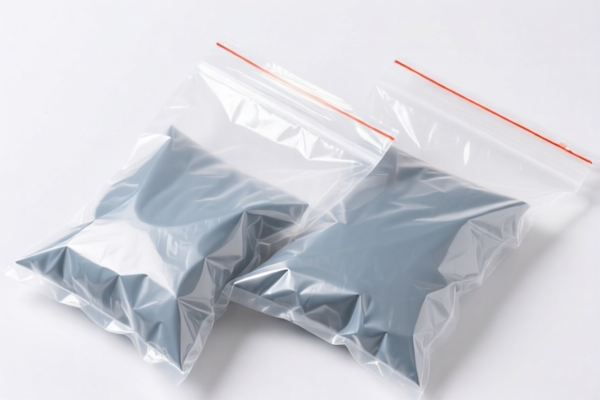
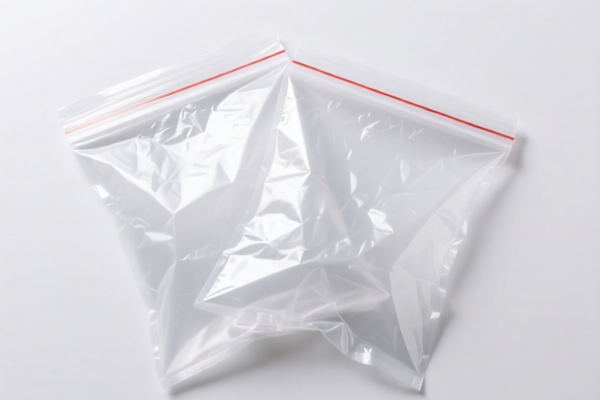
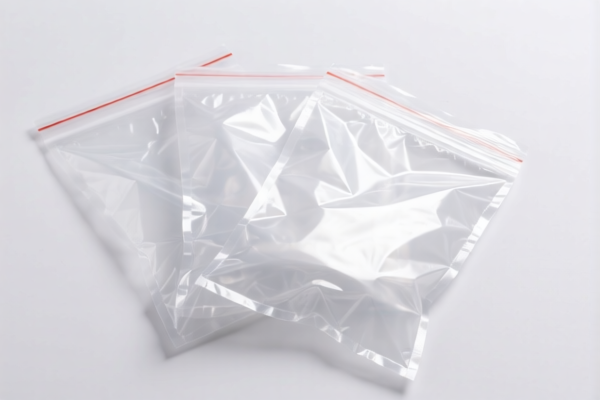
🛍️ Polyethylene Retail Carrier Bags (Transparent)
🌐 HS Code Reference & Customs Clearance Guide | 2024/2025 Latest Tariff Analysis | Professional Entry Strategy
📌 I. Product Definition & Classification: Are You Importing "Bags" or "Containers"?
Polyethylene (PE) bags are ubiquitous in global trade, used for packaging everything from groceries to industrial components. However, customs authorities strictly distinguish between retail carrier bags (designed for consumer carrying) and other sacks/bags (designed for bulk storage or specific containment). The classification depends entirely on dimensions and the presence of handles.
⚠️ Key Distinction Point:
- If the bag is small (single side ≤ 75mm), it is treated as a general plastic container/packing article → 3923.21.00.80
- If the bag is a "retail carrier bag" with handles (drawstrings included) and dimensions between 6 inches and 40 inches → 3923.21.00.85
📦 II. HS Code Classification Details (Latest Harmonized System)
| HS Code | Product Description | Applicable Scenario | Dimensions/Features |
|---|---|---|---|
3923.21.00.80 |
Articles for conveyance/packing of goods; sacks & bags of ethylene polymers; With no single side exceeding 75 mm in length | Small plastic pouches, sachets, tiny packaging bags, sample bags | ❌ Small (≤ 75mm) |
3923.21.00.85 |
Articles for conveyance/packing of goods; sacks & bags of ethylene polymers; Polyethylene retail carrier bags (PRCBs) with handles (including drawstrings), with no length or width shorter than 6 inches (152.4 mm) or longer than 40 inches (1,016 mm) | Grocery bags, T-shirt bags, drawstring sacks, supermarket carry bags | ✅ Large (6"-40") + Handles |
🔍 Critical Reminder:
- HS 3923.21.00.85 is specifically for Retail Carrier Bags (PRCBs) intended for consumers. They must have handles (or be designed to be carried by hand) and fall within the specific size range. - HS 3923.21.00.80 captures smaller, non-retail-specific polyethylene bags that do not meet the PRCB criteria. - Do not misclassify large retail bags as small sacks, or vice versa, as this triggers customs delays and potential penalties.
💰 III. 2024/2025 Tariff Rate Breakdown (Including Additional Duties)
✅ Applicable Country: United States (US)
✅ Country of Origin: China (CN)
✅ Effective Date: Current trade terms apply (Subject to Section 301 & IEEPA tariffs)
🎯 1. 3923.21.00.85 —— Polyethylene Retail Carrier Bags (PRCBs)
| Item | Content |
|---|---|
| Base Tariff Rate | 3.0% (Ad Valorem) |
| Section 301 Additional Tariff | +25.0% |
| IEEPA Additional Tariff | Note: Standard IEEPA tariffs may apply depending on specific product exclusions and current executive orders, but the core "25%" surcharge is the primary driver for many plastic goods under Section 301. |
| Total Effective Tax Rate | 28.0% |
| Tax Calculation | CIF Value × 28% |
| De Minimis Exemption | ❌ Not Eligible (Valued over $800? No, usually this specific HTS falls under scrutiny. Check latest CBP rules for small parcels, but generally, bulk imports are fully taxed.) |
| Legal Basis Path | HTSUS:3923.21.00.85 → USITC Footnote 301 → Executive Order 13936 |
📌 Explanation:
- The 28% total tax is the sum of the standard MFN rate (3%) and the Section 301 retaliation tariff (25%). - This high rate applies specifically because these are considered "retail carrier bags" originating from China. - Cost Impact: For a $10,000 shipment, you pay $2,800 in duties alone.
🎯 2. 3923.21.00.80 —— Other Polyethylene Bags (No single side > 75mm)
| Item | Content |
|---|---|
| Base Tariff Rate | 3.0% (Ad Valorem) |
| Section 301 Additional Tariff | +25.0% |
| Total Effective Tax Rate | 28.0% |
| Tax Calculation | CIF Value × 28% |
| De Minimis Exemption | ❌ Not Eligible for bulk commercial imports |
| Legal Basis Path | HTSUS:3923.21.00.80 → USITC Footnote 301 |
📌 Note:
- Even though these are smaller bags, they are still subject to the same 28% total duty if imported from China. - There is no significant tariff difference between the two HS codes in this specific data set; the difference lies in product definition and customs scrutiny, not tax savings.
🛠️ IV. Customs Clearance Practical Advice (Avoiding Pitfalls)
✅ 1. Documentation Checklist (Mandatory)
| Document | Required | Notes |
|---|---|---|
| ✅ Commercial Invoice | ✔️ | Must clearly state "Polyethylene Retail Carrier Bags" or "Plastic Sacks". Must specify material (100% PE). |
| ✅ Packing List | ✔️ | Must detail quantities, dimensions, and weight. |
| ✅ Product Description | ✔️ | Include: "Handles: Yes/No", "Size: X inches", "Color: Transparent/Clear", "Material: LDPE/HDPE". |
| ✅ Certificate of Origin | ✔️ | Essential for proving Chinese origin to apply (or defend) the 25% tariff. |
| ✅ Form 445 (if applicable) | N/A | Generally not required for simple plastic bags, but check for specific state regulations. |
| ✅ Anti-Dumping Petition Check | ⚠️ | CRITICAL: Some polyethylene products have been subject to Anti-Dumping (AD)/Countervailing Duty (CVD) petitions. Verify if your specific bag type falls under active AD/CVD orders. |
✅ 2. Declaration Tips (Golden Rules)
🔥 "Accurate Description, Correct Dimension, Avoid Misclassification!"
| Scenario | Correct Declaration | Common Mistake |
|---|---|---|
| Retail Shopping Bags | 3923.21.00.85 - "Polyethylene Retail Carrier Bags with Handles" |
Calling them "Plastic Sacks" to hide the "Retail" nature |
| Tiny Sachet Bags | 3923.21.00.80 - "Plastic Bags, no side > 75mm" |
Calling them "Retail Bags" when they are too small |
| Non-PE Plastic Bags | Change HS Code (e.g., PP bags) | Stating "Polyethylene" when it is Polypropylene (PP) |
| Reprocessed Recycled PE | Additional disclosure may be needed | Hidden recycled content can trigger different regulations |
✅ 3. Special Situations
| Situation | Handling Advice |
|---|---|
| Re-export from Canada/Mexico | If the PE resin is Chinese but bags are made in Mexico, you may claim USMCA Free Trade benefits. Do not claim Chinese origin. |
| Mixed Containers | If one container has both 3923.21.00.80 and 3923.21.00.85, declare separately. Mislabeling one as the other can lead to audits of the entire shipment. |
| Bag Thickness | While not directly changing HS code in this dataset, thickness (microns) is often asked by customs to determine if it's a "sack" or a "wrapper." Provide this data if asked. |
🌍 V. Global Market Comparison (2024/2025)
| Country/Region | Recommended HS Code | Tariff (China Origin) | Certification/Labeling | Notes |
|---|---|---|---|---|
| 🇺🇸 USA | 3923.21.00.85 |
28% (3% Base + 25% Section 301) | None specific, but truthful labeling is key | High tariff barrier; consider supply chain diversification. |
| 🇨🇳 China | 3923.21.00.85 |
~10% (Import Duty) | CCC (if applicable for specific types) | Export hub for these goods. |
| 🇪🇺 EU | 3923.21.00.00 |
0% - 6.5% (varies by country/FTA) | Single-Use Plastics Directive (SUPD) compliance required | Banned or taxed on single-use plastics in many EU nations. |
| 🇬🇧 UK | 3923.21.00.00 |
4.5% (Standard) | Plastic Packaging Tax (if <30% recycled content) | New tax on plastic packaging with <30% recycled material. |
| 🇨🇦 Canada | 3923.21.00.00 |
0% (if USMCA eligible & made in NA) | CECA (if from China) | High tariffs on Chinese origin; free on NA-made. |
📌 Conclusion:
- USA: Highest duty burden (28%).
- EU/UK: Non-tariff barriers (bans, recycled content taxes) are more significant than tariffs.
- Supply Chain Alert: If exporting to the US, consider Vietnam, Mexico, or India sourcing to avoid the 25% Section 301 tariff.
📌 VI. Common Errors & Pitfalls (Lessons Learned)
❌ Error 1: Declaring "Retail Carrier Bags" as "Plastic Wrapping Film"
👉 Consequence: Misclassification. If caught, penalties + back taxes. The definition of "Retail Carrier Bag" is strict.
❌ Error 2: Ignoring the "Handles" requirement for 3923.21.00.85
👉 Consequence: If a bag has no handles but is declared under PRCB code, Customs may reject it and reclassify to 3923.21.00.80 or another heading, causing delays.
❌ Error 3: Assuming all Plastic Bags are 3923.21
👉 Consequence: If the bag is made of Polypropylene (PP) or other polymers, the HS code is different (e.g., 3923.29). Always verify the polymer type on the invoice.
❌ Error 4: Not declaring "Recycled Content" accurately
👉 Consequence: While this doesn't change the US HS code in this dataset, it may trigger Plastic Packaging Tax in the UK or compliance issues in the EU.
✅ Correct Practice:
"100% Low-Density Polyethylene (LDPE) Retail Carrier Bags, Clear, with Cut Handles, Size: 12x18 inches, Made in China."
🎯 VII. Conclusion: Professional Declaration, Cost Control, Compliance!
🎯 Remember the Golden Rules:
🔹 "Handles + Size = Retail Carrier Bag (85)"
🔹 "Tiny Bag = Other Sack (80)"
🔹 "China Origin = 28% Total Duty in USA"
🔹 "Always Verify Polymer: PE vs. PP vs. Other"
📌 Pro Tip:
If your supplier is in China, but you are shipping to the US, calculate the Landed Cost including the 28% duty.
Action: Consider tariff engineering (changing bag style/handles to alter classification if possible) or supply chain relocation (Mexico/Vietnam) to save 25% on duties.
Consult a Customs Broker to file for an Advance Ruling if your bag design is ambiguous.
📣 Immediate Action:
📞 Contact your freight forwarder + Provide product specs (Dimensions, Handles, Material) + Verify Origin
🚀 Ensure Smooth Customs Clearance, Avoid Delays, and Protect Your Margins!
✨ Professional Clearance Starts with Precise Classification!
💼 Every Percent of Duty Saved is Pure Profit!
Customer Reviews
About HS Code Classification
The Harmonized System (HS) is an internationally standardized nomenclature developed by the World Customs Organization (WCO) to classify traded products. Over 200 countries use the HS system as the basis for customs tariffs, trade statistics, and import/export regulations.
Each HS code follows a hierarchical structure:
- Chapter (2 digits) — Broad category of goods (e.g., Chapter 84: Machinery and Mechanical Appliances)
- Heading (4 digits) — More specific grouping within the chapter
- Subheading (6 digits) — Internationally standardized breakdown, used by all WCO member countries
- National subdivisions (8-10 digits) — Country-specific extensions for further classification, such as US HTSUS 10-digit codes
Correct HS code classification is essential for smooth customs clearance, accurate duty payment, and compliance with trade regulations. Misclassification can lead to customs delays, overpayment of duties, or penalties.
When importing from CN to US, the applicable tariff rates may include:
- Most-Favored-Nation (MFN) rate — The standard duty rate applied to WTO members
- General rate — Applied to countries without trade agreements
- Trade remedy duties — Additional tariffs such as Section 301 (anti-dumping), Section 232 (national security), or countervailing duties
The information provided on this page is for reference purposes only. For official classification, please consult with your local customs authority or a licensed customs broker.