Polyethylene Coated Fabric
CN → US| HS Code | Tariff Rate | Origin | Destination | Doc |
|---|---|---|---|---|
| 6307909891 | 24.5% | CN | US | Official Doc |
| 3921901910 | 40.3% | CN | US | Official Doc |
| 3921901950 | 40.3% | CN | US | Official Doc |
| 5903202000 | 35.0% | CN | US | Official Doc |
| 3921901910 | 40.3% | CN | US | Official Doc |
Product Images

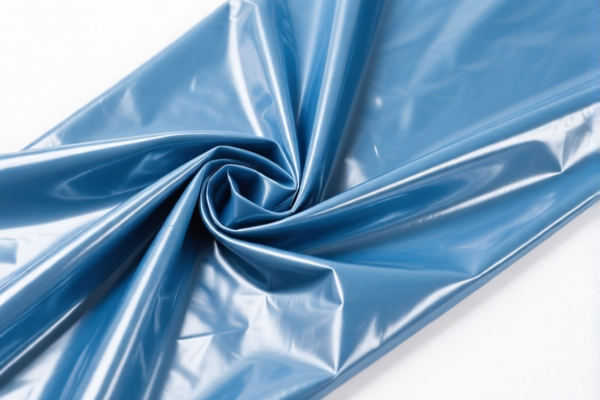


AI Analysis
🧵 Polyethylene Coated Fabric (PE Coated Fabric)
🌐 HS Code Reference & Customs Clearance Guide | 2026 Latest Tariff Analysis | Professional Clearance Strategy
📌 1. Product Definition & Classification: Understanding "PE Coated Fabric"
Polyethylene Coated Fabric is a composite material consisting of a fabric base (often polyester, nylon, or cotton) impregnated, coated, or covered with polyethylene (a type of plastic). In international trade, classification hinges on whether the fabric is viewed primarily as a textile product or a plastic product based on its essential character, coating weight, and specific function.
⚠️ Key Classification Logic:
- If classified as a Textile Article: Falls under Chapter 63 (Other made-up textile articles).
- If classified as a Plastic Product: Falls under Chapter 39 (Plastics and articles thereof) or Chapter 59 (Textile fabrics coated with rubber or plastics).
- Critical Distinction: The presence of polyethylene (plastic) as the primary covering material often triggers higher tariffs due to US trade policies (Section 301, Section 232/122).
📦 2. HS Code Classification Details (2026 Latest Tariff Authority)
Based on the provided data, there are four potential HS Codes for Polyethylene Coated Fabric, each with significantly different tax implications.
| HS Code | Product Description | Classification Logic | Total Tax Rate |
|---|---|---|---|
6307.90.98.91 |
Other made-up textile articles (Catch-all category) | Classified as a finished textile product ("fabric" form). Logic: Bottom-up category for made-up goods. | 24.5% |
3921.90.19.10 |
Other plates, sheets, film, foil, strip of plastics | Classified as a plastic product. Logic: Material is Polyethylene (plastic); form is considered a "plastic plate/sheet/film." | 40.3% |
3921.90.19.50 |
Other plates, sheets, film, foil, strip of plastics | Classified as a plastic product. Logic: Coated fabric viewed as "plastic board/sheet/film/strip." | 40.3% |
5903.20.20.00 |
Textile fabrics impregnated, coated, covered or laminated with plastics (PVC/PE) | Classified as Coated Textile. Logic: Form is coated fabric; function is impregnated/coated with plastic. | 35.0% |
🔍 Key Reminder:
-3921Codes: Highest tax burden (40.3%). Viewed strictly as plastic products.
-6307Code: Lowest tax burden (24.5%). Viewed as a general textile article.
-5903Code: Mid-range (35.0%). Specific for textile fabrics coated with plastics.
💰 3. Detailed Tariff Rate Analysis (Including Surtaxes & Policy Surcharges)
✅ Applicable Country: United States (US)
✅ Origin: China (CN)
✅ Effective Date: 2025/2026 (Current Trade Policy)
🎯 1. 6307.90.98.91 —— Other Made-Up Textile Articles (Lowest Tax)
| Item | Details |
|---|---|
| Base Tariff | 7.0% |
| Surtax (Section 301) | +7.5% |
| 122 Clause Tariff | +10% |
| Total Rate | 24.5% |
| Tax Calculation | CIF Value × 24.5% |
| De Minimis Eligibility | ❌ No (High risk of detention if < $800) |
| Legal Basis | USITC Section 301 + 122 Clauses applied to textile made-ups. |
📌 Explanation:
- This classification treats the product as a textile good.
- The total duty is the lowest among all options.
- Strategy: If the fabric is cut, sewn, or clearly finished as a textile article (e.g., tents, bags, covers), this is the preferred classification for cost savings.
🎯 2. 3921.90.19.10 & 3921.90.19.50 —— Plastic Plates/Sheets (Highest Tax)
| Item | Details |
|---|---|
| Base Tariff | 5.3% |
| Surtax (Section 301) | +25.0% |
| 122 Clause Tariff | +10% |
| Total Rate | 40.3% |
| Tax Calculation | CIF Value × 40.3% |
| De Minimis Eligibility | ❌ No |
| Legal Basis | USITC:3921.90.19 + IEEPA:9903.01.24 (Section 301) + 122 Clause |
📌 Explanation:
- These codes classify the product primarily as plastic, not textile.
- The Section 301 surtax is 25% (higher than the 7.5% in6307).
- Risk: High duty cost. Only use if the product is essentially a plastic sheet/film with negligible textile contribution.
🎯 3. 5903.20.20.00 —— Coated Textile Fabrics (Mid-Range Tax)
| Item | Details |
|---|---|
| Base Tariff | 0.0% |
| Surtax (Section 301) | +25.0% |
| 122 Clause Tariff | +10% |
| Total Rate | 35.0% |
| Tax Calculation | CIF Value × 35.0% |
| De Minimis Eligibility | ❌ No |
| Legal Basis | Chapter 59 (Textile Coated) + Section 301 + 122 Clause |
📌 Explanation:
- This is the most technically accurate classification for raw/coated fabric.
- Base tariff is 0%, but the Section 301 surtax is 25%, leading to a total of 35%.
- Warning: Although the base is 0%, the surtax makes it more expensive than6307(24.5%) but cheaper than3921(40.3%).
🛠️ 4. Customs Clearance Practical Advice (Pitfall Avoidance Guide)
✅ 1. Preparation Checklist (Mandatory)
| Document | Required | Notes |
|---|---|---|
| ✅ Product Specification | ✔️ | Detail fabric base material (polyester/nylon) and PE coating weight/gsm. |
| ✅ Composition Statement | ✔️ | Explicitly state: "Fabric Base: X%, PE Coating: Y%". |
| ✅ Photos | ✔️ | Show cross-section or coating texture to prove it is "coated fabric," not "plastic sheet." |
| ✅ Commercial Invoice | ✔️ | Use precise description: "Polyethylene Coated Polyester Fabric" (avoid generic "Plastic Sheet"). |
| ✅ Origin Certificate | ✔️ | Essential for determining Section 301 applicability (China origin = high tax). |
✅ 2. Declaration Strategy (Critical Tips)
🔥 "Define the Essential Character: Textile vs. Plastic"
| Scenario | Recommended HS Code | Tax Rate | Why? |
|---|---|---|---|
| Finished Goods (Tents, Bags, Covers) | 6307.90.98.91 |
24.5% | Product is a "made-up textile article." Best for cost. |
| Raw Coated Fabric (Rolls) | 5903.20.20.00 |
35.0% | Technically correct for "coated textile." |
| Thin Plastic Film with Mesh | 3921.90.19.10/50 |
40.3% | Only if plastic is the essential character (e.g., plastic tarp with weak mesh). |
⚠️ Warning:
- Do not misclassify5903or3921as6307without strong evidence that it is a "made-up article." Customs may audit and back-due taxes.
-6307is the safest low-tax option if the fabric is cut/sewn into a final product.
✅ 3. Special Cases & Solutions
| Situation | Handling Advice |
|---|---|
| OEM Custom Fabric | Provide design specs to prove it is intended for a specific textile use (e.g., awning). |
| Mixed Container | Ensure separate line items for textile vs. plastic goods to avoid blanket high taxation. |
| Section 122 Impact | Note: The 10% surtax is currently active. Budget for this in all scenarios. |
| De Minimis ($800) | Not eligible for any of these codes under current policy. Must file formal entry. |
🌍 5. Global Market Comparison (2026 Latest)
| Country/Region | Recommended HS Code | Total Tax (China Origin) | Notes |
|---|---|---|---|
| 🇺🇸 USA | 6307.90.98.91 |
24.5% | Lowest rate for made-up articles. |
| 🇺🇸 USA | 5903.20.20.00 |
35.0% | Standard for coated fabrics. |
| 🇪🇺 EU | 5903.20.80 |
~12-15% | No Section 301/122 taxes. Lower duty. |
| 🇨🇳 China | 5903.20.20.00 |
~10-15% | Import duty for domestic production. |
📌 Conclusion:
- USA is the most challenging market due to Section 301 + 122 surtaxes.
- EU offers significantly lower tariffs for similar goods.
- Strategy: For US imports, strive for6307classification if the product is a finished textile item.
📌 6. Common Errors & Pitfalls (Blood & Tears Lessons)
❌ Mistake 1: Declaring finished tents/bags as 3921 (Plastic Sheet)
👉 Consequence: 40.3% tax. Losing money! If it's a tent, it's a textile article (6307).
❌ Mistake 2: Declaring raw coated fabric as 6307 without proof of "made-up" status
👉 Consequence: Customs may reclassify to 5903 (35.0%) or 3921 (40.3%) + penalties.
❌ Mistake 3: Ignoring the "122 Clause"
👉 Consequence: Underpaying 10% tariff. Customs audit risk.
✅ Correct Practice:
"Polyethylene Coated Polyester Fabric, 500 GSM, for Tent Manufacturing. HS: 6307.90.98.91 (if made-up) or 5903.20.20.00 (if raw)."
🎯 7. Conclusion: Professional Classification Saves Money!
🎯 Remember the Golden Rule:
🔹 "If it's a finished textile item →
6307(24.5%)".
🔹 "If it's raw coated fabric →5903(35.0%)".
🔹 "If it's plastic-heavy →3921(40.3%)".
🔹 "Always account for the 10% 122 Clause Surcharge!"
📌 Pro Tip:
If you are exporting finished goods (e.g., PE-coated bags, tarps), insist on 6307.90.98.91 to save 10-15% in duties.
For raw materials, expect 5903 or 3921.
📣 Immediate Action:
📞 Consult a customs broker to confirm if your specific product qualifies as a "made-up article" (
6307).
🚀 Correct classification = Lower taxes = Higher profits!
✨ Professional Customs Clearance Starts with Precise Classification!
💼 Every cent of tax savings counts!
Customer Reviews
About HS Code Classification
The Harmonized System (HS) is an internationally standardized nomenclature developed by the World Customs Organization (WCO) to classify traded products. Over 200 countries use the HS system as the basis for customs tariffs, trade statistics, and import/export regulations.
Each HS code follows a hierarchical structure:
- Chapter (2 digits) — Broad category of goods (e.g., Chapter 84: Machinery and Mechanical Appliances)
- Heading (4 digits) — More specific grouping within the chapter
- Subheading (6 digits) — Internationally standardized breakdown, used by all WCO member countries
- National subdivisions (8-10 digits) — Country-specific extensions for further classification, such as US HTSUS 10-digit codes
Correct HS code classification is essential for smooth customs clearance, accurate duty payment, and compliance with trade regulations. Misclassification can lead to customs delays, overpayment of duties, or penalties.
When importing from CN to US, the applicable tariff rates may include:
- Most-Favored-Nation (MFN) rate — The standard duty rate applied to WTO members
- General rate — Applied to countries without trade agreements
- Trade remedy duties — Additional tariffs such as Section 301 (anti-dumping), Section 232 (national security), or countervailing duties
The information provided on this page is for reference purposes only. For official classification, please consult with your local customs authority or a licensed customs broker.