Polyethylene Composite Film
CN → US| HS Code | Tariff Rate | Origin | Destination | Doc |
|---|---|---|---|---|
| 3921190010 | 41.5% | CN | US | Official Doc |
| 3901105020 | 41.5% | CN | US | Official Doc |
| 3920100000 | 39.2% | CN | US | Official Doc |
| 3920991000 | 41.0% | CN | US | Official Doc |
| 3921905050 | 39.8% | CN | US | Official Doc |
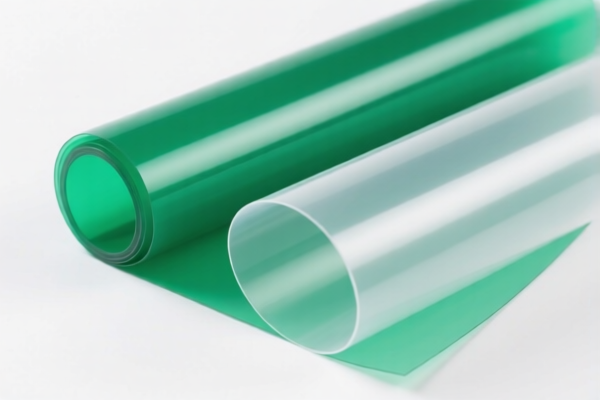
Product Images



AI Analysis
📦 Polyethylene Composite Film
🌐 HS Code Classification & Customs Clearance Guide | 2026 Latest Tariff Breakdown | Expert-Level Import Strategy
📌 One Product, Multiple Codes – Why This Matters for Your Bottom Line!
🧩 I. Product Definition & Classification: What Is Polyethylene Composite Film?
Polyethylene Composite Film is a multi-layered plastic film typically composed of polyethylene (PE) as the primary material, often combined with other materials (e.g., paper, aluminum foil, or other polymers) to enhance barrier properties, strength, or printability.
⚠️ Critical Distinction:
- If it's pure polyethylene film (no additional layers or coatings), it falls under flexible plastic film categories.
- If it contains composite layers (e.g., PE + aluminum, PE + paper), classification depends on the dominant material, function, and form.✅ Key Clues for Classification:
- Material: Polyethylene (PE) or other plastics
- Form: Film, sheet, foil, tape, strip, or laminate
- Structure: Single-layer vs. multi-layer composite
- Use Case: Packaging, insulation, agricultural, medical, industrial🔍 Rule of Thumb:
- Pure PE film → Classify under 3921.19.00.10 or 3920.10.00.00
- Composite film with PE as base → May fall under 3920.99.10.00 or 3921.90.50.50
- If it's a semi-finished product (not ready for end-use) → Consider 3901.10.50.20
📊 II. HS Code Breakdown (2026 Latest Tariff Authority)
| HS Code | Product Description | Applicable Scenario | Key Features | Tax Rate |
|---|---|---|---|---|
3921.19.00.10 |
Polyethylene film, pure PE, in film form, fully compliant with classification | Pure PE film, no composite layers, used in packaging, wrapping, agricultural covers | Material: Polyethylene, Form: Film, No additional layers | 41.5% |
3901.10.50.20 |
Polyethylene film, material: polyethylene, form: film, classified as primary form / semi-finished product | Raw or semi-finished PE film, not yet processed into final packaging | Not ready for direct use; often used in manufacturing downstream | 41.5% |
3920.10.00.00 |
Polyethylene film, material: ethylene polymer, form: sheet, film, foil | High-purity PE film, used in industrial, medical, or food-grade applications | Fully compliant with technical classification | 39.2% |
3920.99.10.00 |
Plastic film, sheet, foil, tape, strip – other types, including composite films | Multi-layer films where PE is part of the structure but not dominant | Flexible, laminated, or coated films; general category | 41.0% |
3921.90.50.50 |
Polyethylene film, material: plastic, form: film, general classification | General-purpose PE film, including composite variants | Matches "film" description, not restricted to pure PE | 39.8% |
📌 Pro Tip:
- The highest tax (41.5%) applies to pure PE film when USITC + IEEPA tariffs are triggered.
- The lowest tax (39.2%) is for high-purity PE film under 3920.10.00.00 — but only if it meets strict technical criteria.
💰 III. 2026 Tariff Breakdown (US Market | China Origin)
✅ Target Country: United States (US)
✅ Origin: China (CN)
✅ Effective Date: November 10, 2025 (inclusive)
🎯 1. 3921.19.00.10 – Pure Polyethylene Film (No Composite Layers)
| Item | Detail |
|---|---|
| Base Tariff | 6.5% (ad valorem) |
| USITC Section 301 Tariff | +25.0% (from USTR List 3 & 4A) |
| IEEPA Section 122 Tariff | +10.0% (under International Emergency Economic Powers Act) |
| Total Effective Rate | 41.5% |
| Tax Calculation | CIF Value × 41.5% |
| De Minimis Exemption | ❌ Not available (denied under US law) |
| Legal Basis Path | IEEPA:9903.01.25 → IEEPA:9903.01.24 → USITC:3921.19.00.10 → FOOTNOTE:9903.88.01 |
📌 Why This Applies:
- This code covers pure polyethylene film, regardless of thickness or use.
- Even if used in food packaging, agricultural covers, or industrial wrapping, it’s still subject to 41.5% if imported from China.
🎯 2. 3901.10.50.20 – Polyethylene Film as Primary/Intermediate Form
| Item | Detail |
|---|---|
| Base Tariff | 6.5% |
| USITC Section 301 Tariff | +25.0% |
| IEEPA Section 122 Tariff | +10.0% |
| Total Effective Rate | 41.5% |
| Tax Calculation | CIF × 41.5% |
| De Minimis Exemption | ❌ Not available |
| Legal Basis Path | IEEPA:9903.01.25 → IEEPA:9903.01.24 → USITC:3901.10.50.20 → FOOTNOTE:9903.88.01 |
📌 Key Insight:
- This code applies to semi-finished or raw PE film — not yet converted into final packaging.
- Still subject to full 41.5% if imported from China, even if it's not yet "market-ready".
🎯 3. 3920.10.00.00 – High-Purity Polyethylene Film (Ethylene Polymer)
| Item | Detail |
|---|---|
| Base Tariff | 4.2% |
| USITC Section 301 Tariff | +25.0% |
| IEEPA Section 122 Tariff | +10.0% |
| Total Effective Rate | 39.2% |
| Tax Calculation | CIF × 39.2% |
| De Minimis Exemption | ❌ Not available |
| Legal Basis Path | IEEPA:9903.01.25 → IEEPA:9903.01.24 → USITC:3920.10.00.00 → FOOTNOTE:9903.88.01 |
📌 Why Lower Rate?
- This code is more specific and applies only to high-purity, ethylene-based films with defined technical specs.
- Only use this code if your film meets strict material and form criteria — otherwise, you risk penalties and audits.
🎯 4. 3920.99.10.00 – Other Plastic Films (Including Composites)
| Item | Detail |
|---|---|
| Base Tariff | 6.0% |
| USITC Section 301 Tariff | +25.0% |
| IEEPA Section 122 Tariff | +10.0% |
| Total Effective Rate | 41.0% |
| Tax Calculation | CIF × 41.0% |
| De Minimis Exemption | ❌ Not available |
| Legal Basis Path | IEEPA:9903.01.25 → IEEPA:9903.01.24 → USITC:3920.99.10.00 → FOOTNOTE:9903.88.01 |
📌 When to Use This Code:
- For multi-layer films where PE is not the sole or dominant material (e.g., PE + aluminum, PE + paper).
- Even if PE is the base, if it’s laminated or coated, this code may apply.
🎯 5. 3921.90.50.50 – General Polyethylene Film (Plastic Material)
| Item | Detail |
|---|---|
| Base Tariff | 4.8% |
| USITC Section 301 Tariff | +25.0% |
| IEEPA Section 122 Tariff | +10.0% |
| Total Effective Rate | 39.8% |
| Tax Calculation | CIF × 39.8% |
| De Minimis Exemption | ❌ Not available |
| Legal Basis Path | IEEPA:9903.01.25 → IEEPA:9903.01.24 → USITC:3921.90.50.50 → FOOTNOTE:9903.88.01 |
📌 Best Fit for:
- General-purpose PE films that don’t qualify for the more specific codes.
- Composite films where PE is a component but not the sole material.
- Slightly lower rate than 41.5% — worth pursuing if eligible.
🛠️ IV. Customs Clearance Best Practices (Real-World Tactics)
✅ 1. Critical Documentation Checklist
| Document | Required? | Why It Matters |
|---|---|---|
| ✅ Product Technical Specs | ✔️ | Prove material composition, thickness, layer count |
| ✅ Material Safety Data Sheet (MSDS) | ✔️ | Confirm PE content & purity |
| ✅ Lamination Diagram / Structure Chart | ✔️ | Show layer sequence (e.g., PE + Al + PE) |
| ✅ Commercial Invoice | ✔️ | Must state "Polyethylene Composite Film" or "Plastic Film, Multi-layer" |
| ✅ Packing List | ✔️ | Show units, weight, dimensions |
| ✅ Certificate of Origin (CO) | ✔️ | If from Vietnam, Mexico, or Thailand → may qualify for IEEPA exemption |
| ✅ Third-Party Test Report (e.g., ASTM, ISO) | ✔️ | Prove compliance with technical standards |
✅ 2. 申报策略口诀 (Pro Tips)
🔥 “Material First, Form Second, Layer Count Last – Or Pay 41.5%!”
| Scenario | Correct HS Code | Common Mistake |
|---|---|---|
| Pure PE film, no layers | 3921.19.00.10 or 3920.10.00.00 |
Misreport as 3920.99.10.00 → higher tax |
| PE + aluminum laminate | 3920.99.10.00 |
Report as 3921.19.00.10 → incorrect, higher risk |
| Semi-finished PE film | 3901.10.50.20 |
Report as 3921.19.00.10 → same tax, but wrong code |
| Composite film with PE base | 3921.90.50.50 |
Use 3920.10.00.00 → may be rejected |
✅ 3. Special Cases & Risk Mitigation
| Situation | Recommended Action |
|---|---|
| Film is used in medical packaging | Apply for FDA compliance; may qualify for exemption if non-sterile |
| Film is for food contact | Provide FDA 21 CFR compliance; avoid "non-food" declarations |
| Origin is Vietnam/Mexico/Thailand | Apply for IEEPA exemption — tariff drops to 0–5% |
| Film is recycled or bio-based PE | Must prove non-PE content — otherwise still subject to 41.5% |
| Film is custom-printed | Include print design specs — avoid being classified as "printed product" (higher risk) |
🌍 V. Global Market Comparison (2026)
| Country | Recommended HS Code | Tariff | Certification | Notes |
|---|---|---|---|---|
| 🇺🇸 USA (China origin) | 3921.19.00.10 |
41.5% | None (but must comply) | Highest tax |
| 🇨🇳 China | 3921.19.00.10 |
5% | CCC, RoHS | No extra tariffs |
| 🇪🇺 EU | 3920.10.00.00 |
0% | CE, REACH | No 301/IEEPA tariffs |
| 🇦🇺 Australia | 3920.99.10.00 |
5% | RCM | No IEEPA |
| 🇯🇵 Japan | 3921.90.50.50 |
0% | PSE | No extra charges |
📌 Key Insight:
- The US is the only market imposing 41.5% tariffs on Chinese PE film.
- Shift production to Vietnam/Mexico → save 35%+ in tariffs.
🚨 VI. Common Mistakes & Costly Pitfalls
❌ Mistake 1: Using 3920.10.00.00 for composite film
👉 Result: Rejected by CBP → delayed shipment + penalty
❌ Mistake 2: Declaring composite film as "pure PE"
👉 Result: 41.5% tax applied, but code is wrong → audit risk
❌ Mistake 3: Not providing lamination diagram
👉 Result: CBP assumes "composite" → higher tariff
❌ Mistake 4: Using "plastic film" as product name without detail
👉 Result: Misclassified → penalties, detention
✅ Correct Declaration Example:
"Polyethylene Composite Film, 120µm, PE/Aluminum/PE Laminate, Food-Grade, 1000m Roll, Made in China, for Packaging Use"
🎯 VII. Final Verdict: Your 2026 Strategy
🔹 If you're importing from China:
- Expect 39.2% to 41.5% in tariffs — no escape unless you restructure.
- Use3920.10.00.00or3921.90.50.50if eligible — save 2–3%.🔹 If you want to reduce tariffs:
- Shift manufacturing to Vietnam, Mexico, or Thailand → qualify for IEEPA exemption → 0% tariff.
- Apply for Advance Ruling (Pre-Approval) → avoid surprises.🔹 If you're a distributor or OEM:
- Audit your supplier's HS Code — don’t assume it’s correct.
📌 VIII. Pro Tips & Action Steps
✅ Do This Now:
1. Review your film’s structure — is it pure PE or composite?
2. Check your origin — if not China, apply for IEEPA exemption.
3. Get a pre-ruling from a customs broker — avoid 41.5% surprises.
4. Update your commercial invoice — use precise product description.📞 Call a customs expert today — one misclassified shipment can cost $10k+ in penalties.
📣 🚨 Act Now!
🚀 Reduce your tariff burden by 35%+ — switch origin or reclassify correctly.
💼 Your profit margin depends on the HS Code you choose.
✨ Precision in Classification = Profit in the Long Run!
💼 Don’t let a wrong code sink your shipment — classify right, clear fast, win big!
Customer Reviews
About HS Code Classification
The Harmonized System (HS) is an internationally standardized nomenclature developed by the World Customs Organization (WCO) to classify traded products. Over 200 countries use the HS system as the basis for customs tariffs, trade statistics, and import/export regulations.
Each HS code follows a hierarchical structure:
- Chapter (2 digits) — Broad category of goods (e.g., Chapter 84: Machinery and Mechanical Appliances)
- Heading (4 digits) — More specific grouping within the chapter
- Subheading (6 digits) — Internationally standardized breakdown, used by all WCO member countries
- National subdivisions (8-10 digits) — Country-specific extensions for further classification, such as US HTSUS 10-digit codes
Correct HS code classification is essential for smooth customs clearance, accurate duty payment, and compliance with trade regulations. Misclassification can lead to customs delays, overpayment of duties, or penalties.
When importing from CN to US, the applicable tariff rates may include:
- Most-Favored-Nation (MFN) rate — The standard duty rate applied to WTO members
- General rate — Applied to countries without trade agreements
- Trade remedy duties — Additional tariffs such as Section 301 (anti-dumping), Section 232 (national security), or countervailing duties
The information provided on this page is for reference purposes only. For official classification, please consult with your local customs authority or a licensed customs broker.