Polyethylene Extrusion Product Raw Material
CN → US| HS Code | Tariff Rate | Origin | Destination | Doc |
|---|---|---|---|---|
| 3901101000 | 41.5% | CN | US | Official Doc |
| 3901105010 | 41.5% | CN | US | Official Doc |
| 3901205000 | 41.5% | CN | US | Official Doc |
| 3901201000 | 41.5% | CN | US | Official Doc |
| 3907995010 | 41.5% | CN | US | Official Doc |
Product Images

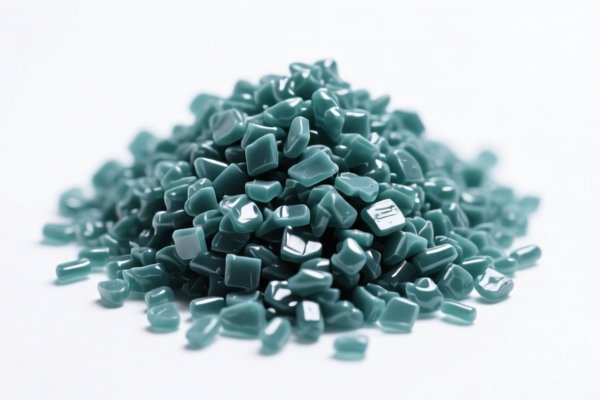
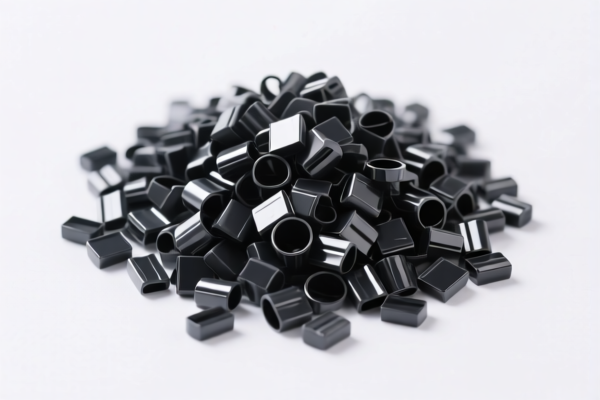

AI Analysis
🏭 Polyethylene & Polymer Extrusion Raw Materials
🌐 HS Code Reference & Customs Clearance Guide | 2024/2025 Latest Tariff Analysis | Professional Entry Strategy
📌 I. Product Definition & Classification: What Exactly Are You Shipping?
Polyethylene Extrusion Raw Materials are primary forms of plastics used in manufacturing processes where molten polymer is forced through a die (extrusion) to create continuous profiles, films, sheets, or pipes.
In international trade, these materials are strictly categorized by polymer density and chemical composition:
Polyethylene (PE) Grades: * Low Density Polyethylene (LDPE): Flexible, used for films and packaging. * High Density Polyethylene (HDPE): Rigid, used for pipes, bottles, and industrial profiles.
Other Polymers (PBT): * Polybutylene Terephthalate (PBT): A thermoplastic polyester often used for high-performance extrusion (gears, connectors).
⚠️ Key Distinction:
- If the product is Polyethylene (PE), it falls under Heading 3901.
- If the product is PBT, it falls under Heading 3907.
- Misclassification between PE and other plastics, or between primary forms and processed goods, leads to significant customs delays and penalties.
📦 II. HS Code Classification Details (Official Data Source)
Based on the provided <DATA>, the following HS Codes apply specifically to Polyethylene and PBT extrusion raw materials. All listed items share the same tariff structure due to their origin (China) and destination (USA).
| HS Code | Product Description | Physical Form | Polymer Type |
|---|---|---|---|
3901.10.10.00 |
Polyethylene Extrusion Grade Raw Material | Primary Form (Raw) | Polyethylene (General) |
3901.10.50.10 |
Low-Density Polyethylene (LDPE) Extrusion Grade | Raw Material | Low-Density Polyethylene |
3901.20.50.00 |
High-Density Polyethylene (HDPE) Extrusion Grade | Primary Form | High-Density Polyethylene (SG ≥ 0.94) |
3901.20.10.00 |
High-Density Polyethylene (HDPE) Granules/原料 | Granules/Raw | Polyethylene Resin |
3907.99.50.10 |
PBT Extrusion Grade Raw Material | Primary Form | Polybutylene Terephthalate (PBT) |
🔍 Critical Note:
-3901.xxxxcovers all Polyethylene products. The sub-code depends on whether it is LDPE (3901.10) or HDPE (3901.20).
-3907.99.50.10is specific to PBT. Do not classify PBT under PE codes.
- All items are defined as "Primary Form" (granules, powders, flakes, or non-fabricated shapes).
💰 III. 2024/2025 Latest Tariff Rate Breakdown (Detailed Tax Provisions)
✅ Applicable Country: USA (US)
✅ Origin: China (CN)
✅ Total Tax Rate: 41.5% (Ad Valorem)
For ALL HS Codes listed in the <DATA>, the tax structure is identical. This is a cumulative rate based on multiple US trade remedies.
🎯 Tariff Composition Analysis
| Tax Component | Rate | Legal/Policy Basis | Explanation |
|---|---|---|---|
| 1. Base Customs Duty | 6.5% | US HTS General Rate | The standard Most Favored Nation (MFN) duty for plastics in primary forms. |
| 2. Section 301 Tariff | 25.0% | US Trade Act Section 301 | Additional duty imposed on Chinese goods to address unfair trade practices. Applies broadly to plastics. |
| 3. Section 122 Tariff | 10.0% | Section 122 of Trade Act (or Specific Provision) | Note: In the provided data, this is labeled as "122 Clause Tariff". This is an additional surcharge applied to specific categories of Chinese imports. |
| TOTAL TAX RATE | 41.5% | Summation | $6.5\% + 25.0\% + 10.0\% = 41.5\%$ |
📌 Explanation of Tax Burden:
- Base Duty (6.5%): Standard import tax for plastic raw materials.
- Section 301 (25%): The dominant cost driver. It is mandatory for Chinese-origin plastic resins.
- Section 122 (10%): A specific additional levy mentioned in the source data.
- No De Minimis Exemption:
❌ Cannot be applied for small shipments. All value is subject to the 41.5% rate.
- Calculation Formula:
$$ \text{Total Tax} = \text{CIF Value (Cost + Insurance + Freight)} \times 41.5\% $$
🛠️ IV. Customs Clearance Practical Advice (Avoid Pitfalls)
✅ 1. Essential Documentation Checklist
| Document | Required? | Purpose |
|---|---|---|
| ✅ Product Specification Sheet | Yes | Must explicitly state: "Extrusion Grade," Polymer Type (LDPE/HDPE/PBT), Melt Flow Index (MFI), and Density. |
| ✅ Certificate of Origin (CO) | Yes | To prove Chinese origin. Crucial because the high tariffs apply specifically to China. |
| ✅ Commercial Invoice | Yes | Must clearly describe goods as "Polyethylene Raw Material" or "PBT Resin." Avoid vague terms like "Plastic Pellets." |
| ✅ Packing List | Yes | Detail net/gross weight and packaging type (bags, pallets). |
| ✅ MSDS (Material Safety Data Sheet) | Yes | Required for safety handling during transport and customs inspection. |
✅ 2. Declaration Tips (Key Mantras)
🔥 “Specify Polymer, Define Grade, Declare Origin!”
| Scenario | Correct Declaration | Wrong Declaration | Consequence |
|---|---|---|---|
| LDPE Extrusion Material | 3901.10.50.10 - LDPE Extrusion Grade |
"Plastic Granules" | Misclassification risk; penalty + delay |
| HDPE Extrusion Material | 3901.20.50.00 - HDPE (SG≥0.94) |
"Plastic Pipe Raw Material" | Potential classification error |
| PBT Extrusion Material | 3907.99.50.10 - PBT Resin |
"Polyethylene Resin" | Wrong HS Code → Rejection or heavy fine |
| Any of the above | CIF Value × 41.5% Tax | Assuming 0% or Low Duty | Underpayment of duties → Seizure |
✅ 3. Special Handling for Each Type
| Product Type | Specific Risk | Mitigation Strategy |
|---|---|---|
LDPE (3901.10.50.10) |
Confusion with other polyolefins | Provide lab test results showing density and melt index. |
HDPE (3901.20.xxxx) |
Density verification | Explicitly state "Specific Gravity ≥ 0.94" on invoice. |
PBT (3907.99.50.10) |
Misclassification as PE | Never use the word "Polyethylene" on docs. Use "PBT Polyester." |
🌍 V. Global Market Comparison (Contextual Insight)
| Destination | Typical HS Code (PE) | Base Duty | US-Specific Surcharges | Total Est. Impact |
|---|---|---|---|---|
| 🇺🇸 USA | 3901.10/20 |
6.5% | +25% (Sec 301) + 10% (Sec 122) | 41.5% ⚠️ High Cost |
| 🇨🇳 China | 3901.10/20 |
6.5% | None | 6.5% ✅ Low Cost |
| 🇪🇺 EU | 3901.10/20 |
6.5% | None (unless origin is China, then check EBA) | 6.5% ✅ Low Cost* |
| 🇬🇧 UK | 3901.10/20 |
6.5% | None | 6.5% ✅ Low Cost* |
📌 Conclusion for US Imports:
The 41.5% tariff is a significant cost barrier.
- Cost Planning: Ensure your profit margins account for this 41.5% levy on the CIF value.
- Supply Chain: If possible, consider sourcing from countries not subject to these specific surcharges (e.g., Southeast Asia, though origin rules apply).
- Pre-Arrival Review: Always apply for an Advance Ruling from CBP if the classification is complex (e.g., blending resins).
📌 VI. Common Mistakes & Pitfalls (Lessons Learned)
❌ Mistake 1: Declaring PBT as "Polyethylene"
👉 Result: Wrong HS Code (3901 instead of 3907). While the tax rate in the data is the same, the classification error can lead to seizure for providing false information.
❌ Mistake 2: Ignoring the "Extrusion Grade" Specification
👉 Result: Customs may classify it as "Other Plastics" (3901.90) or require additional testing, causing 30+ days of delay.
❌ Mistake 3: Assuming "Small Samples" Are Tax-Free
👉 Result: ❌ No De Minimis. All shipments are subject to the 41.5% tax, regardless of value.
❌ Mistake 4: Vague Description "Plastic Raw Material"
👉 Result: Customs officer will guess. If they guess a higher duty code, you pay more. If they guess wrong, they penalize you.
✅ Best Practice:
"High-Density Polyethylene (HDPE), Extrusion Grade, Resin, Granules, Specific Gravity 0.95, Model XYZ, Made in China"
🎯 VII. Conclusion: Professional Entry Saves Money
🎯 Remember the Key Points:
🔹 "PE is 3901, PBT is 3907."
🔹 "China Origin + US Entry = 41.5% Total Tax."
🔹 "Specify Density (LDPE vs HDPE) to get the right sub-code."
🔹 "No Tax Exemptions for Raw Materials."
📌 Pro Tip:
If you are importing large volumes, consider calculating the Landed Cost including the 41.5% tax early in your sourcing decision.
For HDPE and LDPE, ensure the Specific Gravity is clearly documented to distinguish between 3901.10 (LDPE) and 3901.20 (HDPE), as this affects the specific HS code but not the 41.5% rate in this specific dataset.
📣 Immediate Action:
📞 Contact a licensed US Customs Broker before shipment.
📄 Prepare Technical Data Sheets for PE/PBT.
🚀 Verify Origin Certificates to ensure smooth clearance.
✨ Accurate Classification, Predictable Costs, Smooth Customs Clearance!
💼 Don’t let 41.5% tax catch you off guard!
Customer Reviews
About HS Code Classification
The Harmonized System (HS) is an internationally standardized nomenclature developed by the World Customs Organization (WCO) to classify traded products. Over 200 countries use the HS system as the basis for customs tariffs, trade statistics, and import/export regulations.
Each HS code follows a hierarchical structure:
- Chapter (2 digits) — Broad category of goods (e.g., Chapter 84: Machinery and Mechanical Appliances)
- Heading (4 digits) — More specific grouping within the chapter
- Subheading (6 digits) — Internationally standardized breakdown, used by all WCO member countries
- National subdivisions (8-10 digits) — Country-specific extensions for further classification, such as US HTSUS 10-digit codes
Correct HS code classification is essential for smooth customs clearance, accurate duty payment, and compliance with trade regulations. Misclassification can lead to customs delays, overpayment of duties, or penalties.
When importing from CN to US, the applicable tariff rates may include:
- Most-Favored-Nation (MFN) rate — The standard duty rate applied to WTO members
- General rate — Applied to countries without trade agreements
- Trade remedy duties — Additional tariffs such as Section 301 (anti-dumping), Section 232 (national security), or countervailing duties
The information provided on this page is for reference purposes only. For official classification, please consult with your local customs authority or a licensed customs broker.