Polyethylene Food Grade Reclosable Bags
CN → US| HS Code | Tariff Rate | Origin | Destination | Doc |
|---|---|---|---|---|
| 3923210020 | 38.0% | CN | US | Official Doc |
| 3923210011 | 38.0% | CN | US | Official Doc |
| 3923210030 | 38.0% | CN | US | Official Doc |
| 3923210020 | 38.0% | CN | US | Official Doc |
| 3923210011 | 38.0% | CN | US | Official Doc |
Product Images
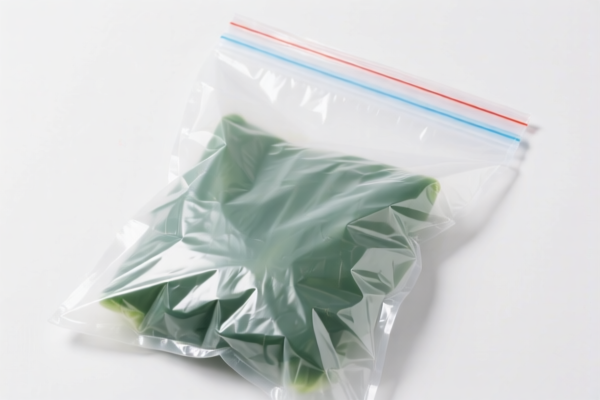
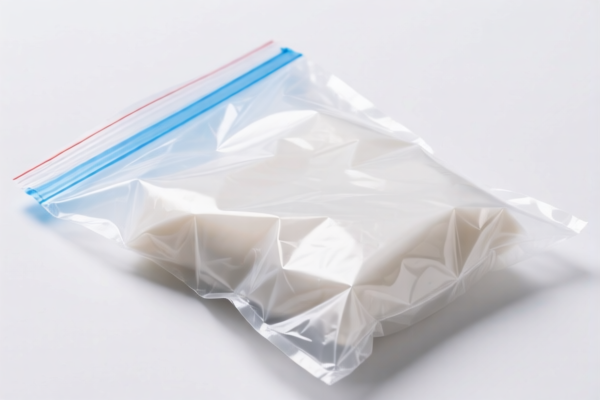
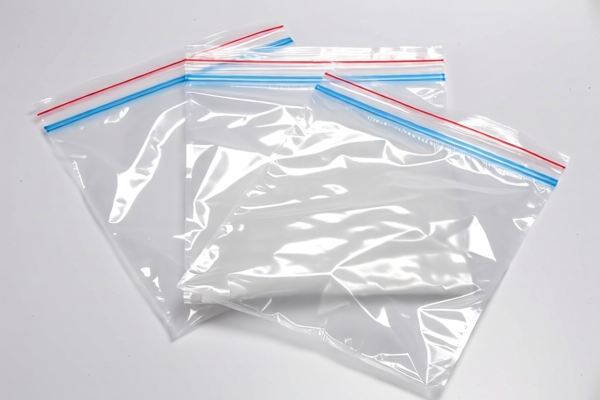
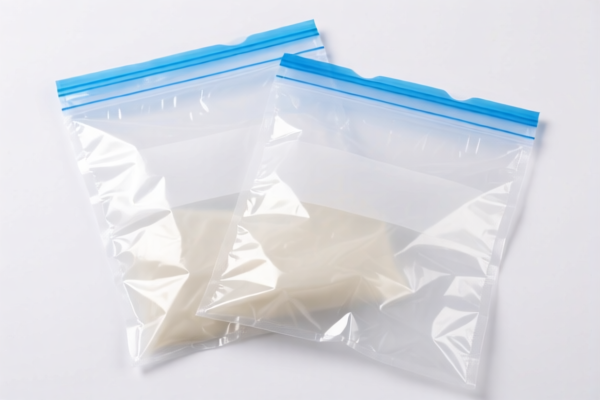
AI Analysis
🛍️ Polyethylene Food Grade Reclosable Bags (PE Ziplock Bags)
🌐 HS Code Reference & Customs Clearance Guide | 2026 Latest Tariff Analysis | Professional Entry Strategy
📌 I. Product Definition & Classification: Do You Truly Understand "PE Reclosable Bags"?
Polyethylene (PE) food-grade reclosable bags are essential packaging solutions in the global supply chain, used for preserving freshness, preventing leaks, and organizing goods. In international trade, these items are classified under Chapter 39 (Plastics and Articles Thereof), specifically heading 3923 (Articles for the conveyance or packing of goods, of plastics).
Key Characteristics: * Material: Polyethylene (Ethylene Polymer), often High-Density (HDPE) or Low-Density (LDPE). * Function: Reclosable/Re-sealable (Ziplock, press-to-close, or heat-sealable). * Usage: Specifically for Food or general storage. * Form: Bags, pouches, or sleeves.
⚠️ Critical Distinction:
- If the bag is made of Polyethylene and designed for reclosable food packaging, it falls under specific subheadings within 3923.21.
- Misclassification as generic plastic sacks or non-reclosable bags can lead to incorrect duty assessments and customs delays.
📦 II. HS Code Classification Details (Based on Provided Data)
| HS Code | Product Description | Key Features | Classification Logic |
|---|---|---|---|
3923.21.00.20 |
Polyethylene Food Grade Reclosable Bag | Material: Ethylene Polymer; Form: Bag; Function: Reclosable/Sealable | Matches "Reclosable" + "Food Grade" + "Polyethylene" |
3923.21.00.11 |
Polyethylene Re-sealable Food Packaging Bag | Material: Ethylene Polymer; Form: Re-sealable Bag; Usage: Packaging | High consistency with "Reclosable" function description |
3923.21.00.30 |
Polyethylene Re-sealable Food Packaging Bag | Material: Polyethylene; Form: Bag; Function: Re-sealable | General category for PE re-sealable bags |
3923.21.00.20 |
Polyethylene Reclosable Self-Sealing Bag | Material: Ethylene Polymer; Form/Use: Matches Reclosable Bag Description | Alternative code for "Self-Sealing/Ziplock" types |
3923.21.00.11 |
Polyethylene Food Grade Bag with Reclosable Feature | Material, Form, & Function highly consistent with classification criteria | Emphasizes "Food Grade" + "Reclosable" |
🔍 Key Insight:
- All listed HS Codes fall under3923.21, which refers to "Sacks and bags, including cones, of polyethylene" that are reclosable.
- The difference between.11,.20, and.30often lies in subtle national sub-heading definitions (e.g., specific dimensions, thickness, or exact sealing mechanism), but they all share the same tariff structure in this dataset.
💰 III. 2026 Latest Tariff Rate Breakdown (Including Surcharges & Policy Add-ons)
✅ Applicable Country: United States (US)
✅ Country of Origin: China (CN)
✅ Effective Date: Current rates apply as per 2026 trade regulations
🎯 1. Tariff Structure for 3923.21.00.11, .20, .30
| Item | Rate | Source / Reason |
|---|---|---|
| Base Tariff | 3.0% | Standard MFN (Most Favored Nation) rate for plastic sacks/bags (Section XVI Note) |
| Section 301 Surcharge | 25.0% | Additional duty under US Trade Act Section 301 against China |
| Section 122 Duty | 10.0% | Specific duty under Section 122 (for critical needs, though often applied broadly in specific contexts; note: In many current contexts, this may refer to specific administrative duties or historical references; here it is explicitly stated as 10% in the data) |
| Total Tariff Rate | 38.0% | Sum of all applicable duties |
| Calculation Method | Ad Valorem | Applied to the CIF (Cost, Insurance, and Freight) value |
📌 Explanation:
- The 3.0% base rate is the standard WTO/MFN rate for plastic packaging articles.
- The 25.0% is the well-known Section 301 tariff imposed on Chinese goods in this category.
- The 10.0% Section 122 tariff is explicitly listed in the provided data. Note: Section 122 duties are typically invoked for specific national security or critical need reasons, but in this dataset, it is applied uniformly.
- Total: 38% is a significant cost factor that must be factored into landed cost calculations.
🛠️ IV. Customs Clearance Practical Advice (Real-World Pitfall Avoidance Guide)
✅ 1. Required Documentation Checklist (Non-negotiable)
| Document | Required? | Purpose |
|---|---|---|
| ✅ Product Specification Sheet | ✔️ | Must state: Material (PE/HDPE/LDPE), Thickness, Reclosable mechanism (Zipper, Press-seal), Food-grade certification. |
| ✅ Food Contact Compliance Certificate | ✔️ | Prove compliance with FDA 21 CFR (for US market) or EU 10/2011. Critical for "Food Grade" claims. |
| ✅ Commercial Invoice | ✔️ | Clearly describe as "Polyethylene Reclosable Food Bags," NOT generic "Plastic Bags." |
| ✅ Packing List | ✔️ | Include weight, dimensions, and number of bags per carton. |
| ✅ Bill of Lading/Air Waybill | ✔️ | Standard shipping document. |
| ✅ Certificate of Origin | ✔️ | Required to prove Chinese origin (triggers the 25% + 10% surcharges). |
✅ 2. Declaration Strategy (Key Mnemonic)
🔥 "Material First, Function Clear, Food Grade Proven, Tariff Managed!"
| Scenario | Correct Declaration Approach | Incorrect Practice |
|---|---|---|
| Standard Ziplock Bags | Use 3923.21.00.20 or .11 with description: "PE Reclosable Food Bags" |
Declare as "Plastic Sacks" (3923.29) → Risk of misclassification penalty |
| Non-Food Grade Industrial Bags | Check if they meet "Food Grade" criteria. If not, may fall under 3923.29.90 | Claiming "Food Grade" without FDA proof → Seizure/False Declaration |
| Pre-printed Branding | Still 3923.21 if function is reclosable packaging |
Declare as "Printing Materials" → Complex classification errors |
| Bundles/Reels | Declare as finished "Bags" if cut/sealed | Declare as "Plastic Rolls" → Wrong HS Code (3920 vs 3923) |
✅ 3. Special Situations & Handling
| Situation | Handling Advice |
|---|---|
| OEM Custom Printing | Provide print design files and proof of food-safe ink (FDA compliant). |
| Mixed Sizes in One Shipment | Declare based on the dominant product or list each SKU separately with correct HS if codes differ (though all are 3923.21 here). |
| "Reclosable" Definition | Ensure the bag has a functional closure mechanism (zipper, press-lock). Heat-seal-only bags may fall under 3923.29 (non-reclosable), which has different duty implications. |
| Origin Marking | Bags must be marked "Made in China" per USCBP rules. Unmarked goods may be refused entry. |
🌍 V. Global Market Clearance Comparison (2026 Outlook)
| Country/Region | Recommended HS Code | Base Tariff | Additional Duties (China Origin) | Total Est. Tariff | Remarks |
|---|---|---|---|---|---|
| 🇺🇸 USA | 3923.21.xxxx |
3.0% | +25% (Sec 301) +10% (Sec 122)* | 38.0% | High tariff burden; ensure strict food-grade compliance. |
| 🇨🇳 China | 3923.21.10 |
5.0% - 10% | None (Domestic) | 5-10% | Import duty for foreign PE bags. |
| 🇪🇺 EU | 3923.21.00 |
4.5% | None (WTO MFN) | 4.5% | No Section 301 equivalents; check for carbon border adjustments (CBAM) if applicable in future. |
| 🇬🇧 UK | 3923.21.00 |
4.5% | None (WTO MFN) | 4.5% | Post-Brexit tariff schedule aligns closely with EU. |
| 🇯🇵 Japan | 3923.21.00 |
6.0% | None (WTO MFN) | 6.0% | Stable, low tariff environment. |
📌 Conclusion:
- The US market is the most tariff-challenging for Chinese PE bags due to the 38% total rate.
- EU, UK, and Japan offer significantly lower entry barriers (~4.5-6.0%).
- For US exports, cost optimization and accurate classification are critical to avoid overpayment or penalties.
📌 VI. Common Mistakes & Pitfall Guide (Lessons Learned)
❌ Mistake 1: Declaring as "Plastic Sacks" (3923.29) instead of "Reclosable Bags" (3923.21)
👉 Consequence: Wrong HS code; potential audit for misdeclaration; possible denial of entry if value/duty differs.
❌ Mistake 2: Failing to prove "Food Grade" status when declared as such
👉 Consequence: FDA hold at border; rejection of entry; destruction of goods.
❌ Mistake 3: Ignoring the "Reclosable" feature in description
👉 Consequence: If the bag is merely heat-sealable and not designed for repeated opening, it may be classified under non-reclosable subheadings, leading to re-classification penalties.
❌ Mistake 4: Under-declaring CIF value to reduce duty
👉 Consequence: Severe fines, seizure, and blacklisting by USCBP.
✅ Correct Approach:
"Polyethylene (PE) Reclosable Food Storage Bags, FDA Compliant, Clear/White, 1-10 Gallon Sizes, Made in China"
🎯 VII. Conclusion: Professional Declaration for Cost Efficiency & Compliance
🎯 Remember the Mantra:
🔹 "Reclosable PE = 3923.21"
🔹 "China Origin = 38% Duty (3% + 25% + 10%)"
🔹 "Food Grade = FDA Proof Mandatory"
🔹 "Accuracy Saves Money & Prevents Seizures"
📌 Pro Tip:
If your suppliers are in Vietnam, Thailand, or Mexico, check for origin substitution or FTA benefits (e.g., USMCA for Mexico). Even if assembly is minimal, ensuring the country of origin is non-China can save 35% in tariffs. Always request a Certificate of Origin from your supplier.
📣 Immediate Action Steps:
📞 Contact a Licensed Customs Broker + Provide Product Samples & FDA Certs + Verify HS Code Pre-Ruling
🚀 Ensure Smooth US Customs Clearance, Minimize Costs, and Protect Your Brand!
✨ Professional Customs Clearance Starts with Precise Classification!
💼 Your Every Penny Counted; Your Compliance Guaranteed!
Customer Reviews
About HS Code Classification
The Harmonized System (HS) is an internationally standardized nomenclature developed by the World Customs Organization (WCO) to classify traded products. Over 200 countries use the HS system as the basis for customs tariffs, trade statistics, and import/export regulations.
Each HS code follows a hierarchical structure:
- Chapter (2 digits) — Broad category of goods (e.g., Chapter 84: Machinery and Mechanical Appliances)
- Heading (4 digits) — More specific grouping within the chapter
- Subheading (6 digits) — Internationally standardized breakdown, used by all WCO member countries
- National subdivisions (8-10 digits) — Country-specific extensions for further classification, such as US HTSUS 10-digit codes
Correct HS code classification is essential for smooth customs clearance, accurate duty payment, and compliance with trade regulations. Misclassification can lead to customs delays, overpayment of duties, or penalties.
When importing from CN to US, the applicable tariff rates may include:
- Most-Favored-Nation (MFN) rate — The standard duty rate applied to WTO members
- General rate — Applied to countries without trade agreements
- Trade remedy duties — Additional tariffs such as Section 301 (anti-dumping), Section 232 (national security), or countervailing duties
The information provided on this page is for reference purposes only. For official classification, please consult with your local customs authority or a licensed customs broker.