Polyethylene Food Packaging Film
CN → US| HS Code | Tariff Rate | Origin | Destination | Doc |
|---|---|---|---|---|
| 3923210095 | 38.0% | CN | US | Official Doc |
| 3921190010 | 41.5% | CN | US | Official Doc |
| 3923290000 | 38.0% | CN | US | Official Doc |
| 3920991000 | 41.0% | CN | US | Official Doc |
| 3920100000 | 39.2% | CN | US | Official Doc |
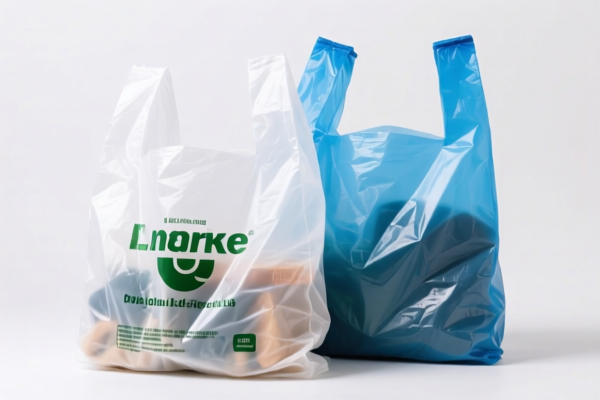
Product Images



AI Analysis
📦 Polyethylene Food Packaging Film (PE Membrages/Pouches)
🌐 HS Code Reference & Customs Clearance Guide | 2026 Latest Tariff Analysis | Professional Level Clearance Strategy 📌 Part 1: Product Definition & Classification: Do You Really Understand "Polyethylene Film"?
Polyethylene (PE) packaging film is a ubiquitous plastic material used globally for food storage, preservation, and logistics. In international trade, the classification depends heavily on its functional form and physical structure:
- Packaging Articles (Bags/Pouches): Products specifically shaped or constructed to contain goods (e.g., gusseted bags, sealed pouches, sleeves). These fall under Chapter 39.23.
- Flat Sheets/Plates/Foils: Rolls or sheets that are not yet formed into specific packaging containers. These fall under Chapter 39.20 or 39.21.
⚠️ Key Distinction Point: - If the item is already formed into a bag, pouch, or wrapper → Classify as Packaging Article (3923). - If the item is a flat sheet, roll, or film without specific packaging features → Classify as Plastic Sheet/Film (3920/3921). - Material Composition: Both categories typically involve "ethylene polymers" or "polyethylene."
📦 Part 2: HS Code Classification Details (2026 Latest Tariff Authority Comparison)
Based on the provided data, here are the specific HS Codes and their logical justifications for "Polyethylene Breathable Food Packaging Film."
| HS Code | Product Description | Classification Logic | Applicable Scenario |
|---|---|---|---|
3923.21.00.95 |
Polyethylene breathable packaging, Ethylene Polymer, Bag/Pouch format | Classified under "Sacks and Bags" within Packaging Articles. Matches the specific material definition of "Ethylene Polymer" rather than generic "Polyethylene." | Specific branded or chemical-grade PE bags where "Ethylene Polymer" is the precise chemical description. |
3921.19.00.10 |
Polyethylene breathable packaging, Polyethylene, Sheet/Film format | Classified under "Other Plastic Plates/Sheets/Film" (Chap 39.21). Strictly limits to film/sheet morphology, excluding formed bags. | Flat rolls of PE film, laminates, or sheets not yet formed into bags. |
3923.29.00.00 |
Polyethylene breathable packaging, Polyethylene (Plastic), Membrane/Film format | Classified under "Other Plastic Packaging Articles." Broad category for plastic packaging not specifically listed in 3923.21. | General PE plastic bags, liners, or flexible packaging that doesn't fit the narrow "Ethylene Polymer" definition of 3923.21. |
3920.99.10.00 |
Polyethylene breathable packaging, Polyethylene (Plastic), Membrane/Film | Based on general plastic sheet/film rules (Chap 39.20). "Other plastics" category. | Unformed plastic films or sheets made of polyethylene, potentially with specific coatings or properties not covered elsewhere. |
3920.10.00.00 |
Polyethylene breathable packaging, Ethylene Polymer, Membrane/Film | Classified under "Non-cellular Plastic Plates, Sheets, Film" (Chap 39.20). Specific to the raw polymer form. | Pure, non-cellular PE film rolls/sheets where the primary characteristic is the raw polymer structure. |
🔍 Critical Reminder: - Form Factor is King: If it has handles, gussets, or is sealed at the ends → 3923. If it is a flat roll/sheet → 3920/3921. - Chemical Terminology: The data distinguishes between "Ethylene Polymer" (
3923.21,3920.10) and generic "Polyethylene" (3921.19,3923.29,3920.99). Ensure your technical data sheet matches the HS Code description precisely.
💰 Part 3: 2026 Latest Tariff Rate Detailed Breakdown (Including Surtaxes)
✅ Applicable Country: United States (US)
✅ Origin: China (CN)
✅ Effective Date: Current tariffs apply (Section 301 + IEEPA)
All scenarios below assume import from China to the US, triggering both the Base Tariff, Section 301 Surtax, and IEEPA 122 Clause Surtax.
🎯 1. 3923.21.00.95 — PE Packaging (Ethylene Polymer, Bag/Pouch)
| Item | Detail |
|---|---|
| Base Tariff | 3.0% |
| Surtax (Sec 301) | +25.0% |
| IEEPA Clause 122 Surtax | +10.0% |
| Total Effective Rate | 38.0% |
| Tax Calculation | CIF Value × 38.0% |
| De Minimis Exemption | ❌ Not Eligible (Deny de minimis for Chinese goods under current rules) |
| Legal Basis Path | Base: 3923.21 → Section 301: 25% → IEEPA: 10% |
📌 Explanation: - This code applies if the product is clearly a bag/pouch made of ethylene polymer. - Total Tax: 38%. High cost structure due to multiple layers of punitive tariffs.
🎯 2. 3921.19.00.10 — PE Packaging (Polyethylene, Sheet/Film)
| Item | Detail |
|---|---|
| Base Tariff | 6.5% |
| Surtax (Sec 301) | +25.0% |
| IEEPA Clause 122 Surtax | +10.0% |
| Total Effective Rate | 41.5% |
| Tax Calculation | CIF Value × 41.5% |
| De Minimis Exemption | ❌ Not Eligible |
| Legal Basis Path | Base: 3921.19 → Section 301: 25% → IEEPA: 10% |
📌 Explanation: - This code applies if the product is classified as a sheet/film under Chapter 39.21, specifically made of polyethylene. - Total Tax: 41.5%. Highest among all options. Avoid if possible by reclassifying to 3923 if the product is actually a bag.
🎯 3. 3923.29.00.00 — PE Packaging (Polyethylene, Other Plastic Packaging)
| Item | Detail |
|---|---|
| Base Tariff | 3.0% |
| Surtax (Sec 301) | +25.0% |
| IEEPA Clause 122 Surtax | +10.0% |
| Total Effective Rate | 38.0% |
| Tax Calculation | CIF Value × 38.0% |
| De Minimis Exemption | ❌ Not Eligible |
| Legal Basis Path | Base: 3923.29 → Section 301: 25% → IEEPA: 10% |
📌 Explanation: - This is the most common classification for general PE plastic bags/pouches that don't fit the narrow "Ethylene Polymer" definition of 3923.21. - Total Tax: 38.0%. Competitive rate for packaging articles.
🎯 4. 3920.99.10.00 — PE Film (Polyethylene, Other Plastic)
| Item | Detail |
|---|---|
| Base Tariff | 6.0% |
| Surtax (Sec 301) | +25.0% |
| IEEPA Clause 122 Surtax | +10.0% |
| Total Effective Rate | 41.0% |
| Tax Calculation | CIF Value × 41.0% |
| De Minimis Exemption | ❌ Not Eligible |
| Legal Basis Path | Base: 3920.99 → Section 301: 25% → IEEPA: 10% |
📌 Explanation: - Applies to unformed films/sheets (Chapter 39.20) made of polyethylene. - Total Tax: 41.0%. Higher than packaging codes due to higher base tariff (6.0% vs 3.0%).
🎯 5. 3920.10.00.00 — PE Film (Ethylene Polymer, Non-cellular)
| Item | Detail |
|---|---|
| Base Tariff | 4.2% |
| Surtax (Sec 301) | +25.0% |
| IEEPA Clause 122 Surtax | +10.0% |
| Total Effective Rate | 39.2% |
| Tax Calculation | CIF Value × 39.2% |
| De Minimis Exemption | ❌ Not Eligible |
| Legal Basis Path | Base: 3920.10 → Section 301: 25% → IEEPA: 10% |
📌 Explanation: - Applies to non-cellular plastic sheets/film of ethylene polymer. - Total Tax: 39.2%. Mid-range cost. Must ensure product is strictly a flat sheet/film, not a bag.
🛠️ Part 4: Customs Clearance Practical Advice (Real-World Pitfall Avoidance)
✅ 1. Documentation Checklist (Mandatory)
| Document | Required | Notes |
|---|---|---|
| ✅ Product Specification Sheet | ✔️ | Must explicitly state: "Polyethylene," "Ethylene Polymer," "Breathable," "Packaging/Bag/Film." |
| ✅ Technical Data Sheet (TDS) | ✔️ | Confirm chemical composition (e.g., HDPE, LDPE, LLDPE) to match "Ethylene Polymer" vs "Polyethylene." |
| ✅ Product Photos | ✔️ | Clear images showing shape. If it’s a bag with gussets/seals → 3923. If it’s a flat roll → 3920/3921. |
| ✅ Commercial Invoice | ✔️ | Description must match HS Code logic (e.g., "PE Plastic Bag" vs "PE Film Roll"). |
| ✅ Packing List | ✔️ | Define net/gross weight and unit of measure (kg/rolls/bags). |
✅ 2. Declaration Tips (Key Mnemonic)
🔥 "Shape Dictates Chapter, Chemistry Dictates Subheading, Tax Dictates Cost!"
| Scenario | Correct HS Code | Incorrect Code | Consequence |
|---|---|---|---|
| Bag/Pouch with handles/seals | 3923.21 or 3923.29 |
3920.10 |
Audit Risk: Misclassification of article vs. raw material. |
| Flat Roll of film | 3920.10 or 3920.99 |
3923.21 |
Audit Risk: Declaring a raw material as a finished article. |
| Material: Ethylene Polymer | 3923.21 or 3920.10 |
3923.29 |
Rate Risk: Minor base tariff differences, but consistency is key. |
| Material: Polyethylene | 3923.29 or 3920.99 |
3920.10 |
Compliance Risk: Technical mismatch in chemical description. |
✅ 3. Special Handling
| Scenario | Advice |
|---|---|
| "Breathable" Feature | Ensure the description mentions "microporous" or "permeable" if it affects chemical structure. Otherwise, stick to standard PE classification. |
| Food Contact | While not affecting HS Code, ensure you have FDA Compliance documentation ready. Customs may request proof of food safety if flagged. |
| Packaging with Print | If the film has heavy printing, it remains 3923/3920 unless the print defines a new function (unlikely for standard PE film). |
| Mixed Shipments | If shipping both bags and rolls, separate line items are crucial. Do not lump them together under one code to avoid confusion. |
🌍 Part 5: Global Market Comparison (2026 Context)
| Market | Recommended HS Code | Total Tax Rate (China Origin) | Key Requirement |
|---|---|---|---|
| 🇺🇸 USA | 3923.29.00.00 (Bag) |
38.0% | FDA Food Contact Notification |
| 🇺🇸 USA | 3921.19.00.10 (Film) |
41.5% | FDA Food Contact Notification |
| 🇪🇺 EU | 3923.29 / 3920.10 |
Varies (0-6%) | REACH Compliance, No Section 301 |
| 🇨🇳 China | 3923.29 / 3920.10 |
5-6.5% | No additional surtaxes |
📌 Conclusion for US Importers: - The 38.0% rate for
3923.21and3923.29is the most favorable for finished packaging. - The 41.5% rate for3921.19is the most expensive. Avoid classifying formed bags as "film/sheets" to prevent this higher rate. - Section 301 (25%) and IEEPA (10%) are unavoidable for Chinese-origin PE packaging. Factor this into your pricing model.
📌 Part 6: Common Mistakes & Pitfalls
❌ Mistake 1: Calling a Bag "Film" to use a lower base tariff?
👉 Result: No. 3923.21 (Bag) has a 3.0% base, while 3921.19 (Film) has 6.5%. Declaring a bag as film increases your base tax! And customs may audit you for wrong description.
❌ Mistake 2: Ignoring the "Ethylene Polymer" vs "Polyethylene" distinction?
👉 Result: Minor discrepancy in base tax (3.0% vs 6.5%), but major compliance risk. If your TDS says "Polyethylene" but you declare 3920.10 (Ethylene Polymer), it triggers an inspection.
❌ Mistake 3: Assuming De Minimis (Section 321) applies? 👉 Result: ❌ NO. Current US regulations deny de minimis for goods subject to Section 301 and IEEPA surtaxes from China. Every shipment is subject to full duties.
✅ Best Practice:
Use
3923.29.00.00for general PE bags/pouches (38% tax) or3923.21.00.95if your product is specifically certified as "Ethylene Polymer" bags (38% tax). Avoid3921and3920codes unless you are importing raw, unformed film rolls.
🎯 Part 7: Conclusion: Precision in Classification Saves Money!
🎯 Remember the Formula:
🔹 "Bag/Pouch = 3923 (38% Tax)"
🔹 "Flat Roll = 3920/3921 (39-41.5% Tax)"
🔹 "Chinese Origin = Base + 25% Sec 301 + 10% IEEPA"
📌 Final Tip: Always align your Commercial Invoice Description with the HS Code Logic. - If it’s a bag, say "Bag." - If it’s a roll, say "Film Roll." - Match the chemical term ("Ethylene Polymer" vs "Polyethylene") to your Technical Data Sheet.
📣 Immediate Action:
📞 Consult your customs broker to confirm whether your product is "Formed (Bag)" or "Unformed (Film)." 🚀 Optimize for 38.0% by ensuring proper classification as Packaging Articles (
3923) rather than Raw Materials (3920/3921).
✨ Professional Clearance Starts with Accurate Classification! 💼 Your Margin Depends on Your HS Code!
Customer Reviews
About HS Code Classification
The Harmonized System (HS) is an internationally standardized nomenclature developed by the World Customs Organization (WCO) to classify traded products. Over 200 countries use the HS system as the basis for customs tariffs, trade statistics, and import/export regulations.
Each HS code follows a hierarchical structure:
- Chapter (2 digits) — Broad category of goods (e.g., Chapter 84: Machinery and Mechanical Appliances)
- Heading (4 digits) — More specific grouping within the chapter
- Subheading (6 digits) — Internationally standardized breakdown, used by all WCO member countries
- National subdivisions (8-10 digits) — Country-specific extensions for further classification, such as US HTSUS 10-digit codes
Correct HS code classification is essential for smooth customs clearance, accurate duty payment, and compliance with trade regulations. Misclassification can lead to customs delays, overpayment of duties, or penalties.
When importing from CN to US, the applicable tariff rates may include:
- Most-Favored-Nation (MFN) rate — The standard duty rate applied to WTO members
- General rate — Applied to countries without trade agreements
- Trade remedy duties — Additional tariffs such as Section 301 (anti-dumping), Section 232 (national security), or countervailing duties
The information provided on this page is for reference purposes only. For official classification, please consult with your local customs authority or a licensed customs broker.