Polyethylene Freezer Bags
CN → US| HS Code | Tariff Rate | Origin | Destination | Doc |
|---|---|---|---|---|
| 3923210080 | 38.0% | CN | US | Official Doc |
| 3923210011 | 38.0% | CN | US | Official Doc |
| 3923210095 | 38.0% | CN | US | Official Doc |
| 3923290000 | 38.0% | CN | US | Official Doc |
Product Images
AI Analysis
🧊 Polyethylene Freezer Bags: HS Code Classification & US Customs Clearance Guide (2026)
🌐 HS Code Reference & Clearance Strategy | 2026 Latest Tariff Analysis | Professional Compliance Guide
📌 I. Product Definition: What Are "Polyethylene Freezer Bags"?
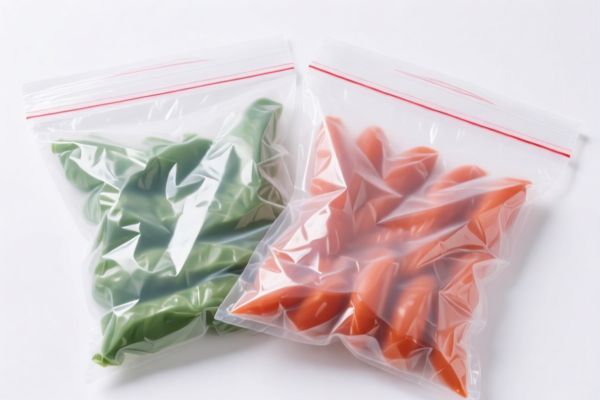
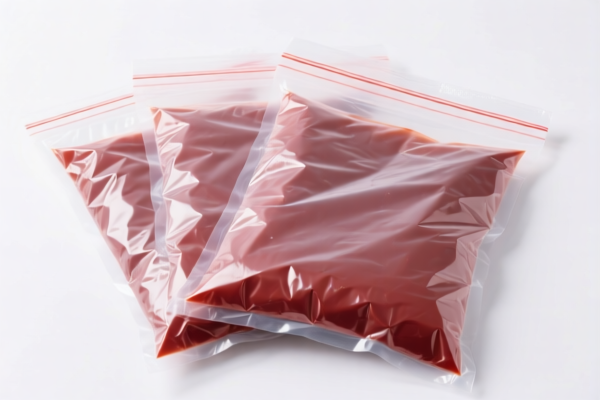
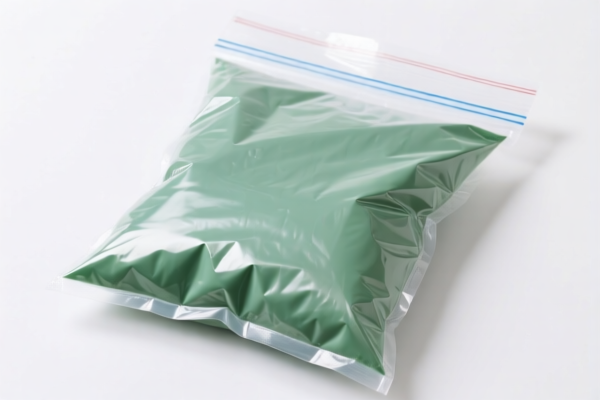
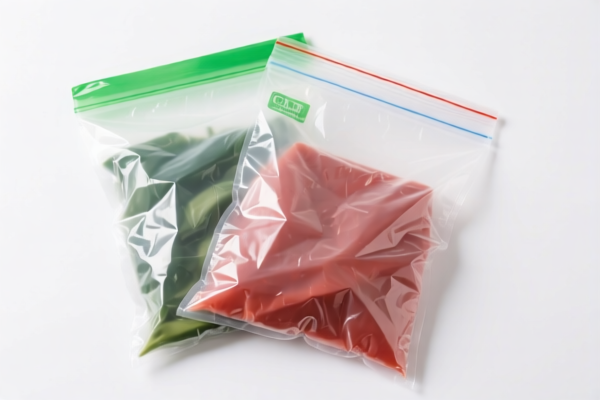
Polyethylene freezer bags are flexible plastic containers made primarily from polyethylene (PE). They are designed for food storage, particularly for freezing, vacuum sealing, or long-term preservation. In international trade, they fall under Chapter 39 (Plastics and Articles Thereof), specifically heading 3923 (Articles for the conveyance or packing of goods, of plastics).
⚠️ Key Distinction:
- If the bag is a simple open-ended or heat-sealed pouch for packaging food →归入 3923.21 or 3923.29.
- If it is specifically a "Ziplock" or "re-sealable" type, it still generally falls under 3923.21 unless it has specific functional enhancements not covered by standard PE bags.
- Material: Must be polyethylene (PE) or polypropylene (PP). If mixed with other materials (e.g., metal layer for barrier properties), classification may shift. For pure PE freezer bags, 3923.21 is the primary candidate.
📦 II. HS Code Classification Details (2026 Official Tariff Data)
Based on the provided dataset, here are the applicable HS codes for Polyethylene Freezer Bags:
| HS Code | Product Description | Application Scenario | Key Characteristics |
|---|---|---|---|
3923.21.00.80 |
Polyethylene bags | Standard food-grade freezer bags, non-resealable or simple zip | Pure PE, bag form, standard packaging use |
3923.21.00.11 |
Polyethylene bags | Similar to above, possibly different size/spec variant | Pure PE, bag form, standard packaging use |
3923.21.00.95 |
Polyethylene envelope bags | Resealable/Ziplock-style PE bags | PE material, envelope shape, common in retail |
3923.29.00.00 |
Other plastic sacks and bags | Non-standard shapes, multi-layer, or non-Polyethylene blends | If not strictly "bags" under 3923.21, fallback category |
🔍 Critical Note:
- All listed HS codes have a total tax rate of 38.0% due to current US tariffs on Chinese-origin plastics.
- Do not misclassify as "paper bags" (4819) or "textile bags" (6305) if made of PE.
- Vacuum-sealed bags with air-escape valves may still fall under 3923.21 if made of PE, but ensure no complex mechanical parts are present.
💰 III. 2026 US Tariff Rate Breakdown (China Origin)
✅ Applicable Country: United States (US)
✅ Origin: China (CN)
✅ Effective Date: November 10, 2025 (and ongoing)
🎯 1. Standard Polyethylene Bags (3923.21.00.80, 3923.21.00.11, 3923.21.00.95)
| Item | Detail |
|---|---|
| Base Tariff | 3.0% (ad valorem) |
| Section 301 Tariff | 25.0% (USITC Footnote 9903.88.01) |
| IEEPA Tariff | 10.0% (China/HK products, effective Nov 10, 2025) |
| Total Tariff Rate | 38.0% |
| Tax Calculation | CIF Value × 38% |
| De Minimis Exemption | ❌ Not Eligible (deny_de_minimis) |
| Legal Authority Path | IEEPA:9903.01.25 → IEEPA:9903.01.24 → USITC:3923.21.00.XX → FOOTNOTE:9903.88.01 |
📌 Explanation:
- The 25% Section 301 tariff applies to most plastic articles from China.
- The 10% IEEPA tariff is an additional layer for Chinese goods.
- Total 38% is high for a low-value commodity. This significantly impacts profit margins.
🎯 2. Other Plastic Bags (3923.29.00.00)
| Item | Detail |
|---|---|
| Base Tariff | 3.0% |
| Section 301 Tariff | 25.0% |
| IEEPA Tariff | 10.0% |
| Total Tariff Rate | 38.0% |
| Tax Calculation | CIF Value × 38% |
| De Minimis Exemption | ❌ Not Eligible |
📌 Note: Even if the bag doesn’t fit perfectly into 3923.21, the fallback category 3923.29 carries the same punitive tariff structure.
🛠️ IV. Customs Clearance Practical Advice (Avoiding Pitfalls)
✅ 1. Required Documentation Checklist
| Document | Required? | Notes |
|---|---|---|
| ✅ Product Specification Sheet | ✔️ | Must state material: 100% Polyethylene (PE) or PE blend % |
| ✅ Material Safety Data Sheet (MSDS) | ✔️ | Especially if intended for food contact; confirm FDA compliance |
| ✅ Product Photos | ✔️ | Clear images showing bag type (zipper, open, valve), labeling |
| ✅ Commercial Invoice | ✔️ | Must describe as "Polyethylene Freezer Bags, Plastic Packaging" |
| ✅ Packing List | ✔️ | Include gross/net weight, number of bags per carton |
| ✅ Certificate of Origin (CO) | ✔️ | To prove origin; if not China, may reduce tariffs |
✅ 2. Declaration Tips (Golden Rules)
🔥 “Material First, Function Second, Name Accurate!”
| Scenario | Correct Declaration | Wrong Practice |
|---|---|---|
| Pure PE freezer bags | 3923.21.00.80 |
Declaring as "plastic containers" (vague) |
| Bags with aluminum foil layer | Check classification carefully | May fall under 3921 or 3920 if multi-material |
| Vacuum bags with pump accessories | Declare bags separately if possible | Bundling pumps (8414) with bags may complicate clearance |
| Reusable/cleanable PE bags | Still 3923.21 | Not classified as "textile" unless woven fabric |
✅ 3. Special Considerations
| Situation | Recommendation |
|---|---|
| Food-Grade Bags | Must provide FDA 21 CFR compliance statement or equivalent |
| Biodegradable PE Bags | Still 3923.21; ensure "biodegradable" claim is certified |
| Custom Printed Bags | Ensure print ink is non-toxic; provide ink composition if asked |
| OEM Orders | Provide customer agreement to avoid intellectual property issues |
🌍 V. Global Market Comparison (2026)
| Country/Region | Recommended HS Code | Tariff (China Origin) | Certification Required | Notes |
|---|---|---|---|---|
| 🇺🇸 USA | 3923.21.00.XX |
38% (3% + 25% + 10%) | FDA (food contact) | High tariff; no de minimis |
| 🇨🇳 China | 3923.21.00.95 |
5.0% | No special certification | Low tariff for domestic |
| 🇪🇺 EU | 3923.21.00 |
0–6.5% | REACH, Food Contact | No Section 301/IEEPA |
| 🇯🇵 Japan | 3923.21.00 |
0–3.8% | JIS, Food Sanitation | Moderate tariff |
| 🇬🇧 UK | 3923.21.00 |
0–4.5% | UKCA, Food Contact | Post-Brexit rules apply |
📌 Conclusion:
- USA has the highest tariff burden for Chinese polyethylene bags.
- EU and Japan are more favorable for Chinese plastic packaging exports.
- Consider supply chain diversification (Vietnam, Mexico) to avoid 38% US tariff if targeting the American market.
📌 VI. Common Mistakes & Pitfalls (Learn from Others)
❌ Mistake 1: Declaring "plastic bags" without specifying material
👉 Consequence: Customs may assign higher tariff code or demand additional documentation → Delayed release
❌ Mistake 2: Ignoring the 10% IEEPA tariff
👉 Consequence: Underpayment of duties → Penalties and back taxes
❌ Mistake 3: Claiming de minimis exemption for small shipments
👉 Consequence: Denied because plastic articles from China are explicitly excluded from de minimis under current rules
❌ Mistake 4: Not providing FDA compliance for food-contact bags
👉 Consequence: FDA hold, product destruction, or return
✅ Correct Practice:
"Polyethylene Freezer Bags, Food Grade, 100% PE, FDA Compliant, Model XYZ, 1000pcs/carton"
🎯 VII. Conclusion: Precision Classification Saves Money
🎯 Remember:
🔹 “PE bags = 3923.21, Tax = 38% in US, No de minimis!”
🔹 “Material truthfulness is key; misclassification leads to fines!”
📌 Pro Tip:
If your polyethylene freezer bags are originally from Vietnam, Thailand, or Mexico, you may qualify for lower or zero tariffs under USMCA or other FTAs.
✅ Recommendation: Apply for a Customs Ruling before shipment to confirm HS code and tariff eligibility.
📣 Take Action Now:
📞 Engage a licensed customs broker + Provide full material specs + Request pre-classification ruling
🚀 Ensure smooth customs clearance, avoid delays, and protect your profit margins!
✨ Professional clearance starts with accurate classification!
💼 Every percentage point of tariff matters in global trade!
Customer Reviews
About HS Code Classification
The Harmonized System (HS) is an internationally standardized nomenclature developed by the World Customs Organization (WCO) to classify traded products. Over 200 countries use the HS system as the basis for customs tariffs, trade statistics, and import/export regulations.
Each HS code follows a hierarchical structure:
- Chapter (2 digits) — Broad category of goods (e.g., Chapter 84: Machinery and Mechanical Appliances)
- Heading (4 digits) — More specific grouping within the chapter
- Subheading (6 digits) — Internationally standardized breakdown, used by all WCO member countries
- National subdivisions (8-10 digits) — Country-specific extensions for further classification, such as US HTSUS 10-digit codes
Correct HS code classification is essential for smooth customs clearance, accurate duty payment, and compliance with trade regulations. Misclassification can lead to customs delays, overpayment of duties, or penalties.
When importing from CN to US, the applicable tariff rates may include:
- Most-Favored-Nation (MFN) rate — The standard duty rate applied to WTO members
- General rate — Applied to countries without trade agreements
- Trade remedy duties — Additional tariffs such as Section 301 (anti-dumping), Section 232 (national security), or countervailing duties
The information provided on this page is for reference purposes only. For official classification, please consult with your local customs authority or a licensed customs broker.