Polyethylene Granules for Agricultural Film
CN → US| HS Code | Tariff Rate | Origin | Destination | Doc |
|---|---|---|---|---|
| 3901105020 | 41.5% | CN | US | Official Doc |
| 3901105010 | 41.5% | CN | US | Official Doc |
| 3920100000 | 39.2% | CN | US | Official Doc |
| 3920992000 | 39.2% | CN | US | Official Doc |
| 3901105010 | 41.5% | CN | US | Official Doc |
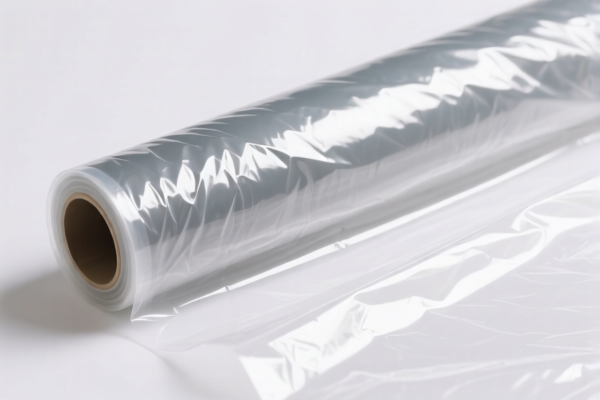
Product Images



AI Analysis
🌾 Polyethylene Granules for Agricultural Film (LDPE Resin)
🌐 HS Code Reference & Customs Clearance Guide | 2026 Latest Tariff Analysis | Professional Strategy for Agricultural Plastics
📌 I. Product Definition & Classification: Do You Really Understand "Ag-Film Grade PE"?
Polyethylene Granules for Agricultural Film refer specifically to Low-Density Polyethylene (LDPE) resins designed for the production of agricultural mulch films, greenhouses, and silage wraps. In international trade, the classification depends heavily on the physical form (resin vs. finished film) and the specific polymer structure.
⚠️ Key Distinction Point:
- If the product is raw resin/granules intended for extrusion into film: It falls under Chapter 39, typically heading 3901 (Polymers of Ethylene, Primary Forms).
- If the product is already processed into films/sheets: It falls under heading 3920 (Other Plates, Sheets, Film, Foil, and Strip, of Plastics).
- Crucial Note: Even if labeled "for agricultural film," if it is in granule/resin form, it is NOT classified as 3920. It must be classified as 3901. Misclassification leads to severe penalties.
📦 II. HS Code Classification Details (2026 Latest Tariff Authority Alignment)
Based on the provided data, here are the four potential HS Codes for this product, depending on the precise technical specification (Linear vs. General LDPE vs. Finished Film form error):
| HS Code | Product Description | Applicability Scenario | Form Factor |
|---|---|---|---|
3901.10.50.20 |
Agricultural Film-Grade LDPE Resin (General Polymer Shape) | General LDPE resin used for ag-films; fits the description of "polymers in primary forms." | ✅ Resin/Granules |
3901.10.50.10 |
Agricultural Film-Grade LDPE Resin (LLDPE Attribute) | Specifically identified as Linear Low-Density Polyethylene (LLDPE) or similar linear structure attributes within the LDPE category. | ✅ Resin/Granules |
3920.10.00.00 |
Agricultural Film-Grade LDPE (Plate/Sheet/Film Form) | WARNING: Only applicable if the product is ALREADY extruded into film/sheet/strip form, NOT granules. Fits "plates, sheets, film, foil, and strip." | ⚠️ Film/Sheet (If misdeclared as resin, this is an error) |
3920.99.20.00 |
Agricultural Film-Grade LDPE (Other Flexible Film) | WARNING: Applicable only if the product is a flexible film/strip not covered by 3920.10. Not applicable for raw resin. | ⚠️ Film/Strip (If misdeclared as resin, this is an error) |
🔍 Critical Insight:
- The majority of exports for "Granules for Agricultural Film" are raw materials and should primarily fall under3901.10.50.20or3901.10.50.10.
- If you are importing finished rolls of film, use3920codes.
- Do not mix resin and film classifications in the same shipment without clear separation.
💰 III. 2026 Latest Tariff Rate Breakdown (Including Additional Taxes)
✅ Applicable Country: USA (US)
✅ Origin: China (CN) (Implied by the 25% + 10% structure in the data)
✅ Effective Date: Current 2026 Policy Framework
🎯 1. Raw Resin Classification (3901.10.50.20 & 3901.10.50.10)
These are the most likely codes for granules/powder/flakes.
| Item | Content |
|---|---|
| Base Duty Rate | 6.5% (Ad Valorem) |
| Section 301 Additional Duty | +25.0% |
| Section 122 Duty | +10.0% |
| Total Tariff Rate | 41.5% |
| Tax Calculation | CIF Value × 41.5% |
| De Minimis Exemption | ❌ Not Applicable |
| Legal Basis Path | USITC:3901.10.50 → Section 301: Footnote 9903.88.01 → Section 122 Authority |
📌 Explanation:
- The 6.5% is the standard Most Favored Nation (MFN) rate for polyethylene resins.
- The 25% is the punitive tariff imposed under Section 301 of the Trade Act of 1974 on Chinese goods.
- The 10% is an additional tariff under Section 122 (International Emergency Economic Powers Act or specific agricultural/trade provisions).
- Total Cost Impact: For every $10,000 CIF value, you pay $4,150 in duties.
🎯 2. Finished Film Classification (3920.10.00.00 & 3920.99.20.00)
These codes apply ONLY if the goods are already films/sheets.
| Item | Content |
|---|---|
| Base Duty Rate | 4.2% (Ad Valorem) |
| Section 301 Additional Duty | +25.0% |
| Section 122 Duty | +10.0% |
| Total Tariff Rate | 39.2% |
| Tax Calculation | CIF Value × 39.2% |
| De Minimis Exemption | ❌ Not Applicable |
| Legal Basis Path | USITC:3920.10.00 / 3920.99.20 → Section 301: Footnote 9903.88.01 → Section 122 Authority |
📌 Explanation:
- Finished films have a slightly lower base duty (4.2% vs 6.5%) but still face the same punitive tariffs.
- Total Cost Impact: For every $10,000 CIF value, you pay $3,920 in duties.
🛠️ IV. Customs Clearance Practical Advice (实战避坑指南)
✅ 1. Required Documentation Checklist (None Can Be Omitted)
| Document | Must Provide | Description |
|---|---|---|
| ✅ Technical Data Sheet (TDS) | ✔️ | Must specify: Melt Flow Index (MFI), Density, Resin Type (LDPE/LLDPE), and "Intended Use: Agricultural Film Production". |
| ✅ Product Photos | ✔️ | Clear photos of granules/pellets showing physical form. If film, show rolls. |
| ✅ Commercial Invoice | ✔️ | Must explicitly state: "Polyethylene Resin for Agricultural Film," NOT "Finished Film" if it is resin. |
| ✅ Certificate of Origin (CO) | ✔️ | Critical for verifying origin to apply/confirm Section 301 rates. |
| ✅ Bill of Lading (B/L) | ✔️ | Consistent with invoice description. |
| ✅ Packaging List | ✔️ | Net/Gross weight, number of bags/pallets. |
✅ 2. Declaration Strategy (Key Mantra)
🔥 "Resin is 3901, Film is 3920. Form defines form, don't guess!"
| Scenario | Correct Declaration | Incorrect Declaration | Consequence |
|---|---|---|---|
| Bagged Granules/Pellets | 3901.10.50.20 or .10 |
3920.10.00.00 |
High Risk: Customs may reclassify, fine, or delay shipment. |
| Finished Rolls of Film | 3920.10.00.00 or .99.20 |
3901.10.50.20 |
Under-declaration: If base rate is higher, you face penalties. If lower, you may still be audited for misdescription. |
| Mixed Shipment | Split into two lines | Single line | Confusion: Must have separate HS codes for each physical form. |
✅ 3. Special Situations Handling
| Situation | Handling Advice |
|---|---|
| LLDPE vs. LDPE | If the TDS confirms Linear Low-Density Polyethylene, use 3901.10.50.10. If general LDPE, use 3901.10.50.20. Both have the same total tax (41.5%), but technical accuracy prevents audits. |
| Recycled PE | If the granules are recycled, they may fall under different subheadings. Ensure the product is virgin resin for these codes. |
| Additives/Blends | If the resin contains >5% other additives not standard for ag-film, it might be classified as "Other Plastics" (3901.90). Stick to standard ag-film grades. |
🌍 V. Global Market Comparison (2026 Latest)
| Country/Region | Recommended HS Code | Tariff Rate (China Origin) | Certification Requirements | Remarks |
|---|---|---|---|---|
| 🇺🇸 USA | 3901.10.50.20 |
41.5% | None specific for PE, but CO required | High tariff burden; Section 301 & 122 apply. |
| 🇨🇳 China | 3901.10.50.20 |
6.5% (Import) | None | Standard MFN rate. |
| 🇪🇺 EU | 3901.10.00 |
~4-5% | REACH Registration required for polymers | No Section 301/122 equivalent, but REACH is strict. |
| 🇬🇧 UK | 3901.10.00 |
~4-5% | UKCA (for finished goods), REACH-aligned | Post-Brexit tariffs apply. |
| 🇦🇺 Australia | 3901.10.00 |
5% | None specific | Standard FTAs may apply if from partner countries. |
📌 Conclusion:
- The USA market is significantly more expensive due to the cumulative 35% additional duties.
- Cost Optimization: Consider sourcing PE resin from non-Subject 301 countries (e.g., South Korea, Japan, Europe) if shipping to the US to avoid the 25% + 10% add-ons.
📌 VI. Common Errors & Pitfall Guide (Blood & Tears Lessons)
❌ Error 1: Declaring Granules as "Plastic Film" (3920)
👉 Consequence: Customs may reject the declaration or reclassify to 3901. If 3901 has a higher base rate (6.5% vs 4.2%), you pay more. If 3920 is deemed correct but mislabeled, you face fraud allegations.
❌ Error 2: Using "Plastic Raw Materials" as the description
👉 Consequence: Too vague. Customs will ask for clarification, delaying clearance.
✅ Correct Description: "Low Density Polyethylene Resin, Granular, for Agricultural Film Production, Model XYZ, MFI 2.0 g/10min"
❌ Error 3: Ignoring the "Section 122" duty
👉 Consequence: Underestimating total landed cost. The 10% is often overlooked by junior traders.
✅ Action: Always calculate CIF × (Base + 25% + 10%).
❌ Error 4: Mixing Virgin and Recycled PE in one HS Code
👉 Consequence: Recycled plastics often have stricter environmental rules or different HS codes.
✅ Action: Clearly distinguish "Virgin Resin" vs. "Recycled Pellets."
🎯 VII. Conclusion: Precision in Classification Saves Money!
🎯 Remember the Mantra:
🔹 "Granules = 3901 (41.5%), Film = 3920 (39.2%). Check the form first!"
🔹 "Section 301 (25%) + Section 122 (10%) = 35% Extra Cost. Know your origin!"
📌 Pro Tip:
If your PE Granules are shipped from Vietnam, Malaysia, or Thailand (with sufficient transformation), you may qualify for IEEPA/Section 301 Exclusions or lower MFN rates.
Recommendation: Apply for an Advance Ruling from US Customs (CBP) if the volume is high and the form is ambiguous.
📣 Immediate Action:
📞 Consult a licensed customs broker.
📄 Provide TDS and Product Photos.
🚀 Ensure your Commercial Invoice matches the Physical Form (Granules vs. Film) exactly.
✨ Professional Clearance Starts with Accurate Classification!
💼 Your Every Penny of Duty Should Be Accurately Calculated!
Customer Reviews
About HS Code Classification
The Harmonized System (HS) is an internationally standardized nomenclature developed by the World Customs Organization (WCO) to classify traded products. Over 200 countries use the HS system as the basis for customs tariffs, trade statistics, and import/export regulations.
Each HS code follows a hierarchical structure:
- Chapter (2 digits) — Broad category of goods (e.g., Chapter 84: Machinery and Mechanical Appliances)
- Heading (4 digits) — More specific grouping within the chapter
- Subheading (6 digits) — Internationally standardized breakdown, used by all WCO member countries
- National subdivisions (8-10 digits) — Country-specific extensions for further classification, such as US HTSUS 10-digit codes
Correct HS code classification is essential for smooth customs clearance, accurate duty payment, and compliance with trade regulations. Misclassification can lead to customs delays, overpayment of duties, or penalties.
When importing from CN to US, the applicable tariff rates may include:
- Most-Favored-Nation (MFN) rate — The standard duty rate applied to WTO members
- General rate — Applied to countries without trade agreements
- Trade remedy duties — Additional tariffs such as Section 301 (anti-dumping), Section 232 (national security), or countervailing duties
The information provided on this page is for reference purposes only. For official classification, please consult with your local customs authority or a licensed customs broker.