Polyethylene Insulating Board
CN → US| HS Code | Tariff Rate | Origin | Destination | Doc |
|---|---|---|---|---|
| 3920100000 | 39.2% | CN | US | Official Doc |
| 3921190010 | 41.5% | CN | US | Official Doc |
| 3926909940 | 22.8% | CN | US | Official Doc |
| 3926909989 | 22.8% | CN | US | Official Doc |
| 3921190090 | 41.5% | CN | US | Official Doc |
Product Images
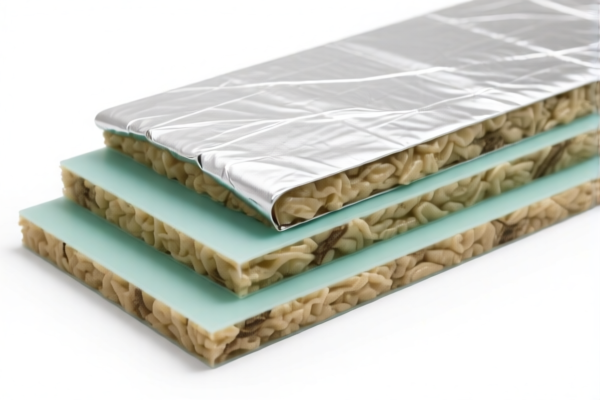
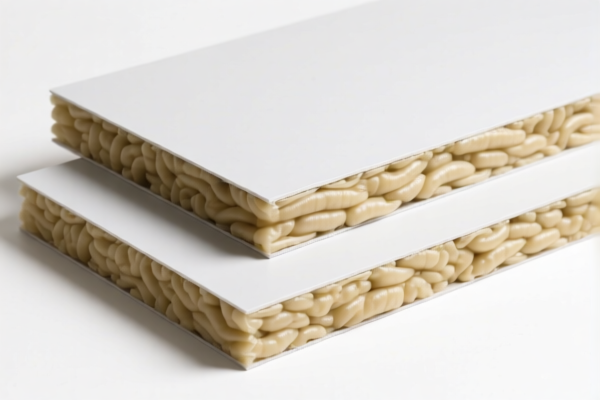
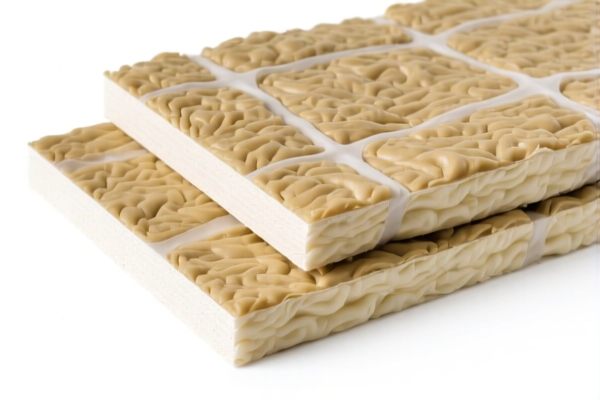
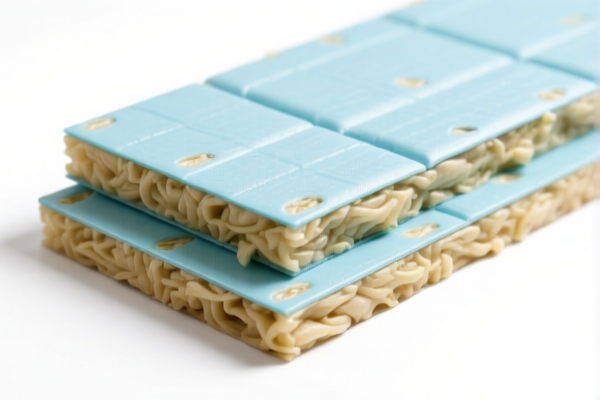
AI Analysis
🛡️ Polyethylene Insulating Board (PE Insulating Board)
🌐 HS Code Reference & Customs Clearance Guide | 2026 Latest Tariff Analysis | Professional Entry Strategy
📌 1. Product Definition & Classification: What Exactly Is "Polyethylene Insulating Board"?
Polyethylene (PE) Insulating Boards are rigid or semi-rigid sheets made from polymerized ethylene. In international trade, the classification depends heavily on the physical form (sheet/film vs. other制品) and specific application/structure.
Key Distinction for Customs: * Sheets/Films/Plates (3920/3921): If the product is a continuous slab, sheet, film, foil, or strip, it falls under Chapters 39.02–39.21. * Other Articles (3926): If the board has been cut, shaped, or processed into a specific "other" article that doesn't fit the strict definition of a sheet/plate/film, it may fall under 3926.
⚠️ Critical Classification Point:
- If it is a flat sheet, plate, or film → Look at 3920 or 3921.
- If it is a molded, cut, or shaped protective board not strictly defined as a "plate/film" in the legal notes → Look at 3926.
📦 2. HS Code Classification Details (2026 Latest Tariff Authority)
Based on the provided data, there are 5 potential HS Codes for Polyethylene Insulating Boards. Here is the detailed breakdown:
| HS Code | Summary & Logic | Key Characteristics |
|---|---|---|
| 3920.10.00.00 | Polyethylene, in the form of plates, sheets, or film. | Matches the legal definition of "plates" (板). Simple PE structure. |
| 3921.19.00.10 | Polyethylene, in the form of plates, sheets, or film. Specific sub-category. | Matches "polyethylene" and "plate" format. Likely a more specific tariff line for certain PE plates. |
| 3921.19.00.90 | Polyethylene, in the form of plates, sheets, or film (Other). | The "Catch-all" for PE plates/sheets/films under 3921.19. |
| 3926.90.99.40 | Other plastic articles. Polyethylene is classified as plastic; this is an "other article." | No conflict in material (PE) or form (board). Used if it doesn't fit the strict "plate/film" definition. |
| 3926.90.99.89 | Other plastic articles. Specifically, protective boards. | Material: PE; Form: Protective Board. Fits the "Other Articles" category for protective uses. |
🔍 Key Insight:
- 3920/3921 codes are generally for unworked or simply worked sheets/films.
- 3926 codes are for fabricated articles (cut, molded, or specific protective uses).
- Importers must decide: Is your product a simple sheet (3920/3921) or a fabricated protective board (3926)? This choice drastically affects the tariff rate.
💰 3. 2026 Tariff Rate Breakdown (Detailed Tax Clauses)
✅ Applicable Country: United States (US)
✅ Origin: China (CN)
✅ Effective Date: 2025-11-10 onwards
🎯 1. 3920.10.00.00 – Polyethylene, Plates, Sheets, or Film
| Item | Details |
|---|---|
| Base Tariff | 4.2% |
| Section 301 (Add-on) | +25.0% |
| Section 122 (Add-on) | +10.0% |
| Total Tariff Rate | 41.2% |
| Tax Calculation | CIF Value × 41.2% |
| Legal Path | Base Duty + USITC Section 301 + IEEPA Section 122 |
📌 Explanation:
- This is a high-tariff classification due to the combination of base duty and two layers of additional tariffs (301 + 122).
- Section 301 (25%) is the standard US-China trade war tariff.
- Section 122 (10%) is an additional tariff applied to certain imports from China.
🎯 2. 3921.19.00.10 – Polyethylene, Plates, Sheets, or Film (Specific Sub-category)
| Item | Details |
|---|---|
| Base Tariff | 6.5% |
| Section 301 (Add-on) | +25.0% |
| Section 122 (Add-on) | +10.0% |
| Total Tariff Rate | 41.5% |
| Tax Calculation | CIF Value × 41.5% |
| Legal Path | Base Duty + USITC Section 301 + IEEPA Section 122 |
📌 Explanation:
- Slightly higher base duty (6.5%) than 3920.10.00.00, resulting in a 41.5% total rate.
- Applies to PE plates that fit this specific sub-category.
🎯 3. 3921.19.00.90 – Polyethylene, Plates, Sheets, or Film (Other)
| Item | Details |
|---|---|
| Base Tariff | 6.5% |
| Section 301 (Add-on) | +25.0% |
| Section 122 (Add-on) | +10.0% |
| Total Tariff Rate | 41.5% |
| Tax Calculation | CIF Value × 41.5% |
| Legal Path | Base Duty + USITC Section 301 + IEEPA Section 122 |
📌 Explanation:
- The "Other" category under 3921.19 carries the same high tariff burden as 3921.19.00.10.
- Total rate: 41.5%.
🎯 4. 3926.90.99.40 – Other Plastic Articles (PE)
| Item | Details |
|---|---|
| Base Tariff | 5.3% |
| Section 301 (Add-on) | +7.5% |
| Section 122 (Add-on) | +10.0% |
| Total Tariff Rate | 22.8% |
| Tax Calculation | CIF Value × 22.8% |
| Legal Path | Base Duty + USITC Section 301 (lower rate for some 3926 items) + IEEPA Section 122 |
📌 Explanation:
- Significant Savings! The total rate is 22.8%, which is ~18.7 percentage points lower than the 3920/3921 classifications.
- This classification applies if the board is considered an "other plastic article" rather than a simple plate/film.
- Section 301 rate is only 7.5% for some 3926 items, unlike the 25% for 3920/3921.
🎯 5. 3926.90.99.89 – Other Plastic Articles (Protective Boards)
| Item | Details |
|---|---|
| Base Tariff | 5.3% |
| Section 301 (Add-on) | +7.5% |
| Section 122 (Add-on) | +10.0% |
| Total Tariff Rate | 22.8% |
| Tax Calculation | CIF Value × 22.8% |
| Legal Path | Base Duty + USITC Section 301 (lower rate) + IEEPA Section 122 |
📌 Explanation:
- Specifically for protective boards made of PE.
- Same favorable tariff rate as 3926.90.99.40: 22.8%.
- Recommendation: If your product is indeed a "protective board," this is the most cost-effective classification.
🛠️ 4. Customs Clearance Practical Advice (Battle-Tested Guide)
✅ 1. Required Documentation Checklist (Non-negotiable)
| Document | Required? | Notes |
|---|---|---|
| Product Specification Sheet | ✅ Yes | Must detail material (100% PE or blend), thickness, density, and dimensions. |
| Product Photos | ✅ Yes | Clear images of the board, showing texture, edges, and any labels. |
| Commercial Invoice | ✅ Yes | Must state "Polyethylene Insulating Board" and clearly describe form (sheet vs. molded). |
| Packing List | ✅ Yes | Include weight, dimensions, and packaging type. |
| Certificate of Origin (CO) | ✅ Yes | Essential for determining origin and applying correct tariffs. |
| Technical Data Sheet (TDS) | ✅ Optional but Recommended | Proves material composition and physical properties. |
| Test Report | ✅ Optional | If claiming "protective board" status, a test report showing impact resistance or insulation properties can help justify 3926. |
✅ 2. Classification Strategy (Critical Decision Point)
🔥 Golden Rule:
"Sheet = High Tax (41.5%); Protective Board = Low Tax (22.8%)"
| Scenario | Recommended HS Code | Total Tariff | Risk Level |
|---|---|---|---|
| Simple PE Sheet/Plate (Unworked, continuous, standard thickness) | 3920.10.00.00 or 3921.19.00.xx |
41.2% - 41.5% | ✅ Low (Straightforward) |
| Cut-to-size Board (Still fits "plate/film" definition) | 3921.19.00.90 |
41.5% | ⚠️ Medium (May be reclassified) |
| Molded/Processed Protective Board (Shaped, specific use, not just a flat sheet) | 3926.90.99.40 or 3926.90.99.89 |
22.8% | ✅ High Savings! |
| Composite Board (PE with other materials) | Varies | Check Material Composition | ❌ High Risk |
📌 Note:
- To use 3926, you must argue that the product is an "article" rather than a "plate/film."
- Provide evidence that the board has been processed, cut, or molded into a specific form that goes beyond simple sheet production.
- Protective function is key for3926.90.99.89. Highlight its use for protection (e.g., against impact, moisture, etc.).
✅ 3. Special Circumstances & Handling
| Situation | Handling Advice |
|---|---|
| OEM Custom Sizes | If cut to specific sizes but still a "sheet," it may still fall under 3921. To qualify for 3926, ensure additional processing (e.g., die-cutting, embossing). |
| Multi-layer PE Boards | If it’s a laminated product, check if the PE is the essential character. If so, it may still be classified under 3920/3921. |
| Export to Non-US Markets | Tariffs vary significantly. For example, EU may have 0% duty under certain FTA agreements. Always check local tariffs. |
| Section 122 Exemptions | Check if your specific product type is exempt from the 10% Section 122 tariff. Some PE products may have exclusions. |
🌍 5. Global Market Comparison (2026)
| Country/Region | Recommended HS Code | Estimated Tariff (CN Origin) | Notes |
|---|---|---|---|
| 🇺🇸 USA | 3926.90.99.89 |
22.8% | Best rate if classified as protective board. |
| 🇨🇳 China (Import) | 3926.90.99.89 |
~5-10% | Lower base duties, no Section 301/122. |
| 🇪🇺 EU | 3926.90.99 |
~4-5% | No Section 301/122. Check for anti-dumping. |
| 🇯🇵 Japan | 3926.90.90 |
~5-6% | Standard tariff. No additional US-style tariffs. |
📌 Conclusion:
- USA is the most challenging market due to Section 301 and 122 tariffs.
- Classification as 3926 (Other Plastic Articles) is the key to saving ~18.7% in duties.
📌 6. Common Errors & Pitfalls (Learn from Others' Mistakes)
❌ Error 1: Declaring a simple PE sheet as "Other Plastic Article" (3926) without justification.
👉 Consequence: Customs reclassifies to 3921 → Back taxes + penalties + delay.
❌ Error 2: Not distinguishing between "Plate/Sheet" and "Protective Board."
👉 Consequence: Paying 41.5% instead of 22.8% unnecessarily.
❌ Error 3: Failing to provide product photos showing the "board" nature (e.g., thickness, edges).
👉 Consequence: Customs doubts the description, leading to audit or hold.
✅ Correct Approach:
"Polyethylene Insulating Board, 10mm thick, die-cut into specific shapes for protective packaging, made of 100% virgin PE."
HS Code:3926.90.99.89(if justified as protective article).
🎯 7. Conclusion: Smart Classification, Smart Savings!
🎯 Key Takeaway:
- If it’s just a sheet: Prepare for 41.5% tariff.
- If it’s a processed protective board: Aim for 22.8% tariff.
- Document everything: Provide photos, specs, and justification for "protective" use.
- Consult a customs broker: Pre-classification with a professional can save thousands of dollars.
📌 Pro Tip:
If your PE board is imported for industrial protection (e.g., machinery shielding, wall protection), emphasize this in the invoice description to support the 3926 classification.
📣 Action Item:
📞 Contact a licensed customs broker.
📄 Submit product samples and photos for Advance Ruling if possible.
💡 Choose the correct HS Code to minimize tax burden.
✨ Customs Clearance Starts with Accurate Classification!
💼 Every percentage point saved is profit earned!
Customer Reviews
About HS Code Classification
The Harmonized System (HS) is an internationally standardized nomenclature developed by the World Customs Organization (WCO) to classify traded products. Over 200 countries use the HS system as the basis for customs tariffs, trade statistics, and import/export regulations.
Each HS code follows a hierarchical structure:
- Chapter (2 digits) — Broad category of goods (e.g., Chapter 84: Machinery and Mechanical Appliances)
- Heading (4 digits) — More specific grouping within the chapter
- Subheading (6 digits) — Internationally standardized breakdown, used by all WCO member countries
- National subdivisions (8-10 digits) — Country-specific extensions for further classification, such as US HTSUS 10-digit codes
Correct HS code classification is essential for smooth customs clearance, accurate duty payment, and compliance with trade regulations. Misclassification can lead to customs delays, overpayment of duties, or penalties.
When importing from CN to US, the applicable tariff rates may include:
- Most-Favored-Nation (MFN) rate — The standard duty rate applied to WTO members
- General rate — Applied to countries without trade agreements
- Trade remedy duties — Additional tariffs such as Section 301 (anti-dumping), Section 232 (national security), or countervailing duties
The information provided on this page is for reference purposes only. For official classification, please consult with your local customs authority or a licensed customs broker.