Polyethylene Insulation Film
CN → US| HS Code | Tariff Rate | Origin | Destination | Doc |
|---|---|---|---|---|
| 3921190010 | 41.5% | CN | US | Official Doc |
| 3901105020 | 41.5% | CN | US | Official Doc |
| 3920100000 | 39.2% | CN | US | Official Doc |
| 3920991000 | 41.0% | CN | US | Official Doc |
| 3921905050 | 39.8% | CN | US | Official Doc |
Product Images
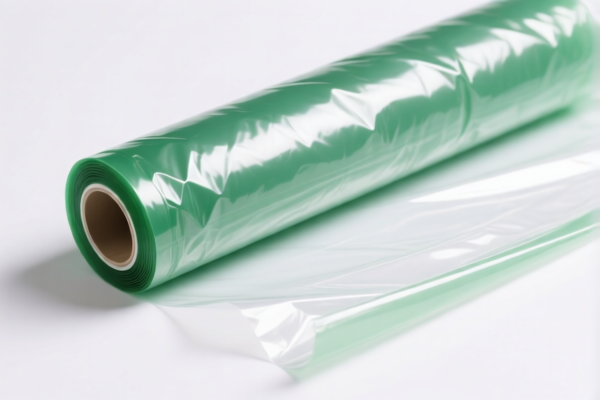
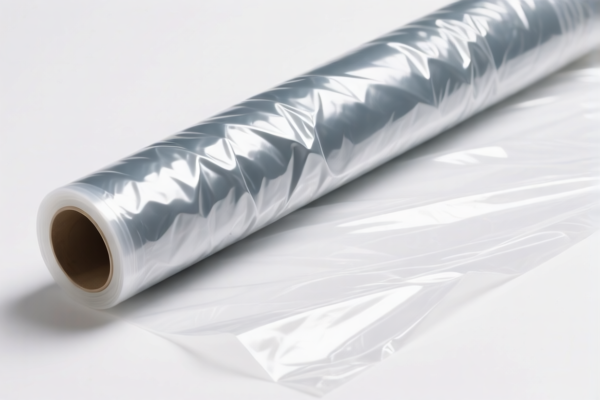
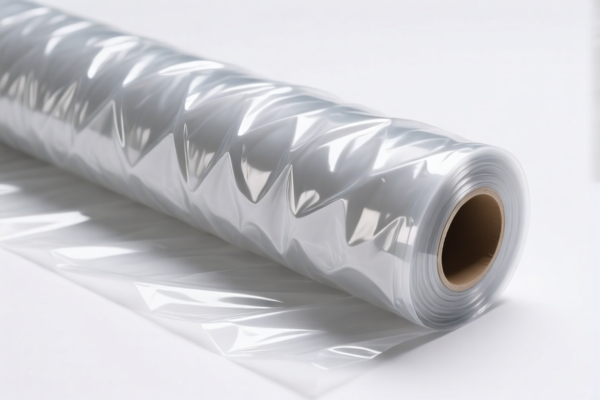
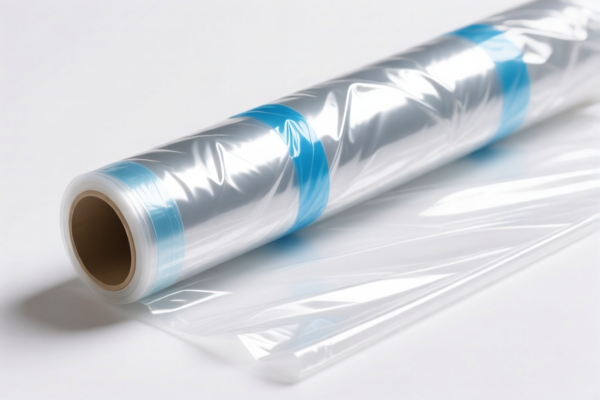
AI Analysis
📦 Polyethylene Insulation Film (PE Film)
🌐 HS Code Reference & Customs Clearance Guide | 2026 Latest Tariff Analysis | Professional-Level Entry Strategy
📌 I. Product Definition & Classification: Do You Really Understand "PE Insulation Film"?
Polyethylene (PE) insulation film is a versatile plastic product primarily used for electrical insulation, packaging, and moisture barrier applications in industrial and consumer sectors. In international trade, it is classified based on its chemical composition, physical form (film/foil/sheet), and specific polymer type.
The critical distinction lies in whether the film is a finished plastic film (Chapter 39, heading 3920/3921) or an unfinished semi-finished product (Chapter 39, heading 3901). Misclassification can lead to significant tariff discrepancies due to the varying "Section 301" and "Section 122" duty rates.
⚠️ Key Distinction Points:
- If the product is a finished film used for insulation or general packaging with no further transformation needed → Typically 3920.xx or 3921.xx.
- If the product is a semi-finished primary form (e.g., resin in film-like form or basic polymer sheet) → May fall under 3901.xx.
- Material Specificity: "Polyethylene" is an ethylene polymer. Films made from other plastics (like PVC or PP) do not qualify for these specific codes.
📦 II. HS Code Classification Details (2026 Latest Tariff Authority Comparison)
Based on the provided data, here are the five possible HS Codes for Polyethylene Insulation Film, along with their specific descriptions and total tax rates.
| HS Code | Product Description | Classification Logic | Total Tax Rate |
|---|---|---|---|
3921.19.00.10 |
Polyethylene film, material is polyethylene, form is film, meets coding requirements. | Classified under "Plastics and articles thereof; other plates, sheets, film, foil and strip." | 41.5% |
3901.10.50.20 |
Polyethylene film, material is polyethylene, form is film, classified under primary forms/semi-finished category. | Classified under "Polymers of ethylene in primary forms." | 41.5% |
3920.10.00.00 |
Polyethylene film, material is ethylene polymer, form is plate, sheet, film, foil, fully meets classification requirements. | Classified under "Plastics and articles thereof; plates, sheets, film, foil and strip, unworked or surface-worked." | 39.2% |
3920.99.10.00 |
Polyethylene film, material is plastic, form is plate, sheet, film, foil, strip, match successful. | Classified under "Other plastics." | 41.0% |
3921.90.50.50 |
Polyethylene film, material is plastic, form is film, meets classification characteristics. | Classified under "Other plates, sheets, film, foil and strip." | 39.8% |
🔍 Important Reminder:
- 3920.10.00.00 offers the lowest total tax rate (39.2%) among the options, likely due to its specific alignment with "Ethylene Polymer" and "Unworked/Specific Form" criteria.
- 3921.19.00.10 and 3901.10.50.20 share the highest rate (41.5%), often due to broader or less specific sub-categories.
- Customs Determination: The final code depends on the exact manufacturing process (e.g., blown film vs. cast film) and technical specifications (thickness, density).
💰 III. 2026 Latest Tariff Rate Breakdown (Including Surtaxes & Policy Add-ons)
✅ Applicable Country: United States (US)
✅ Origin: China (CN)
✅ Effective Time: From November 10, 2025 (and subsequent imports)
🎯 1. 3920.10.00.00 —— Polyethylene Film (Ethylene Polymer) – Best Rate Option
| Item | Details |
|---|---|
| Base Tariff | 4.2% |
| Section 301 Surtax | +25.0% (Added under US Trade Act Section 301) |
| Section 122 Tariff | +10.0% (Specific penalty/added tariff clause) |
| Total Tax Rate | 39.2% |
| Tax Calculation | CIF Value × 39.2% |
| De Minimis Exemption | ❌ Not Eligible (Section 301 and 122 tariffs apply to low-value shipments) |
| Legal Basis Path | USITC:3920.10.00.00 → Section 301: Footnote 9903.88.01 → Section 122 |
📌 Explanation:
- This code benefits from a lower base rate (4.2%) compared to others (which are 6.0%-6.5%).
- The 25% Section 301 and 10% Section 122 are fixed additions, making the total 39.2%.
- Strategy: If your product is strictly "Ethylene Polymer" in "Plate/Sheet/Film" form, this is the optimal code for cost savings.
🎯 2. 3921.19.00.10 & 3901.10.50.20 – Highest Rate Option
| Item | Details |
|---|---|
| Base Tariff | 6.5% |
| Section 301 Surtax | +25.0% |
| Section 122 Tariff | +10.0% |
| Total Tax Rate | 41.5% |
| Tax Calculation | CIF Value × 41.5% |
| De Minimis Exemption | ❌ Not Eligible |
| Legal Basis Path | USITC:3921.19.00.10 / 3901.10.50.20 → Section 301 → Section 122 |
📌 Explanation:
- These codes have a higher base rate (6.5%) due to broader categorization or semi-finished status.
- The total tax is 41.5%, which is 2.3 percentage points higher than the optimal code.
- Risk: Misclassifying a finished film as a "semi-finished" (3901) or "other plastic" (3921.19) could result in overpayment.
🎯 3. 3920.99.10.00 & 3921.90.50.50 – Mid-Range Option
| Item | Details |
|---|---|
| Base Tariff | 4.8% – 6.0% |
| Section 301 Surtax | +25.0% |
| Section 122 Tariff | +10.0% |
| Total Tax Rate | 39.8% – 41.0% |
| Tax Calculation | CIF Value × Rate |
| De Minimis Exemption | ❌ Not Eligible |
📌 Explanation:
- 3921.90.50.50 (39.8%) is close to the optimal rate but has a slightly higher base (4.8%).
- 3920.99.10.00 (41.0%) has a higher base (6.0%), pushing the total higher.
- Strategy: Use these only if the product does not fit the strict "Ethylene Polymer" definition of3920.10.00.00.
🛠️ IV. Customs Clearance Practical Advice (Real-World Pitfall Guide)
✅ 1. Preparation Checklist (All Required)
| Document | Mandatory | Notes |
|---|---|---|
| ✅ Product Specification Sheet | ✔️ | Must specify: Polymer Type (e.g., HDPE, LDPE, LLDPE), Thickness, Width, Intended Use (Insulation). |
| ✅ Technical Data Sheet (TDS) | ✔️ | Must confirm chemical composition (100% Polyethylene). |
| ✅ Product Photos | ✔️ | Clear images of the film roll, label, and packaging. |
| ✅ Commercial Invoice | ✔️ | Must clearly state: "Polyethylene Film for Electrical Insulation." |
| ✅ Packing List | ✔️ | Include gross/net weight and dimensions. |
| ✅ Certificate of Origin | ✔️ | To prove origin (China) and apply correct tariffs. |
| ✅ HS Code Advance Ruling | ✔️ | Highly Recommended to avoid misclassification penalties. |
✅ 2. Declaration Tips (Key Mantra)
🔥 "Specify Polymer, Define Form, Avoid 'Other' Trap!"
| Scenario | Correct Declaration | Wrong Practice |
|---|---|---|
| Finished PE Film | 3920.10.00.00 (Ethylene Polymer) |
Misclassified as 3921.19 (Other Plastic) → Higher Tax |
| Semi-Finished PE Resin/Film | 3901.10.50.20 |
Misclassified as Finished Film → Delay/Rejection |
| Blended Plastic Film | Not 3920.10 (Use 3920.99 or 3921.90) |
Claiming 100% PE when it’s mixed → Fraud Risk |
| General Plastic Wrap | 3921.19.00.10 or 3921.90.50.50 |
Overclaiming "Insulation" to get lower rate → Audit Risk |
✅ 3. Special Cases Handling
| Situation | Handling Advice |
|---|---|
| OEM Custom Film | Provide customer specs and design drawings to prove "Insulation" use. |
| Multi-Layer Film | If outer layer is PE, declare based on essential character. If PE is core layer, 3920.10.00.00 may still apply. |
| Anti-Static PE Film | If treated with anti-static agents, ensure it still qualifies as "Polyethylene" and not "Chemically Treated Plastic" (which may have different codes). |
| Recycled PE Film | May fall under different sub-codes; check if recycled content changes the HS Code. |
🌍 V. Global Market Comparison (2026 Latest)
| Country/Region | Recommended HS Code | Tariff (China Origin) | Certification | Notes |
|---|---|---|---|---|
| 🇺🇸 USA | 3920.10.00.00 |
39.2% | No special | High surtax; Pre-ruling essential. |
| 🇨🇳 China | 3920.10.00.00 |
~5-9% | CCC (if applicable) | Lower base rate; No Section 301/122. |
| 🇪🇺 EU | 3920.10 / 3921.10 |
~6.5% | CE, REACH | No Section 301; Standard duty applies. |
| 🇦🇺 Australia | 3920.10 |
~5% | ACMA (if electrical) | No Section 301. |
| 🇯🇵 Japan | 3920.10 |
~6% | PSE (if electrical) | No Section 301. |
📌 Conclusion:
- USA is the most challenging market due to Section 301 (25%) and Section 122 (10%) tariffs.
- China origin PE film faces high tariffs (39.2%–41.5%) in the US.
- Cost Saving: Use3920.10.00.00to save 2.3% compared to3921.19.00.10.
📌 VI. Common Mistakes & Pitfall Guide (Lessons Learned)
❌ Mistake 1: Using "Plastic Film" as the product name without specifying "Polyethylene."
👉 Consequence: Customs may classify under 3920.99 or 3921.90 (higher base rate) or request further proof.
❌ Mistake 2: Misclassifying finished film as "Semi-Finished" (3901).
👉 Consequence: 41.5% tax instead of 39.2%; potential audit for under-declaration.
❌ Mistake 3: Ignoring Section 122 Tariff.
👉 Consequence: 10% surprise tax on all shipments, leading to budget overruns.
❌ Mistake 4: Using "De Minimis" to avoid tariffs on low-value shipments.
👉 Consequence: Denied entry; Section 301 and 122 tariffs apply regardless of value.
✅ Correct Approach:
"Polyethylene Insulation Film, LDPE, 0.05mm Thick, 120cm Width, for Electrical Cable Insulation, Made in China"
🎯 VII. Conclusion: Professional Declaration, Cost Optimization
🎯 Remember the Mantra:
🔹 "Specify Polymer, Choose 3920.10, Avoid 3921.19, Save 2.3%!"
🔹 "Base Rate Matters, 4.2% vs 6.5%, Declaration Precision Saves Thousands!"
📌 Pro Tip:
If your Polyethylene Film is produced in Vietnam, Mexico, Thailand, or Malaysia, you may be eligible for IEEPA Exemptions or FTZ Benefits, reducing tariffs to 0%–5%.
Recommendation: Apply for HS Code Advance Ruling before shipment to avoid clearance risks.
📣 Immediate Action:
📞 Contact a professional customs broker + Provide product specs + Apply for HS Code Advance Ruling
🚀 Ensure your PE Film clears customs smoothly, efficiently, and cost-effectively!
✨ Professional Customs Clearance Starts with Accurate Classification!
💼 Every cent of your cost is worth precise calculation!
Customer Reviews
About HS Code Classification
The Harmonized System (HS) is an internationally standardized nomenclature developed by the World Customs Organization (WCO) to classify traded products. Over 200 countries use the HS system as the basis for customs tariffs, trade statistics, and import/export regulations.
Each HS code follows a hierarchical structure:
- Chapter (2 digits) — Broad category of goods (e.g., Chapter 84: Machinery and Mechanical Appliances)
- Heading (4 digits) — More specific grouping within the chapter
- Subheading (6 digits) — Internationally standardized breakdown, used by all WCO member countries
- National subdivisions (8-10 digits) — Country-specific extensions for further classification, such as US HTSUS 10-digit codes
Correct HS code classification is essential for smooth customs clearance, accurate duty payment, and compliance with trade regulations. Misclassification can lead to customs delays, overpayment of duties, or penalties.
When importing from CN to US, the applicable tariff rates may include:
- Most-Favored-Nation (MFN) rate — The standard duty rate applied to WTO members
- General rate — Applied to countries without trade agreements
- Trade remedy duties — Additional tariffs such as Section 301 (anti-dumping), Section 232 (national security), or countervailing duties
The information provided on this page is for reference purposes only. For official classification, please consult with your local customs authority or a licensed customs broker.