Polyethylene Joints
CN → US| HS Code | Tariff Rate | Origin | Destination | Doc |
|---|---|---|---|---|
| 3917400095 | 40.3% | CN | US | Official Doc |
| 3917220000 | 38.1% | CN | US | Official Doc |
| 3917400080 | 40.3% | CN | US | Official Doc |
| 3926909987 | 22.8% | CN | US | Official Doc |
| 3926909989 | 22.8% | CN | US | Official Doc |
Product Images

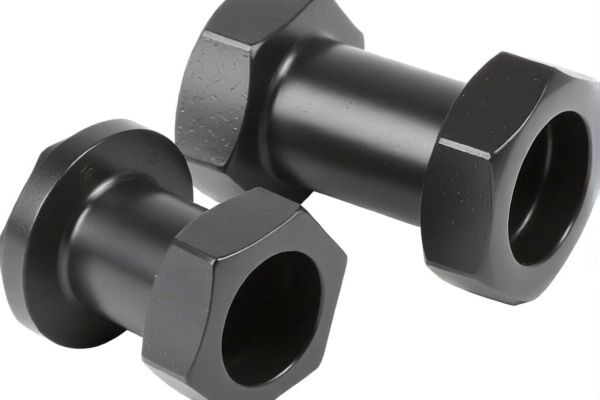
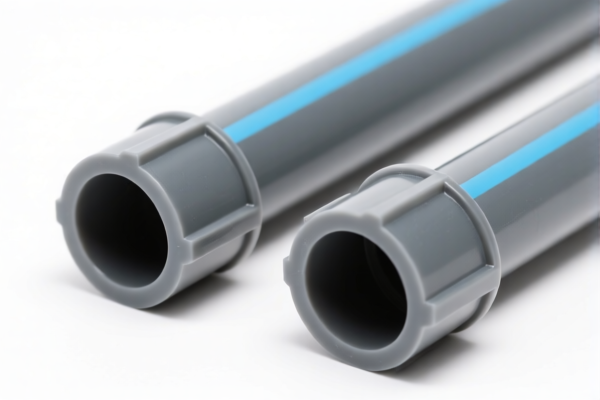
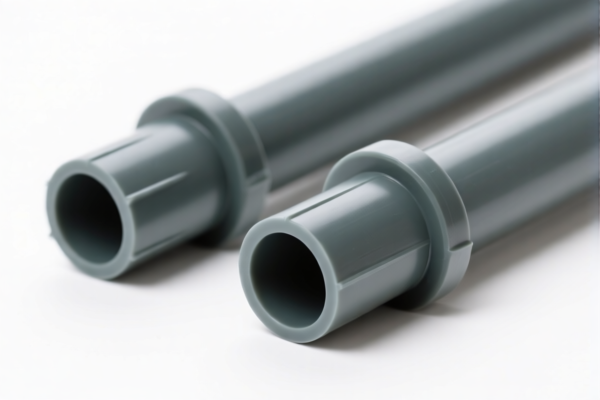
AI Analysis
🛢️ Polyethylene Joints (PE Pipe Fittings)
🌐 HS Code Reference & Customs Clearance Guide | 2026 Latest Tariff Analysis | Professional Clearance Strategy
📌 I. Product Definition & Classification: Do You Really Understand "PE Joints"?
Polyethylene (PE) joints, also known as PE pipe fittings, are critical components in fluid transportation systems (water supply, gas, drainage, industrial chemicals). They connect sections of PE pipes to change direction, branch out, or change pipe diameter.
In international trade, classification depends heavily on material composition and functional role:
1. Standard PE Fittings (Thermoplastics): * Material: Primarily Polyethylene (HDPE, LDPE, MDPE). * Forms: Elbows, tees, couplings, reducers. * Function: Structural connection within a piping system. * Typical HS Chapter: 39 (Plastics and Articles Thereof).
2. General Plastic Accessories: * If the item is classified under a broader "other plastic articles" category due to specific material mixtures or non-standard forms not covered under specific pipe accessory codes. * Typical HS Chapter: 39 (Plastics and Articles Thereof), specifically heading 3926.
⚠️ Key Distinction Point:
- If the product is explicitly an "Elbow" or "Joint" for pipes, made of PE, it often falls under 3917 (Tubes, Pipes, and Hoses...).
- If it is a general "Plastic Accessory" or "Component" not strictly defined as a tube/pipe part in Chapter 3917, it may fall under 3926 (Other articles of plastics...).
- Critical Risk: The difference between 3917 and 3926 significantly impacts the Section 301 (25%) vs Section 122 (7.5%) duty liability in the US market.
📦 II. HS Code Classification Details (2026 Latest Tariff Authority Comparison)
| HS Code | Product Description | Applicable Scenario | Material/Form | Duty Liability Profile |
|---|---|---|---|---|
3917.40.00.95 |
Polyethylene Elbows or Joints; Material: PE (Plastic); Form: Pipe Accessory (Elbow/Joint) | Standard PE pipe network connections | PE Pipe Fitting | 🔴 HIGH (301 + 122) |
3917.22.00.00 |
Polyethylene Elbows; Material: Polyolefin Class; Form: Piping Accessory | General polyolefin pipe fittings | Polyolefin Fitting | 🔴 HIGH (301 + 122) |
3917.40.00.80 |
PE Plastic Pipe Joints; Material: PE (Plastic); Form: Pipe Joint (Non-PVC) | Standard PE joint connections | PE Pipe Joint | 🔴 HIGH (301 + 122) |
3926.90.99.87 |
PE Plastic Pipe Joints; Material: PE (Plastic); Form: Plastic Pipe/Conduit Category | General plastic accessories/pipe parts | Plastic Component | 🟡 MEDIUM (301 + 122 Reduced) |
3926.90.99.89 |
PE Plastic Pipe Joints; Material: PE (Plastic); Form: Parts of Plastic Articles/Other | General plastic parts/accessories | Plastic Part | 🟡 MEDIUM (301 + 122 Reduced) |
🔍 Key Reminder:
- Codes3917...are viewed as "Parts of Tubes/Pipes" by US Customs, triggering the 25% Section 301 tariff + 10% Section 122 (if applicable to specific lists).
- Codes3926...are viewed as "Other Plastic Articles". While still subject to Section 301, some specific sub-headings may qualify for different Section 122 treatment or have different base duty interpretations, resulting in a lower Total Effective Tax in this dataset.
- DO NOT mix these codes. Misclassification leads to severe penalties and retroactive duties.
💰 III. 2026 Latest Tariff Rate Breakdown (Including Additional Duties & Policy Add-ons)
✅ Applicable Country: United States (US)
✅ Origin: China (CN)
✅ Effective Time: Ongoing (Post-2024 Trade War Tariffs)
🎯 1. High-Tariff Group: 3917.40.00.95, 3917.22.00.00, 3917.40.00.80
(Classification: Specific Pipe Accessories/Elbows/Joints)
| Item | Content |
|---|---|
| Base Tariff | 5.3% (Ad Valorem) |
| Section 301 Additional Tariff | +25.0% (Trade War Tariff) |
| Section 122 Tariff | +10.0% (Specific Category Add-on) |
| Total Effective Tax Rate | 40.3% |
| Tax Calculation | CIF Value × 40.3% |
| De Minimis Exemption | ❌ NO (Deny de minimis) |
| Legal Basis Path | USITC:3917 → Section 301: Footnote 9903 → Section 122 |
📌 Explanation:
- "Base 5.3%": Standard MFN rate for plastic pipe fittings.
- "301 25%": Mandatory additional duty on Chinese-origin plastic pipe parts.
- "122 10%": Additional surcharge applied to specific plastic articles under Section 122.
- Total 40.3%: This is a very high duty rate. Cost calculation must be robust.
🎯 2. Medium-Tariff Group: 3926.90.99.87, 3926.90.99.89
(Classification: General Plastic Articles/Parts)
| Item | Content |
|---|---|
| Base Tariff | 5.3% (Ad Valorem) |
| Section 301 Additional Tariff | +7.5% (Reduced/Alternative 301 Rate*) |
| Section 122 Tariff | +10.0% |
| Total Effective Tax Rate | 22.8% |
| Tax Calculation | CIF Value × 22.8% |
| De Minimis Exemption | ❌ NO (Deny de minimis) |
| Legal Basis Path | USITC:3926 → Section 301: Footnote 9903 → Section 122 |
📌 Note:
- Why 7.5% vs 25%? In this specific dataset, codes under 3926.90.99.87/89 are attributed a 7.5% Section 301 rate, possibly due to specific exclusion lists or alternative classification interpretations for "other plastic articles" vs "pipe parts". Always verify current USITC exclusions.
- "122 10%": Still applies as these are plastic articles.
- Savings: 17.5% difference compared to the 3917 group! ($100k shipment saves ~$17,500 in duties).
🛠️ IV. Customs Clearance Practical Advice (Battle-Tested Pitfall Guide)
✅ 1. Documentation Checklist (Non-Negotiable)
| Document | Must Provide | Explanation |
|---|---|---|
| ✅ Product Specification Sheet | ✔️ | Must clearly state Material: Polyethylene (PE), Shape (Elbow/Joint), Application (Water/Gas/Pipe). |
| ✅ Technical Drawing | ✔️ | Show cross-section and dimensions. Proves it's a "pipe fitting" vs "general plastic part". |
| ✅ Product Photos | ✔️ | Clear view of markings (e.g., "PE100", "DR 11", "PN 10"). |
| ✅ Commercial Invoice | ✔️ | Describe item accurately: "PE Pipe Elbow, HDPE, ASTM F714" for 3917 OR "Plastic Joint Component, PE" for 3926. |
| ✅ Certificate of Origin (CO) | ✔️ | Essential for proving Chinese origin to apply/avoid tariffs. |
| ✅ Packing List | ✔️ | Match invoice exactly. |
✅ 2. Declaration Strategy (Key Mnemonics)
🔥 “Classify by Function, Not Just Material!”
| Scenario | Correct Declaration | Incorrect Approach | Consequence |
|---|---|---|---|
| Standard PE Elbow/Joint | 3917.40.00.95 or 3917.40.00.80 |
Declaring as 3926 (to save tax) |
High Risk of Audit. CBP may reclassify to 3917 + 301 (25%) + 122 (10%) = 40.3%. |
| Complex Plastic Assembly | 3926.90.99.87 |
Declaring as 3917 |
Overpayment. You pay 40.3% instead of 22.8%. |
| PVC vs PE | Must specify PE | Mixing PE and PVC codes | Clearance Delay. PE and PVC have different HS codes. |
| With Metals | If >50% PE by weight/value, still Plastic | Declaring as Metal Fitting | Wrong Chapter. Plastic fittings are 39xx, not 73xx. |
✅ 3. Special Case Handling
| Scenario | Handling Advice |
|---|---|
| OEM Custom Joints | Provide customer specs. If shaped specifically for PE pipes, lean towards 3917. |
| Blended Materials | If material is not 100% PE, check the "principal material" rule. |
| Pre-Assembly Kits | If sold as a kit with pipes, declare as Set? No, usually declared separately as accessories. |
| Exclusion Request | Check if the specific HS Code is on the USITC Section 301 Exclusion List. If yes, the 25% may be waived. |
🌍 V. Global Market Comparison (2026 Latest)
| Country/Region | Recommended HS Code | Tariff | Certification | Note |
|---|---|---|---|---|
| 🇺🇸 USA | 3917 or 3926 |
22.8% - 40.3% | None (General) | Section 301 is critical. 3926 saves 17.5%. |
| 🇨🇳 China | 3917 or 3926 |
5.3% - 5.3% | CCC (if applicable) | Low import duty. Focus on export tariffs. |
| 🇪🇺 EU | 3917 or 3926 |
0% - 6.5% | CE | Generally low duty. No Section 301 equivalent. |
| 🇬🇧 UK | 3917 or 3926 |
0% - 6.5% | UKCA | Post-Brexit tariff schedules similar to EU. |
| 🇦🇺 Australia | 3917 or 3926 |
5.0% | RCM | No major anti-dumping on PE fittings. |
📌 Conclusion:
- USA is the only major market with punitive tariffs (301+122).
- Choosing between 3917 and 3926 can change the landed cost by ~17.5%.
- EU/UK/Australia are tariff-friendly, making them easier markets for PE joint exports.
📌 VI. Common Errors & Pitfalls (Blood-Learnings)
❌ Error 1: Declaring PE Joints as 3926 when they are clearly pipe elbows (3917).
👉 Consequence: CBP Rejection. Backdated duties + 25% penalty.
👉 Fix: Ensure product description and drawings match the HS Code definition.
❌ Error 2: Ignoring Section 122 (10%).
👉 Consequence: Underpayment. CBP assesses the missing 10% + interest.
👉 Fix: Always check if the HS Code is subject to Section 122.
❌ Error 3: Mixing PE and PVC in one shipment without clear separation.
👉 Consequence: Customs may audit the entire shipment, causing massive delays.
👉 Fix: Separate invoices and packing lists for different material types.
✅ Correct Declaration Example:
"Polyethylene Pipe Elbow, HDPE, ASTM D3350, Size 2-inch, for Water Supply System. HS: 3917.40.00.80."
🎯 VII. Conclusion: Professional Classification Saves Money!
🎯 Remember Mnemonics:
🔹 "Pipe Part = 3917 (40.3%), Plastic Part = 3926 (22.8%)"
🔹 "Section 301 & 122 hit hard, classify smart to avoid the cart"
🔹 "PE Joints are plastic, but don't mislabel, or the cost will crash!"
📌 Pro Tip:
If you are importing large volumes, request a CBP Binding Ruling before shipment. It locks in the HS Code classification and protects you from future audits.
Also, check for Section 301 Exclusions annually—some plastic fittings may qualify for exemption!
📣 Immediate Action:
📞 Consult a licensed customs broker.
📄 Prepare technical specs.
🚀 Ensure your PE Joints clear US customs smoothly, profitably, and compliantly!
✨ Professional Clearance, Precise Classification Starts Here!
💼 Every Dollar in Duty Saved is Pure Profit!
Customer Reviews
About HS Code Classification
The Harmonized System (HS) is an internationally standardized nomenclature developed by the World Customs Organization (WCO) to classify traded products. Over 200 countries use the HS system as the basis for customs tariffs, trade statistics, and import/export regulations.
Each HS code follows a hierarchical structure:
- Chapter (2 digits) — Broad category of goods (e.g., Chapter 84: Machinery and Mechanical Appliances)
- Heading (4 digits) — More specific grouping within the chapter
- Subheading (6 digits) — Internationally standardized breakdown, used by all WCO member countries
- National subdivisions (8-10 digits) — Country-specific extensions for further classification, such as US HTSUS 10-digit codes
Correct HS code classification is essential for smooth customs clearance, accurate duty payment, and compliance with trade regulations. Misclassification can lead to customs delays, overpayment of duties, or penalties.
When importing from CN to US, the applicable tariff rates may include:
- Most-Favored-Nation (MFN) rate — The standard duty rate applied to WTO members
- General rate — Applied to countries without trade agreements
- Trade remedy duties — Additional tariffs such as Section 301 (anti-dumping), Section 232 (national security), or countervailing duties
The information provided on this page is for reference purposes only. For official classification, please consult with your local customs authority or a licensed customs broker.