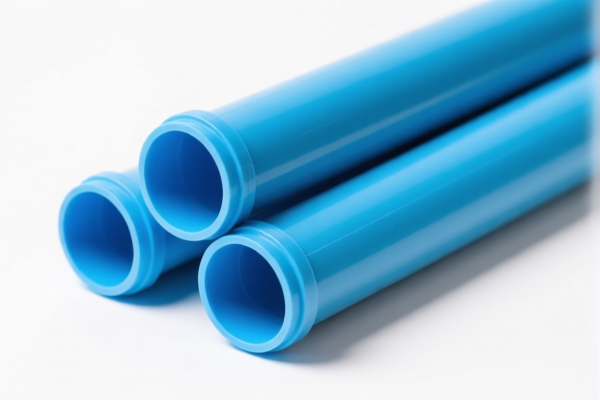
Polyethylene Plastic Water Tubes
CN → US| HS Code | Tariff Rate | Origin | Destination | Doc |
|---|---|---|---|---|
| 3917210000 | 38.1% | CN | US | Official Doc |
| 3917320020 | 38.1% | CN | US | Official Doc |
| 3926909987 | 22.8% | CN | US | Official Doc |
| 3926909989 | 22.8% | CN | US | Official Doc |
| 3917290090 | 38.1% | CN | US | Official Doc |
Product Images



AI Analysis
🚰 Polyethylene Plastic Water Tubes (PE Pipes)
🌐 HS Code Reference & Customs Clearance Guide | 2026 Latest Tariff Analysis | Professional Entry Strategies
📌 One, Product Definition & Classification: Do You Truly Understand "PE Water Tubes"?
Polyethylene (PE) water tubes are critical components in modern infrastructure, used for transporting drinking water, sewage, and industrial fluids. In international trade, these products are strictly classified based on two key factors: Material Composition (specifically Polyethylene) and Form/Structure (specifically Pipes/Conduits).
Misclassification is the most common cause of customs delays and excessive duties for this category.
⚠️ Key Distinction Point:
- If the material is explicitly Polyethylene (PE) and the form is a Pipe, it primarily falls under Chapter 39, Heading 3917 (Plastics tubes, pipes, and hoses).
- If the classification is ambiguous or if the product is considered a general "Plastic Accessory" rather than a specific pipe, it may incorrectly fall under 3926 (Other plastic articles), leading to significant tax discrepancies.
- Crucial: The presence of "Polyethylene" vs. generic "Plastic" drastically changes the duty rate from ~38% to ~23%.
📦 Two, HS Code Classification Details (2026 Latest Tariff Authority Comparison)
Based on the provided data, here are the valid HS Codes for Polyethylene Plastic Water Tubes, ranked by classification accuracy:
| HS Code | Product Description | Applicability & Logic | Tax Rate |
|---|---|---|---|
| 3917.21.00.00 | Pipes & Hoses of Polyethylene | Most Accurate. Specifically covers tubes/hoses made of polyethylene (a polymer of ethylene). Fits "hard or soft tubes" for oil/water transport. | 38.1% |
| 3917.32.00.20 | Other Tubes of Polyethylene | Highly Accurate. Covers polyethylene tubing including water supply lines. Fully complies with the definition of "Polyethylene管路". | 38.1% |
| 3917.29.00.90 | Other Pipes/Hoses of Plastics (PE) | Accurate. If length is unspecified or it falls under "Other," this captures PE pipes not specified in 3917.21. | 38.1% |
| 3926.90.99.87 | Other Plastic Articles (Pipes) | Less Accurate (兜底/General). Used if the pipe is deemed a general plastic accessory. Lower base duty but higher risk of classification challenge. | 22.8% |
| 3926.90.99.89 | Other Plastic Articles (General) | Least Accurate. A general catch-all for plastic products. Using this for PE pipes is risky as it lacks specific material/shape confirmation. | 22.8% |
🔍 Key Takeaway:
- 3917 codes are the correct technical classification for PE pipes because they specify both the material (Polyethylene) and the form (Pipe).
- 3926 codes are incorrect or suboptimal for standard PE water tubes, despite the lower tariff, because they lack the specific material definition required by HS headings.
- Warning: Using 3926 for PE pipes may lead to customs rejection or audits for misdeclaration.
💰 Three, 2026 Latest Tariff Rate Breakdown (Including Surcharges & Policy Add-ons)
✅ Applicable Country: United States (US)
✅ Origin: China (CN)
✅ Effective Time: Current rates apply (including subsequent imports post-2025)
🎯 1. 3917.21.00.00 / 3917.32.00.20 / 3917.29.00.90 — Polyethylene Pipes
| Item | Content |
|---|---|
| Base Duty | 3.1% (ad valorem) |
| Section 301 Additional Duty | +25.0% (USITC Footnote) |
| Section 122 Duty | +10.0% (Specific policy surcharge) |
| Total Effective Rate | 38.1% |
| Calculation Method | CIF Value × 38.1% |
| De Minimis Exemption | ❌ Not Applicable (High tariff threshold) |
| Legal Basis Path | USITC:3917.21.00.00 → Section 301: +25% → Section 122: +10% |
📌 Explanation:
- Base Duty (3.1%): Standard MFN rate for plastic pipes.
- Section 301 (+25%): Retaliatory tariff on Chinese goods under Trade Act Section 301.
- Section 122 (+10%): Additional surcharge applied to specific plastic/polymer imports from China.
- Total 38.1%: This is a high-cost category. Any attempt to downgrade to 3926 to save ~15% is risky and may result in penalties if audited.
🎯 2. 3926.90.99.87 / 3926.90.99.89 — Other Plastic Articles (General)
| Item | Content |
|---|---|
| Base Duty | 5.3% (ad valorem) |
| Section 301 Additional Duty | +7.5% (USITC Footnote) |
| Section 122 Duty | +10.0% (Specific policy surcharge) |
| Total Effective Rate | 22.8% |
| Calculation Method | CIF Value × 22.8% |
| De Minimis Exemption | ❌ Not Applicable |
| Legal Basis Path | USITC:3926.90.99.87 → Section 301: +7.5% → Section 122: +10% |
📌 Explanation:
- While the rate is lower (22.8% vs 38.1%), this classification is only valid if the product cannot be identified as a specific pipe under Chapter 39.
- Risk: Customs may reclassify PE water tubes to 3917, charging the difference (15.3%) plus interest and penalties.
- Recommendation: Only use this if the product is a non-standard plastic fitting or accessory NOT primarily defined as a "pipe" in its commercial use.
🛠️ Four, Customs Clearance Practical Advice (Operational Pitfall Guide)
✅ 1. Required Documentation List (Non-Negotiable)
| Document | Must Provide? | Explanation |
|---|---|---|
| ✅ Product Specification Sheet | ✔️ | Must explicitly state Material: Polyethylene (PE) and Form: Pipe/Tube. |
| ✅ Material Safety Data Sheet (MSDS) | ✔️ | Confirms polymer type (PE, PVC, PP, etc.). |
| ✅ Product Photos (Clear Labeling) | ✔️ | Show the pipe surface, diameter, and any printed markings (e.g., "PE 100", "Water Supply"). |
| ✅ Commercial Invoice | ✔️ | Description must read: "Polyethylene Pipe for Water Transport" (NOT "Plastic Tube" or "Plastic Part"). |
| ✅ Packing List | ✔️ | Detail dimensions and weight per bundle. |
| ✅ Bill of Lading/Air Waybill | ✔️ | Standard shipping document. |
✅ 2. Declaration Tips (Key Mantras)
🔥 "Material First, Form Second: PE Pipe Wins, Plastic Loses!"
| Scenario | Correct Declaration | Wrong Action |
|---|---|---|
| Standard PE Water Pipe | HS 3917.21.00.00 Desc: "Polyethylene Pipe" |
Using "Plastic Tube" → Risk of 3926 audit. |
| PE Pipe with Fittings | HS 3917.21.00.00 (for pipe) Separate line for fittings |
Bunching pipe and fittings together → Classification error. |
| Non-Polyethylene Pipe (e.g., PVC) | HS 3917.29.00.90 or other 3917 subhead | Claiming PE when it’s PVC → Fraud risk. |
| Plastic Elbows/Fittings | HS 3917.29.00.90 or 3926 | Declaring fittings as "Pipe" → Misclassification. |
✅ 3. Special Situation Handling
| Situation | Handling Advice |
|---|---|
| OEM Custom Sizes | Provide drawings showing it is a "continuous tube" and not a molded part. |
| High-Density Polyethylene (HDPE) | Clearly state "HDPE" in specs. It still falls under 3917 but ensures accuracy. |
| Colored vs. Black Pipe | Color does not change HS code. Focus on material (PE). |
| Export to Non-US Markets | Check local tariffs. EU may have different duties, but 3917 remains the global standard for PE pipes. |
🌍 Five, Global Market Comparison (2026 Latest)
| Country/Region | Recommended HS Code | Est. Duty (China Origin) | Key Certification | Notes |
|---|---|---|---|---|
| 🇺🇸 United States | 3917.21.00.00 |
38.1% (High) | None (Standard) | High tariff due to 301+122 clauses. |
| 🇨🇳 China | 3917.21.00.00 |
~5-7% | CCC (if applicable) | No Section 301/122 surcharges. |
| 🇪🇺 European Union | 3917.21.00 |
0-6% | REACH, CE | Generally favorable for plastic pipes. |
| 🇦🇺 Australia | 3917.21.00 |
5% | Australian Standards | Moderate duty. |
📌 Conclusion:
- The US market is significantly more expensive for PE pipes due to overlapping tariffs (301 + 122).
- 3917 is mandatory for PE pipes in the US; attempting to use 3926 to save money is a high-risk strategy.
📌 Six, Common Errors & Pitfall Guide (Lessons Learned)
❌ Error 1: Declaring "Polyethylene Pipe" as "Plastic Tube" (General)
👉 Consequence: Customs may accept 3926 (22.8%) initially, but later audit reveals the true material/form, leading to back taxes + 15.3% penalty.
❌ Error 2: Ignoring the "Polyethylene" specification
👉 Consequence: If the spec says "Plastic" without specifying PE, customs may assign a higher generic rate or reject the declaration for lack of detail.
❌ Error 3: Mixing Pipe and Fittings in One Line Item
👉 Consequence: If fittings are classified under 3926 and pipes under 3917, but declared together, the entire shipment may be misclassified. Always separate.
✅ Correct Practice:
"Polyethylene (PE) Pressure Pipe, Diameter 50mm, for Water Supply System, Certified to ASTM D3035, Model XYZ"
🎯 Seven, Conclusion: Professional Declaration Saves Money
🎯 Remember the Mantra:
🔹 "PE Pipe = 3917. 38.1% is the cost. Don't guess, be precise."
🔹 "Plastic Fitting = 3926. 22.8% applies only to accessories, not main pipes."
🔹 "HS Code determines your profit margin. One digit error costs 15%!"
📌 Pro Tip:
If your PE pipes are sourced from Vietnam, Mexico, or Malaysia, you may exempt Section 301/122 tariffs, reducing the rate to 0-6%.
👉 Action: Ensure your Certificate of Origin is perfectly aligned with the manufacturing location.
📣 Immediate Action Required:
📞 Contact Your Customs Broker + Provide PE Material Specs + Verify HS 3917.21.00.00
🚀 Ensure Smooth Clearance, Avoid Delays, Protect Your Margins!
✨ Professional Clearance Starts with Accurate Classification!
💼 Every Percent of Duty Counts!
Customer Reviews
About HS Code Classification
The Harmonized System (HS) is an internationally standardized nomenclature developed by the World Customs Organization (WCO) to classify traded products. Over 200 countries use the HS system as the basis for customs tariffs, trade statistics, and import/export regulations.
Each HS code follows a hierarchical structure:
- Chapter (2 digits) — Broad category of goods (e.g., Chapter 84: Machinery and Mechanical Appliances)
- Heading (4 digits) — More specific grouping within the chapter
- Subheading (6 digits) — Internationally standardized breakdown, used by all WCO member countries
- National subdivisions (8-10 digits) — Country-specific extensions for further classification, such as US HTSUS 10-digit codes
Correct HS code classification is essential for smooth customs clearance, accurate duty payment, and compliance with trade regulations. Misclassification can lead to customs delays, overpayment of duties, or penalties.
When importing from CN to US, the applicable tariff rates may include:
- Most-Favored-Nation (MFN) rate — The standard duty rate applied to WTO members
- General rate — Applied to countries without trade agreements
- Trade remedy duties — Additional tariffs such as Section 301 (anti-dumping), Section 232 (national security), or countervailing duties
The information provided on this page is for reference purposes only. For official classification, please consult with your local customs authority or a licensed customs broker.