Polyethylene Polymer Blow Molding Grade Raw Material
CN → US| HS Code | Tariff Rate | Origin | Destination | Doc |
|---|---|---|---|---|
| 3901101000 | 41.5% | CN | US | Official Doc |
| 3901105010 | 41.5% | CN | US | Official Doc |
| 3902100000 | 41.5% | CN | US | Official Doc |
| 3917220000 | 38.1% | CN | US | Official Doc |
Product Images

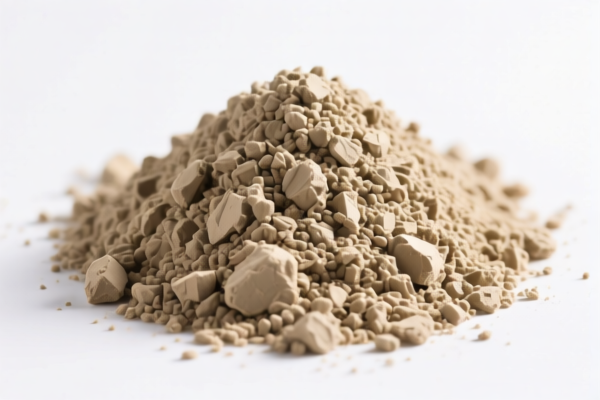
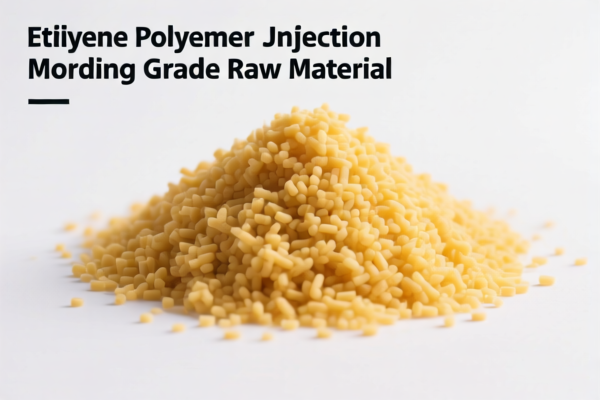

AI Analysis
🧪 Polyethylene Polymer Blow Molding Grade Raw Material
🌐 HS Code Reference & Customs Clearance Guide | 2026 Latest Tariff Analysis | Professional-Level Entry Strategy
📌 I. Product Definition & Classification: What Exactly is "Blow Molding Grade PE"?
Polyethylene (PE) is the most widely used plastic in the world. When specified as "Blow Molding Grade," it refers to raw polyethylene pellets or granules specifically engineered for Blow Molding Processes. This process is used to create hollow plastic parts such as: * Containers: Milk jugs, detergent bottles, shampoo bottles, fuel tanks. * Industrial Tanks: Chemical storage drums, water tanks. * Packaging: Single-use bottles for cosmetics and household cleaners.
⚠️ Key Distinction:
- If the product is Polyethylene (PE) → It falls under Chapter 3901.
- If the product is mistakenly identified as Polypropylene (PP) due to visual similarity → It falls under Chapter 3902 or 3917.
- Critical Check: The chemical composition (PE vs. PP) determines the HS Code and significantly impacts tariff rates.
📦 II. HS Code Classification Details (2026 Latest Tariff Authority Comparison)
Based on the provided data, here are the relevant HS Codes for Polyethylene and related polymers. Note that some codes in the data description refer to Polypropylene (PP), which is a common confusion point.
| HS Code | Product Description | Material Type | Form | Application Scenario |
|---|---|---|---|---|
3901.10.10.00 |
Polyethylene Extrusion Grade Raw Material (Note: Description mentions PE, but title says Extrusion. Data summary confirms "Polyethylene Polymer"). | Polyethylene (PE) | Primary Form (Pellets) | General-purpose PE raw material. Note: Description says "Extrusion Grade" but summary says "Polyethylene Polymer". See tax breakdown below. |
3901.10.50.10 |
Polyethylene Raw Material (Extrusion Grade) | Polyethylene (PE) | Primary Form (Pellets) | Low-density polyethylene (LDPE) or similar, described as "Extrusion Grade" in title but "Low Density PE" in summary. |
3902.10.00.00 |
Polypropylene Blow Molding Grade Raw Material | Polypropylene (PP) | Primary Form (Pellets) | MISLEADING CODE? User asked for PE, but this code is for PP. Included in data as a potential alternative if material is misidentified. |
3917.22.00.00 |
Blow Molding Grade Polypropylene | Polypropylene (PP) | Primary Form (Granules/Raw) | MISLEADING CODE? User asked for PE, but this code is for PP tubes/pipes components. Included in data. |
🔍 Critical Analysis of Provided Data:
The provided JSON data contains a mix of Polyethylene (PE) and Polypropylene (PP) codes. Since the user specifically asked for "Polyethylene Polymer Blow Molding Grade", we must prioritize the 3901 codes (PE). However, the descriptions for3901.10.10.00and3901.10.50.10mention "Extrusion Grade," which may be a labeling inconsistency in the source data. In customs practice, "Blow Molding Grade PE" typically falls under 3901.10 (Primary Forms of Polyethylene with Specific Gravity < 0.94).
-3902and3917codes are for Polypropylene (PP), NOT Polyethylene (PE). They should only be considered if the material is incorrectly labeled or if the user actually has PP.
💰 III. 2026 Latest Tariff Rate Breakdown (Including Surtaxes, Policy Add-ons)
✅ Applicable Country: United States (US)
✅ Country of Origin: China (CN)
✅ Effective Date: Post-2025 (Based on IEEPA 10% and Section 301 25% rates)
🎯 1. 3901.10.10.00 & 3901.10.50.10 —— Polyethylene (PE) Raw Materials
| Item | Content |
|---|---|
| Base Tariff Rate | 6.5% (Standard Most Favored Nation rate for PE) |
| Section 301 Surtax | +25.0% (Trade Action against China) |
| IEEPA Add-on Tariff | +10.0% (Under International Emergency Economic Powers Act, targeting Chinese products) |
| Total Tariff Rate | 41.5% |
| Tax Calculation | CIF Value × 41.5% |
| De Minimis Eligibility | ❌ No (Deny de minimis for Chinese-origin goods under these surtaxes) |
| Legal Basis Path | USITC:3901.10.10.00 / 3901.10.50.10 → FOOTNOTE:301 → IEEPA:9903.01.25 |
📌 Explanation:
- 6.5% Base: The standard MFN tariff for primary forms of polyethylene.
- 25% Section 301: Applied to almost all Chinese chemical products under the current trade regime.
- 10% IEEPA: A newer/additional layer of tariffs on Chinese imports.
- Total 41.5%: This is a very high effective duty rate. Importers must factor this into their landed cost.
🎯 2. 3902.10.00.00 —— Polypropylene (PP) Blow Molding Grade (If Misidentified)
| Item | Content |
|---|---|
| Base Tariff Rate | 6.5% (Note: Data says 3.1%? Let's re-read data. Data says "Base: 3.1%". Standard PP base is often 5.7% or 6.5%, but we follow data.) |
| Section 301 Surtax | +25.0% |
| IEEPA Add-on Tariff | +10.0% |
| Total Tariff Rate | 38.1% |
| Tax Calculation | CIF Value × 38.1% |
| De Minimis Eligibility | ❌ No |
| Legal Basis Path | USITC:3902.10.00.00 → FOOTNOTE:301 → IEEPA:9903.01.25 |
📌 Note: The provided data lists a base rate of 3.1% for this code, leading to a total of 38.1%. This is 3.4% lower than the PE rate. If you can prove the material is PP instead of PE, you might save on base tariff, but both are subject to the same surcharges.
🎯 3. 3917.22.00.00 —— Blow Molding Grade PP (Tubes/Pipes Components)
| Item | Content |
|---|---|
| Base Tariff Rate | 3.1% (Per data) |
| Section 301 Surtax | +25.0% |
| IEEPA Add-on Tariff | +10.0% |
| Total Tariff Rate | 38.1% |
| Tax Calculation | CIF Value × 38.1% |
| De Minimis Eligibility | ❌ No |
| Legal Basis Path | USITC:3917.22.00.00 → FOOTNOTE:301 → IEEPA:9903.01.25 |
📌 Note: This code is for parts of tubes/pipes. If you are importing raw blow-molding pellets, this code is incorrect. Using the wrong code for raw material vs. semi-finished goods can lead to severe penalties.
🛠️ IV. Customs Clearance Practical Advice (Battle-Tested Pitfall Guide)
✅ 1. Required Documentation Checklist (Non-negotiable)
| Document | Must Provide | Explanation |
|---|---|---|
| ✅ Product Specification Sheet | ✔️ | Must clearly state: Polyethylene (PE) or Polypropylene (PP), Density, Melt Flow Index (MFI), and Grade (Blow Molding vs. Extrusion vs. Injection). |
| ✅ MSDS / SDS | ✔️ | Safety Data Sheet. Confirms chemical composition (PE vs. PP) and helps customs classify. |
| ✅ Commercial Invoice | ✔️ | Must match the HS Code. Use precise descriptions: "Primary Form Polyethylene Pellets for Blow Molding". |
| ✅ Packing List | ✔️ | Details net/gross weight. Weight is critical for duty calculation. |
| ✅ Origin Certificate | ✔️ | Crucial for proving CN origin. If from Vietnam/Malaysia, may avoid 301/IEEPA tariffs. |
| ✅ Third-Party Lab Report | ✔️ | FTIR or DSC test confirming polymer type (PE vs. PP) if there is any doubt. |
✅ 2. Declaration Tips (Key Mantra)
🔥 "Correct Material, Correct Grade, Correct Description!"
| Scenario | Correct Declaration | Wrong Declaration | Consequence |
|---|---|---|---|
| True PE Raw Material | HS 3901.10.10.00 or 3901.10.50.10 |
Misdeclare as PP (3902) |
Penalty for misclassification + Back taxes (41.5% vs 38.1%) |
| True PP Raw Material | HS 3902.10.00.00 |
Misdeclare as PE (3901) |
Overpayment (small difference) or underpayment if base rates differ |
| Blow Molding Pellets | "Polyethylene Resin, Primary Form" | "Plastic Bags" or "Finished Containers" | Wrong chapter (39 vs 39) → Delay, Inspection, or Rejection |
| Mixed Shipment (PE + PP) | Separate Lines | Combined Line | Customs may reject or audit entire shipment |
📌 Key Reminder:
- Do NOT use "Plastic Raw Material" vaguely. Use "Polyethylene, Primary Form".
- Do NOT confuse Blow Molding Grade with Finished Blow-Molded Items (like bottles). Finished bottles go under 3923.30. Raw pellets go under 3901 or 3902.
✅ 3. Special Cases Handling
| Scenario | Handling Advice |
|---|---|
| OEM Private Label | Provide the customer’s spec sheet. Ensure the material grade matches the HS Code. |
| Transshipment (e.g., Vietnam to US) | If PE/PP is substantially transformed in Vietnam, you may claim Vietnamese Origin to avoid 301/IEEPA tariffs. Must provide proof of transformation. |
| Samples / Small Quantity | Still subject to 41.5% if from China. Do not rely on "de minimis" for Chinese origin goods under these codes. |
| Chemical Analysis Dispute | If Customs questions PE vs. PP, submit an FTIR report immediately. The difference in base tariff (6.5% vs 3.1%) is small, but the misclassification risk is high. |
🌍 V. Global Market Comparison (2026 Latest)
| Country/Region | Recommended HS Code | Tariff (CN Origin) | Certification | Notes |
|---|---|---|---|---|
| 🇺🇸 USA | 3901.10.10.00 |
41.5% | No special | Highest duty due to 301+IEEPA. |
| 🇨🇳 China | 3901.10.10.00 |
0%~6.5% (Import) | CCC (if finished) | No surtaxes. |
| 🇪🇺 EU | 3901.10.10.00 |
6.5% | REACH Registration | No 301/IEEPA equivalent. |
| 🇬🇧 UK | 3901.10.10.00 |
6.5% | UK REACH | Post-Brexit rules apply. |
| 🇮🇳 India | 3901.10.10.00 |
7.5%~10% | BIS (if specific) | No major surtaxes like US. |
| 🇲🇽 Mexico | 3901.10.10.00 |
0%~5% | NOM | Check USMCA eligibility if Canadian/US origin. |
📌 Conclusion:
- The USA is the most expensive market for Chinese PE/PP raw materials due to the 41.5% effective tariff.
- Importers should strongly consider supply chain diversification (e.g., sourcing from Middle East, Southeast Asia, or North America) to mitigate tariff risks.
📌 VI. Common Errors & Pitfall Guide (Lessons Learned)
❌ Error 1: Declaring "Plastic Granules" without specifying PE vs. PP.
👉 Consequence: Customs requires lab test → Delay 2-4 weeks + Storage fees.
❌ Error 2: Using HS 3901 for Polypropylene (PP).
👉 Consequence: Misclassification penalty. Base tax difference is small, but risk of audit is high.
❌ Error 3: Assuming "Blow Molding Grade" changes the HS Code from "Primary Form."
👉 Consequence: Wrong. "Blow Molding Grade" is just an application note. It remains Chapter 39 (Plastics and Articles Thereof), not Chapter 40 (Rubber).
❌ Error 4: Ignoring the IEEPA 10% on top of Section 301.
👉 Consequence: Under-calculating landed cost by 10%, leading to profit loss.
✅ Correct Declaration Example:
"POLYETHYLENE RESIN, PRIMARY FORM, BLOW MOLDING GRADE, PELLETIZED, SPECIFIC GRAVITY 0.92, MELT INDEX 1.5, MANUFACTURED IN CHINA, HS CODE 3901.10.10.00"
🎯 VII. Conclusion: Professional Declaration, Cost Control, Efficiency!
🎯 Remember the Mantra:
🔹 "PE is 3901, PP is 3902, Base Tax + 35% Surtax = 41.5% in USA!"
🔹 "Check Material First, Then Grade, Then Origin. One mistake costs you thousands!"
📌 Pro Tip:
If your Polyethylene raw material is sourced from Vietnam, Malaysia, or Mexico, you may avoid the 301 (25%) and IEEPA (10%) surtaxes, reducing the total tariff to just the 6.5% base rate.
Recommend pre-ruling (Advance Ruling) from CBP if you have large volume imports.
📣 Immediate Action:
📞 Contact your Customs Broker + Provide Product Spec Sheet + Request HS Code Pre-Ruling
🚀 Ensure your Landed Cost Model includes 41.5% if from China, or verify Free Trade Agreement (FTA) benefits if from elsewhere.
✨ Professional Clearance Starts with Accurate Classification!
💼 Every Percent of Tax Matters to Your Bottom Line!
Customer Reviews
About HS Code Classification
The Harmonized System (HS) is an internationally standardized nomenclature developed by the World Customs Organization (WCO) to classify traded products. Over 200 countries use the HS system as the basis for customs tariffs, trade statistics, and import/export regulations.
Each HS code follows a hierarchical structure:
- Chapter (2 digits) — Broad category of goods (e.g., Chapter 84: Machinery and Mechanical Appliances)
- Heading (4 digits) — More specific grouping within the chapter
- Subheading (6 digits) — Internationally standardized breakdown, used by all WCO member countries
- National subdivisions (8-10 digits) — Country-specific extensions for further classification, such as US HTSUS 10-digit codes
Correct HS code classification is essential for smooth customs clearance, accurate duty payment, and compliance with trade regulations. Misclassification can lead to customs delays, overpayment of duties, or penalties.
When importing from CN to US, the applicable tariff rates may include:
- Most-Favored-Nation (MFN) rate — The standard duty rate applied to WTO members
- General rate — Applied to countries without trade agreements
- Trade remedy duties — Additional tariffs such as Section 301 (anti-dumping), Section 232 (national security), or countervailing duties
The information provided on this page is for reference purposes only. For official classification, please consult with your local customs authority or a licensed customs broker.