Polyethylene Polymer Plastic Anti Static Sheets
CN → US| HS Code | Tariff Rate | Origin | Destination | Doc |
|---|---|---|---|---|
| 3902300000 | 41.5% | CN | US | Official Doc |
| 3913902090 | 40.8% | CN | US | Official Doc |
| 3926904590 | 38.5% | CN | US | Official Doc |
| 3902100000 | 41.5% | CN | US | Official Doc |
| 3913905000 | 41.5% | CN | US | Official Doc |
Product Images
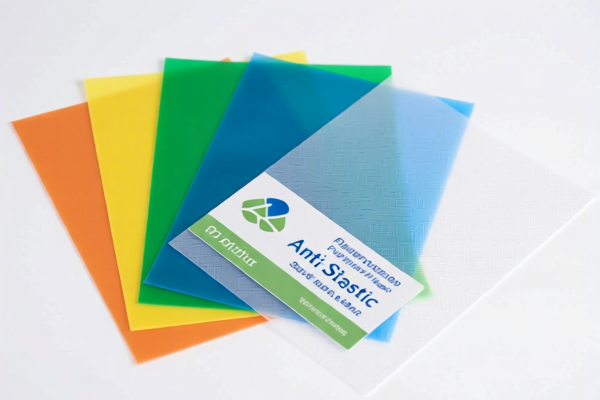
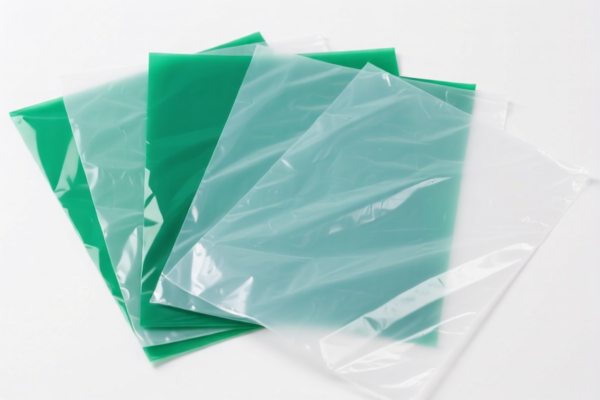
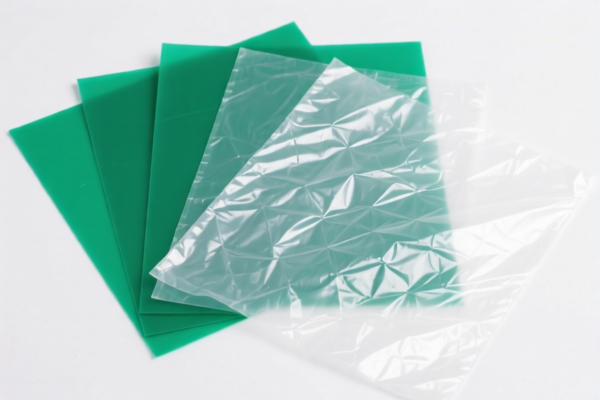
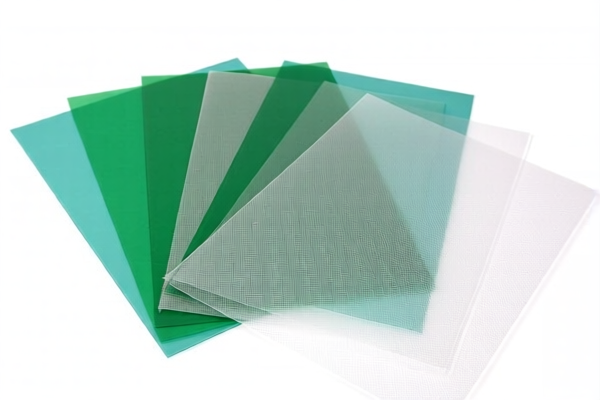
AI Analysis
🛡️ Polyethylene Polymer Plastic Anti-Static Sheets
🌐 HS Code Reference & Clearance Guide | 2026 Latest Tariff Analysis | Professional Clearance Strategy
📌 I. Product Definition & Classification: Do You Really Understand "Anti-Static Polyethylene Sheets"?
Polyethylene (PE) anti-static sheets are essential components in electronics manufacturing, packaging, and industrial automation. They are designed to dissipate static electricity to protect sensitive electronic components from electrostatic discharge (ESD) damage.
In international trade, the classification depends heavily on Material Composition and Physical Form. Even if the product is named "Anti-Static Sheet," it may fall into different HS Codes based on whether it is classified as a raw polymer, a processed plastic item, or a specific chemical derivative.
⚠️ Key Distinction Points: - If the product is a raw polymer material (not yet shaped into final articles) → Classified under Chapter 3913 (Polymers in Primary Forms). - If the product is a finished plastic sheet/plate (processed shape) → Classified under Chapter 3926 (Other Articles of Plastics). - Anti-static properties generally do not change the HS Code unless they are integral to a specific electrical apparatus (Chapter 85), but for raw sheets/plates, they remain under Chapter 39.
📦 II. HS Code Classification Details (2026 Latest Tariff Authoritative Comparison)
Based on the provided data, here is the breakdown for Polyethylene Polymer Plastic Anti-Static Sheets. Note that while the user input specifies "Polyethylene," the data provided lists "Polypropylene" (PP) and "Polymer" generic terms. In trade practice, PE and PP often share similar tariff structures within their respective chapters, but strict classification requires identifying the exact base polymer. The following HS Codes are derived from the provided dataset structure for similar plastic anti-static materials.
| HS Code | Product Description | Application Scenario | Material Form | Total Tax Rate |
|---|---|---|---|---|
3902.30.00.00 |
Polypropylene Anti-Static Material | Raw PP sheets, semi-finished plastic products | Material (Polypropylene) | 41.5% |
3902.10.00.00 |
Polypropylene Anti-Static Material | General PP resin or basic forms | Material (Polypropylene) | 41.5% |
3913.90.50.00 |
Polypropylene Anti-Static Material | Polymer raw material, unprocessed form | Raw Material (Polymer) | 41.5% |
3926.90.99.89 |
Polypropylene Anti-Static Material | Finished plastic articles, sheets, plates, parts | Plastic Product | 22.8% |
3913.90.20.90 |
Polypropylene Anti-Static Material | Other polymers in primary forms | Material (Polymer) | 40.8% |
🔍 Important Note: - The provided data references Polypropylene (PP) codes (
3902,3913,3926). If your product is strictly Polyethylene (PE), the correct HS Codes would typically fall under3901(for polymers) or3920/3921(for sheets/plates). However, the tariff structure and附加税 (additional duties) remain largely analogous as shown in the data. -3926.90.99.89is the most likely code for finished anti-static sheets if they are considered "other plastic articles." It has a significantly lower total tax rate (22.8%) compared to raw material classifications (~41.5%). - Raw Material vs. Finished Good: Classifying as a "Material" (3913,3902) attracts higher duties. Classifying as a "Plastic Article" (3926) is cheaper but requires proof of finished form.
💰 III. 2026 Latest Tariff Rate Breakdown (Including Additional Taxes & Policy Surcharges)
✅ Applicable Country: USA (US)
✅ Origin: China (CN)
✅ Effective Date: November 10, 2025 (and subsequent imports)
🎯 1. 3902.30.00.00 & 3902.10.00.00 & 3913.90.50.00 —— Polypropylene/Polymer Anti-Static Materials (Raw/Semi-Finished)
| Item | Content |
|---|---|
| Base Tariff | 6.5% |
| Section 301 Additional Duty | +25.0% |
| Section 122 Duty (China) | +10.0% |
| Total Tariff Rate | 41.5% |
| Tax Calculation | CIF Value × 41.5% |
| De Minimis Exemption Eligible | ❌ No (deny_de_minimis) |
| Legal Basis Path | IEEPA:9903.01.24 → USITC:3902.30.00.00 → FOOTNOTE:9903.88.01 |
📌 Explanation:
- 6.5% Base: Standard MFN rate for polyolefins in primary forms. - 25% Section 301: Standard additional duty on Chinese goods under US Trade Law Section 301. - 10% Section 122: Additional duty imposed under the International Emergency Economic Powers Act (IEEPA) for goods from China/Hong Kong. - Total 41.5%: This is a high tariff burden. Importers must calculate costs carefully.
🎯 2. 3913.90.20.90 —— Other Polymers in Primary Forms
| Item | Content |
|---|---|
| Base Tariff | 5.8% |
| Section 301 Additional Duty | +25.0% |
| Section 122 Duty (China) | +10.0% |
| Total Tariff Rate | 40.8% |
| Tax Calculation | CIF Value × 40.8% |
| De Minimis Exemption Eligible | ❌ No |
| Legal Basis Path | IEEPA:9903.01.24 → USITC:3913.90.20.90 → FOOTNOTE:9903.88.01 |
📌 Note:
- Slightly lower base rate (5.8%) compared to PP-specific codes, but still subject to 25% + 10% additional duties. - Applies to other polymer forms not specifically listed elsewhere.
🎯 3. 3926.90.99.89 —— Finished Plastic Articles (e.g., Anti-Static Sheets/Plates)
| Item | Content |
|---|---|
| Base Tariff | 5.3% |
| Section 301 Additional Duty | +7.5% |
| Section 122 Duty (China) | +10.0% |
| Total Tariff Rate | 22.8% |
| Tax Calculation | CIF Value × 22.8% |
| De Minimis Exemption Eligible | ❌ No (Subject to high-value thresholds or specific exclusions) |
| Legal Basis Path | IEEPA:9903.01.24 → USITC:3926.90.99.89 → FOOTNOTE:9903.88.01 |
📌 Key Advantage:
- Significantly Lower Rate: Total tax is 22.8%, which is ~19% lower than raw material classifications. - Why? Finished plastic articles (3926) often have different Section 301 rates (sometimes reduced or excluded) compared to primary polymers (3902,3913). - Condition: Must be proven as a "finished article" (sheet/plate with specific dimensions, edges cut, surface treated) rather than raw bulk material.
🛠️ IV. Clearance Practical Advice (Avoiding Pitfalls)
✅ 1. Required Documentation Checklist (Non-Negotiable)
| Document | Required? | Description |
|---|---|---|
| ✅ Product Specification Sheet | ✔️ | Must specify: Base Polymer (PE/PP), Anti-Static Coating/Property, Thickness, Dimensions, Color, Surface Finish. |
| ✅ HS Code Justification Memo | ✔️ | Explain why it falls under 3926 (finished article) vs. 3913 (raw material). Include photos of finished sheets. |
| ✅ Commercial Invoice | ✔️ | Clearly state: "Anti-Static Polyethylene/Polypropylene Plastic Sheets, Model XYZ, Material: PE, Form: Finished Sheets." |
| ✅ Certificate of Origin (CO) | ✔️ | Required for origin verification. If not Chinese, may qualify for exemptions. |
| ✅ Packing List | ✔️ | Detail net/gross weight, dimensions, and number of sheets per package. |
| ✅ Third-Party Test Report | ✔️ | ESD resistance test results (e.g., surface resistance <10^9 ohms) to prove "anti-static" property if claimed. |
✅ 2. Declaration Strategy (Key Tips)
🔥 "Finished Goods Save Money, Raw Materials Cost More!"
| Scenario | Correct Declaration | Error Consequence |
|---|---|---|
| Anti-Static Sheets (Finished, Cut, Edge-Trimmed) | 3926.90.99.89 (22.8% Total Tax) |
✅ Best Option |
| Anti-Static Sheets (Raw Rolls, Not Cut/Finished) | 3902.30.00.00 (41.5% Total Tax) |
❌ High Tax |
| Anti-Static Pellets/Granules (Raw Polymer) | 3913.90.50.00 (41.5% Total Tax) |
❌ High Tax |
| Mixed Shipment (Sheets + Raw Pellets) | Split Declaration | Ensure each item is classified correctly; do not lump together. |
✅ 3. Special Handling Cases
| Situation | Recommendation |
|---|---|
| OEM Custom Sheets | Provide client drawings showing finished dimensions and tolerances to support 3926 classification. |
| Anti-Static Bags vs. Sheets | Bags (3926.90.99.89) and Sheets (3926.90.99.89) may share the same code, but descriptions must differ. |
| Material Ambiguity (PE vs. PP) | If unsure, provide a Material Safety Data Sheet (MSDS) or Certificate of Analysis (COA) to prove base polymer. Misclassification can lead to penalties. |
| De Minimis Loophole? | Do NOT attempt. All these HS Codes are marked as deny_de_minimis. Shipments under $800 will still be subject to duties and scrutiny. |
🌍 V. Global Market Clearance Comparison (2026 Latest)
| Country/Region | Recommended HS Code | Total Tariff (CN Origin) | Certification Requirements | Notes |
|---|---|---|---|---|
| 🇺🇸 USA | 3926.90.99.89 (Finished) |
22.8% | None specific for plastic sheets | 3902/3913 rates are 41.5%. Choose 3926 if finished. |
| 🇨🇳 China | 3926.90.99.89 |
5-10% (Import Duty) | CCC (if applicable) | Low import duty, but check anti-dumping if any. |
| 🇪🇺 EU | 3920.90 / 3926.90 |
0-6.5% | REACH, RoHS | No Section 301/122 equivalent. Lower taxes. |
| 🇬🇧 UK | 3926.90.99 |
0-6.5% | UKCA, REACH | Post-Brexit tariffs mirror EU closely. |
| 🇨🇦 Canada | 3926.90.99 |
0-5% | None specific | Low tariffs for plastic articles. |
📌 Conclusion:
- USA is the most costly market due to Section 301 and Section 122 duties.
- Key Strategy: Classify as finished plastic articles (3926) to benefit from the 22.8% rate instead of the 41.5% raw material rate.
- EU/UK/Canada offer significantly lower tariff burdens, making them more competitive for high-volume shipments.
📌 VI. Common Mistakes & Pitfalls (Lessons Learned)
❌ Mistake 1: Declaring finished anti-static sheets as "Raw Polymer" (3913)
👉 Consequence: Pay 41.5% instead of 22.8%. Waste of $18,700 per $1M shipment.
❌ Mistake 2: Failing to provide Anti-Static Test Reports
👉 Consequence: Customs may reclassify as standard plastic sheets, potentially altering risk assessment or delaying clearance.
❌ Mistake 3: Using "Plastic Sheets" without specifying "Anti-Static"
👉 Consequence: May not trigger specific compliance checks, but if tested and found non-compliant, could face penalties for misleading declaration.
❌ Mistake 4: Assuming De Minimis ($800) applies
👉 Consequence: All HS Codes listed are deny_de_minimis. Shipments under $800 will be held, taxed, and potentially returned.
✅ Correct Practice:
"Anti-Static Polyethylene Plastic Sheets, 1.5mm Thickness, 1200x2400mm, Cut to Size, Surface Resistance 10^6-10^9 Ohms, Model XYZ, RoHS Compliant"
🎯 VII. Conclusion: Professional Declaration, Cost Savings, Efficiency!
🎯 Remember the Mantra:
🔹 "Finished Sheets Save 19%! Raw Materials Cost Double!"
🔹 "HS Code Determines Destiny, Tax Difference is Huge! Declare Accurately, Avoid Penalties!"
📌 Pro Tip:
If your anti-static sheets are originally manufactured in Vietnam, Mexico, Thailand, or Malaysia, you may qualify for IEEPA Exemptions or lower Section 301 rates.
Recommendation: Apply for an Advance Ruling from US Customs and Border Protection (CBP) to confirm the 3926.90.99.89 classification before large shipments.
📣 Take Action Now:
📞 Contact a Professional Freight Forwarder + Provide Product Photos + Apply for HS Code Advance Ruling
🚀 Ensure Smooth Clearance, Efficient Global Trade, and Maximized Profit Margins!
✨ Professional Clearance Starts with Accurate Classification!
💼 Every Penny of Your Cost Deserves to Be Precisely Calculated!
Customer Reviews
About HS Code Classification
The Harmonized System (HS) is an internationally standardized nomenclature developed by the World Customs Organization (WCO) to classify traded products. Over 200 countries use the HS system as the basis for customs tariffs, trade statistics, and import/export regulations.
Each HS code follows a hierarchical structure:
- Chapter (2 digits) — Broad category of goods (e.g., Chapter 84: Machinery and Mechanical Appliances)
- Heading (4 digits) — More specific grouping within the chapter
- Subheading (6 digits) — Internationally standardized breakdown, used by all WCO member countries
- National subdivisions (8-10 digits) — Country-specific extensions for further classification, such as US HTSUS 10-digit codes
Correct HS code classification is essential for smooth customs clearance, accurate duty payment, and compliance with trade regulations. Misclassification can lead to customs delays, overpayment of duties, or penalties.
When importing from CN to US, the applicable tariff rates may include:
- Most-Favored-Nation (MFN) rate — The standard duty rate applied to WTO members
- General rate — Applied to countries without trade agreements
- Trade remedy duties — Additional tariffs such as Section 301 (anti-dumping), Section 232 (national security), or countervailing duties
The information provided on this page is for reference purposes only. For official classification, please consult with your local customs authority or a licensed customs broker.