Polyethylene Polymer Plastic Anti UV Film
CN → US| HS Code | Tariff Rate | Origin | Destination | Doc |
|---|---|---|---|---|
| 3920991000 | 41.0% | CN | US | Official Doc |
| 3921190010 | 41.5% | CN | US | Official Doc |
| 3921190090 | 41.5% | CN | US | Official Doc |
| 3920100000 | 39.2% | CN | US | Official Doc |
| 3901105010 | 41.5% | CN | US | Official Doc |
Product Images
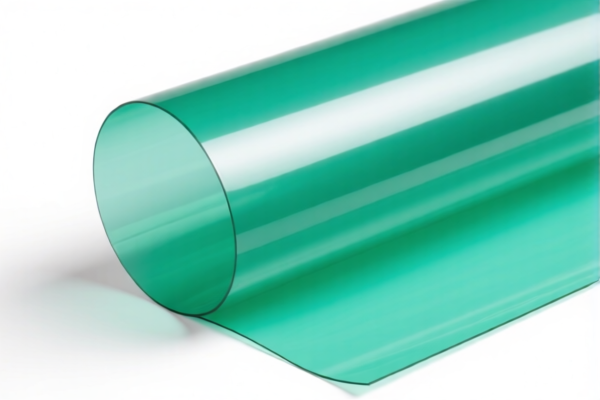

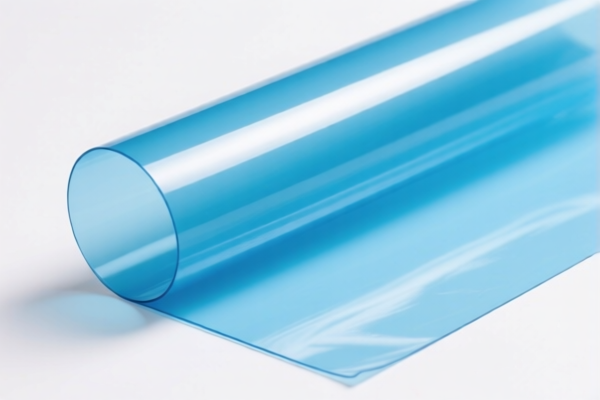
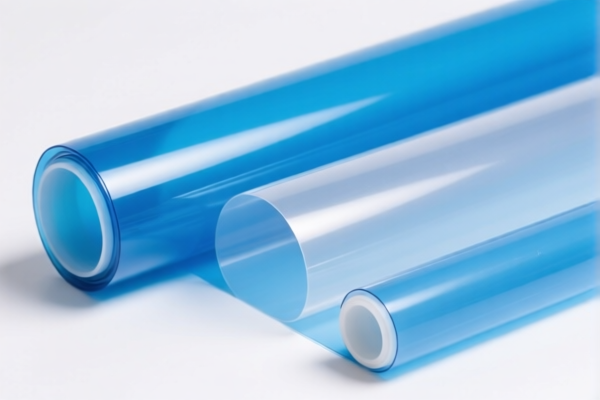
AI Analysis
📦 Polyethylene Polymer Plastic Anti-UV Film (PE Anti-UV Film)
🌐 HS Code Reference & Customs Clearance Guide | 2026 Latest Tariff Analysis | Professional Strategy for US Imports
📌 I. Product Definition & Classification: Understanding PE Anti-UV Film
Polyethylene (PE) Anti-UV Film is a high-performance plastic material widely used in agriculture (greenhouses), construction (waterproofing membranes), and industrial applications (capacitor films, protective wrapping). It consists of polyethylene polymers processed into non-cellular, non-reinforced sheets, plates, films, or foils.
The key to correct classification lies in distinguishing whether the product is: 1. A Basic Polymer Sheet/Film: Classified under Chapter 39 (Plastics and articles thereof). 2. A Specific Industrial Component: e.g., Capacitor film (often subsumed under generic plastic films if not specialized enough).
⚠️ Key Distinction:
- If it is a general-purpose PE film (agricultural, protective, packaging) → Likely 3920.10.00.00 or 3921.19.00.
- If it is specifically designed for capacitors and meets technical specs → May qualify for 3920.99.10.00.
- Anti-UV additive does not change the HS Code; it remains a plastic film, but may affect customs scrutiny regarding safety/environmental claims.
📦 II. HS Code Classification Details (2026 Latest Tariff Authority Comparison)
| HS Code | Product Description | Applicable Scenario | Reinforcement/Cellular? |
|---|---|---|---|
3920.10.00.00 |
Plates, sheets, film, foil and strip, of polymers of ethylene | Most Common: General PE films, agricultural mulch, protective wraps, non-reinforced, non-cellular | ❌ Non-cellular, Non-reinforced |
3920.99.10.00 |
Other plates, sheets, film, foil and strip, of plastics: Of polymers of ethylene: For capacitor films | Specialized: Specifically manufactured for electrical capacitors, meeting strict dielectric standards | ❌ Non-cellular, Non-reinforced |
3921.19.00.10 |
Other plates, sheets, film, foam, strip and block, of plastics: Of polymers of ethylene: Other | Alternative: If classified as "Other" under Chapter 39.11 (e.g., coated, laminated, or reinforced slightly beyond basic film) | ❌/✅ Varies |
3921.19.00.90 |
Other plates, sheets, film, foam, strip and block, of plastics: Of polymers of ethylene: Other | Broad Category: Catch-all for PE films not fitting 3920 or 3921.19.10 | ❌/✅ Varies |
3901.10.50.10 |
Polymers of ethylene, in primary forms: Linear low density polyethylene (LLDPE) | Raw Material: If sold as primary form (pellets, granules, not yet processed into film) | N/A (Raw Polymer) |
🔍 Critical Reminder:
- Anti-UV treatment is considered a processing step, not a change in material. The HS Code remains based on the polymer type (PE) and form (film).
- 3920.10.00.00 is the most common code for standard PE films.
- 3920.99.10.00 is niche and requires proof of use (e.g., invoices specifying "capacitor film").
- 3901.10.50.10 is incorrect for finished films; it is for raw pellets.
💰 III. 2026 Latest Tariff Rate Breakdown (Including Additional Duties & Policy Surcharges)
✅ Applicable Country: United States (US)
✅ Country of Origin: China (CN)
✅ Effective Date: November 10, 2025 (and onwards)
🎯 1. 3920.10.00.00 —— Polymers of Ethylene, Plates, Sheets, Film, etc. (Most Common)
| Item | Detail |
|---|---|
| Base Tariff Rate | 4.2% (ad valorem) |
| Section 301 Additional Duty | +25.0% (USITC Footnote 9903.88.01) |
| Section 122 Additional Duty | +10.0% (IEEPA, targeting specific Chinese plastic products) |
| Total Tariff Rate | 39.2% |
| Tax Calculation | CIF Value × 39.2% |
| De Minimis Exemption | ❌ Not Eligible (Section 301 & 122 duties apply regardless of value) |
| Legal Authority Path | IEEPA:9903.01.25 → IEEPA:9903.01.24 → USITC:3920.10.00.00 → FOOTNOTE:9903.88.01 |
📌 Explanation:
- Base 4.2%: Standard MFN rate for PE films.
- 25% Section 301: Broad tariff on Chinese plastics.
- 10% Section 122: Specific surcharge on certain Chinese plastic products under IEEPA.
- Total 39.2% is a high barrier to entry. Importers must factor this into pricing.
🎯 2. 3920.99.10.00 —— Plastic Films, Other, Specifically for Capacitor Films
| Item | Detail |
|---|---|
| Base Tariff Rate | 6.0% (ad valorem) |
| Section 301 Additional Duty | +25.0% |
| Section 122 Additional Duty | +10.0% |
| Total Tariff Rate | 41.0% |
| Tax Calculation | CIF Value × 41.0% |
| De Minimis Exemption | ❌ Not Eligible |
| Legal Authority Path | IEEPA:9903.01.25 → IEEPA:9903.01.24 → USITC:3920.99.10.00 → FOOTNOTE:9903.88.01 |
📌 Note:
- Slightly higher base rate (6.0%) due to "Other" classification, but total rate (41.0%) is higher than standard PE film.
- Only use this code if you have documented proof (e.g., technical specs, customer orders) that the film is exclusively for capacitors. Misclassification here leads to penalties.
🎯 3. 3921.19.00.10 & 3921.19.00.90 —— Other Plastic Sheets/Films (Ethylene Polymers)
| Item | Detail |
|---|---|
| Base Tariff Rate | 6.5% (ad valorem) |
| Section 301 Additional Duty | +25.0% |
| Section 122 Additional Duty | +10.0% |
| Total Tariff Rate | 41.5% |
| Tax Calculation | CIF Value × 41.5% |
| De Minimis Exemption | ❌ Not Eligible |
| Legal Authority Path | IEEPA:9903.01.25 → IEEPA:9903.01.24 → USITC:3921.19.00.10/90 → FOOTNOTE:9903.88.01 |
📌 Note:
- These codes are for modified or coated PE films (e.g., coated with UV inhibitors, laminated, or reinforced).
- Highest total rate (41.5%). Avoid unless the product is truly different from basic PE film.
🎯 4. 3901.10.50.10 —— Linear Low Density Polyethylene (LLDPE), Primary Forms
| Item | Detail |
|---|---|
| Base Tariff Rate | 6.5% (ad valorem) |
| Section 301 Additional Duty | +25.0% |
| Section 122 Additional Duty | +10.0% |
| Total Tariff Rate | 41.5% |
| Tax Calculation | CIF Value × 41.5% |
| De Minimis Exemption | ❌ Not Eligible |
| Legal Authority Path | IEEPA:9903.01.25 → IEEPA:9903.01.24 → USITC:3901.10.50.10 → FOOTNOTE:9903.88.01 |
📌 Warning:
- Do not use this code for films. This is for raw pellets/granules.
- Misclassifying film as raw material is a serious violation and can lead to seizure, fines, and back taxes.
🛠️ IV. Customs Clearance Practical Advice (Real-World Pitfall Avoidance)
✅ 1. Required Documentation Checklist (Mandatory)
| Document | Required? | Notes |
|---|---|---|
| ✅ Commercial Invoice | ✔️ | Must specify: "Polyethylene Anti-UV Film," material composition, thickness, width, length, and end-use (e.g., agricultural, capacitor). |
| ✅ Packing List | ✔️ | Detail rolls, weight, and dimensions. |
| ✅ Product Specification Sheet | ✔️ | Include UV content %, tensile strength, thickness, and certifications (e.g., ASTM, ISO). |
| ✅ Certificate of Origin | ✔️ | Essential for origin verification. If not China, may qualify for different rates. |
| ✅ Test Report | ✔️ | Proving it is non-cellular and non-reinforced (if claiming 3920). |
| ✅ IEEPA/301 Exemption Request | ❌ | Generally not available for PE films from China. |
✅ 2. Declaration Tips (Key Mnemonic)
🔥 “Film not Raw, Non-Cellular is Key, 3920.10 is Standard, 41.5% is High!”
| Scenario | Correct HS Code | Common Mistake |
|---|---|---|
| Standard PE Anti-UV Film (Agri/Protective) | 3920.10.00.00 |
Misclassifying as raw material 3901.10.50.10 → Audit Risk |
| Capacitor-Grade PE Film | 3920.99.10.00 |
Using generic code 3920.10.00.00 → Underpayment Risk |
| Coated/Laminated PE Film | 3921.19.00.10/90 |
Using 3920.10.00.00 → Incorrect Classification |
| PE Pellets (Raw) | 3901.10.50.10 |
Using film code → Major Violation |
✅ 3. Special Cases Handling
| Case | Handling Advice |
|---|---|
| OEM Custom PE Film | Provide design drawings and customer PO to prove specific use (e.g., capacitor). |
| Coated PE Film | If coated with UV inhibitors, adhesives, or metals, it may move to 3921. Ensure Coating Thickness is documented. |
| Recycled PE Film | If made from recycled material, it may still fall under 3920, but content percentage must be declared. |
| Non-Cellular vs. Cellular | Cellular (foam) PE films fall under 3921.19.00. Non-cellular (solid) fall under 3920.10.00.00. Test reports are critical. |
🌍 V. Global Market Customs Comparison (2026 Latest)
| Country/Region | Recommended HS Code | Tariff Rate | Certification Requirements | Notes |
|---|---|---|---|---|
| 🇺🇸 USA | 3920.10.00.00 |
39.2% | No specific FDA/USDA for general use | High tariff burden |
| 🇨🇳 China | 3920.10.00.00 |
6.0% | GB Standards (e.g., GB/T 4454) | No additional duties |
| 🇪🇺 EU | 3920.10.00.00 |
6.5% | REACH, RoHS | No anti-dumping |
| 🇬🇧 UK | 3920.10.00.00 |
6.5% | UKCA, RoHS | Post-Brexit rules apply |
| 🇯🇵 Japan | 3920.10.00.00 |
6.0% | PSE (if electrical) | Low tariff |
📌 Conclusion:
- USA imposes the highest effective tariff (39.2%) due to Section 301 and 122 duties.
- EU, UK, Japan, China have significantly lower rates (~6-7%).
- Supplier Diversification: Consider sourcing from Vietnam, Thailand, or Mexico to avoid US duties, if possible.
📌 VI. Common Errors & Pitfall Guide (Lessons Learned)
❌ Mistake 1: Declaring PE Film as Raw Material (3901.10.50.10)
👉 Consequence: Customs may reject the declaration, demand correct code, and impose fines + back taxes.
❌ Mistake 2: Failing to Specify Non-Cellular Status
👉 Consequence: Customs may assume it is cellular (3921) and apply higher base rate (6.5%) or require additional testing.
❌ Mistake 3: Ignoring Anti-UV Additives in Description
👉 Consequence: If additives are regulated (e.g., heavy metals), customs may hold the shipment for environmental review.
✅ Correct Approach:
“Polyethylene Anti-UV Film, Non-Cellular, Non-Reinforced, Thickness 0.1mm, Width 1.2m, for Agricultural Greenhouse Use, Model XYZ, Certified ASTM D4339”
🎯 VII. Conclusion: Precision in Classification Saves Money!
🎯 Key Takeaways:
🔹 “Film is Not Raw, Non-Cellular is Key” – Always specify form and structure.
🔹 “3920.10.00.00 is Your Friend” – Standard PE films have the lowest total rate (39.2%).
🔹 “3921 and 3901 are Traps” – Higher rates and stricter scrutiny.
🔹 “39.2% is the US Price” – Factor this into your cost model.
📌 Pro Tip:
If your PE film is imported for R&D or sample purposes, consult a customs broker for Entry Type 86 (consumed samples) or Entry Type 99 (temporary import). This may defer duties, but do not use for commercial sales.
📣 Immediate Action:
📞 Contact a Licensed Customs Broker
📝 Prepare Product Specs & End-Use Documentation
🚀 Apply for Advance Ruling if unsure about classification.
✨ Professional Customs Clearance Starts with Accurate Classification!
💼 Every percentage point of tariff matters – know your code, save your profit!
Customer Reviews
About HS Code Classification
The Harmonized System (HS) is an internationally standardized nomenclature developed by the World Customs Organization (WCO) to classify traded products. Over 200 countries use the HS system as the basis for customs tariffs, trade statistics, and import/export regulations.
Each HS code follows a hierarchical structure:
- Chapter (2 digits) — Broad category of goods (e.g., Chapter 84: Machinery and Mechanical Appliances)
- Heading (4 digits) — More specific grouping within the chapter
- Subheading (6 digits) — Internationally standardized breakdown, used by all WCO member countries
- National subdivisions (8-10 digits) — Country-specific extensions for further classification, such as US HTSUS 10-digit codes
Correct HS code classification is essential for smooth customs clearance, accurate duty payment, and compliance with trade regulations. Misclassification can lead to customs delays, overpayment of duties, or penalties.
When importing from CN to US, the applicable tariff rates may include:
- Most-Favored-Nation (MFN) rate — The standard duty rate applied to WTO members
- General rate — Applied to countries without trade agreements
- Trade remedy duties — Additional tariffs such as Section 301 (anti-dumping), Section 232 (national security), or countervailing duties
The information provided on this page is for reference purposes only. For official classification, please consult with your local customs authority or a licensed customs broker.