Polyethylene Polymer Plastic Anti static Sheet
CN → US| HS Code | Tariff Rate | Origin | Destination | Doc |
|---|---|---|---|---|
| 3921190090 | 41.5% | CN | US | Official Doc |
| 3920992000 | 39.2% | CN | US | Official Doc |
| 3920995000 | 40.8% | CN | US | Official Doc |
| 3921905050 | 39.8% | CN | US | Official Doc |
| 3921190090 | 41.5% | CN | US | Official Doc |
Product Images
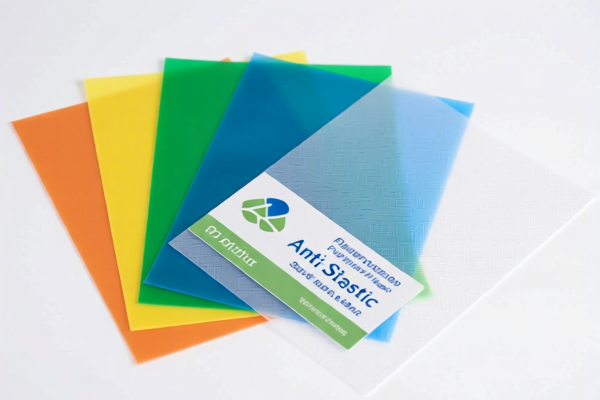
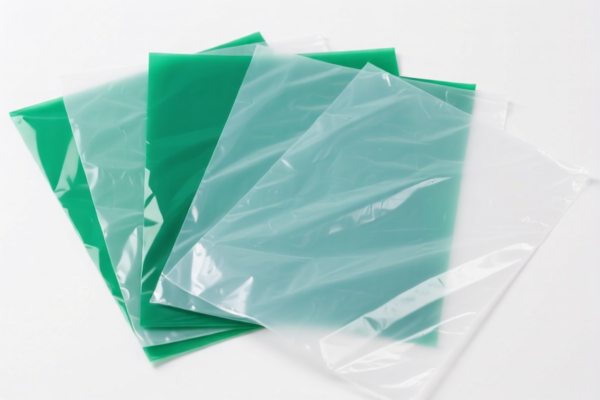
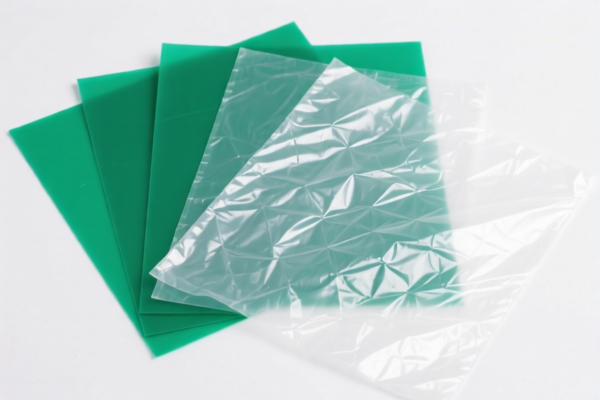
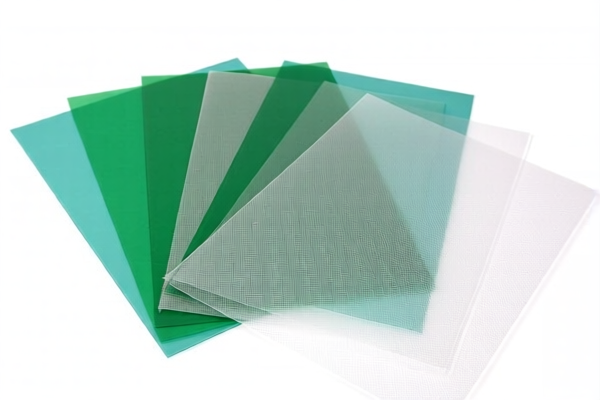
AI Analysis
🧪 Polyethylene (PE) Polymer Plastic Anti-static Sheet
🌐 HS Code Reference & Customs Clearance Guide | 2026 Latest Tariff Analysis | Professional Clearance Strategy
📌 I. Product Definition & Classification: What Exactly is "PE Anti-static Sheet"?
Polyethylene (PE) anti-static sheets are flat, plastic materials used in electronics manufacturing, packaging, and industrial handling to prevent static discharge. In international trade, these products fall under Chapter 39 (Plastics and Articles Thereof), specifically within heading 3920 (Other plates, sheets, film, foil and strip, of plastics) or 3921 (Other plates, sheets, film, foil and strip, of plastics).
The critical distinction lies in the manufacturing process: * Non-cellular, Non-reinforced: Falls under 3920. * Cellular (Foamed) OR Reinforced/Laminated: Falls under 3921.
⚠️ Key Distinction Point:
- If the PE sheet is a simple extruded film/plate without foam or layering → 3920
- If the PE sheet is foamed (insulation), laminated with other materials, or reinforced → 3921
📦 II. HS Code Classification Details (2026 Latest Tariff Authority Comparison)
Based on the provided data, the following HS Codes are potential matches. The selection depends heavily on whether the product is considered "cellular" (foamed) or "reinforced/laminated," which determines if it goes to 3920 or 3921.
| HS Code | Product Description | Matching Logic from Data | Total Tax Rate |
|---|---|---|---|
3920.99.20.00 |
Other plates, sheets... of plastics (Other) | Match: Material is "Plastic" (PE). Form is "Sheet". Since it's not specified as cellular or reinforced, it fits the "Other" category under 3920. | 39.2% |
3920.99.50.00 |
Other plates, sheets... of plastics (Other) | Match: Explicitly mentions "Plastic" material and "Sheet" form. No material/form conflict. Fits general "Other" plastic sheets. | 40.8% |
3921.90.50.50 |
Other plates, sheets... of plastics (Other) | Match: Material is PE (Plastic), Form is Sheet. Classified under "Other" in 3921, implying it may be cellular or reinforced (or simply grouped here as "Other" if 3920 didn't fit). | 39.8% |
3921.19.00.90 |
Other plates, sheets... of plastics (Other) | Match: Explicitly mentions "Polyethylene" (PE). Since PE sheets can often be cellular (foam) or laminated, they frequently fall into the 3921 "Other" bucket. No conflict with material/form. | 41.5% |
🔍 Key Reminder:
-3920is generally for non-cellular, non-reinforced plastics.
-3921is generally for cellular (foamed) OR reinforced/laminated plastics.
- "Anti-static" is a functional property. Unless the static-control additive changes the fundamental material classification (which it usually doesn't for PE), the base material (PE) and form (Sheet) dictate the code.
- The "Other" (.9xor.5x) subheadings are catch-alls for items not specifically listed elsewhere (e.g., not PVC, not Polystyrene).
💰 III. 2026 Latest Tariff Rate Breakdown (Including Additional Duties & Policy Surcharges)
✅ Applicable Country: United States (US)
✅ Origin: China (CN)
✅ Effective Date: November 10, 2025 (and subsequent imports)
🎯 1. 3920.99.20.00 – Other Plates, Sheets of Plastics (Non-Cellular/Non-Reinforced)
| Item | Content |
|---|---|
| Base Tariff | 4.2% (Ad Valorem) |
| USITC Additional Duty | +25.0% (Under USITC Footnote 9903.88.01 / Section 301) |
| IEEPA Additional Duty | +10.0% (Against Chinese/HK products, effective Nov 10, 2025) |
| Total Tax Rate | 39.2% |
| Tax Calculation | CIF Value × 39.2% |
| De Minimis Eligibility | ❌ NO (deny_de_minimis) |
| Legal Basis Path | IEEPA:9903.01.24 → USITC:3920.99.20.00 → FOOTNOTE:9903.88.01 |
📌 Explanation:
- The 25% is the standard Section 301 tariff on Chinese plastics.
- The 10% is the new IEEPA surcharge starting late 2025.
- Total 39.2% is a significant cost driver.
🎯 2. 3920.99.50.00 – Other Plates, Sheets of Plastics (General Other)
| Item | Content |
|---|---|
| Base Tariff | 5.8% (Ad Valorem) |
| USITC Additional Duty | +25.0% |
| IEEPA Additional Duty | +10.0% |
| Total Tax Rate | 40.8% |
| Tax Calculation | CIF Value × 40.8% |
| De Minimis Eligibility | ❌ NO |
| Legal Basis Path | IEEPA:9903.01.24 → USITC:3920.99.50.00 → FOOTNOTE:9903.88.01 |
📌 Note:
- Slightly higher base tariff (5.8% vs 4.2%) leads to a higher total.
- Often used for specific plastic types not covered in.20but still under 3920.
🎯 3. 3921.90.50.50 – Other Plates, Sheets of Plastics (Cellular/Reinforced)
| Item | Content |
|---|---|
| Base Tariff | 4.8% (Ad Valorem) |
| USITC Additional Duty | +25.0% |
| IEEPA Additional Duty | +10.0% |
| Total Tax Rate | 39.8% |
| Tax Calculation | CIF Value × 39.8% |
| De Minimis Eligibility | ❌ NO |
| Legal Basis Path | IEEPA:9903.01.24 → USITC:3921.90.50.50 → FOOTNOTE:9903.88.01 |
📌 Note:
- If your PE sheet is foamed (e.g., EPE foam sheet) or laminated with static-control layers, this is the most likely correct code.
- Tax rate is intermediate (39.8%).
🎯 4. 3921.19.00.90 – Other Plates, Sheets of Plastics (Polyethylene Specific)
| Item | Content |
|---|---|
| Base Tariff | 6.5% (Ad Valorem) |
| USITC Additional Duty | +25.0% |
| IEEPA Additional Duty | +10.0% |
| Total Tax Rate | 41.5% |
| Tax Calculation | CIF Value × 41.5% |
| De Minimis Eligibility | ❌ NO |
| Legal Basis Path | IEEPA:9903.01.24 → USITC:3921.19.00.90 → FOOTNOTE:9903.88.01 |
📌 Note:
- Highest base tariff (6.5%) among the options.
- Specifically mentions "Polyethylene," making it a strong candidate if the product is definitively PE and falls under 3921 (e.g., foam PE).
🛠️ IV. Customs Clearance Practical Advice (Real-World Pitfall Guide)
✅ 1. Required Documentation Checklist (Non-Negotiable)
| Document | Mandatory? | Details |
|---|---|---|
| ✅ Product Specification Sheet | ✔️ | Must specify: Material (100% PE?), Thickness, Width, Length, Static-Control Level (e.g., Surface Resistivity <10^9 ohms/sq). |
| ✅ Material Safety Data Sheet (MSDS) | ✔️ | To confirm no hazardous additives beyond standard PE. |
| ✅ Product Photos (Clear) | ✔️ | Show the sheet texture, any embossing, and packaging. Is it rigid (board) or flexible (film)? |
| ✅ Commercial Invoice | ✔️ | Must clearly state "Polyethylene Plastic Sheet" or "PE Film." Avoid vague terms like "Plastic Product." |
| ✅ Packing List | ✔️ | Detail dimensions and weight. |
| ✅ Origin Certificate | ✔️ | To prove China origin (triggering the 35% additional duties). |
✅ 2. Declaration Tips (Critical Mnemonics)
🔥 "Material First, Form Second, Static is Feature, Not Code!"
| Scenario | Correct Declaration | Wrong Practice |
|---|---|---|
| Solid PE Sheet (Rigid) | 3920.99.20.00 (Non-cellular) |
Claiming 3921 (implying foam/reinforcement) without proof → Audit Risk |
| Foamed PE Sheet (EPE) | 3921.19.00.90 (Cellular PE) |
Claiming 3920 → Misclassification |
| Laminated PE Sheet | 3921.90.50.50 (Reinforced/Laminated) |
Claiming 3920 → High Penalty |
| Static-Control Property | Mention in description, NOT in HS Code | Trying to find a "Static" HS Code → Does Not Exist |
📌 Key Insight:
- "Anti-static" is a functional addition (e.g., carbon black, additives). It does not change the HS Code from PE to "Electronic Component." It remains a plastic sheet.
- Form Factor Matters:
- Thin, flexible film → Often3920
- Thick, rigid board → Could be3920or3921depending on cellular structure.
- Foam/Insulation → Always3921
✅ 3. Special Case Handling
| Scenario | Handling Advice |
|---|---|
| OEM Custom Size | Provide die-cut templates or specifications. Ensure description matches the standard trade name (e.g., "PE Film," not "Anti-static Shielding Material"). |
| Combined with Static Shielding Bags | If sold as a kit (Sheet + Bag), may need split declaration or primary function determination. Usually, the Sheet dominates if it's the main component. |
| High-Value Static Shielding | If the static-control performance is the primary value (not just PE), consult a customs broker. However, PE is still the base material. |
| Misclassification Risk | If you classify as 3920 but it's actually foamed (3921), you may face back taxes + penalties because the base rates differ (6.5% vs 4.2%). |
🌍 V. Global Market Clearance Comparison (2026 Latest)
| Country/Region | Recommended HS Code | Tariff (China Origin) | Certification Requirements | Remarks |
|---|---|---|---|---|
| 🇺🇸 USA | 3920.99.20.00 or 3921.19.00.90 |
39.2% - 41.5% | N/A (No special certs for PE) | High Tariff. IEEPA 10% + Section 301 25%. |
| 🇨🇳 China | 3920.99.20.00 |
6.5% - 5.8% (Import) | N/A | Domestic trade is exempt. |
| 🇪🇺 EU | 3920.99.20.00 |
6.5% (Most Favored Nation) | REACH Compliance | No Section 301 equivalent. REACH registration required for additives. |
| 🇬🇧 UK | 3920.99.20.00 |
6.5% | UK REACH | Post-Brexit rules apply. |
| 🇯🇵 Japan | 3920.99.20.00 |
5.5% - 6.0% | PSE (if electrical accessory) | Low tariff, but strict quality standards. |
📌 Conclusion:
- The US is the most expensive market due to the 35% additional duties.
- EU/Japan/UK have much lower base tariffs but require chemical compliance (REACH/UK REACH) for anti-static additives.
- Cost Optimization: If possible, source PE from non-China origins (e.g., Korea, Thailand) to avoid IEEPA/Section 301 surcharges.
📌 VI. Common Errors & Pitfall Guide (Lessons Learned)
❌ Error 1: Classifying "Anti-static" as an electronic component (8536 or 8543)
👉 Consequence: Severe misclassification. PE sheets are plastics, not electronics. Result: Seizure or Rejection.
❌ Error 2: Assuming all PE sheets are 3920
👉 Consequence: If the sheet is foamed (common for anti-static packaging), it MUST be 3921. Misclassification leads to audit and back taxes.
❌ Error 3: Ignoring the IEEPA 10% surcharge
👉 Consequence: Budgeting errors. Many companies only factor in the 25% Section 301 duty, forgetting the new 10% IEEPA tax, leading to unexpected costs.
❌ Error 4: Vague Description: "Plastic Sheet"
👉 Consequence: Customs may assign the highest possible rate (3921.19.00.90 at 41.5%) if they suspect cellular/reinforced structure.
✅ Correct Description:
"Polyethylene (PE) Plastic Sheet, Anti-static, Non-cellular, White, 0.5mm Thickness, Used for Electronic Packaging"
🎯 VII. Conclusion: Professional Declaration, Save Money & Time!
🎯 Remember the Mantra:
🔹 "PE is Plastic, Static is Feature. Check Cellular? If Yes, 3921. If No, 3920. US Tax is High, 39% is the Floor!"
🔹 "HS Code Defines Duty, 35% Surcharges Kill Profit. Describe Accurately, Avoid Audits."
📌 Pro Tip:
- If your PE sheet is non-cellular, aim for 3920.99.20.00 (39.2% total).
- If it is foamed/cellular, you must use 3921.19.00.90 (41.5% total).
- Always provide product specs proving cellular vs. non-cellular status.
- Consider Advance Ruling (Pre-ruling) from US Customs if you are unsure, to avoid post-clearance audits.
📣 Immediate Action:
📞 Contact Your Customs Broker + Provide Material Certificates + Apply for HS Code Pre-ruling
🚀 Ensure Smooth Clearance, Minimize Tariff Impact, Maximize Profit Margins!
✨ Professional Clearance Starts with Accurate Classification!
💼 Every Percentage Point of Duty Affects Your Bottom Line!
Customer Reviews
About HS Code Classification
The Harmonized System (HS) is an internationally standardized nomenclature developed by the World Customs Organization (WCO) to classify traded products. Over 200 countries use the HS system as the basis for customs tariffs, trade statistics, and import/export regulations.
Each HS code follows a hierarchical structure:
- Chapter (2 digits) — Broad category of goods (e.g., Chapter 84: Machinery and Mechanical Appliances)
- Heading (4 digits) — More specific grouping within the chapter
- Subheading (6 digits) — Internationally standardized breakdown, used by all WCO member countries
- National subdivisions (8-10 digits) — Country-specific extensions for further classification, such as US HTSUS 10-digit codes
Correct HS code classification is essential for smooth customs clearance, accurate duty payment, and compliance with trade regulations. Misclassification can lead to customs delays, overpayment of duties, or penalties.
When importing from CN to US, the applicable tariff rates may include:
- Most-Favored-Nation (MFN) rate — The standard duty rate applied to WTO members
- General rate — Applied to countries without trade agreements
- Trade remedy duties — Additional tariffs such as Section 301 (anti-dumping), Section 232 (national security), or countervailing duties
The information provided on this page is for reference purposes only. For official classification, please consult with your local customs authority or a licensed customs broker.