Polyethylene Polymer Plastic Films for Agriculture
CN → US| HS Code | Tariff Rate | Origin | Destination | Doc |
|---|---|---|---|---|
| 3901105020 | 41.5% | CN | US | Official Doc |
| 3920991000 | 41.0% | CN | US | Official Doc |
| 3901105010 | 41.5% | CN | US | Official Doc |
| 3920100000 | 39.2% | CN | US | Official Doc |
| 3921190010 | 41.5% | CN | US | Official Doc |
Product Images

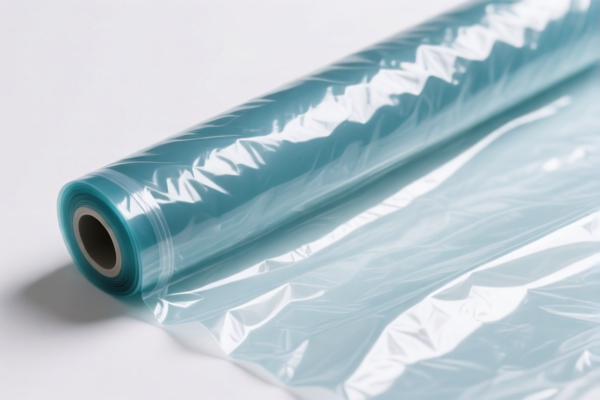
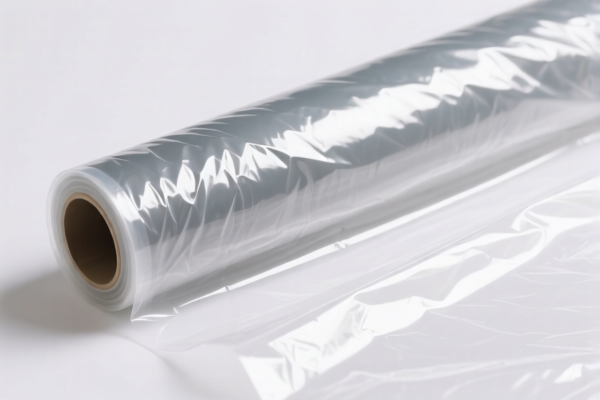

AI Analysis
🌾 Polyethylene Agricultural Plastic Films (PE Ag Films)
🌐 HS Code Reference & Clearance Guide | 2026 Tariff Analysis | Professional Customs Strategy
📌 I. Product Definition & Classification: Do You Understand "PE Ag Films"?
Polyethylene (PE) Agricultural Films are semi-finished or finished polymer products designed specifically for agricultural applications such as: * Greenhouse Covers: Transparent or translucent films for temperature control. * Mulch Films: Ground cover to retain moisture, suppress weeds, and regulate soil temperature. * Silage Bales: Heavy-duty wraps for preserving animal feed.
Crucial Classification Distinction: The HS Code depends entirely on the physical form and processing stage: 1. Primary Forms (Resins/Granules): Raw PE material intended for manufacturing films. (Chapter 3901) 2. Finished/Semi-Finished Sheets & Films: Rolled or cut plastic sheets ready for agricultural use. (Chapter 3920 or 3921)
⚠️ Key Differentiator:
- Raw Material: If the product is granules/resin to be made into film → 3901
- Finished Product: If the product is already a film/sheet ready for the field → 3920 or 3921
📦 II. HS Code Classification Breakdown (2026 Official Tariff Reference)
Based on the provided data, here are the exact matching codes for your Polyethylene Agricultural Films:
| HS Code | Product Description | Application Scenario | Material/Form Status |
|---|---|---|---|
| 3901.10.50.20 | Low-Density Polyethylene (LDPE), Primary Form | Raw Material: Agricultural film resin (granules) for manufacturing. | ✅ Primary Product (Raw) |
| 3920.99.10.00 | Other Plastic Sheets/Films/Sheets (Composite/PE) | Finished Product: Multi-layer or composite agricultural films. | ✅ Film/Sheet Form |
| 3901.10.50.10 | Low-Density Polyethylene (LDPE), Primary Form | Raw Material: Semi-finished PE for film production. | ✅ Semi-finished/Primary |
| 3920.10.00.00 | Plastic Sheets/Films (Polymerized Ethylene) | Finished Product: Single-layer PE agricultural mulch or greenhouse film. | ✅ Film Form |
| 3921.19.00.10 | Other Plastic Plates, Sheets, Film, Sheet, Foil (PE) | Finished Product: PE films specifically classified under "Other Plastics". | ✅ Film Form |
🔍 Critical Reminder:
- Raw Resin (3901.10...): Used if you are importing the source material to extrude films in your own factory.
- Finished Film (3920/3921): Used if you are importing the ready-to-use rolls for farmers/agricultural businesses.
- Misclassification Risk: Declaring raw granules as "films" or vice versa leads to immediate customs delays and duty discrepancies.
💰 III. 2026 Tariff Rate Breakdown (Including Add-on Taxes & Policy Levies)
✅ Applicable Country: USA (US)
✅ Origin: China (CN)
✅ Effective Date: 2025/2026 Import Season
🎯 Category A: Primary Forms (Raw Resins)
(Codes: 3901.10.50.20, 3901.10.50.10)
| Item | Content |
|---|---|
| Base Tariff | 6.5% (Standard Most-Favored-Nation Rate) |
| Add-on Tariff (Section 301) | +25.0% (Retaliatory tariffs on Chinese goods) |
| 122-Clause Tariff | +10.0% (Specific policy levy on certain petrochemicals) |
| Total Tax Rate | 🚨 41.5% |
| Calculation Basis | CIF Value × 41.5% |
| De Minimis Exemption? | ❌ NO (High-value chemical products are not exempt) |
| Legal Path | Base: 3901 → 301 Add-on: 25% → 122-Clause: 10% |
📌 Explanation:
Even though these are "raw materials" for agriculture, they are treated as high-value petrochemical imports subject to strict US trade barriers. The 41.5% rate significantly impacts cost margins.
🎯 Category B: Finished/Semi-Finished Films
(Codes: 3920.99.10.00, 3921.19.00.10)
| Item | Content |
|---|---|
| Base Tariff | 6.5% (Standard MFN Rate) |
| Add-on Tariff (Section 301) | +25.0% |
| 122-Clause Tariff | +10.0% |
| Total Tax Rate | 🚨 41.5% |
| Calculation Basis | CIF Value × 41.5% |
📌 Explanation:
Finished agricultural films (mulch, greenhouse covers) face the exact same punitive rate as raw resins due to the Section 301 and 122-Clause provisions.
🎯 Category C: Standard Polyethylene Sheets (Single Layer)
(Code: 3920.10.00.00)
| Item | Content |
|---|---|
| Base Tariff | 4.2% (Slightly lower base rate for specific polymer forms) |
| Add-on Tariff (Section 301) | +25.0% |
| 122-Clause Tariff | +10.0% |
| Total Tax Rate | 🚨 39.2% |
| Calculation Basis | CIF Value × 39.2% |
📌 Note: This is the only code in the list with a lower total tax (39.2% vs 41.5%), but it requires strict verification that the product fits the "3920.10" definition exactly.
🛠️ IV. Customs Clearance Practical Advice (Avoiding Pitfalls)
✅ 1. Document Checklist (Must-Have)
| Document | Requirement | Purpose |
|---|---|---|
| ✅ Technical Data Sheet | ✔️ Must specify "Polyethylene", "Low Density" (LDPE), or "Linear Density" (LLDPE). | Proves material composition to avoid misclassification. |
| ✅ Form & Usage Declaration | ✔️ Explicitly state: "Raw Resin for Film Production" OR "Finished Agricultural Mulch Film". | Determines if it goes under 3901 or 3920/3921. |
| ✅ Commercial Invoice | ✔️ Must match the HS Code exactly. No vague terms like "Plastic". | Prevents "Customs Red Flag" audits. |
| ✅ Certificate of Origin | ✔️ Original CO from China. | Essential for proving origin to calculate Section 301 taxes. |
| ✅ Photos/Labeling | ✔️ Show granules (for 3901) OR rolled film (for 3920). | Visual proof for CBP officers. |
✅ 2. Declaration Strategy (Golden Rules)
🔥 "Form Defines Fate: Raw = 3901, Film = 3920/3921!"
| Scenario | Correct HS Code | Wrong Declaration | Consequence |
|---|---|---|---|
| Raw Granules (Resin) | 3901.10.50.20 / 3901.10.50.10 |
Declare as 3920 (Film) |
High Risk: Misdeclaration of raw material → Fine + Retention. |
| Finished Mulch Film | 3920.99.10.00 / 3921.19.00.10 |
Declare as 3901 (Resin) |
Risk: Underpayment of duties + Delay. |
| Single Layer PE Sheet | 3920.10.00.00 |
Declare as 3920.99 |
Risk: Overpayment of 2.3% tax (minor, but cumulative). |
✅ 3. Special Handling Tips
- Composite Films: If your agricultural film is multi-layered (e.g., PE + EVOH + PE), it must be declared under 3920.99.10.00. Do not try to classify it as single-layer PE to save tax.
- Agricultural Exemptions? Generally, NO. Unlike food or medicine, plastic inputs for agriculture in the US are subject to Section 301 tariffs regardless of their use.
- Packaging: Ensure the product is clearly labeled "Polyethylene Film" or "PE Resin". Generic labels like "Agri-Packaging" are insufficient.
🌍 V. Global Market Comparison (2026 Context)
| Market | Recommended HS Code | Estimated Duty (China Origin) | Key Requirement | Note |
|---|---|---|---|---|
| 🇺🇸 USA | 3901.10.50.20 / 3920.99.10.00 |
39.2% ~ 41.5% | IEEPA + Section 301 | Very High. No exemptions for Ag-Films. |
| 🇪🇺 EU | 3920 series |
~4.5% + VAT | REACH / CE | Lower tariffs, but strict environmental regulations. |
| 🇨🇳 China | 3901 / 3920 |
6.5% ~ 10% | CCC | Exports from US to China face their own taxes. |
| 🇲🇽 Mexico | 3920 |
~2% ~ 4% | NAFTA/USMCA | Potential for lower duty if origin is verified. |
📌 Conclusion:
The US market imposes the heaviest burden on PE agricultural films due to the Section 301 (25%) + 122-Clause (10%) double-whammy.
Strategy: If importing into the US, ensure the Base Tariff (4.2% vs 6.5%) is optimized by choosing3920.10.00.00if the product fits, saving 2.3% on the base.
📌 VI. Common Mistakes & "Blood & Tears" Warnings
❌ Mistake 1: Declaring Resin (Granules) as Film.
👉 Result: Customs may reject the entry because the physical form doesn't match the code description.
✅ Fix: Use 3901.10 codes for granules.
❌ Mistake 2: Assuming "Agricultural Use" grants tax exemption.
👉 Result: 41.5% tax is still applied. US law does not exempt ag-plastics from 301 tariffs.
✅ Fix: Calculate the full duty into your landed cost.
❌ Mistake 3: Vague Invoice Description ("Plastic Film").
👉 Result: Customs Audit → Delay → Demurrage fees.
✅ Fix: Be specific: "LDPE Mulch Film, 20 Micron, 1000m Roll".
🎯 VII. Final Verdict: Professional Clearance Strategy
🎯 Key Takeaway:
"For Polyethylene Ag-Films in the US, HS Code Selection dictates your tax base (4.2% vs 6.5%), but Policy Add-ons (25% + 10%) will dominate your cost. There is no escape from the 39.2% ~ 41.5% total duty."
Action Plan: 1. Verify Form: Are you importing granules or rolls? (3901 vs 3920). 2. Check Composition: Is it single-layer (3920.10) or composite (3920.99)? 3. Calculate Landed Cost: CIF Value × ~40%. 4. Pre-Board: Submit a "Proforma Invoice" with exact HS codes to avoid last-minute surprises.
📌 Pro Tip:
If your supply chain involves Vietnam or Mexico (where USMCA applies), you might qualify for 0% tariffs on finished films, bypassing the 25% Section 301 tax.
Recommendation: Consider trans-shipment or re-packaging in a free-trade zone country if volumes are high.
✨ Precision in Classification = Savings in the Long Run!
💼 Don't let a wrong digit cost you 41.5% of your revenue!
Customer Reviews
About HS Code Classification
The Harmonized System (HS) is an internationally standardized nomenclature developed by the World Customs Organization (WCO) to classify traded products. Over 200 countries use the HS system as the basis for customs tariffs, trade statistics, and import/export regulations.
Each HS code follows a hierarchical structure:
- Chapter (2 digits) — Broad category of goods (e.g., Chapter 84: Machinery and Mechanical Appliances)
- Heading (4 digits) — More specific grouping within the chapter
- Subheading (6 digits) — Internationally standardized breakdown, used by all WCO member countries
- National subdivisions (8-10 digits) — Country-specific extensions for further classification, such as US HTSUS 10-digit codes
Correct HS code classification is essential for smooth customs clearance, accurate duty payment, and compliance with trade regulations. Misclassification can lead to customs delays, overpayment of duties, or penalties.
When importing from CN to US, the applicable tariff rates may include:
- Most-Favored-Nation (MFN) rate — The standard duty rate applied to WTO members
- General rate — Applied to countries without trade agreements
- Trade remedy duties — Additional tariffs such as Section 301 (anti-dumping), Section 232 (national security), or countervailing duties
The information provided on this page is for reference purposes only. For official classification, please consult with your local customs authority or a licensed customs broker.