Polyethylene Polymer Plastic Industrial Packaging Sheets
CN → US| HS Code | Tariff Rate | Origin | Destination | Doc |
|---|---|---|---|---|
| 3921190010 | 41.5% | CN | US | Official Doc |
| 3921190090 | 41.5% | CN | US | Official Doc |
| 3926909989 | 22.8% | CN | US | Official Doc |
| 3926901000 | 20.9% | CN | US | Official Doc |
| 3923109000 | 38.0% | CN | US | Official Doc |
Product Images
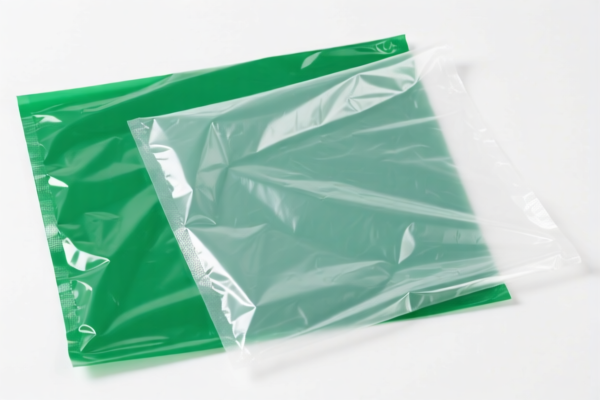
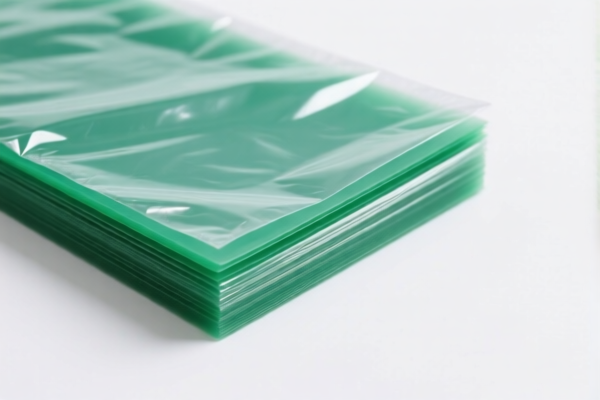
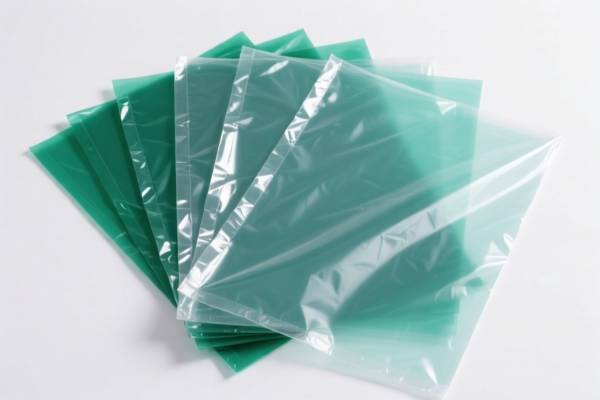
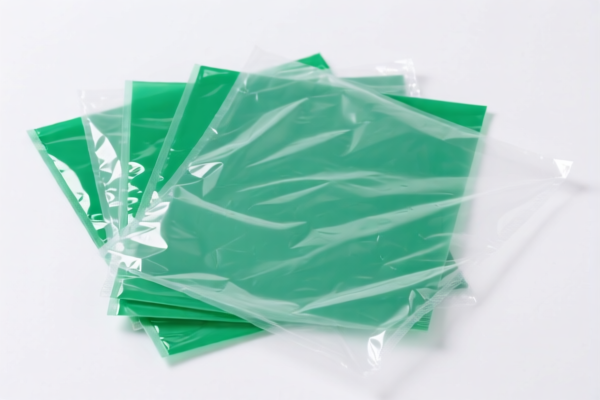
AI Analysis
📦 Polyethylene Polymer Plastic Industrial Packaging Sheets
🌐 HS Code Reference & Customs Clearance Guide | 2026 Latest Tariff Analysis | Professional Clearance Strategy
📌 I. Product Definition & Classification: Are You Sure You Know "Polyethylene Sheets"?
Polyethylene Polymer Plastic Industrial Packaging Sheets are versatile materials used in industrial logistics, protection, and packaging. In international trade, they are primarily classified based on two key factors: 1. Material Composition: Polyethylene (PE) – a thermoplastic polymer. 2. Form/State: Sheet, plate, film, or foil.
The critical distinction in customs classification lies in whether the product is viewed as a raw material/plastic sheet (Chapter 39, Heading 3921) or a manufactured article/container (Chapter 39, Heading 3923/3926).
⚠️ Key Distinction Point:
- If the product is a plain sheet, film, or plate of PE without specific shaping into a container or complex assembly → It likely falls under 3921 (Plastics in primary forms/sheets).
- If the product is explicitly marketed as "Industrial Packaging" implying a specific article/container function (e.g., lined boxes, specific packaging films formed for protection) → It may fall under 3923 or 3926.
📦 II. HS Code Classification Details (2026 Latest Tariff Authority Comparison)
| HS Code | Product Description | Applicable Scenario | Key Classification Logic |
|---|---|---|---|
| 3921.19.00.10 | Plastic plates, sheets, film, foil & strip, of polymers of ethylene | Plain PE sheets used for padding, wrapping, or as a raw material for further fabrication | Material: PE. Form: Sheet/Plate. No specific container shape. |
| 3921.19.00.90 | Other plates, sheets, film, foil & strip, of polymers of ethylene | Similar to above, but for other specific PE variants not listed in .10. Covers general PE sheets. | Material: PE. Form: Sheet/Plate. General "Other" category for sheets. |
| 3926.90.99.89 | Other articles of plastics | "Industrial Packaging" items that are plastic articles not specifically listed elsewhere (e.g., complex plastic packaging components) | Material: Plastic. Function: Industrial article/packaging component. Not a simple sheet. |
| 3926.90.10.00 | Other articles of plastics; Containers | Plastic articles specifically categorized as containers or packaging containers under "Other articles" | Material: Plastic. Function: Container/Packaging article. |
| 3923.10.90.00 | Boxes, cases, crates and similar articles for the carriage or packing of goods | Plastic boxes, cases, or crates made for transport/packing | Material: Plastic. Function: Specific packing article (Box/Crate). |
🔍 Important Note:
- 3921 codes apply to the material form (sheets/plates). If your product is literally just a sheet of polyethylene, this is the most accurate technical classification.
- 3923/3926 codes apply to articles/items. If the "sheet" is pre-cut, pre-folded, or specifically designed as a "packaging unit" rather than a raw material, customs may prefer these codes. However, the provided data suggests 3921 is strongly supported for "sheets".
💰 III. 2026 Latest Tariff Rate Breakdown (Including Surcharges & Policy Add-ons)
✅ Applicable Country: United States (US)
✅ Country of Origin: China (CN)
✅ Effective Date: From November 10, 2025 (including subsequent imports)
🎯 1. 3921.19.00.10 & 3921.19.00.90 — Polyethylene Sheets/Plates
| Item | Content |
|---|---|
| Base Tariff Rate | 6.5% (Ad Valorem) |
| Section 301 Surcharge (USITC) | +25.0% (Under US Trade Law Section 301) |
| IEEPA Surcharge (122 Clause) | +10.0% (Against Chinese/HK products, effective Nov 10, 2025) |
| Total Tariff Rate | 41.5% |
| Tax Calculation | CIF Value × 41.5% |
| De Minimis Eligibility | ❌ Not Eligible (Deny De Minimis) |
| Legal Authority Path | IEEPA:9903.01.25 → IEEPA:9903.01.24 → USITC:3921.19.00.10/90 → FOOTNOTE:301 |
📌 Explanation:
- The 6.5% base rate is the standard Most Favored Nation (MFN) rate for PE sheets.
- The 25% Section 301 tariff is a significant added cost for Chinese-origin plastic sheets.
- The 10% IEEPA tariff is an additional levy specifically targeting Chinese goods under emergency economic powers.
- Total: 41.5%. This is a high tariff rate, significantly impacting cost competitiveness.
🎯 2. 3926.90.99.89 — Other Plastic Articles (Industrial Packaging)
| Item | Content |
|---|---|
| Base Tariff Rate | 5.3% |
| Section 301 Surcharge (USITC) | +7.5% |
| IEEPA Surcharge (122 Clause) | +10.0% |
| Total Tariff Rate | 22.8% |
| Tax Calculation | CIF Value × 22.8% |
| De Minimis Eligibility | ❌ Not Eligible (Deny De Minimis) |
| Legal Authority Path | IEEPA:9903.01.25 → IEEPA:9903.01.24 → USITC:3926.90.99.89 → FOOTNOTE:301 |
📌 Note:
- If customs classifies the "industrial packaging sheet" as a plastic article rather than a raw sheet, the tariff drops to 22.8%.
- This is a significant savings compared to the 41.5% rate for plain sheets.
- Risk: Misclassification risk is high. If audited, and it's deemed a plain sheet, you may face back duties.
🎯 3. 3926.90.10.00 — Other Plastic Articles (Containers)
| Item | Content |
|---|---|
| Base Tariff Rate | 3.4% |
| Section 301 Surcharge (USITC) | +7.5% |
| IEEPA Surcharge (122 Clause) | +10.0% |
| Total Tariff Rate | 20.9% |
| Tax Calculation | CIF Value × 20.9% |
| De Minimis Eligibility | ❌ Not Eligible (Deny De Minimis) |
| Legal Authority Path | IEEPA:9903.01.25 → IEEPA:9903.01.24 → USITC:3926.90.10.00 → FOOTNOTE:301 |
📌 Note:
- This code applies if the item is considered a container under "Other articles".
- 20.9% is the lowest possible tariff among the recommended codes.
- Justification Required: Must prove the product functions as a container/packaging article, not just a sheet.
🎯 4. 3923.10.90.00 — Boxes, Cases, Crates for Packing
| Item | Content |
|---|---|
| Base Tariff Rate | 3.0% |
| Section 301 Surcharge (USITC) | +25.0% |
| IEEPA Surcharge (122 Clause) | +10.0% |
| Total Tariff Rate | 38.0% |
| Tax Calculation | CIF Value × 38.0% |
| De Minimis Eligibility | ❌ Not Eligible (Deny De Minimis) |
| Legal Authority Path | IEEPA:9903.01.25 → IEEPA:9903.01.24 → USITC:3923.10.90.00 → FOOTNOTE:301 |
📌 Note:
- Although the base rate is low (3.0%), the 25% Section 301 surcharge drastically increases the total to 38.0%.
- This code is only appropriate if the product is clearly a box, case, or crate, not a sheet.
🛠️ IV. Customs Clearance Practical Advice (Real-World Pitfall Avoidance Guide)
✅ 1. Preparation Checklist (Essential Documents)
| Document | Required? | Notes |
|---|---|---|
| ✅ Product Specifications | ✔️ | Must clearly state: Material (Polyethylene), Form (Sheet/Plate), Dimensions, Thickness. |
| ✅ Product Photos | ✔️ | Show the product in its natural state (sheet) and if applicable, its use in packaging. |
| ✅ Commercial Invoice | ✔️ | Description should be precise: "Polyethylene Plastic Sheets for Industrial Packaging". Avoid vague terms like "Plastic". |
| ✅ Certificate of Origin (CO) | ✔️ | Essential for determining origin-based surcharges (China vs. Other). |
| ✅ Packing List | ✔️ | Detail the quantity and packaging of the sheets. |
| ✅ Third-Party Test Report | ❌ (Optional) | Can support material composition (PE) if challenged. |
✅ 2. Declaration Strategy (Key Mantras)
🔥 "Material First, Form Second, Function Clarified!"
| Scenario | Correct Declaration | Wrong Practice |
|---|---|---|
| Plain PE Sheets | 3921.19.00.10 or 3921.19.00.90Desc: "Polyethylene Plastic Sheets" |
Misdeclaring as "Packaging Articles" → Higher risk of audit |
| Pre-formed Packaging Liners | Consider 3926.90.10.00Desc: "Polyethylene Plastic Packaging Liners/Containers" |
Declaring as "Sheets" if they are clearly containers |
| Boxes/Crates made of PE | 3923.10.90.00Desc: "Polyethylene Plastic Boxes/Crates" |
Declaring as "Sheets" → Under-declaration of value/tariff |
| Complex Plastic Packaging Parts | 3926.90.99.89Desc: "Other Plastic Articles for Industrial Packaging" |
Declaring as simple sheets → Misclassification |
✅ 3. Special Circumstances Handling
| Situation | Handling Advice |
|---|---|
| OEM Custom Sheets | Provide client orders + design specs to prove they are specific articles if claiming 3926 codes. |
| Sheets with Printing/Coating | Still likely 3921 unless the coating transforms them into a specific container. |
| Used for Medical Packaging | If for medical use, still classified by material/form (3921) unless it's a medical device component. |
| Mixed Shipment (Sheets + Boxes) | Declare separately. Do not lump sheets into box code or vice versa. |
🌍 V. Global Main Market Clearance Comparison (2026 Latest)
| Country/Region | Recommended HS Code | Tariff (China Origin) | Certification Requirements | Notes |
|---|---|---|---|---|
| 🇺🇸 USA | 3921.19.00.10 |
41.5% | None specific | High tariff due to Section 301 + IEEPA. |
| 🇨🇳 China | 3921.19.00.10 |
5.0% | None | Low tariff for domestic consumption. |
| 🇪🇺 EU | 3921.19.00.10 |
6.5% | REACH Compliance | No major surcharges, but strict chemical regulations. |
| 🇬🇧 UK | 3921.19.00.10 |
6.5% | UKCA Marking (if applicable) | Post-Brexit rules apply. |
| 🇦🇺 Australia | 3921.19.00.10 |
5.0% | None | Favorable for plastic sheets. |
📌 Conclusion:
- The USA is the most challenging market for Chinese polyethylene sheets due to the 41.5% total tariff.
- Alternative Markets (EU, UK, Australia) offer much lower tariffs but require compliance with local chemical/environmental standards (e.g., REACH in EU).
- Supply Chain Strategy: Consider sourcing from non-China origins (e.g., Vietnam, Malaysia) to avoid Section 301 and IEEPA surcharges, potentially reducing tariffs to 0-6.5%.
📌 VI. Common Errors & Pitfall Guide (Blood-Teaching Lessons)
❌ Error 1: Declaring "Polyethylene Sheets" as "Plastic Packaging Bags"
👉 Consequence: If not bags, it's misclassification. Risk of penalty and back duties.
👉 Correct: Declare as "Sheets" (3921) unless they are specifically bags (3923).
❌ Error 2: Using vague description "Plastic Sheets"
👉 Consequence: Customs may assign a higher default rate or request extensive documentation.
👉 Correct: Use precise description: "Polyethylene Polymer Plastic Industrial Packaging Sheets, 0.5mm Thickness".
❌ Error 3: Ignoring the "Industrial Packaging" function in description
👉 Consequence: May lead to questions about whether it's an article (3926) or material (3921).
👉 Correct: If it's a sheet, emphasize "Material: PE, Form: Sheet". If it's an article, emphasize "Function: Packaging Container".
❌ Error 4: Assuming De Minimis applies
👉 Consequence: Under $800 shipments may still be subject to tariffs if classified under these codes, as indicated by Deny De Minimis.
👉 Correct: Plan for full tariff payment even for small shipments.
✅ Correct Declaration Example:
"Polyethylene Plastic Sheets for Industrial Packaging, Raw Material Form, Not Containers, 100% PE, Thickness 1mm, Model XYZ"
🎯 VII. Conclusion: Professional Declaration, Save Time, Reduce Costs!
🎯 Remember the Mantra:
🔹 "Sheets are Sheets (3921), Articles are Articles (3923/3926)."
🔹 "41.5% for Sheets, 20.9% for Articles, 38% for Boxes – Know the Difference!"
🔹 "Origin Matters, Surcharge Hits Hard, Declare Precisely to Avoid Fines!"
📌 Tips:
- If your Polyethylene Sheets are originally from Vietnam, Mexico, or Thailand, you may qualify for IEEPA Exemptions or lower Section 301 rates, reducing tariffs to 0-6.5%.
- It is highly recommended to apply for an Advance Ruling with US Customs (CBP) to get a binding classification for your specific product, avoiding future disputes.
📣 Immediate Action:
📞 Contact Professional Customs Brokers + Provide Product Images + Apply for HS Code Advance Ruling
🚀 Let your Polyethylene Sheets clear customs smoothly, efficiently, and profitably!
✨ Professional Clearance Starts with Accurate Classification!
💼 Every cent of your cost deserves precise calculation!
Customer Reviews
About HS Code Classification
The Harmonized System (HS) is an internationally standardized nomenclature developed by the World Customs Organization (WCO) to classify traded products. Over 200 countries use the HS system as the basis for customs tariffs, trade statistics, and import/export regulations.
Each HS code follows a hierarchical structure:
- Chapter (2 digits) — Broad category of goods (e.g., Chapter 84: Machinery and Mechanical Appliances)
- Heading (4 digits) — More specific grouping within the chapter
- Subheading (6 digits) — Internationally standardized breakdown, used by all WCO member countries
- National subdivisions (8-10 digits) — Country-specific extensions for further classification, such as US HTSUS 10-digit codes
Correct HS code classification is essential for smooth customs clearance, accurate duty payment, and compliance with trade regulations. Misclassification can lead to customs delays, overpayment of duties, or penalties.
When importing from CN to US, the applicable tariff rates may include:
- Most-Favored-Nation (MFN) rate — The standard duty rate applied to WTO members
- General rate — Applied to countries without trade agreements
- Trade remedy duties — Additional tariffs such as Section 301 (anti-dumping), Section 232 (national security), or countervailing duties
The information provided on this page is for reference purposes only. For official classification, please consult with your local customs authority or a licensed customs broker.