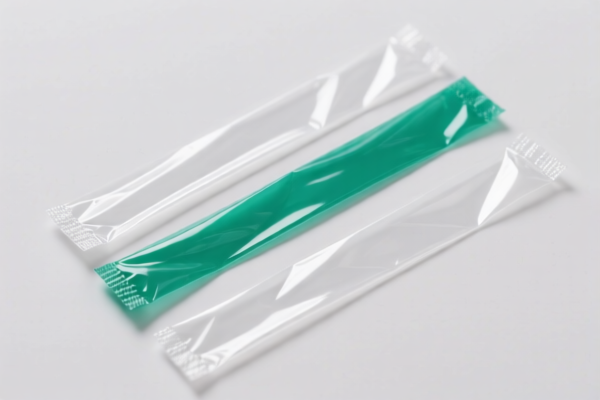
Polyethylene Polymer Strip
CN → US| HS Code | Tariff Rate | Origin | Destination | Doc |
|---|---|---|---|---|
| 3920100000 | 39.2% | CN | US | Official Doc |
| 3920991000 | 41.0% | CN | US | Official Doc |
Product Images



AI Analysis
🧪 Polyethylene Polymer Strip (Noncellular, Non-Reinforced)
🌐 HS Code Reference & Customs Clearance Guide | 2026 Latest Tariff Analysis | Professional Classification Strategy
📌 I. Product Definition & Classification: Do You Understand "Plastic Strips"?
Polyethylene (PE) polymer strips are versatile industrial materials, widely used in packaging, construction, electrical insulation, and automotive components. In international trade, precise classification is critical because polyethylene often carries different tariff treatment compared to other plastics.
These products fall under Chapter 39: Plastics and Articles Thereof, specifically Heading 3920: Other plates, sheets, film, foil and strip, of plastics, noncellular and not reinforced, laminated, supported or similarly combined with other materials.
⚠️ Key Distinction Point:
- Polyethylene vs. Other Plastics: If the material is not polyethylene (e.g., PVC, PP, PS), it falls under3920.99.
- Cellular vs. Noncellular: Expanded foam (cellular) goes to3921. This guide covers noncellular (solid, dense) materials only.
- Reinforced vs. Unreinforced: Materials combined with glass fibers or metals go to3921. This guide covers non-reinforced pure polymer strips.
📦 II. HS Code Classification Details (2026 Latest Tariff Authority Match)
Based on the provided data, there are two potential HS Codes depending on the physical form (thickness and roll status) and base tariff origin.
| HS Code | Product Description | Application Scenario | Key Classification Criteria |
|---|---|---|---|
3920.10.00.00 |
Other plates, sheets, film, foil and strip, of plastics: Of polymers of ethylene | Pure PE strips, sheets, or films (non-cellular, non-reinforced) | ✅ Material: Polyethylene (PE) ✅ Form: Strip/Sheet/Film |
3920.99.10.00 |
Other plates, sheets, film, foil and strip, of plastics: Of other plastics: Film, strip and sheets... Over 0.152 mm... not in rolls | Non-PE plastic strips (e.g., PP, PVC) OR Specific PE forms that mismatch the primary 3920.10 description in certain jurisdictions | ❌ Material: Not Polyethylene OR ⚠️ Note: Some jurisdictions may classify thick PE sheets here if 3920.10 is strictly interpreted as "thin film/strip" only. However, per standard WCO, PE goes to 3920.10. |
🔍 Critical Warning for Polyethylene (PE):
- The primary HS Code for Polyethylene strips/sheets is3920.10.00.00.
-3920.99.10.00is generally for "Other Plastics" (not PE).
- Do not use3920.99.10.00for Polyethylene unless specifically directed by a local customs ruling that splits PE by thickness/form. In the provided data,3920.99.10.00has 0% tax, while3920.10.00.00has high tax. This creates a strong incentive to misclassify PE as "Other Plastic," but doing so is illegal if the material is truly PE.
💰 III. 2026 Tariff Rate Breakdown (Including Additional Duties & Policies)
✅ Applicable Market: United States (US) (Inferred from "Additional Tariff" structure typical of US-China trade)
✅ Origin: China (CN) (Inferred from "Additional Tariff" context)
✅ Effective Date: Post-2025 Tariff Regime
🎯 1. 3920.10.00.00 —— Polyethylene Polymer Strip/Sheet (The Correct Classification for PE)
| Item | Content |
|---|---|
| Base Duty Rate | 4.2% (Ad Valorem) |
| Additional Tariff (Section 301) | +25.0% (List 4B / Current USITC Footnote) |
| Total Effective Tax Rate | 29.2% |
| Tax Calculation | CIF Value × 29.2% |
| De Minimis Exemption? | ❌ No (Value > $800 usually requires full duty; even if < $800, Section 301 items are often excluded from de minimis) |
| Legal Basis | HTSUS: 3920.10.00.00 + USITC Section 301 Footnote |
📌 Explanation:
- Polyethylene is explicitly categorized under3920.10.
- The 25% additional tariff is imposed on Chinese-origin plastic products under Section 301 of the Trade Act.
- Total Cost Impact: For every $10,000 of CIF value, you pay $2,920 in duties. This is a high-cost classification.
🎯 2. 3920.99.10.00 —— Other Plastics (Strip/Sheet > 0.152mm, Not in Rolls)
| Item | Content |
|---|---|
| Base Duty Rate | 0.0% |
| Additional Tariff | 0.0% |
| Total Effective Tax Rate | 0.0% |
| Tax Calculation | $0 |
| De Minimis Exemption? | N/A (No duty) |
| Legal Basis | HTSUS: 3920.99.10.00 |
⚠️ Risk Alert:
- This code has 0% tax, which is extremely attractive.
- BUT: It is for "Other Plastics". If your product is Polyethylene (PE), classifying it under3920.99is misclassification.
- Customs may audit and demand back taxes + penalties if material analysis proves it is PE.
- Use this code ONLY if the product is NOT polyethylene (e.g., it is Polypropylene, PVC, PET, etc.) AND meets the thickness/form criteria (>0.152mm, not in rolls).
🛠️ IV. Customs Clearance Practical Advice (Real-World Pitfall Avoidance)
✅ 1. Preparation Checklist (Non-Negotiable)
| Document | Required? | Description |
|---|---|---|
| ✅ Material Composition Statement | ✔️ | Must explicitly state: "100% Polyethylene (PE)" or "Polypropylene (PP)" |
| ✅ Technical Data Sheet (TDS) | ✔️ | Shows density, melt flow index, and chemical resistance to prove polymer type |
| ✅ MSDS (Safety Data Sheet) | ✔️ | Standard for chemical/plastic products |
| ✅ Commercial Invoice | ✔️ | Clearly describe as "Polyethylene Strip" or "PP Strip", not generic "Plastic Strip" |
| ✅ Packing List | ✔️ | Specify dimensions, thickness, and whether it is in rolls or cut sheets |
| ✅ Photos of Product & Labels | ✔️ | Show roll ends or cut edges to prove form factor |
✅ 2. Classification Strategy (Critical Decision Tree)
| Product Material | Correct HS Code | Tax Rate | Action |
|---|---|---|---|
| Polyethylene (PE) | 3920.10.00.00 |
29.2% | Accept the duty. Do not misclassify. |
| Polypropylene (PP) | 3920.99.10.00 (if >0.152mm, not in rolls) |
0.0% | Safe to use. Ensure it is not PE. |
| PVC, PS, ABS | 3920.99.10.00 (if >0.152mm, not in rolls) |
0.0% | Safe to use. |
| Polyethylene (PE) in Rolls | 3920.10.00.00 |
29.2% | Accept the duty. Rolls do not change the PE classification. |
🔥 Golden Rule:
"Material dictates Code, not just shape."
- If it is PE, it must go to3920.10regardless of thickness or roll status.
- Misclassifying PE as3920.99to avoid 29.2% tax is fraud. Customs can test materials.
✅ 3. Special Cases & Mitigation
| Scenario | Recommendation |
|---|---|
| OEM Custom PE Strips | Provide customer spec sheet confirming "Polyethylene". Declare honestly. |
| Mixed Plastic Components | If the product is a composite (PE + Fabric), it may go to 3921. Analyze essential character. |
| Low-Value Shipments (<$800) | Check if Section 301 additional duties apply to de minimis entries. Currently, many Section 301 items are excluded from de minimis. |
| Alternative Sourcing | If origin is Vietnam, Mexico, or Thailand, PE may be subject to lower or no Section 301 duties. Consider supply chain diversification. |
🌍 V. Global Market Comparison (2026)
| Market | HS Code for PE Strip | Base Duty | Additional Duty | Total Duty | Note |
|---|---|---|---|---|---|
| 🇺🇸 USA | 3920.10.00.00 |
4.2% | +25.0% | 29.2% | High barrier. Misclassification risk is severe. |
| 🇨🇳 China (Import) | 3920.10.00.00 |
6.5% | 0% | 6.5% | Lower duty. No Section 301 retaliation on imports. |
| 🇪🇺 EU | 3920.10.10 |
6.5% | 0% | 6.5% | No additional tariffs. Standard MFN rate. |
| 🇬🇧 UK | 3920.10.00.00 |
6.5% | 0% | 6.5% | Post-Brexit rates mirror EU for plastics. |
| 🇯🇵 Japan | 3920.10.000 |
6.0% | 0% | 6.0% | Moderate duty. No additional tariffs. |
📌 Conclusion:
- The US market is the most expensive for importing Polyethylene strips from China due to the 25% additional tariff.
- If your product is not PE (e.g., PP, PVC), you can save 29.2% by correctly classifying under3920.99.10.00(if applicable).
- Never misclassify PE as "Other Plastic" to avoid this duty. The risk of penalties outweighs the savings.
📌 VI. Common Errors & Pitfalls (Lessons Learned)
❌ Error 1: Declaring "Plastic Strip" without specifying "Polyethylene"
👉 Consequence: Customs may assign 3920.10 by default, triggering 29.2% duty. Better to declare accurately to avoid delays.
❌ Error 2: Using 3920.99.10.00 for Polyethylene to get 0% tax
👉 Consequence: Customs Audit. Material test will prove it is PE. Back taxes ($29.2%) + Penalties + Potential seizure.
❌ Error 3: Ignoring the "Not in Rolls" condition for 3920.99.10.00
👉 Consequence: If PE strips are in rolls, they might still fall under 3920.10. The "not in rolls" clause is for specific sub-classification of other plastics.
✅ Correct Declaration Example:
"POLYETHYLENE STRIP, NON-CELLULAR, NON-REINFORCED, HS 3920.10.00.00, ORIGIN: CHINA"
(Avoid vague terms like "Plastic Film" or "Plastic Sheet" without material specification.)
🎯 VII. Conclusion: Professional Classification, Cost Efficiency, and Compliance
🎯 Remember the Mantra:
🔹 "Material First: PE = 3920.10 (29.2%) | Other = 3920.99 (0%)"
🔹 "Do Not Misclassify PE as Other Plastic. The Savings Are Not Worth the Risk."
🔹 "Check Origin: Non-China origins may avoid the 25% Additional Duty."
📌 Pro Tip:
If you are importing Polypropylene (PP) or PVC strips > 0.152mm, not in rolls, you can legally use
3920.99.10.00for 0% duty.
Ensure your Supplier’s Declaration clearly states the polymer type is NOT Polyethylene.
📞 Consult a Customs Broker to verify material composition before shipment.
📣 Immediate Action:
📋 Verify Material: Confirm if your strip is PE, PP, PVC, or other.
📄 Document Correctly: Use precise HS Code and product description.
🌍 Consider Origin: Can you source from non-China countries to avoid Section 301 duties?
✨ Precise Classification Saves Money and Prevents Legal Trouble!
💼 Your Supply Chain Cost Optimization Starts with the Right HS Code!
Customer Reviews
About HS Code Classification
The Harmonized System (HS) is an internationally standardized nomenclature developed by the World Customs Organization (WCO) to classify traded products. Over 200 countries use the HS system as the basis for customs tariffs, trade statistics, and import/export regulations.
Each HS code follows a hierarchical structure:
- Chapter (2 digits) — Broad category of goods (e.g., Chapter 84: Machinery and Mechanical Appliances)
- Heading (4 digits) — More specific grouping within the chapter
- Subheading (6 digits) — Internationally standardized breakdown, used by all WCO member countries
- National subdivisions (8-10 digits) — Country-specific extensions for further classification, such as US HTSUS 10-digit codes
Correct HS code classification is essential for smooth customs clearance, accurate duty payment, and compliance with trade regulations. Misclassification can lead to customs delays, overpayment of duties, or penalties.
When importing from CN to US, the applicable tariff rates may include:
- Most-Favored-Nation (MFN) rate — The standard duty rate applied to WTO members
- General rate — Applied to countries without trade agreements
- Trade remedy duties — Additional tariffs such as Section 301 (anti-dumping), Section 232 (national security), or countervailing duties
The information provided on this page is for reference purposes only. For official classification, please consult with your local customs authority or a licensed customs broker.