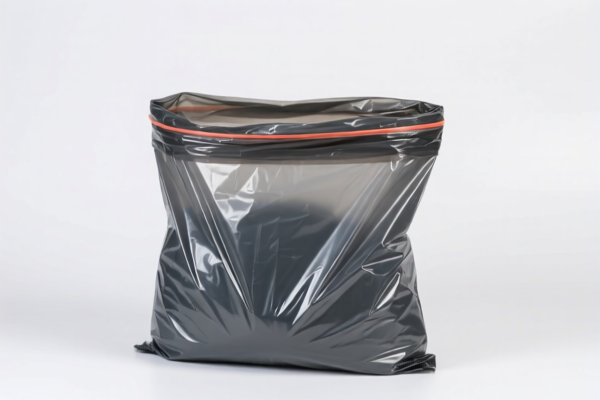
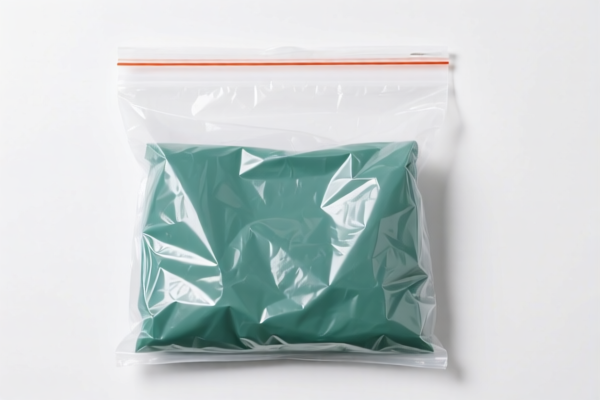
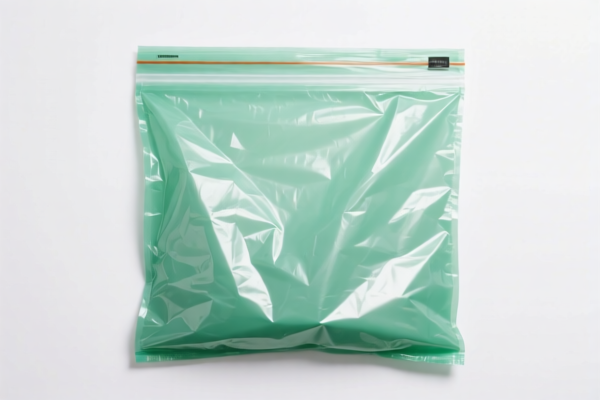
Polyethylene Reclosable Trash Bags
CN → US| HS Code | Tariff Rate | Origin | Destination | Doc |
|---|---|---|---|---|
| 3923210030 | 38.0% | CN | US | Official Doc |
| 3923210011 | 38.0% | CN | US | Official Doc |
| 3923210020 | 38.0% | CN | US | Official Doc |
| 3923210011 | 38.0% | CN | US | Official Doc |
| 3923210020 | 38.0% | CN | US | Official Doc |
Product Images

AI Analysis
🗑️ Polyethylene Reclosable Trash Bags (PE Trash Bags)
🌐 HS Code Reference & Customs Clearance Guide | 2026 Latest Tariff Analysis | Professional Logistics Strategy
📌 I. Product Definition & Classification: Understanding "PE Reclosable Bags"
Polyethylene (PE) reclosable trash bags are specialized packaging solutions designed for waste management, storage, or food preservation. In international trade, their classification depends heavily on material composition, morphology, and functional features (specifically the "reclosable" mechanism).
⚠️ Key Distinction:
- Material: Must be primarily Polyethylene (PE) or Ethylene Polymers.
- Form: Bags (Sachets, Pouches, or Flexible Containers).
- Function: Must feature a reclosable/re-sealable mechanism (e.g., zipper, press-to-close).
- Exclusion: Simple, non-reclosable trash bags fall under different HS codes (e.g., 3923.29 or 3923.30). These specifically require a reclosable feature.
📦 II. HS Code Classification Details (2026 Latest Tariff Alignment)
Based on the provided data, these products are classified under Heading 3923.21 (Sacks and bags, including cones, of polyethylene). The specific sub-headings vary slightly by description but share the same tax structure.
| HS Code | Product Description | Key Characteristics |
|---|---|---|
| 3923.21.00.30 | Polyethylene Reclosable Food Packaging Bags | Material: PE; Form: Bag; Function: Reclosable. Often specified for food use. |
| 3923.21.00.11 | Polyethylene Reclosable Food Packaging Bags | Material: Ethylene Polymer; Form: Resealable Bag; Use: Packaging. |
| 3923.21.00.20 | Polyethylene Bags with Reclosable Closure | Material: PE; Form: Bag; Function: Reclosable/Resealable. |
| 3923.21.00.11 | Polyethylene Bags with Reclosable Function | Material: PE; Form: Bag-like; Function: Reclosable/Sealable. |
| 3923.21.00.20 | Polyethylene Resealable Self-Sealing Bags | Material: Ethylene Polymer; Form: Self-sealing bag. |
🔍 Important Note:
- All listed HS Codes fall under 3923.21.00.x, which specifically covers polyethylene sacks and bags.
- The decimal variations (.11, .20, .30) often reflect minor administrative distinctions in national sub-tariffs (e.g., US HTS) but are subject to the same high tariff structure in this context.
- Do NOT misclassify as non-reclosable bags (e.g., 3923.29) as this leads to significant duty discrepancies and customs delays.
💰 III. 2026 Latest Tariff Rate Breakdown (Including Surtaxes & Policy Add-ons)
✅ Applicable Country: United States (US)
✅ Country of Origin: China (CN)
✅ Effective Date: Post-2025 (Including subsequent imports)
🎯 1. All Codes under 3923.21.00.x (.11, .20, .30) —— Polyethylene Reclosable Bags
| Item | Detail |
|---|---|
| Base Duty Rate | 3.0% (ad valorem) |
| Section 301 Surcharge | +25.0% |
| Section 122 Duty | +10.0% |
| Total Tax Rate | 38.0% |
| Tax Calculation | CIF Value × 38% |
| De Minimis Exemption | ❌ Not Eligible (deny_de_minimis) |
| Legal Basis Path | Base Tariff: 3.0% → Section 301: 25.0% → Section 122: 10.0% |
📌 Detailed Explanation:
- Base Tariff (3.0%): Standard Most Favored Nation (MFN) rate for plastic sacks/bags.
- Section 301 Surtax (25.0%): Imposed by the U.S. Trade Representative (USTR) on specific Chinese goods, including plastic packaging products.
- Section 122 Duty (10.0%): Additional tariff under Section 122 of the Trade Expansion Act of 1962 (often applied to specific strategic or economic sectors).
- Total 38%: This is a high-cost barrier. Importers must account for nearly 40% of the product value in duties alone.
- No De Minimis: Unlike small parcels (< $800), commercial imports of these goods are fully taxable.
🛠️ IV. Customs Clearance Practical Advice (Avoiding Pitfalls)
✅ 1. Documentation Checklist (Essential)
| Document | Required? | Notes |
|---|---|---|
| ✅ Commercial Invoice | ✔️ | Must clearly state "Reclosable," "Polyethylene," and HS Code. |
| ✅ Packing List | ✔️ | Specify quantity, weight, and dimensions per bag type. |
| ✅ Product Specifications | ✔️ | Confirm material (100% PE or blend), thickness, and closure type (zipper, press-seal). |
| ✅ Certificate of Origin (CO) | ✔️ | Critical for proving origin (China) to apply correct surcharges. |
| ✅ Labeling/Packaging Photos | ✔️ | Show the "Reclosable" feature clearly to justify HS 3923.21. |
✅ 2. Declaration Tips (Key Mnemonics)
🔥 “Material is PE, Closure is Key, Declare 3923.21, Avoid 3923.29!”
| Scenario | Correct Declaration | Incorrect Action |
|---|---|---|
| Reclosable PE Bag | 3923.21.00.xx |
Misdeclare as "Plastic Bag" without specifying "Reclosable" |
| Non-Reclosable Bag | 3923.29 or 3923.30 |
Use 3923.21 → Overpay Duties |
| Food-Grade PE Bag | 3923.21.00.30/11 |
Generic declaration → Risk of Inspection |
| Mixed Materials | Check PE content >50% | If non-PE dominant, HS code changes entirely |
✅ 3. Special Cases & Mitigation
| Situation | Advice |
|---|---|
| High Duty Cost (38%) | Consider supply chain diversification (e.g., sourcing from Vietnam/Thailand if eligible for lower rates). |
| Product Description | Use precise terms: "Polyethylene Resealable Bag with Zipper." Avoid vague terms like "Plastic Sack." |
| Customs Audit Risk | Ensure the "Reclosable" feature is physically verifiable. Customs may inspect to confirm the mechanism. |
| Section 122 Compliance | Verify if Section 122 applies to your specific product line and value threshold. |
🌍 V. Global Market Comparison (2026)
| Country/Region | Recommended HS Code | Base Tariff | Additional Duties (China) | Total Estimate | Remarks |
|---|---|---|---|---|---|
| 🇺🇸 USA | 3923.21.00.xx |
3.0% | +35% (301+122) | 38.0% | High cost; strict origin enforcement. |
| 🇨🇳 China | 3923.21 |
5-8% | None | ~5-8% | Lower duty for domestic sales. |
| 🇪🇺 EU | 3923.21 |
4.5% | None (if non-China) | ~4.5% | No Section 301/122 equivalent. |
| 🇬🇧 UK | 3923.21 |
4.5% | None | ~4.5% | Post-Brexit tariff structure. |
| 🇨🇦 Canada | 3923.21 |
5.0% | None | ~5.0% | No major surcharges on this category. |
📌 Conclusion:
- The USA imposes the highest effective tariff (38%) on Chinese-made PE reclosable bags due to Section 301 and Section 122.
- Importers should strictly adhere to the 3923.21 classification to avoid penalties for misclassification.
- Cost optimization may require exploring non-Chinese sources if the 38% duty erodes margins.
📌 VI. Common Errors & Pitfalls (Lessons Learned)
❌ Error 1: Misclassifying as non-reclosable bags (3923.29)
👉 Consequence: While base duty may be lower, customs may penalize for misdeclaration if the "reclosable" feature is evident. Risk of fines & seizure.
❌ Error 2: Ignoring Section 122 Duty
👉 Consequence: Underpaying 10% → Back taxes + Interest + Penalties.
❌ Error 3: Vague Description ("Plastic Bag")
👉 Consequence: Customs delays for classification review → Shipping delays.
❌ Error 4: Assuming De Minimis Applies
👉 Consequence: Commercial shipments are not exempt → Unexpected 38% bill.
✅ Correct Approach:
"Polyethylene Reclosable Bag, 13x16 inch, Zipper Closure, for Trash/Food, Made in China, HS Code: 3923.21.00.30"
🎯 VII. Conclusion: Strategic Clearance for Cost Efficiency
🎯 Remember the Rule:
🔹 "PE + Reclosable = 3923.21"
🔹 "Total Duty = 38% (3+25+10)"
🔹 "No De Minimis, No Exceptions for China Origin"
📌 Pro Tip:
- If importing large volumes, consider Advance Rulings to confirm HS Code.
- Evaluate supply chain shifts to countries with favorable trade agreements (e.g., USMCA for Canada/Mexico) to avoid the 38% tariff.
- Always document the "Reclosable" feature in product specs and invoices.
📣 Immediate Action:
📞 Consult a licensed customs broker.
📋 Verify current Section 122 applicability.
🚀 Optimize your supply chain to mitigate high-duty impacts.
✨ Professional Clearance, Accurate Classification, Cost Control!
💼 Your Profit Margin Depends on Precise Tariff Management!
Customer Reviews
About HS Code Classification
The Harmonized System (HS) is an internationally standardized nomenclature developed by the World Customs Organization (WCO) to classify traded products. Over 200 countries use the HS system as the basis for customs tariffs, trade statistics, and import/export regulations.
Each HS code follows a hierarchical structure:
- Chapter (2 digits) — Broad category of goods (e.g., Chapter 84: Machinery and Mechanical Appliances)
- Heading (4 digits) — More specific grouping within the chapter
- Subheading (6 digits) — Internationally standardized breakdown, used by all WCO member countries
- National subdivisions (8-10 digits) — Country-specific extensions for further classification, such as US HTSUS 10-digit codes
Correct HS code classification is essential for smooth customs clearance, accurate duty payment, and compliance with trade regulations. Misclassification can lead to customs delays, overpayment of duties, or penalties.
When importing from CN to US, the applicable tariff rates may include:
- Most-Favored-Nation (MFN) rate — The standard duty rate applied to WTO members
- General rate — Applied to countries without trade agreements
- Trade remedy duties — Additional tariffs such as Section 301 (anti-dumping), Section 232 (national security), or countervailing duties
The information provided on this page is for reference purposes only. For official classification, please consult with your local customs authority or a licensed customs broker.