Polyethylene Resealable Self Sealing Bags
CN → US| HS Code | Tariff Rate | Origin | Destination | Doc |
|---|---|---|---|---|
| 3920100000 | 39.2% | CN | US | Official Doc |
| 3921190090 | 41.5% | CN | US | Official Doc |
| 3921190010 | 41.5% | CN | US | Official Doc |
| 3923210030 | 38.0% | CN | US | Official Doc |
| 3923210011 | 38.0% | CN | US | Official Doc |
| 3920992000 | 39.2% | CN | US | Official Doc |
Product Images
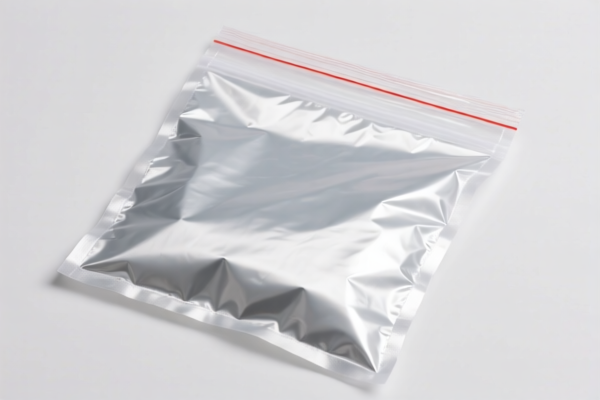
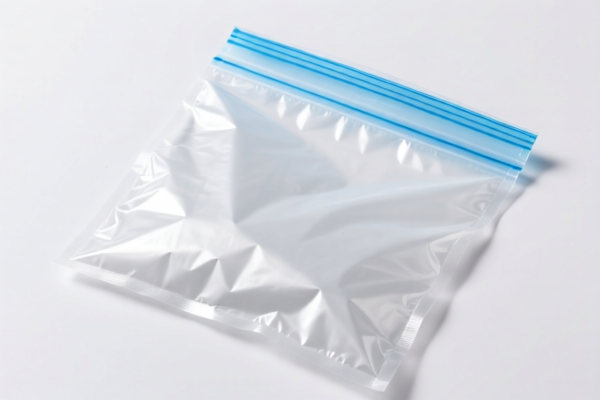
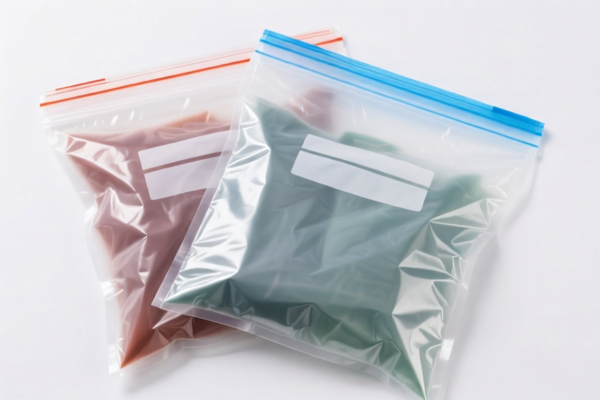
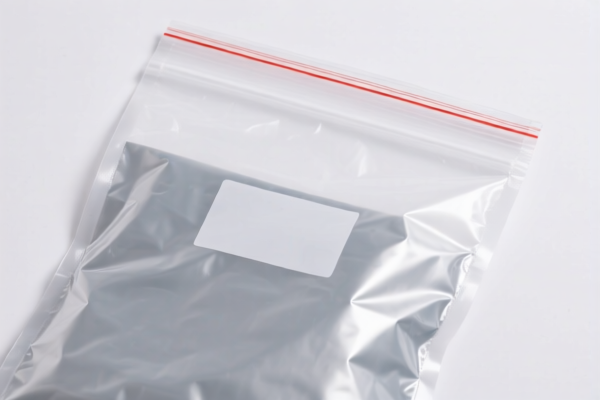
AI Analysis
🛍️ Polyethylene Resealable Self-Sealing Bags (Ziplock/Pee-Lock Bags)
🌐 HS Code Reference & Customs Clearance Guide | 2026 Latest Tariff Analysis | Professional Strategy for PE Plastic Bags
📌 I. Product Definition & Classification: What Exactly Are You Shipping?
Polyethylene Resealable Bags are ubiquitous packaging solutions used in food storage, retail, industrial parts, and electronics. In international trade, they fall under Chapter 39 (Plastics and Articles Thereof). The critical distinction lies in their form (film vs. finished bag) and specific design features (resealable strips, closures).
Key Classification Scenarios: 1. Raw Film/Sheets: If the product is just rolls of flat PE film before being cut and sealed into bags → Chapter 39.01 or 39.20. 2. Finished Bags (General): Standard zip-lock or self-sealing bags, often used for general packaging → Chapter 39.23 (Paraphernalia, articles, and containers for the conveyance or packaging of goods). 3. Specific Sub-categories: Distinction between standard PE bags and specific industrial or heavy-duty variants.
⚠️ Critical Distinction Point:
- If it is a finished container (cut, sealed edges, functional closure) → 3923.21 is the most common and accurate classification.
- If it is considered a basic plastic film/sheet without specific "container" features (rare for retail bags) → 3920.10 or 3921.19.
- Do NOT classify finished ziplock bags as "Plates/Sheets" (3920) if they are clearly finished goods, as this risks customs delays for misclassification.
📦 II. HS Code Classification Details (Based on Provided Data)
The following HS Codes are derived from the provided dataset. Note that all listed codes attract significant additional tariffs (Section 301 & 122) due to the product's origin (implied China/US trade context).
| HS Code | Product Description | Application Scenario | Tax Rate Summary |
|---|---|---|---|
3923.21.00.30 |
Plastic sacks and bags, incl. cones (e.g., Ziplock bags) | Most Recommended. Matches form (bag/sack), use (packaging), and material (polyethylene). | 38.0% |
3923.21.00.11 |
Self-sealing bags / Sealed bags (Polyethylene) | Matches form (self-sealing) and use (packaging). Highly specific to "Ziplock" style. | 38.0% |
3920.10.00.00 |
Plates, sheets, film, foil, and strip, of polymers of ethylene | If classified as "Plastic Film" rather than a "Bag". Often used for bulk rolls or simple non-resealable films. | 39.2% |
3920.99.20.00 |
Other plates, sheets, film, foil, and strip, of plastics | Fallback for flexible films/strip not specifically ethylene polymers or other specific headings. | 39.2% |
3921.19.00.90 |
Other plates, sheets, film, foil, and strip, of plastics | "Catch-all" for plastic films/sheets that don't fit specific ethylene categories. | 41.5% |
3921.19.00.10 |
Plastic bags/sacks (Film extension) | Specifically for bag forms made from PE/PP films, falling under general plastic articles. | 41.5% |
🔍 Key Insight:
-3923.21.00.30and3923.21.00.11are the most accurate for finished resealable/self-sealing bags. They specifically address "sacks, bags, cones" and "self-sealing" features. -3920and3921codes are typically for films or sheets. Using them for finished bags may trigger customs scrutiny unless the goods are shipped as raw rolls without final bagging. - Tax Difference:3923codes have a lower base tariff (3.0%) compared to3920(4.2%) and3921(6.5%), leading to a lower total effective rate.
💰 III. 2026 Latest Tariff Rate Breakdown (Including Surtaxes & Policy Add-ons)
✅ Applicable Country: United States (US)
✅ Origin: China (CN) (Inferred from "122 Clause" and 25% Section 301 tariffs)
✅ Effective Date: 2025–2026 (Current Trade Policy Context)
🎯 1. 3923.21.00.30 & 3923.21.00.11 —— Best Fit for Resealable Bags
| Item | Content |
|---|---|
| Base Tariff | 3.0% (General Rate for Plastic Sacks/Bags) |
| Section 301 Surtax | +25.0% (USITC Footnote 9903.88.01 – Additional Duties 2017) |
| Section 122 Surtax | +10.0% (Trade Facilitation and Trade Enforcement Act of 2015 – 122 Tariff) |
| Total Effective Rate | 38.0% |
| Calculation | CIF Value × 38.0% |
| De Minimis Eligibility | ❌ No (Deny De Minimis) – Must file formal entry |
| Legal Pathway | USITC:3923.21.00.30 → SECTION_301:9903.01.25 → SECTION_122:9903.01.24 |
📌 Explanation:
- The 3.0% is the standard MFN (Most Favored Nation) rate for plastic bags. - The 25% is the standard Section 301 tariff on Chinese plastic articles. - The 10% is the specific "122 Tariff" applied to certain Chinese goods. - Total: 38%. This is the most cost-effective and accurate classification for finished ziplock bags.
🎯 2. 3920.10.00.00 & 3920.99.20.00 —— If Classified as "Plastic Film/Sheets"
| Item | Content |
|---|---|
| Base Tariff | 4.2% |
| Section 301 Surtax | +25.0% |
| Section 122 Surtax | +10.0% |
| Total Effective Rate | 39.2% |
| Calculation | CIF Value × 39.2% |
| De Minimis Eligibility | ❌ No |
| Legal Pathway | USITC:3920.10.00.00 → SECTION_301 → SECTION_122 |
📌 Note:
- Only 1.2% higher than the bag classification. - Risk: If customs determines these are "finished bags" and not "films," you may face penalties for misclassification.
🎯 3. 3921.19.00.90 & 3921.19.00.10 —— "Catch-All" Plastic Articles
| Item | Content |
|---|---|
| Base Tariff | 6.5% |
| Section 301 Surtax | +25.0% |
| Section 122 Surtax | +10.0% |
| Total Effective Rate | 41.5% |
| Calculation | CIF Value × 41.5% |
| De Minimis Eligibility | ❌ No |
| Legal Pathway | USITC:3921.19.00.90 → SECTION_301 → SECTION_122 |
📌 Warning:
- This is the highest tax bracket among the options. - Only use if the product does not fit into "Ethylene Polymers" (3920) or "Sacks/Bags" (3923).
🛠️ IV. Customs Clearance Practical Advice (Real-World Pitfall Guide)
✅ 1. Required Documentation Checklist
| Document | Mandatory? | Notes |
|---|---|---|
| ✅ Commercial Invoice | ✔️ | Must clearly state: "Polyethylene Resealable Bags, for Packaging Use" |
| ✅ Packing List | ✔️ | Detail weight, dimensions, and quantity per bag/roll |
| ✅ Product Specification | ✔️ | Confirm material (PE), thickness, closure type (ziplock/peel-and-seal) |
| ✅ Labeling | ✔️ | Bags should be labeled with material code (e.g., "PE", "HDPE", "LDPE") |
| ✅ FCC/RoHS Certs | ❌ (Usually) | Not typically required for plain plastic bags, but check if printed with graphics |
| ✅ Country of Origin Certificate | ✔️ | Required to apply for duty drawbacks or verify Section 301 applicability |
✅ 2. Declaration Tips (Key Mnemonic)
🔥 "Finish Bag to 3923, Film Roll to 3920, Name it Right, Save the Cost!"
| Scenario | Correct Declaration | Incorrect Declaration | Consequence |
|---|---|---|---|
| Finished Ziplock Bags | 3923.21.00.30 (Plastic Sacks/Bags) |
"Plastic Film" or "Polymer Sheets" | Risk of audit, potential fine, or higher duty if reclassified |
| Raw Rolls of PE Film | 3920.10.00.00 (Ethylene Polymers) |
"Resealable Bags" | Misleading description; must be accurate to actual form |
| Bags with Printed Graphics | 3923.21.00.30 |
"Printing Service" | Must still classify as plastic bag; printing is secondary |
| Heavy-Duty Industrial Sacks | 3923.21.00.30 |
"Textile Bags" | Plastic bags are never textile, even if strong |
✅ 3. Special Cases
| Situation | Handling Advice |
|---|---|
| Biodegradable PE Bags | Still classified under 3923 if made from polyethylene, even if additive-treated. Declare as "Biodegradable PE Bags." |
| Custom Printed Bags | Do not split printing and bag costs. The entire item is a plastic article. |
| Samples | Even samples attract duty if declared as commercial goods. Use "No Commercial Value" carefully, but note that Section 301/122 tariffs may still apply if value exceeds de minimis ($800). |
| Mixed Containers | If mixing finished bags with other plastic goods, ensure clear segregation in the packing list to avoid blanket taxation. |
🌍 V. Global Market Comparison (2026 Update)
| Country/Region | Recommended HS Code | Tariff (China Origin) | Key Requirements | Notes |
|---|---|---|---|---|
| 🇺🇸 USA | 3923.21.00.30 |
38.0% | Section 301 + 122 Tariffs | Highest duty burden; De Minimis ($800) does NOT apply for these goods from China. |
| 🇨🇳 China | 3923.21.00.30 |
~3%–9% | None specific | Low import duty; focus on domestic sales. |
| 🇪🇺 EU | 3923.21.00.30 |
0%–6.5% | EPR (Extended Producer Responsibility) | No Section 301. Focus on recycling labels. |
| 🇯🇵 Japan | 3923.21.00.30 |
3.2%–6.0% | FSC Certification (if recycled) | Moderate duty; no major surtaxes. |
| 🇲🇽 Mexico | 3923.21.00.30 |
0%–5% | USMCA Compliance | Check for preferential rates if origin shifts. |
📌 Conclusion:
- The USA imposes the highest effective duty (38%) due to Section 301 and 122 tariffs. - EU and Japan are more favorable for duty purposes but require strict compliance with environmental/EPR regulations. - Strategy: For US imports, ensure your supplier is not using Chinese-origin PE resin if you want to avoid Section 301. Consider sourcing from Vietnam, Thailand, or Malaysia for 0%–5% duty under USMCA or FTAA agreements.
📌 VI. Common Errors & Pitfalls (Lessons Learned)
❌ Error 1: Classifying finished ziplock bags as "Plastic Film" (3920)
👉 Risk: Customs may reject the code as "not a film" or apply the correct code later, causing delays.
👉 Fix: Use 3923.21 for finished bags.
❌ Error 2: Assuming "Plastic Bags" are eligible for De Minimis ($800)
👉 Risk: Section 301 and 122 tariffs are NOT exempted from de minimis for Chinese goods. You will be billed retroactively.
👉 Fix: Budget for the 38% duty even for small shipments.
❌ Error 3: Mislabeling material as "Polypropylene (PP)" when it is "Polyethylene (PE)"
👉 Risk: 3921.19 (PP) has a 41.5% duty vs. 3923.21 (PE) at 38.0%. More importantly, misdeclaration is fraud.
👉 Fix: Verify material composition (LDPE/HDPE) with the manufacturer.
✅ Correct Declaration Example:
"PLASTIC BAGS, RESEALABLE, POLYETHYLENE, FOR FOOD PACKAGING, MODEL XYZ, MADE IN CHINA"
🎯 VII. Conclusion: Professional Declaration, Cost Control, Smooth Clearance!
🎯 Remember the Golden Rules:
🔹 "Finished Bags go to 3923, Raw Films go to 3920."
🔹 "38% Duty for China Origin in the US is Non-Negotiable."
🔹 "De Minimis ($800) Does NOT Apply to Section 301/122 Goods."
🔹 "Consider Sourcing from Non-China Origins to Save 30%+ in Duties!"
📌 Pro Tip:
If you are importing large volumes, consider Applying for an Exclusion from Section 301 tariffs if your specific type of bag qualifies. However, many plastic bags do not qualify.
Alternative Strategy: Source PE resin from Vietnam, Thailand, or Mexico and have bags manufactured there. This can reduce your US duty from 38% to 0–5%, saving significant costs.
📣 Immediate Action:
📞 Consult a Customs Broker to verify if your specific bag design fits
3923.21.00.30.
📄 Request Material Certificates from suppliers to confirm PE vs. PP.
🚀 Evaluate Supply Chain: Can you shift production to a non-China country to bypass the 38% tariff?
✨ Professional Clearance Starts with Accurate Classification!
💼 Every Percent of Duty Matters – Optimize Your HS Code for Maximum Profit!
Customer Reviews
About HS Code Classification
The Harmonized System (HS) is an internationally standardized nomenclature developed by the World Customs Organization (WCO) to classify traded products. Over 200 countries use the HS system as the basis for customs tariffs, trade statistics, and import/export regulations.
Each HS code follows a hierarchical structure:
- Chapter (2 digits) — Broad category of goods (e.g., Chapter 84: Machinery and Mechanical Appliances)
- Heading (4 digits) — More specific grouping within the chapter
- Subheading (6 digits) — Internationally standardized breakdown, used by all WCO member countries
- National subdivisions (8-10 digits) — Country-specific extensions for further classification, such as US HTSUS 10-digit codes
Correct HS code classification is essential for smooth customs clearance, accurate duty payment, and compliance with trade regulations. Misclassification can lead to customs delays, overpayment of duties, or penalties.
When importing from CN to US, the applicable tariff rates may include:
- Most-Favored-Nation (MFN) rate — The standard duty rate applied to WTO members
- General rate — Applied to countries without trade agreements
- Trade remedy duties — Additional tariffs such as Section 301 (anti-dumping), Section 232 (national security), or countervailing duties
The information provided on this page is for reference purposes only. For official classification, please consult with your local customs authority or a licensed customs broker.