Polyethylene Resealable Ziplock Bag with Handle
CN → US| HS Code | Tariff Rate | Origin | Destination | Doc |
|---|---|---|---|---|
| 3923210085 | 38.0% | CN | US | Official Doc |
| 3923210020 | 38.0% | CN | US | Official Doc |
| 3923210011 | 38.0% | CN | US | Official Doc |
| 3920100000 | 39.2% | CN | US | Official Doc |
| 3920991000 | 41.0% | CN | US | Official Doc |
Product Images
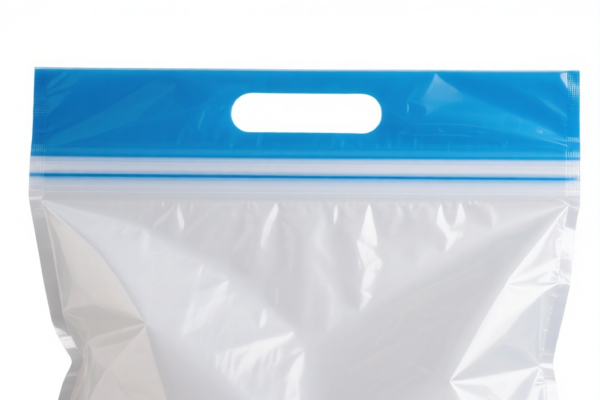
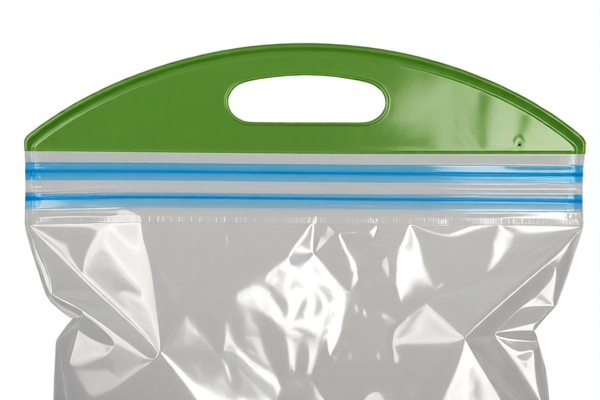
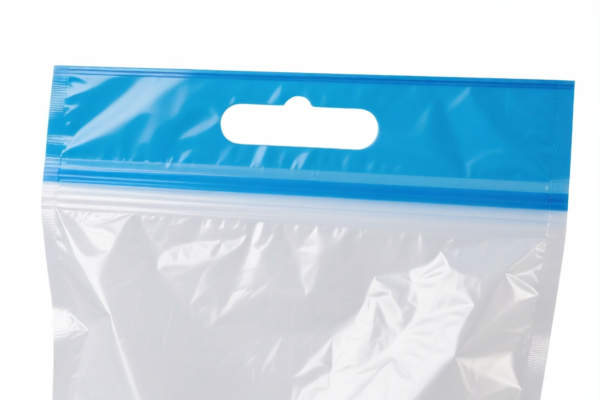
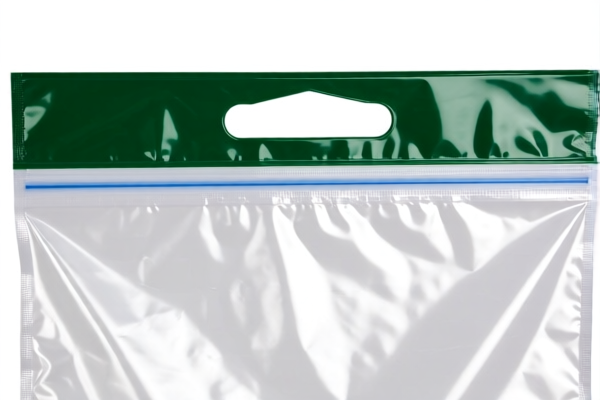
AI Analysis
🛍️ Polyethylene Resealable Ziplock Bag with Handle
🌐 HS Code Reference & Customs Clearance Guide | 2026 Latest Tariff Analysis | Professional Logistics Strategy
📌 I. Product Definition & Classification: Do You Really Understand "PE Bags"?
Polyethylene (PE) bags are ubiquitous in global trade, ranging from simple grocery carriers to high-end retail packaging. However, "with Handle" and "Resealable/Ziplock" are critical differentiators that drastically change their HS Code classification and, consequently, their tax burden.
In international trade, these products are generally split into two distinct categories based on structure and function:
- Carrying Bags (With Handles): Designed for transport/shopping. The presence of a handle is the defining feature.
- Storage/Sealing Bags (Ziplock/Reclosable): Designed for storage, food preservation, or organizing. The "zipper" mechanism is the defining feature.
⚠️ Key Distinction Point:
- If the bag has a handle (die-cut, rope, or attached) and is primarily for carrying goods → Falls under 3923.21 (Sacks & Bags, incl. Pouches).
- If the bag is sealed via a zipper/ziplock and primarily for storage/packaging (even if it has a small hanging tab, unless it's a major handle) → Falls under 3920.99 or 3923.21 depending on specific construction, but often distinguished from "sacks" if it's a flat pouch.
- Crucial Note: A "Ziplock bag" is technically a type of bag/pouch. If it is merely a pouch without a carrying handle, it may fall under 3920 (Other plates, sheets, film, foil and strip, of plastics) if it's considered a "sheet/film" application, or 3923.21 if considered a "pouch." However, US Customs often scrutinizes "Resealable Bags" heavily.
📦 II. HS Code Classification Details (2026 Latest Tariff Authority对照)
| HS Code | Product Description | Key Features | Applicable Scenario |
|---|---|---|---|
3923.21.00.85 |
Polyethylene Bags with Handles | PE Material, With Handle Structure, for Packaging/Carrying | Grocery bags, retail shopping bags, carrier bags |
3923.21.00.20 |
Polyethylene Reclosable (Ziplock) Bags | PE Material, Reclosable Structure | Storage bags, freezer bags, snack packaging (non-handle focused) |
3923.21.00.11 |
Polyethylene Reclosable Self-Sealing Bags | PE Material, Self-Sealing/Ziplock | High-quality resealable bags, industrial packaging |
3920.10.00.00 |
Polyethylene Stand-Up Pouches | PE Material, Extended Film Application, Stand-Up | Food stand-up pouches, liquid packaging (no handle/zip complex) |
3920.99.10.00 |
Polyethylene Stand-Up Pouches (Sheet Processed) | PE Material, Finished Container from Sheet | Complex multi-layer pouches, high-barrier packaging |
🔍 Critical Reminder:
- "With Handle" is King for3923.21.00.85: If your product has a functional handle intended for carrying, it MUST be classified under the "Bags with Handles" subheading. Do not misdeclare a handled bag as a "Ziplock storage bag" to try and lower taxes; CBP (Customs and Border Protection) will reject it. - "Resealable/Ziplock" triggers3923.21.00.20or.11: If the bag has a zipper but NO carrying handle (or only a tiny hang hole), it is classified as a reclosable bag/pouch. -3920Series: Usually applies to flat films, sheets, or simple pouches that are not structured as "sacks or bags" in the traditional sense. Stand-up pouches often get tricky here; if it's a complex multilayer structure, it might fall under3920.99.
💰 III. 2026 Latest Tariff Rate Breakdown (Including Surtaxes & Policy Add-ons)
✅ Applicable Country: United States (US)
✅ Country of Origin: China (CN)
✅ Effective Date: November 10, 2025 onwards (including all subsequent imports)
🎯 1. 3923.21.00.85 —— PE Bags with Handles
| Item | Content |
|---|---|
| Base Tariff | 3.0% (Ad Valorem) |
| USITC Additional Tariff (Section 301) | +25% |
| IEEPA Additional Tariff (Section 122) | +10% (Against China/Hong Kong) |
| Total Effective Tax Rate | 38.0% |
| Tax Calculation | CIF Value × 38.0% |
| De Minimis Exemption Eligible | ❌ NO (deny_de_minimis) |
| Legal Basis Path | IEEPA:122 → USITC:301 → HS:3923.21.00.85 |
📌 Explanation:
- "Base Tariff 3%": Standard Most Favored Nation (MFN) rate for PE bags. - "25% Section 301": This is the major tariff hit for Chinese-made plastic bags. It is non-negotiable for most commercial shipments. - "10% IEEPA 122": A specific surcharge applied to certain Chinese goods. - Total 38%: This is a very high cost. A $10,000 shipment will incur $3,800 in duties alone.
🎯 2. 3923.21.00.20 & .11 —— Reclosable/Ziplock Bags
| Item | Content |
|---|---|
| Base Tariff | 3.0% |
| USITC Additional Tariff (Section 301) | +25% |
| IEEPA Additional Tariff (Section 122) | +10% |
| Total Effective Tax Rate | 38.0% |
| Tax Calculation | CIF Value × 38.0% |
| De Minimis Exemption Eligible | ❌ NO (deny_de_minimis) |
| Legal Basis Path | IEEPA:122 → USITC:301 → HS:3923.21.00.20 / .11 |
📌 Note:
- Same tax structure as handled bags. - Even though "Ziplock" bags might seem like "consumables" or "small items," they are NOT eligible for the $800 De Minimis exemption if classified under these specific HS codes for Chinese origin.
🎯 3. 3920.10.00.00 —— PE Stand-Up Pouches (Film Application)
| Item | Content |
|---|---|
| Base Tariff | 4.2% |
| USITC Additional Tariff (Section 301) | +25% |
| IEEPA Additional Tariff (Section 122) | +10% |
| Total Effective Tax Rate | 39.2% |
| Tax Calculation | CIF Value × 39.2% |
| De Minimis Exemption Eligible | ❌ NO |
📌 Explanation:
- Slightly higher base rate (4.2% vs 3.0%). - Still subject to the full 25% + 10% surcharges.
🎯 4. 3920.99.10.00 —— PE Stand-Up Pouches (Sheet Processed)
| Item | Content |
|---|---|
| Base Tariff | 6.0% |
| USITC Additional Tariff (Section 301) | +25% |
| IEEPA Additional Tariff (Section 122) | +10% |
| Total Effective Tax Rate | 41.0% |
| Tax Calculation | CIF Value × 41.0% |
| De Minimis Exemption Eligible | ❌ NO |
📌 Explanation:
- Highest base rate (6.0%) due to being classified as a "finished container" from sheets. - Total tax burden is the highest at 41%.
🛠️ IV. Customs Clearance Practical Advice (Pitfall Avoidance Guide)
✅ 1. Documentation Checklist (Non-Negotiable)
| Document | Required | Notes |
|---|---|---|
| ✅ Commercial Invoice | ✔️ | Must clearly state: "Polyethylene Bag," "With Handle" OR "Resealable/Ziplock," Material Composition (e.g., 100% LDPE), Country of Origin (China). |
| ✅ Packing List | ✔️ | Include net weight, gross weight, and dimensions. |
| ✅ Product Photos | ✔️ | CRITICAL: Show the handle structure or the zipper mechanism. Customs officers use these to verify classification. |
| ✅ Bill of Lading (B/L) | ✔️ | Ensure HS Codes match the invoice exactly. |
| ✅ Certificate of Origin (CO) | ✔️ | For Chinese origin to confirm Section 301 applicability. |
✅ 2. Classification Strategy (Key Rules)
🔥 "Handle vs. Zipper, Name it Right, Avoid the Bite!"
| Scenario | Correct Classification | Incorrect Classification | Consequence |
|---|---|---|---|
| Bag with a Die-Cut Handle | 3923.21.00.85 |
3923.21.00.20 (Ziplock) |
Penalty + Back Taxes. CBP will see the handle and reclassify. |
| Bag with a Rope Handle | 3923.21.00.85 |
3920.10.00.00 (Film) |
Higher Tax. Handled bags are "bags," not just "films." |
| Ziplock Bag (No Handle) | 3923.21.00.20 or .11 |
3920.99.10.00 |
Risk of Audit. If it's a simple pouch, it's usually 3923.21. |
| Multi-Layer Stand-Up Pouch | 3920.99.10.00 |
3923.21.00.85 |
Misclassification. Complex structures may fall under 3920. |
✅ 3. Special Considerations
| Situation | Handling Advice |
|---|---|
| Small Business Dropshipping | Be aware: No De Minimis Exemption for these HS codes from China. Even $100 shipments will be taxed at 38-41%. Factor this into your pricing model. |
| Sample Shipments | Mark as "Samples, Not for Resale." However, if the value is above $800 or if CBP flags it, duties may still apply. |
| Mixed Containers | If a container has both handled bags and ziplock bags, ensure they are separated and declared separately with distinct HS codes. Mixing them can lead to delays. |
| Labeling | Ensure the product label says "Polyethylene" and does not misleadingly claim "Biodegradable" unless certified, as this can trigger FDA or EPA reviews. |
🌍 V. Global Market Comparison (2026 Update)
| Country/Region | Recommended HS Code | Base Tariff | Surcharge (China) | Total Rate | Notes |
|---|---|---|---|---|---|
| 🇺🇸 USA | 3923.21.00.85 / .20 |
3.0% - 4.2% | 35% (25%+10%) | 38.0% - 41.0% | No De Minimis. High barrier to entry. |
| 🇨🇳 China | 3923.21 / 3920.99 | 5% - 10% | 0% | 5% - 10% | Lower entry cost for domestic sales. |
| 🇪🇺 EU | 3923.21 | 0% - 4.5% | 0% | 0% - 4.5% | No general surcharges, but VAT applies. |
| 🇬🇧 UK | 3923.21 | 0% - 4.5% | 0% | 0% - 4.5% | Post-Brexit rules apply; check UK TARIC. |
| 🇨🇦 Canada | 3923.21 | 5% - 10% | 0% (CUSMA) | 0% - 10% | Can be 0% if Canadian/US/Mexican origin. |
📌 Conclusion:
- The USA is the most expensive market for PE bags from China due to Section 301 and IEEPA tariffs. - EU and UK offer significant cost advantages (0-4.5% total), but require strict REACH/RoHS compliance. - Canada offers potential duty-free entry if the bags are manufactured in North America (CUSMA).
📌 VI. Common Mistakes & Pitfall Guide (Blood Lessons)
❌ Mistake 1: Declaring "Handled Bags" as "Plastic Film" (3920)
👉 Consequence: CBP will reject the classification. The rate for films might be lower, but the penalty for misdeclaration is severe.
👉 Result: Seizure, fines, and delay.
❌ Mistake 2: Claiming "De Minimis" for Small Shipments of PE Bags from China
👉 Consequence: Denied. The specific HS codes for these bags are explicitly excluded from the $800 threshold for Chinese goods.
👉 Result: You will be billed for 38-41% duties on every single package.
❌ Mistake 3: Ignoring the "Handle" in the Description
👉 Consequence: If the invoice says "Bag" but the photo shows a handle, and you declare it as "Ziplock Storage Bag," CBP will audit.
👉 Result: Back taxes + interest.
✅ Correct Action:
Use precise descriptions:
- "PE Shopping Bag with Die-Cut Handles, Model A" for3923.21.00.85
- "PE Reclosable Ziplock Bag, Food Grade, Model B" for3923.21.00.20
🎯 VII. Conclusion: Precision Saves Money!
🎯 Remember the Mantra:
🔹 "Handle = 3923.21.00.85 (38%)"
🔹 "Ziplock = 3923.21.00.20/11 (38%)"
🔹 "Film/Pouch = 3920 (39.2%-41%)"
🔹 "NO De Minimis for China! Prepare Cash Flow!"
📌 Pro Tip:
If you are importing large volumes to the US, consider supplier diversification to Vietnam, Thailand, or Mexico to avoid the 35% surcharge. Or, explore Section 301 Exclusions (if still available for specific subcategories, though rare for simple bags).
Always apply for a Binding Ruling (Pre-Ruling) from US CBP before your first large shipment to lock in the classification and avoid surprises.
📣 Immediate Action:
📞 Consult a licensed Customs Broker
📸 Take clear photos of your product (Handle/Zipper visible)
🚀 Calculate your landed cost accurately: CIF + 38-41% Duty + Port Fees + Storage.
✨ Professional Clearance Starts with Accurate Classification!
💼 Every Percent Saved is Pure Profit!
Customer Reviews
About HS Code Classification
The Harmonized System (HS) is an internationally standardized nomenclature developed by the World Customs Organization (WCO) to classify traded products. Over 200 countries use the HS system as the basis for customs tariffs, trade statistics, and import/export regulations.
Each HS code follows a hierarchical structure:
- Chapter (2 digits) — Broad category of goods (e.g., Chapter 84: Machinery and Mechanical Appliances)
- Heading (4 digits) — More specific grouping within the chapter
- Subheading (6 digits) — Internationally standardized breakdown, used by all WCO member countries
- National subdivisions (8-10 digits) — Country-specific extensions for further classification, such as US HTSUS 10-digit codes
Correct HS code classification is essential for smooth customs clearance, accurate duty payment, and compliance with trade regulations. Misclassification can lead to customs delays, overpayment of duties, or penalties.
When importing from CN to US, the applicable tariff rates may include:
- Most-Favored-Nation (MFN) rate — The standard duty rate applied to WTO members
- General rate — Applied to countries without trade agreements
- Trade remedy duties — Additional tariffs such as Section 301 (anti-dumping), Section 232 (national security), or countervailing duties
The information provided on this page is for reference purposes only. For official classification, please consult with your local customs authority or a licensed customs broker.