Polyethylene Retail Handbag
CN → US| HS Code | Tariff Rate | Origin | Destination | Doc |
|---|---|---|---|---|
| 3923210085 | 38.0% | CN | US | Official Doc |
| 3923210095 | 38.0% | CN | US | Official Doc |
| 3923210080 | 38.0% | CN | US | Official Doc |
Product Images
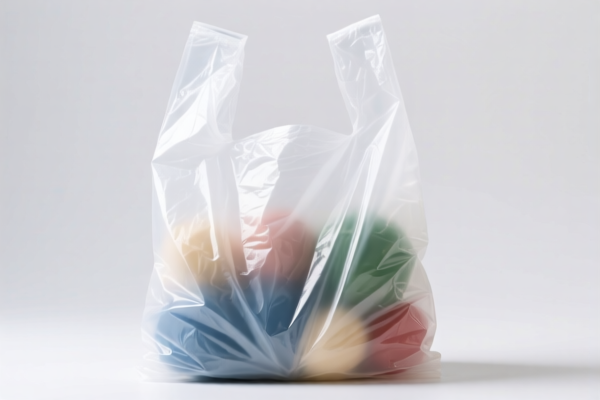
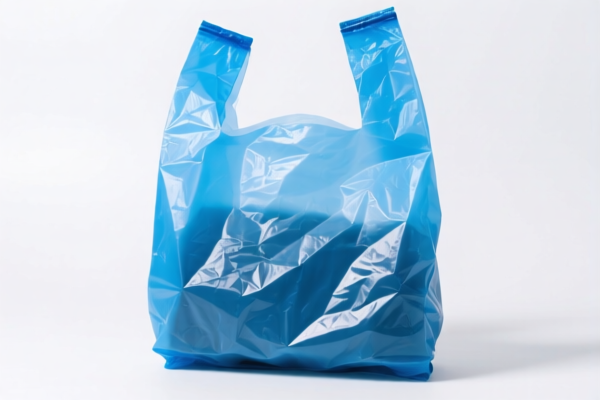
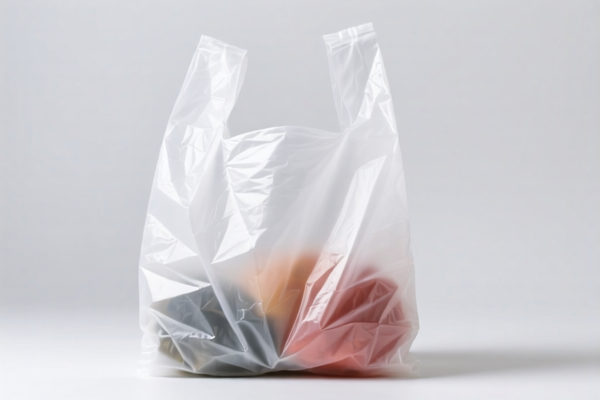
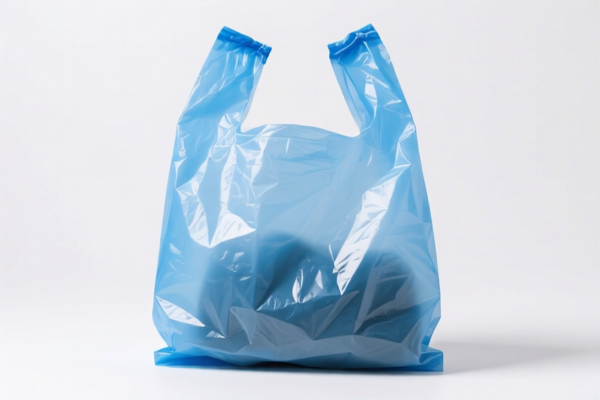
AI Analysis
🛍️ Polyethylene Retail Handbag (PE Shopping Bags)
🌐 HS Code Reference & Customs Clearance Guide | 2026 Latest Tariff Analysis | Professional Strategy for PE Retail Bags
📌 1. Product Definition & Classification: What Exactly Is a "Polyethylene Retail Handbag"?
In international trade, "Polyethylene Retail Handbag" refers specifically to flexible packaging materials made from polyethylene (PE) polymers. These are commonly known as shopping bags, produce bags, or retail carry bags.
Key Characteristics: * Material: 100% Polyethylene (PE) – either High-Density Polyethylene (HDPE) or Low-Density Polyethylene (LDPE). * Form: Flexible film bags, often with handles (cut handles, die-cut handles, or loop handles). * Purpose: Retail packaging, fruit/vegetable packing, or general consumer goods carrying.
⚠️ Critical Distinction for Classification:
- If the bag is made of Polyethylene and is a retail shopping bag (with handles or standard design) → It falls under Chapter 39, Heading 3923.
- Do NOT confuse with plastic boxes, bottles, or hard containers (which may fall under 3923.10 or 3923.29).
- Do NOT confuse with paper bags, woven polypropylene bags, or non-woven fabric bags (they have different HS codes).
📦 2. HS Code Classification Details (2026 Official Tariff Schedule)
Based on the provided data, there are three specific sub-headings under HS 3923.21 (Sacks and bags, including cones, of plastics) that apply to polyethylene retail handbags. The choice depends on the exact description used in customs declarations.
| HS Code | Product Description | Applicable Scenario | Key Attributes |
|---|---|---|---|
3923.21.00.85 |
Polyethylene Shopping Bag (Compliant Size) or PE shopping bag with handles | Standard retail use, compliant dimensions, with or without handles | Material: PE; Form: Shopping Bag; Use: Packaging |
3923.21.00.95 |
Polyethylene Shopping Bag or PE Fruit Bag | General polyethylene bags, including produce/fruit bags | Material: PE; Form: Bag; Use: Packaging; Fits "polymer sack" definition |
3923.21.00.80 |
Polyethylene Fruit Bag | Specifically for fruits/vegetables, flexible plastic bags | Material: PE; Form: Bag; Use: Packaging; Fits "plastic bag of polymers of ethylene" |
🔍 Important Note:
- All three codes fall under 3923.21.00 (Sacks and bags of plastics).
- The 8-digit suffix (.85,.95,.80) distinguishes the specific type or usage for statistical or tariff quota purposes in certain markets (e.g., US HTS).
- All three carry the SAME total tax rate as per the provided data.
💰 3. 2026 Tariff Rate Breakdown (Detailed Tax Analysis)
✅ Target Market: United States (US)
✅ Origin: China (CN)
✅ Applicable To: All three HS Codes above (3923.21.00.85,.95,.80)
✅ Effective Date: Ongoing (including current import periods)
🎯 Unified Tax Structure for PE Retail Handbags
| Tax Component | Rate | Legal Basis / Description |
|---|---|---|
| Base Tariff | 3.0% | Standard MFN (Most Favored Nation) duty for plastic bags under HTS 3923.21 |
| Section 301 Tariff (Trade War) | 25.0% | Additional duty imposed on Chinese-origin goods under US Trade Act Section 301 |
| Section 122 Tariff (Specific Provision) | 10.0% | Additional duty under Section 122 of the Trade Expansion Act (often applied to specific textile/apparel-related or general import categories, here explicitly listed) |
| TOTAL EFFECTIVE RATE | 38.0% | Sum of all applicable duties |
📌 Detailed Explanation of Tax Components:
- Base Tariff (3.0%): This is the standard duty rate for plastic sacks and bags (other than paper or woven) under US HTS. It applies to all countries with MFN status unless otherwise specified.
- Section 301 Tariff (25%): This is the most significant cost driver for Chinese-origin PE bags. Implemented to address unfair trade practices, this 25% additional duty applies to nearly all Chinese-made plastic packaging products.
- Section 122 Tariff (10%): As per the provided data, a 10% additional duty is applied under Section 122. This is less common than Section 301 but is explicitly listed for these HS codes. It may relate to specific import restrictions or emergency actions.
- Total Cost: Importers must budget for 38% of the CIF (Cost, Insurance, Freight) value as duty alone.⚠️ No De Minimis Exemption:
These goods DO NOT qualify for the de minimis exemption (Section 321) if the total value exceeds $800 per person per day, and even then, high-duty items may be scrutinized. For commercial imports, the full 38% applies.
🛠️ 4. Customs Clearance Practical Advice (Avoid Pitfalls)
✅ 1. Required Documentation Checklist
| Document | Required? | Notes |
|---|---|---|
| Commercial Invoice | ✅ Yes | Must clearly state "Polyethylene Shopping Bag" or "PE Fruit Bag". Avoid vague terms like "Plastic Bag". |
| Packing List | ✅ Yes | Specify quantity, weight, and dimensions. |
| Bill of Lading / Air Waybill | ✅ Yes | Standard shipping document. |
| Product Specification Sheet | ✅ Recommended | Include material composition (e.g., "100% HDPE"), thickness (microns), and handle type. |
| Country of Origin Certificate | ✅ Yes | To prove Chinese origin (which triggers the 38% tax). If from Vietnam/Malaysia, provide COO to potentially avoid Section 301. |
| Customs Bond | ✅ Yes | Required for US imports over certain values. |
✅ 2. Declaration Best Practices
🔥 Golden Rule:
"Be Specific: Material + Form + Use = Correct HS Code"
| Scenario | Recommended Declaration | Risk if Vague |
|---|---|---|
| Standard Shopping Bag | "Polyethylene Shopping Bag, with handles, for retail packaging" | Risk of misclassification to 3923.29 (other bags) → potential audit |
| Fruit/Veg Bag | "Polyethylene Fruit Bag, thin film, for produce packaging" | Risk of being flagged as "single-use plastic" → environmental compliance issues |
| Bag with Print | "Polyethylene Shopping Bag, printed with brand logo" | Ensure printing is mentioned; may affect classification if ink is considered significant |
| Biodegradable PE? | "NOT Biodegradable" | If not certified biodegradable, do NOT claim it. Misrepresentation leads to penalties. |
✅ 3. Special Considerations for 2026
- Environmental Regulations: Many US states (e.g., California, New York) have banned or restricted single-use plastic bags. Ensure your "retail handbag" complies with local state laws, even if federal customs clearance is successful.
- Minimum Thickness Rules: Some jurisdictions require bags to be at least 3 mils (76 microns) to be classified as "reusable" rather than "single-use". This can affect state-level fines, though federal HS classification remains the same.
- Supply Chain Diversification: Due to the 38% total tariff, consider:
- Sourcing from non-China origins (e.g., Vietnam, India, Thailand) to potentially avoid the 25% Section 301 tariff.
- Using customs bonds and continuous entry to manage cash flow for high-duty items.
- Pre-arrival rulings: Submit a binding ruling request to US Customs and Border Protection (CBP) for certainty on HS code assignment.
🌍 5. Global Market Comparison (2026)
| Country/Region | HS Code | Base Tariff | Additional Duties (China) | Total Effective Rate | Notes |
|---|---|---|---|---|---|
| 🇺🇸 USA | 3923.21.00.85/95/80 |
3.0% | +25% (Sec 301) + 10% (Sec 122) | 38.0% | High cost; environmental restrictions apply |
| 🇨🇳 China | 3923.21.00 |
5-10% | None | ~5-10% | Low tariff; domestic production is strong |
| 🇪🇺 EU | 3923.21 |
3-5% | None | ~3-5% | No Section 301 equivalent; focus on environmental compliance |
| 🇨🇦 Canada | 3923.21 |
0-5% | None | ~0-5% | CUSMA benefits may apply; low duty |
📌 Conclusion:
- The USA imposes the highest effective tariff (38%) on Chinese-made PE retail handbags.
- For cost-sensitive shipments, consider diverting supply chains to non-China countries to avoid the 25% Section 301 duty.
- Always verify state-level plastic bag bans before shipping to the US.
📌 6. Common Mistakes & Pitfalls (Learn from Others)
❌ Mistake 1: Declaring as "Plastic Film" instead of "Bag"
👉 Consequence: Misclassification → potential penalty + delay. Bags are specifically "sacks and bags" under 3923.
❌ Mistake 2: Ignoring the Handle Type
👉 Consequence: If handles are integral, it’s a "shopping bag". If handles are attached later, still a bag. But if it’s a "pouch" without handles, it might fall under 3923.29. Be precise.
❌ Mistake 3: Assuming All Plastic Bags Are the Same
👉 Consequence: Different polymers (PP, PE, PVC) have different HS codes. Polyethylene = 3923.21. Polypropylene = 3923.29. Ensure material is correctly stated.
❌ Mistake 4: Forgetting About State Regulations
👉 Consequence: Even if customs clears the 38% duty, the product may be banned or fined at the state level (e.g., CA, NY, WA) if it’s a single-use bag under 3 mils.
✅ Correct Approach:
"Polyethylene Shopping Bag, 3.0 mil thickness, with die-cut handles, for retail use, Made in China, HTS 3923.21.00.85"
🎯 7. Final Recommendation: Cost Optimization & Compliance
🎯 Remember These Tips:
🔹 "38% Total Duty is Real" – Factor this into your pricing strategy.
🔹 "Check the Origin" – If you can source from Vietnam or India, you may save 25%.
🔹 "Know the State Laws" – Federal clearance ≠ State compliance.
🔹 "Be Specific in Description" – Avoid "plastic bag" as a generic term. Use "Polyethylene Shopping Bag".
📌 Pro Tip:
If you are importing large volumes, consider applying for a Tariff Engineering or Exclusion request under Section 301, though exclusions for plastic bags are rare.
For smaller shipments, ensure your customs broker is experienced with Chapter 39 goods to avoid unnecessary delays.
📣 Action Step:
📞 Contact your customs broker NOW to verify HS code accuracy.
📄 Prepare a Product Specification Sheet detailing material, thickness, and handle type.
🚀 Clear Customs Smoothly, Avoid Fines, Protect Your Margin!
✨ Precision in Classification, Savings in Cost, Compliance in Action!
💼 Every Bag Matters – Get the HS Code Right!
Customer Reviews
About HS Code Classification
The Harmonized System (HS) is an internationally standardized nomenclature developed by the World Customs Organization (WCO) to classify traded products. Over 200 countries use the HS system as the basis for customs tariffs, trade statistics, and import/export regulations.
Each HS code follows a hierarchical structure:
- Chapter (2 digits) — Broad category of goods (e.g., Chapter 84: Machinery and Mechanical Appliances)
- Heading (4 digits) — More specific grouping within the chapter
- Subheading (6 digits) — Internationally standardized breakdown, used by all WCO member countries
- National subdivisions (8-10 digits) — Country-specific extensions for further classification, such as US HTSUS 10-digit codes
Correct HS code classification is essential for smooth customs clearance, accurate duty payment, and compliance with trade regulations. Misclassification can lead to customs delays, overpayment of duties, or penalties.
When importing from CN to US, the applicable tariff rates may include:
- Most-Favored-Nation (MFN) rate — The standard duty rate applied to WTO members
- General rate — Applied to countries without trade agreements
- Trade remedy duties — Additional tariffs such as Section 301 (anti-dumping), Section 232 (national security), or countervailing duties
The information provided on this page is for reference purposes only. For official classification, please consult with your local customs authority or a licensed customs broker.