Polyethylene Scrap
CN → US| HS Code | Tariff Rate | Origin | Destination | Doc |
|---|---|---|---|---|
| 3915100000 | 35.0% | CN | US | Official Doc |
| 3915900090 | 35.0% | CN | US | Official Doc |
| 3903110000 | 41.5% | CN | US | Official Doc |
| 3915200000 | 35.0% | CN | US | Official Doc |
| 3903190000 | 41.5% | CN | US | Official Doc |
Product Images


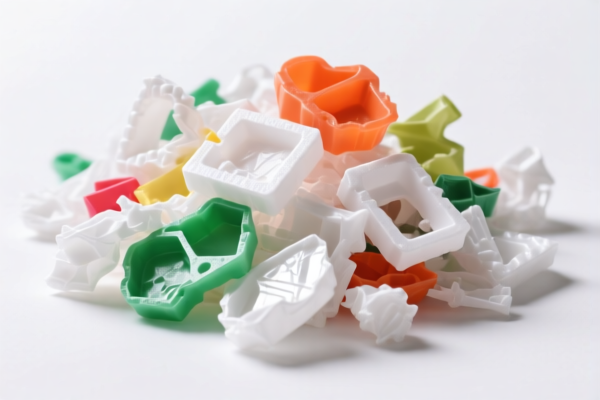

AI Analysis
♻️ Polyethylene Scrap (Plastic Waste)
🌐 HS Code Reference & Customs Clearance Guide | 2026 Latest Tariff Analysis | Professional Entry Strategy
📌 I. Product Definition & Classification: What Exactly is "Polyethylene Scrap"?
Polyethylene (PE) scrap refers to waste, offal, or unusable primary shapes of polyethylene polymers. In international trade, accurate classification is critical because PE scrap is subject to significant trade war tariffs and 122-clause duties when exported from China to the US.
The data provided highlights five specific HS Codes. While some are explicitly "Scrap" (3915), others are "Primary Shapes" (3903) that may be misclassified due to naming conventions.
⚠️ Key Distinction Point:
- True Scrap (3915 Series): Must be in waste/offal form. Typically 0% Base Duty + High Surtax.
- Primary Shapes/Residue (3903 Series): Even if called "waste" in name, if it fits the chemical definition of Polystyrene Primary Shapes, it falls under 3903.
- Mixed/Material Agnosticism (3915.90): For plastic waste not specifically identified as PE, PS, PVC, etc.
📦 II. HS Code Classification Details (2026 Latest Tariff Authority Comparison)
| HS Code | Product Description | Material & Form Match | Total Tax Rate | Tax Structure |
|---|---|---|---|---|
3915.10.00.00 |
Polyethylene Scrap: Specifically for polyethylene polymer waste. | ✅ Exact Match (PE Waste) | 35.0% | Base: 0% + Surtax: 25% + 122-Clause: 10% |
3915.90.00.90 |
Other Plastic Scrap: Applies to waste of various plastic materials not elsewhere specified. | ✅ Broad Match (Mixed/Unknown Plastic Waste) | 35.0% | Base: 0% + Surtax: 25% + 122-Clause: 10% |
3915.20.00.00 |
Styrene Polymer Scrap/Offal: Waste of styrene polymers. | ✅ Match (If Material is actually PS, not PE) | 35.0% | Base: 0% + Surtax: 25% + 122-Clause: 10% |
3903.11.00.00 |
Polystyrene Primary Shapes: Name says "Waste" but fits material definition of Primary Shape. | ⚠️ Misclassification Risk (If it's actually PS Primary Shape) | 41.5% | Base: 6.5% + Surtax: 25% + 122-Clause: 10% |
3903.19.00.00 |
Other Polystyrene: For primary shape residues or bulk state. | ⚠️ Misclassification Risk (If it's PS Residue/Bulk) | 41.5% | Base: 6.5% + Surtax: 25% + 122-Clause: 10% |
🔍 Critical Reminder:
- Codes 3915.10, 3915.90, and 3915.20 all share the same total tax burden (35%) but differ in the material specificity.
- Codes 3903.11 and 3903.19 are HEAVIER (41.5%) because they carry a 6.5% Base Duty in addition to the surtaxes.
- Do NOT list Polystyrene (PS) waste under 3903 if it is clearly scrap; conversely, do not list PE waste under 3903. Material identity drives the Base Duty.
💰 III. 2026 Latest Tariff Rate Breakdown (Including Surtaxes & Policy Add-ons)
✅ Applicable Country: United States (US)
✅ Origin: China (CN)
✅ Effective Time: Post-2025 Rules (Includes Section 301 & Section 122 Add-ons)
🎯 1. 3915.10.00.00 —— Polyethylene Scrap (Exact Match)
| Item | Content |
|---|---|
| Base Duty | 0.0% (Ad Valorem) |
| Section 301 Surtax | +25.0% (USITC Footnote for China Origin) |
| Section 122 Duty | +10.0% (Specific clause for plastic waste/recyclables) |
| Total Effective Rate | 35.0% |
| Tax Calculation | CIF Value × 35% |
| De Minimis Exemption | ❌ Not Applicable (Deny de minimis for China-origin waste/plastics in many contexts) |
| Legal Basis Path | HTSUS:3915.10.00.00 → USITC Footnote 9903.88.01 → IEEPA:9903.01.25 (122-Clause) |
📌 Explanation:
- Base 0%: Scrap is often duty-free in normal trade.
- 25% Surtax: The standard trade war penalty on Chinese plastics.
- 10% 122-Clause: A specific additional duty targeting plastic scrap/waste imports, often applied to prevent dumping or environmental concerns.
- Total 35%: This is the hard floor for genuine PE scrap.
🎯 2. 3915.90.00.90 —— Other Plastic Scrap (Mixed/Unspecified)
| Item | Content |
|---|---|
| Base Duty | 0.0% |
| Section 301 Surtax | +25.0% |
| Section 122 Duty | +10.0% |
| Total Effective Rate | 35.0% |
| Tax Calculation | CIF Value × 35% |
| De Minimis Exemption | ❌ Not Applicable |
| Legal Basis Path | HTSUS:3915.90.00.90 → USITC Footnote 9903.88.01 → IEEPA:9903.01.25 |
📌 Note:
- Use this only if the plastic type is not PE or PS, or if it is a mixed blend that cannot be separated.
- If you can identify it as PE, use3915.10for specificity, though the rate is identical.
🎯 3. 3903.11.00.00 & 3903.19.00.00 —— The "Trap" Codes (Polystyrene Primary Shapes)
| Item | Content |
|---|---|
| Base Duty | 6.5% |
| Section 301 Surtax | +25.0% |
| Section 122 Duty | +10.0% |
| Total Effective Rate | 41.5% |
| Tax Calculation | CIF Value × 41.5% |
| De Minimis Exemption | ❌ Not Applicable |
📌 Warning:
- The summary notes "Name is waste but fits material definition." This is a danger zone.
- If Customs determines your "PE Scrap" is actually Polystyrene (PS) residue, or if you mislabel PS scrap as PE, you might fall into 3903.
- Difference: 41.5% vs 35.0% = 6.5% extra cost just due to a misclassification of material type.
- Why 6.5% Base? PS Primary Shapes are considered more valuable/commodity-like than scrap, hence the base duty.
🛠️ IV. Customs Clearance Practical Advice (Real-World Pitfall Guide)
✅ 1. Documentation Checklist (Non-Negotiable)
| Document | Must Provide | Explanation |
|---|---|---|
| ✅ Material Safety Data Sheet (MSDS) | ✔️ | To prove chemical composition (Polyethylene vs. Polystyrene). |
| ✅ Photographs of Scrap | ✔️ | Show form: flakes, pellets, chunks? Must look like "waste/offal". |
| ✅ Commercial Invoice | ✔️ | Clearly state "Polyethylene Scrap" or "Plastic Waste". Avoid vague terms. |
| ✅ Packing List | ✔️ | Detail net/gross weight. |
| ✅ Export License/Permit | ✔️ | Some plastic scrap requires EPA or export permits depending on origin. |
✅ 2. Classification Strategy (Key Mantra)
🔥 “Material First, Form Second. Don’t Guess the Base!”
| Scenario | Correct HS Code | Wrong Action | Consequence |
|---|---|---|---|
| Pure PE Waste/Flakes | 3915.10.00.00 |
Mislabel as PS 3903 |
Pay 41.5% instead of 35%. Overpayment. |
| Mixed Plastic Waste | 3915.90.00.90 |
Mislabel as PE 3915.10 |
Potential rejection if tested and found mixed. |
| PS Residue/Bulk | 3903.19.00.00 |
Call it "Scrap" to get 0% base | Customs lab test reveals PS → Back taxes + Penalties. |
| True PE Primary Pellets (New) | Not in List | Declare as Scrap 3915 |
Fraud Alert: Scrap must be waste. New pellets are different HTS. |
✅ 3. Special Handling Tips
| Situation | Recommendation |
|---|---|
| Contaminated Scrap | If scrap contains labels, glue, or other plastics, declare as 3915.90 (Mixed). Do not claim Pure PE 3915.10. |
| Pre-Processed vs. Raw | If it’s just shredded PE, it’s still 3915.10. If it’s washed/dried pellets intended for reuse, argue for "Recyclable Raw Material" but be ready for scrutiny. |
| 122-Clause Application | Ensure the 10% surtax is pre-calculated in your landed cost. It is not optional. |
🌍 V. Global Market Comparison (2026 Latest)
| Country/Region | Recommended HS Code | Tariff (China Origin) | Notes |
|---|---|---|---|
| 🇺🇸 USA | 3915.10.00.00 |
35% | High surtax (25%) + 122-Clause (10%). |
| 🇨🇳 China | 3915.10.00.00 |
~0-5% | Domestic recycling incentives may apply. |
| 🇪🇺 EU | 3915.10.00 |
Varies (Often 0-2.5%) | No Section 301 equivalent, but strict EU waste shipment regulations (EWC codes). |
| 🇯🇵 Japan | 3915.10.00 |
~5-10% | No trade war surtaxes. |
📌 Conclusion:
- The USA is the most expensive destination for Chinese plastic scrap due to the 35% effective rate.
- EU/Japan are more cost-effective but have stricter environmental compliance requirements for waste imports.
📌 VI. Common Mistakes & Pitfalls (Lessons Learned)
❌ Mistake 1: Labeling all plastic waste as "Polyethylene Scrap" to avoid "Mixed Waste" scrutiny.
👉 Result: If lab tests show Polystyrene (PS) or PVC, you face 3903 classification (41.5%) or rejection.
❌ Mistake 2: Assuming "Base Duty 0%" means low total cost.
👉 Result: Ignoring the 25% + 10% surtaxes leads to 35% total cost, which is nearly 1/3 of the value!
❌ Mistake 3: Confusing "Primary Shape" with "Scrap".
👉 Result: If your "PE Scrap" is actually clean, uniform pellets (new material), it might be classified as new plastic (lower duty but not scrap), leading to contraband/waste smuggling accusations.
✅ Correct Action:
"Polyethylene (PE) Scrap, Shredded/Flakes, Mixed Colors, Non-Hazardous, HS Code 3915.10.00.00"
🎯 VII. Conclusion: Precision Saves Money!
🎯 Remember the Mantra:
🔹 "Base 0, Surtax 25, 122-Clause 10. Total 35 for PE Scrap."
🔹 "If it's PS, Base jumps to 6.5. Total 41.5. Don't be fooled by the name!"
📌 Pro Tip:
If your volume is high, consider Advance Ruling (Ruling Request) from US Customs and Border Protection (CBP) to confirm the HS Code before shipping. This prevents unexpected 6.5% penalties at the port.
📣 Immediate Action:
📞 Verify Material Composition via Lab Test.
📝 Choose Between 3915.10 (PE), 3915.90 (Mixed), or 3903.19 (PS).
🚀 Calculate Landed Cost with 35% or 41.5%.
✨ Accurate Classification is the First Step to Profitability!
💼 Don't let a 6.5% Base Duty error eat your margin!
Customer Reviews
About HS Code Classification
The Harmonized System (HS) is an internationally standardized nomenclature developed by the World Customs Organization (WCO) to classify traded products. Over 200 countries use the HS system as the basis for customs tariffs, trade statistics, and import/export regulations.
Each HS code follows a hierarchical structure:
- Chapter (2 digits) — Broad category of goods (e.g., Chapter 84: Machinery and Mechanical Appliances)
- Heading (4 digits) — More specific grouping within the chapter
- Subheading (6 digits) — Internationally standardized breakdown, used by all WCO member countries
- National subdivisions (8-10 digits) — Country-specific extensions for further classification, such as US HTSUS 10-digit codes
Correct HS code classification is essential for smooth customs clearance, accurate duty payment, and compliance with trade regulations. Misclassification can lead to customs delays, overpayment of duties, or penalties.
When importing from CN to US, the applicable tariff rates may include:
- Most-Favored-Nation (MFN) rate — The standard duty rate applied to WTO members
- General rate — Applied to countries without trade agreements
- Trade remedy duties — Additional tariffs such as Section 301 (anti-dumping), Section 232 (national security), or countervailing duties
The information provided on this page is for reference purposes only. For official classification, please consult with your local customs authority or a licensed customs broker.