Polyethylene Self Sealing Bag
CN → US| HS Code | Tariff Rate | Origin | Destination | Doc |
|---|---|---|---|---|
| 3920100000 | 39.2% | CN | US | Official Doc |
| 3921190090 | 41.5% | CN | US | Official Doc |
| 3921190010 | 41.5% | CN | US | Official Doc |
| 3923210030 | 38.0% | CN | US | Official Doc |
| 3923210011 | 38.0% | CN | US | Official Doc |
| 3920992000 | 39.2% | CN | US | Official Doc |
Product Images

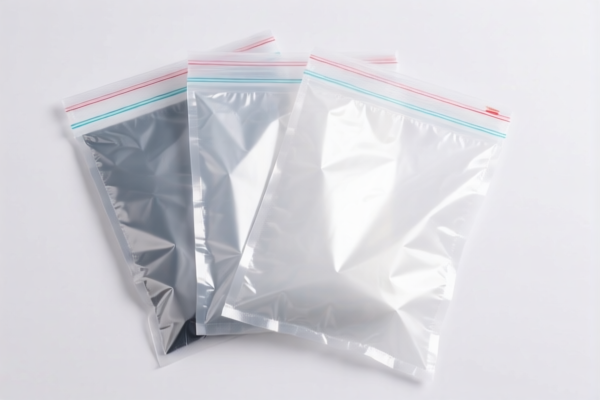

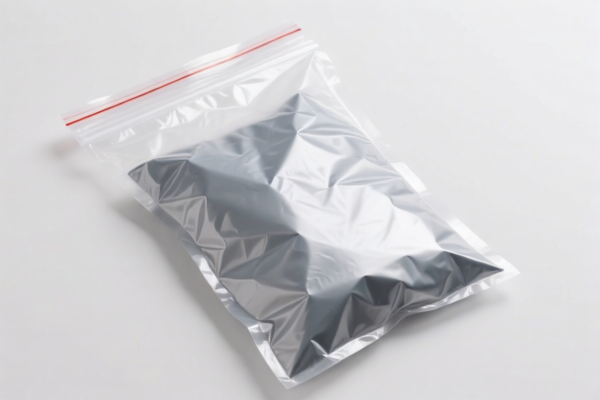
AI Analysis
🛍️ Polyethylene Self-Sealing Bag (PE Zip Lock Bag / Resealable Pouch)
🌐 HS Code Reference & Customs Clearance Guide | 2026 Latest Tariff Analysis | Professional-Level Clearance Strategy
📌 I. Product Definition & Classification: Do You Really Understand "PE Self-Sealing Bags"?
Polyethylene (PE) self-sealing bags are ubiquitous packaging solutions used in retail, logistics, and industrial storage. They are characterized by a zipper-type closure mechanism (interlocking teeth) that allows for repeated opening and closing. In international trade, they are classified primarily under Chapter 39 (Plastics and Articles Thereof), but the specific HS Code depends heavily on the morphology (film vs. finished bag) and application.
⚠️ Critical Distinction:
- If the item is a finished bag with a specific closure mechanism (zipper/zip-lock) intended for packaging → It generally falls under Heading 3923 (Artcles for the conveyance or packing of goods).
- If the item is considered a flat sheet/film before being formed into a bag, or a generic plastic film without specific bag features → It may fall under Heading 3920 or 3921 (Plates, sheets, film, foil, and strip).
- Customs Reality: Most standard "self-sealing bags" are classified as finished packing articles (3923) to avoid the higher duties often associated with generic plastic films (3920/3921) in certain jurisdictions, or vice versa, depending on local tariff preferences. The data below reflects the specific tax implications of the provided codes.
📦 II. HS Code Classification Details (2026 Latest Tariff Authority Comparison)
| HS Code | Product Description | Application Scenario | Total Tax Rate | Key Determinant |
|---|---|---|---|---|
3923.21.00.30 |
Plastic Sacks and Bags (with closure) | Self-sealing bags, Zip-lock pouches, Stand-up pouches | 38.0% | Matched morphology (sack/bag) & use (packaging). |
3923.21.00.11 |
Plastic Sacks and Bags (with closure) | Self-sealing bags, Seal bags, Zip-lock closures | 38.0% | Matched morphology (bag) & use (packaging). |
3920.10.00.00 |
Plates, Sheets, Film, Foil, and Strip (PE) | Generic PE film, raw plastic sheets, non-specific bags | 39.2% | Inferred material (PE), morphology (film/sheet). |
3920.99.20.00 |
Other Plates, Sheets, Film, Foil, and Strip | Flexible films, strips, generic plastic sheeting | 39.2% | Inferred material (Plastic), morphology (flexible film). |
3921.19.00.90 |
Other Plates, Sheets, Film, Foil, and Strip | Extended application of film/sheet (bag-like but not classified as bag) | 41.5% | Bottom-category for plastic sheets/films. |
3921.19.00.10 |
Other Plates, Sheets, Film, Foil, and Strip | PE/PP films, bag-like morphology but classified as sheet/film | 41.5% | Bag morphology + PE material, but grouped under sheets. |
🔍 Key Insight:
- 3923.21.xx codes are specifically for "Sacks and Bags". If your product has a clear sealing mechanism (zipper, drawstring, heat seal) and is sold as a finished bag, 3923 is usually the most accurate and often more favorable (38.0%) than the generic film codes.
- 3920/3921 codes are for "Plates, Sheets, Film". If you declare a self-sealing bag under these, customs may view it as a "plastic film" rather than a "finished bag," leading to higher duties (39.2% - 41.5%).
- Why the difference? The 3923 codes have a lower base tariff (3.0%) compared to 3920/3921 (4.2% - 6.5%), resulting in a lower total effective rate despite similar additional taxes.
💰 III. 2026 Latest Tariff Rate Breakdown (Including Surtaxes & Policy Add-ons)
✅ Applicable Country: United States (US)
✅ Origin: China (CN)
✅ Effective Date: Post-November 2025 (Including subsequent imports)
🎯 1. 3923.21.00.30 & 3923.21.00.11 —— Plastic Sacks and Bags (Self-Sealing/Zip-Lock)
| Item | Content |
|---|---|
| Base Tariff Rate | 3.0% (ad valorem) |
| USITC Surtax (Section 301) | +25.0% |
| IEEPA Surtax (Section 122/482) | +10.0% (Targeting China/HK products) |
| Total Effective Tax Rate | 38.0% |
| Tax Calculation | CIF Value × 38.0% |
| De Minimis Exemption? | ❌ Not Available (deny_de_minimis) |
| Legal Basis Path | IEEPA:9903.01.24 → USITC:3923.21.00.30 → FOOTNOTE:9903.88.01 |
📌 Explanation:
- The 3.0% base is significantly lower than other plastic film codes.
- However, the 25% Section 301 and 10% IEEPA surcharges are mandatory for Chinese-origin goods.
- Total 38.0% is still lower than the 3920/3921 alternatives, making 3923 the preferred classification for self-sealing bags if facts support it.
🎯 2. 3920.10.00.00 —— PE Plates, Sheets, Film, Foil, and Strip
| Item | Content |
|---|---|
| Base Tariff Rate | 4.2% (ad valorem) |
| USITC Surtax (Section 301) | +25.0% |
| IEEPA Surtax (Section 122/482) | +10.0% |
| Total Effective Tax Rate | 39.2% |
| Tax Calculation | CIF Value × 39.2% |
| De Minimis Exemption? | ❌ Not Available (deny_de_minimis) |
| Legal Basis Path | IEEPA:9903.01.24 → USITC:3920.10.00.00 → FOOTNOTE:9903.88.01 |
📌 Note:
- Even though this is "PE" (Polyethylene), the morphology (film/sheet) triggers a higher base rate (4.2% vs 3.0%).
- 1.2% higher total duty than 3923. Over large volumes, this difference is substantial.
🎯 3. 3921.19.00.90 & 3921.19.00.10 —— Other Plastic Plates, Sheets, Film, Foil, and Strip
| Item | Content |
|---|---|
| Base Tariff Rate | 6.5% (ad valorem) |
| USITC Surtax (Section 301) | +25.0% |
| IEEPA Surtax (Section 122/482) | +10.0% |
| Total Effective Tax Rate | 41.5% |
| Tax Calculation | CIF Value × 41.5% |
| De Minimis Exemption? | ❌ Not Available (deny_de_minimis) |
| Legal Basis Path | IEEPA:9903.01.24 → USITC:3921.19.00.90 → FOOTNOTE:9903.88.01 |
📌 Warning:
- This is the most expensive classification among the options.
- It applies when the product is considered a "generic plastic sheet/film" but doesn't fit the specific PE/PP film exclusions of 3920.
- Avoid this classification for self-sealing bags unless you have no other option.
🛠️ IV. Customs Clearance Practical Advice (Battle-Tested Pitfall Avoidance Guide)
✅ 1. Documentation Checklist (None of the Following Can Be Omitted)
| Document | Required | Explanation |
|---|---|---|
| ✅ Product Specification Sheet | ✔️ | Must detail: Material (LDPE/HDPE/LLDPE), Thickness (microns/mils), Zipper type, Closure mechanism. |
| ✅ Product Photos (Clear) | ✔️ | Show the zipper/lock mechanism clearly. Prove it is a "finished bag," not just a roll of film. |
| ✅ Commercial Invoice | ✔️ | Description should read: "Polyethylene Self-Sealing Bag, Resealable Zipper Closure, for Packaging Use" |
| ✅ Packing List | ✔️ | Quantify units (pcs/kg). Avoid vague terms like "Plastic Film" if it's clearly a bag. |
| ✅ Fiber Content/Material Proof | ✔️ | If blended, provide composition. For 100% PE, state "100% Polyethylene." |
| ✅ Certificate of Origin (CO) | ✔️ | Required to verify Chinese origin and apply surtaxes correctly. |
✅ 2. Declaration Tips (Key Mantra)
🔥 "Bag Has Zipper, Code 3923; Just Film, Code 3920. Don't Mix Them, Or You'll Pay More!"
| Scenario | Correct Declaration | Wrong Approach |
|---|---|---|
| Standard Zip-Lock Bag | 3923.21.00.30 or .11 |
Declare as "Plastic Film" → 39.2%~41.5% |
| Bag without Zipper (Heat Seal Only) | 3923.21.00.30 or .11 |
Declare as "Sheet" → 39.2% |
| Roll of Film with Pre-Printed Zipper Track | 3923.21.00.30 (if ready-to-use) |
Declare as "Sheet" → 39.2% |
| Empty Plastic Sheet (No Closure) | 3920.10.00.00 |
Declare as "Bag" → Misclassification Risk |
✅ 3. Special Circumstances Handling
| Situation | Handling Advice |
|---|---|
| OEM Custom Bags | Provide customer design specs. Clearly state "Packaging Article" to support 3923. |
| Biodegradable PE Bags | If certified biodegradable, check for specific exemptions. However, under current US data, surtaxes still apply. |
| Multi-Layer Bags (PE + Other) | If >50% PE by weight, 3923/3920 still likely apply. If other material dominates, chapter may change. |
| Bag with Handle | If it's a "T-shirt bag" or "gusseted bag," it still falls under 3923.21 (Sacks/Bags). |
🌍 V. Global Market Clearance Comparison (2026 Latest)
| Country/Region | Recommended HS Code | Total Tax Rate (China Origin) | Certification Requirements | Notes |
|---|---|---|---|---|
| 🇺🇸 USA | 3923.21.00.30 |
38.0% | None specific, but FDA compliance for food contact may apply | High surtaxes make classification critical. |
| 🇨🇳 China | 3923.21.00.30 |
~9.5% (Est.) | GB Standards | No US-style surtaxes. |
| 🇪🇺 EU | 3923.21.00.30 |
0% - 6% (Most Favored Nation) | REACH, RoHS | No Section 301/IEEPA surtaxes. |
| 🇯🇵 Japan | 3923.21.00.30 |
~0% - 5% | JIS Standards | No high surtaxes. |
| 🇬🇧 UK | 3923.21.00.30 |
~0% - 6% | UKCA | Post-Brexit tariffs apply. |
📌 Conclusion:
- USA is the only market among these with 30-40% effective rates due to trade wars.
- Classification as 3923 (Bag) vs. 3920/3921 (Film) saves 1.2% to 3.5% in duty.
- For non-US markets, duties are significantly lower, so classification errors are less costly but still important for compliance.
📌 VI. Common Mistakes & Pitfall Guide (Blood-Teaching Lessons)
❌ Mistake 1: Declaring "Self-Sealing Bags" as "Plastic Film" (3920.10.00.00)
👉 Consequence: You pay 39.2% instead of 38.0%. Over $1M CIF value, that’s $12,000 wasted.
👉 Why? Customs may still accept it, but you’re overpaying. If you declare it as a "bag" and customs agrees, you save money.
❌ Mistake 2: Using vague terms like "Plastic Packaging" on Invoice
👉 Consequence: Customs delays inspection, may assign highest applicable rate (41.5%) or require re-classification.
👉 Fix: Always specify "Polyethylene Self-Sealing Bag with Zipper Closure."
❌ Mistake 3: Assuming "De Minimis" ($800) applies
👉 Consequence: Denied. Section 301/IEEPA goods from China are explicitly excluded from de minimis thresholds.
👉 Fix: Every shipment, no matter how small, is subject to full duties.
✅ Correct Practice:
"PE Self-Sealing Bag, Zipper Closure, 100% Polyethylene, for Retail Packaging, Model XYZ, FDA Compliant (if applicable)"
🎯 VII. Conclusion: Precision in Classification, Precision in Profit!
🎯 Remember the Mantra:
🔹 "Bag has Zipper = 3923 (38%); Just Film = 3920 (39.2%); Generic Sheet = 3921 (41.5%)."
🔹 "Save 1.2% to 3.5% by correctly identifying the 'Bag' morphology!"
🔹 "HS Code is Life; Tax Difference is Death (of Profit)!"
📌 Pro Tip:
- If your self-sealing bags are made from recycled PE, check for any potential green tariff benefits, though currently, surtaxes still apply.
- For large volumes, consider applying for an Advance Ruling (ACE) from CBP to lock in the 3923 classification and avoid post-entry audits.
- Ensure your supplier provides accurate material declarations (100% PE vs. blended) to avoid misclassification risks.
📣 Take Action Now:
📞 Contact a Licensed Customs Broker
📄 Provide Clear Product Photos with Zipper Visible
🚀 Declare as "Self-Sealing Bag" under 3923.21 to Minimize Duties!
✨ Professional Clearance Starts with Accurate Classification!
💼 Every Cent of Duty Saved is Pure Profit!
Customer Reviews
About HS Code Classification
The Harmonized System (HS) is an internationally standardized nomenclature developed by the World Customs Organization (WCO) to classify traded products. Over 200 countries use the HS system as the basis for customs tariffs, trade statistics, and import/export regulations.
Each HS code follows a hierarchical structure:
- Chapter (2 digits) — Broad category of goods (e.g., Chapter 84: Machinery and Mechanical Appliances)
- Heading (4 digits) — More specific grouping within the chapter
- Subheading (6 digits) — Internationally standardized breakdown, used by all WCO member countries
- National subdivisions (8-10 digits) — Country-specific extensions for further classification, such as US HTSUS 10-digit codes
Correct HS code classification is essential for smooth customs clearance, accurate duty payment, and compliance with trade regulations. Misclassification can lead to customs delays, overpayment of duties, or penalties.
When importing from CN to US, the applicable tariff rates may include:
- Most-Favored-Nation (MFN) rate — The standard duty rate applied to WTO members
- General rate — Applied to countries without trade agreements
- Trade remedy duties — Additional tariffs such as Section 301 (anti-dumping), Section 232 (national security), or countervailing duties
The information provided on this page is for reference purposes only. For official classification, please consult with your local customs authority or a licensed customs broker.