Polyisobutylene Raw Material
CN → US| HS Code | Tariff Rate | Origin | Destination | Doc |
|---|---|---|---|---|
| 3902205000 | 41.5% | CN | US | Official Doc |
| 3902201000 | 35.0% | CN | US | Official Doc |
| 4002310000 | 35.0% | CN | US | Official Doc |
| 4002390000 | 35.0% | CN | US | Official Doc |
| 3911909110 | 41.5% | CN | US | Official Doc |
| 3911909150 | 41.5% | CN | US | Official Doc |
Product Images

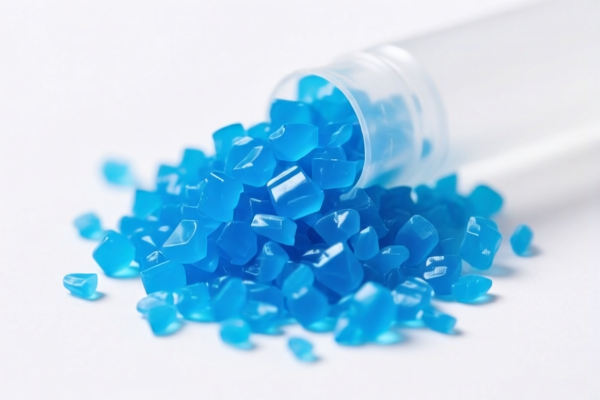
AI Analysis
🧪 Polyisobutylene (PIB) Raw Material: The "Chlorine-Free" Elastomer
🌐 HS Code Reference & Customs Clearance Guide | 2026 Latest Tariff Analysis | Professional Clearance Strategy
📌 I. Product Definition & Classification: Is it Rubber or Plastic?
Polyisobutylene (PIB) is a synthetic polymer derived from isobutylene. In international trade, its classification hinges on a critical chemical distinction: Is it an Elastomer (Rubber) or a Thermoplastic/Resin?
Although PIB is often used in rubber-like applications (adhesives, sealants), it is chemically distinct from "Synthetic Rubber" (like Butyl Rubber IIR) unless it is specifically compounded or cross-linked to exhibit elastomeric properties.
Key Classification Divergence:
1. Polyisobutylene (PIB) - Primary Forms: * Non-Elastomeric (Thermoplastic/Resin-like): High molecular weight PIB used as adhesives, sealants, or viscosity modifiers often falls under Chapter 39 (Plastics). * Elastomeric: If the PIB is processed to act as an elastic polymer (often mixed with other olefins or specifically designated as such in trade databases), it falls under Chapter 40 (Rubber).
⚠️ Critical Distinction Point:
- If the material is pure Polyisobutylene in primary forms (powders, granules, liquids) and is NOT classified as an elastomer in the specific tariff schedule → HS 3902.20.50.00
- If the material is explicitly labeled/described as Elastomeric Polyisobutylene → HS 3902.20.10.00
- ⚠️ WARNING: Do NOT confuse PIB with Butyl Rubber (IIR). Butyl Rubber is a copolymer of Isobutylene and Isoprene (approx. 98% isobutylene, 2% isoprene). Pure PIB is 100% isobutylene units. They have different HS codes!
📦 II. HS Code Classification Details (2026 Latest Tariff Authority Comparison)
| HS Code | Product Description | Application Scenario | Tariff Category |
|---|---|---|---|
3902.20.50.00 |
Polymers of propylene or other olefins: Polyisobutylene: Other | Pure PIB, high molecular weight, used in adhesives, sealants, lubricants, non-elastomeric forms. | ✅ Other (Thermoplastic-like) |
3902.20.10.00 |
Polymers of propylene or other olefins: Polyisobutylene: Elastomeric | PIB processed to exhibit rubber-like elasticity; specific elastomeric grades. | ✅ Elastomeric |
🔍 Important Note:
- The dataset provided does not list Butyl Rubber (IIR) under PIB. Butyl Rubber (IIR) has its own specific codes (4002.31.00.00,4002.39.00.00).
- If you are importing Pure Polyisobutylene, use the codes above.
- If you are importing Butyl Rubber (Isobutylene + Isoprene copolymer), use4002.31.00.00or4002.39.00.00. Do not misdeclare PIB as Butyl Rubber or vice versa.
💰 III. 2026 Latest Tariff Rate Details (Including Surcharges & Policy Add-ons)
✅ Applicable Country: United States (US)
✅ Country of Origin: China (CN)
✅ Effective Date: 2025 November 10 onwards (including subsequent imports)
🎯 1. 3902.20.50.00 —— Polyisobutylene (Other / Non-Elastomeric)
| Item | Content |
|---|---|
| Base Tariff Rate | 0% (ad valorem) |
| USITC Surcharge (Section 301) | +0.0% |
| IEEPA Surcharge | +0.0% |
| Total Tariff Rate | 0.0% |
| Tax Calculation | CIF Value × 0% = $0 |
| De Minimis Eligibility | ❌ Not Applicable (Primary Forms are high value) |
| Legal Basis Path | USITC:3902.20.50.00 |
📌 Explanation:
- This is one of the most favorable classifications for chemical intermediates.
- No additional surcharges are applied to pure Polyisobutylene (Non-Elastomeric) from China.
- This makes it highly competitive compared to other elastomers.
🎯 2. 3902.20.10.00 —— Polyisobutylene (Elastomeric)
| Item | Content |
|---|---|
| Base Tariff Rate | 0% (ad valorem) |
| USITC Surcharge (Section 301) | +0.0% |
| IEEPA Surcharge | +0.0% |
| Total Tariff Rate | 0.0% |
| Tax Calculation | CIF Value × 0% = $0 |
| De Minimis Eligibility | ❌ Not Applicable |
| Legal Basis Path | USITC:3902.20.10.00 |
📌 Note:
- Even if classified as "Elastomeric," this specific HS code for Polyisobutylene currently enjoys a 0% total tariff.
- This is a rare advantage in the current trade environment for chemical intermediates.
🎯 3. Comparison with Butyl Rubber (IIR) - For Reference Only
| Item | Content |
|---|---|
| HS Code | 4002.31.00.00 (Butyl Rubber) |
| Base Tariff | 0% |
| USITC Surcharge | +25.0% |
| IEEPA Surcharge | +0.0% (Note: Dataset shows 25% total) |
| Total Tariff Rate | 25.0% |
| Legal Basis Path | USITC:4002.31.00.00 |
📌 CRITICAL WARNING:
- If you mistakenly declare Pure PIB as Butyl Rubber (IIR), you will be charged 25% instead of 0%.
- Conversely, if you declare Butyl Rubber as PIB, you may face penalties for false declaration and owe back taxes + fines.
- Ensure your Material Safety Data Sheet (MSDS) and Technical Data Sheet (TDS) clearly distinguish between "Polyisobutylene" and "Butyl Rubber."
🛠️ IV. Customs Clearance Operational Advice (Practical Pitfall Avoidance Guide)
✅ 1. Documentation Checklist (Essential)
| Document | Required | Purpose |
|---|---|---|
| ✅ MSDS (Material Safety Data Sheet) | ✔️ | Proves chemical composition; must state "Polyisobutylene" not "Butyl Rubber" |
| ✅ Technical Data Sheet (TDS) | ✔️ | Confirms physical properties (e.g., viscosity, molecular weight) |
| ✅ Certificate of Origin (CO) | ✔️ | For potential preferential treatment (if applicable) |
| ✅ Commercial Invoice | ✔️ | Must clearly describe as "Polyisobutylene Raw Material, Grade XYZ" |
| ✅ Packaging List | ✔️ | Details net/gross weight, container type |
| ✅ Labeling Photos | ✔️ | Clear view of product labels and UN numbers |
✅ 2. Declaration Tips (Key Mantras)
🔥 “Pure PIB is 0%, Butyl is 25%; Mislabeling costs dearly!”
| Situation | Correct Declaration | Incorrect Action |
|---|---|---|
| Pure PIB (Adhesive grade) | 3902.20.50.00 |
Declaring as 4002.31.00.00 (Butyl Rubber) → 25% Tax |
| Pure PIB (Elastomeric grade) | 3902.20.10.00 |
Declaring as 3902.20.50.00 → Low Risk, but ensure accuracy |
| Butyl Rubber (IIR) | 4002.31.00.00 |
Declaring as 3902.20.50.00 → False Declaration, Penalties |
| Mixed Products | Split Declaration | Combining PIB and IIR in one line item → Customs Rejection |
✅ 3. Special Case Handling
| Case | Handling Advice |
|---|---|
| PIB used in Adhesives | Clearly state "Polyisobutylene for Adhesive Use" to avoid confusion with rubber products. |
| PIB vs. Butyl Rubber | Provide MSDS showing 100% Isobutylene monomer content. Butyl Rubber contains Isoprene. |
| Import for R&D | If small quantities, consider if de minimis applies (usually not for primary forms). |
| OEM/Private Label | Ensure labels match the MSDS and Invoice exactly. |
🌍 V. Global Market Clearance Comparison (2026 Latest)
| Country/Region | Recommended HS Code | Tariff (China Origin) | Certification Requirements | Remarks |
|---|---|---|---|---|
| 🇺🇸 USA | 3902.20.50.00 |
0% | None specific for PIB | 0% Surcharge - Highly favorable |
| 🇨🇳 China | 3902.20.50.00 |
0% | None | No additional surcharges |
| 🇪🇺 EU | 3902.20.90 |
0% (if no trade barriers) | REACH Registration | PIB is commonly used in EU |
| 🇦🇺 Australia | 3902.20.90 |
5% | None | Check for local chemical regulations |
| 🇯🇵 Japan | 3902.20.90 |
0% | None | No additional surcharges |
📌 Conclusion:
- USA offers the most favorable tariff (0%) for Pure Polyisobutylene under HS 3902.20.
- Butyl Rubber (IIR) is taxed at 25% in the USA.
- Key Strategy: Ensure your supply chain and documentation clearly distinguish Pure PIB from Butyl Rubber to save 25% in tariffs.
📌 VI. Common Errors & Pitfall Guide (Lessons Learned)
❌ Error 1: Declaring Butyl Rubber (IIR) as Polyisobutylene (PIB)
👉 Consequence: False declaration, penalties, back taxes of 25% + interest.
❌ Error 2: Declaring Pure PIB as Butyl Rubber (IIR)
👉 Consequence: Overpaying 25% tariff unnecessarily.
❌ Error 3: Providing vague descriptions like "Rubber Raw Material"
👉 Consequence: Customs may misclassify, leading to delays, audits, or incorrect tariff application.
❌ Error 4: Ignoring the Isoprene Content
👉 Consequence: If Isoprene is present (>0%), it is Butyl Rubber, not pure PIB. Check MSDS!
✅ Correct Practice:
“Polyisobutylene (PIB), CAS No. 9003-27-4, Primary Form, Pure Isobutylene Polymer, Not Butyl Rubber, HS 3902.20.50.00”
🎯 VII. Conclusion: Precise Classification Saves 25%!
🎯 Remember the Mantra:
🔹 “Pure PIB is 0%, Butyl is 25%.”
🔹 “Check the MSDS: Isoprene means Butyl Rubber, not PIB.”
🔹 “HS Code 3902.20.50.00 is your best friend for PIB.”
📌 Pro Tip:
If your product is Pure Polyisobutylene, ensure your MSDS explicitly states 100% Isobutylene content and 0% Isoprene. This is your strongest evidence to support the 0% tariff classification.
📣 Immediate Action:
📞 Contact your customs broker + Provide MSDS + Confirm HS Code
3902.20.50.00or3902.20.10.00
🚀 Avoid the 25% trap! Clear your Polyisobutylene shipments efficiently and cost-effectively!
✨ Professional Clearance Starts with Precise Classification!
💼 Every Percent Saved is Profit Earned!
Customer Reviews
About HS Code Classification
The Harmonized System (HS) is an internationally standardized nomenclature developed by the World Customs Organization (WCO) to classify traded products. Over 200 countries use the HS system as the basis for customs tariffs, trade statistics, and import/export regulations.
Each HS code follows a hierarchical structure:
- Chapter (2 digits) — Broad category of goods (e.g., Chapter 84: Machinery and Mechanical Appliances)
- Heading (4 digits) — More specific grouping within the chapter
- Subheading (6 digits) — Internationally standardized breakdown, used by all WCO member countries
- National subdivisions (8-10 digits) — Country-specific extensions for further classification, such as US HTSUS 10-digit codes
Correct HS code classification is essential for smooth customs clearance, accurate duty payment, and compliance with trade regulations. Misclassification can lead to customs delays, overpayment of duties, or penalties.
When importing from CN to US, the applicable tariff rates may include:
- Most-Favored-Nation (MFN) rate — The standard duty rate applied to WTO members
- General rate — Applied to countries without trade agreements
- Trade remedy duties — Additional tariffs such as Section 301 (anti-dumping), Section 232 (national security), or countervailing duties
The information provided on this page is for reference purposes only. For official classification, please consult with your local customs authority or a licensed customs broker.