Polyisobutylene Raw Material for Adhesives
CN → US| HS Code | Tariff Rate | Origin | Destination | Doc |
|---|---|---|---|---|
| 3902205000 | 41.5% | CN | US | Official Doc |
| 3902201000 | 35.0% | CN | US | Official Doc |
| 3911901000 | 35.0% | CN | US | Official Doc |
| 3911901500 | 35.0% | CN | US | Official Doc |
Product Images

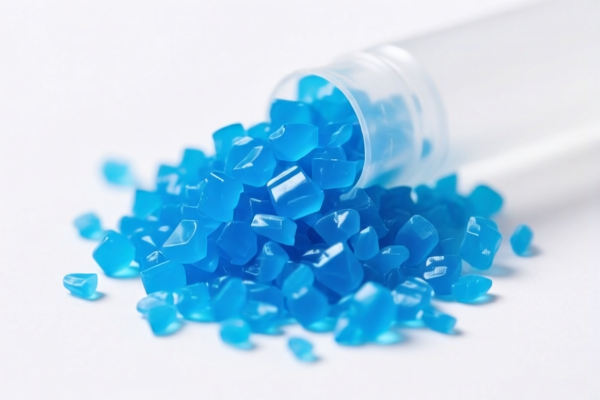

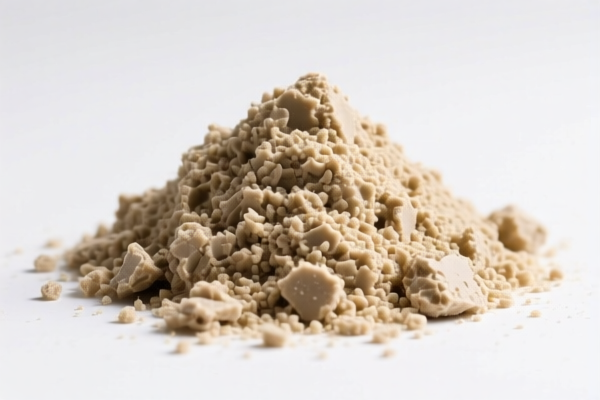
AI Analysis
🧪 Polyisobutylene (PIB) Raw Material for Adhesives
🌐 HS Code Reference & Customs Clearance Guide | 2026 Latest Tariff Analysis | Professional Clearance Strategy
📌 Part 1: Product Definition & Classification: What is "Polyisobutylene"?
Polyisobutylene (PIB), often referred to as "Butyl Rubber" in its polymerized form, is a synthetic rubber with a simple backbone consisting of only carbon and hydrogen atoms. In the context of adhesives, sealants, and coatings, it is primarily classified as a polymer of isobutylene with a small amount of isoprene.
In international trade, the classification depends heavily on its physical state (primary shape vs. other forms) and chemical composition. It is generally treated as a synthetic plastic material or a modified polymer, falling under Chapter 39 of the Harmonized System.
⚠️ Key Distinction for Customs:
- Primary Forms (Raw Resin): Powder, granules, flakes, or liquid forms that have not been processed into finished articles. These fall under Heading 3902.
- Other Forms (Modified/Resins): If the PIB is compounded, blended with other substances, or classified as a specific type of petroleum resin, it may fall under Heading 3911.
- Application Clue: Even if destined for "adhesives," the raw polymer itself is classified based on its chemical nature, not its end-use.
📦 Part 2: HS Code Classification Details (2026 Latest Tariff Authority Comparison)
| HS Code | Product Description | Applicable Scenario | Primary Shape? | Chemical Category |
|---|---|---|---|---|
3902.20.50.00 |
Polymers of isobutylene, Primary Form | Raw granules/powder for industrial blending | ✅ Yes | Isobutylene Polymer |
3902.20.10.00 |
Polymers of isobutylene, Primary Shape | Standard raw material supply chain | ✅ Yes | Isobutylene Polymer |
3911.90.10.00 |
PIB, Petroleum Resin/Polyolefin Class | Classified as an elastomer/resin derivative | ❌ No (Modified) | Modified Polymer/Elastomer |
3911.90.15.00 |
PIB, Hydrocarbon Polymer | Classified as petroleum resin/other modified polymers | ❌ No (Modified) | Hydrocarbon Polymer |
🔍 Crucial Reminder:
-3902Series: Used when the PIB is in its basic, unmodified chemical state (primary shape).
-3911Series: Used when the PIB is considered a "petroleum resin" or a "modified polymer" (e.g., specific grades treated as resins for adhesive formulation).
- Misclassification Risk: Declaring a raw resin as "petroleum resin" (3911) when it is chemically a primary polymer (3902) can lead to duty discrepancies and customs audits.
💰 Part 3: 2026 Latest Tariff Rate Breakdown (Including Surtaxes & Policy Add-ons)
✅ Applicable Country: United States (US)
✅ Country of Origin: China (CN)
✅ Effective Date: November 10, 2025 (and subsequent imports)
🎯 1. 3902.20.50.00 — Polymers of Isobutylene, Primary Form
| Item | Content |
|---|---|
| Base Tariff Rate | 6.5% (ad valorem) |
| Section 301 Surtax | +25.0% (From USITC Footnote 9903.88.01) |
| Section 122 Tariff | +10.0% (Specific US Trade Policy Surtax) |
| Total Effective Rate | 41.5% |
| Calculation Basis | CIF Value × 41.5% |
| De Minimis Exemption | ❌ Not Applicable (deny_de_minimis) |
| Legal Pathway | Base: 6.5% → Sec 301: +25% → Sec 122: +10% |
📌 Explanation:
- The 6.5% base rate is the standard Most Favored Nation (MFN) rate for isobutylene polymers.
- The 25% is the standard Section 301 tariff on Chinese imports.
- The 10% is the additional Section 122 tariff (or similar recent policy surcharge) applied to this category.
- Total: 41.5%. This is a high-cost entry. You must factor this into your landed cost immediately.
🎯 2. 3902.20.10.00 — Polymers of Isobutylene, Primary Shape
| Item | Content |
|---|---|
| Base Tariff Rate | 0.0% |
| Section 301 Surtax | +25.0% |
| Section 122 Tariff | +10.0% |
| Total Effective Rate | 35.0% |
| Calculation Basis | CIF Value × 35.0% |
| De Minimis Exemption | ❌ Not Applicable |
| Legal Pathway | Base: 0.0% → Sec 301: +25% → Sec 122: +10% |
📌 Note:
- While the base rate is 0%, the surtaxes remain identical (35% total).
- The difference between3902.20.50.00and3902.20.10.00lies in the specific sub-heading definition of "primary form" vs "primary shape," but both attract the same punitive surcharges.
🎯 3. 3911.90.10.00 — PIB, Petroleum Resin/Elastomer Class
| Item | Content |
|---|---|
| Base Tariff Rate | 0.0% |
| Section 301 Surtax | +25.0% |
| Section 122 Tariff | +10.0% |
| Total Effective Rate | 35.0% |
| Calculation Basis | CIF Value × 35.0% |
| De Minimis Exemption | ❌ Not Applicable |
| Legal Pathway | Base: 0.0% → Sec 301: +25% → Sec 122: +10% |
📌 Explanation:
- Classified under Chapter 3911 (Petroleum Resins/Synthetic Polymers).
- Even though the base is 0%, the 35% surcharge still applies due to the Chinese origin.
- This category is often used for PIBs that are chemically modified or blended specifically for resin-like applications.
🎯 4. 3911.90.15.00 — PIB, Hydrocarbon Polymer/Petroleum Resin
| Item | Content |
|---|---|
| Base Tariff Rate | 0.0% |
| Section 301 Surtax | +25.0% |
| > Section 122 Tariff | +10.0% |
| Total Effective Rate | 35.0% |
| Calculation Basis | CIF Value × 35.0% |
| De Minimis Exemption | ❌ Not Applicable |
| Legal Pathway | Base: 0.0% → Sec 301: +25% → Sec 122: +10% |
📌 Note:
- This is the most generic "other hydrocarbon polymer" category.
- Like3911.90.10.00, it benefits from a 0% base rate but incurs the 35% total duty.
- Use this only if the product cannot be strictly defined as a standard "isobutylene polymer" under 3902.
🛠️ Part 4: Customs Clearance Practical Advice (实战避坑指南)
✅ 1. Required Documentation Checklist (Non-Negotiable)
| Document | Required | Explanation |
|---|---|---|
| ✅ Product Specification Sheet | ✔️ | Must detail molecular weight, vinyl content, and physical state (liquid/powder). |
| ✅ Formula/Composition List | ✔️ | Critical for distinguishing between "Primary Polymer" (3902) and "Modified Resin" (3911). |
| ✅ Photos (Clear Labeling) | ✔️ | Show bulk packaging, labeling, and any safety data sheets (SDS). |
| ✅ Commercial Invoice | ✔️ | Must explicitly state "Polyisobutylene, Chemical Formula C4H8n, Primary Polymer." |
| ✅ Certificate of Origin (CO) | ✔️ | Proof of Chinese origin triggers the 35%-41.5% duty. |
| ✅ Packaging List | ✔️ | Detail net/gross weight and container type. |
✅ 2. Declaration Tips (Key Mantra)
🔥 “Be Precise, Avoid Ambiguity: ‘Resin’ vs. ‘Polymer’ is the Duty Divider!”
| Scenario | Correct Declaration | Wrong Declaration |
|---|---|---|
| Raw Granules/Powder | 3902.20.10.00 or 3902.20.50.00 |
“Adhesive Raw Material” → High risk of audit |
| Blended/Modified PIB | 3911.90.10.00 or 3911.90.15.00 |
“Pure Isobutylene” → Misclassification |
| Liquid PIB (Low Viscosity) | 3902.20.10.00 (If primary) |
“Chemical Solvent” → Wrong Chapter |
| Finished Adhesive Sealant | Not Covered Here (Likely 3506 or 4009) | Using 39xx codes for finished glue → Illegal |
📌 Critical Warning:
- Do NOT declare as "Adhesive" if it is the raw polymer. Raw polymers are chemicals; finished adhesives are industrial products.
- Ensure the Chemical Identity matches the HS Code. If it’s a pure polymer, use 3902. If it’s a compounded resin, use 3911.
✅ 3. Special Case Handling
| Situation | Handling Advice |
|---|---|
| PIB in Drum/Barrel | Declare as "Primary Form." Ensure drums are UN-certified if liquid. |
| Blended with Solvents | If solvents are >50% by weight, it might fall under Chapter 38 (Chemical Products) or 3506 (Prepared Adhesives). Consult a broker. |
| OEM/Private Label | Provide the supplier’s technical data sheet. Private labeling does not change the HS code. |
| High Molecular Weight (Butyl Rubber) | Still 3902.20 if it’s polymerized isobutylene-isoprene. Do not confuse with Butyl Latex (3902.90). |
🌍 Part 5: Global Market Clearance Comparison (2026 Latest)
| Country/Region | Recommended HS Code | Base Duty | Surtax (China) | Total Estimate | Notes |
|---|---|---|---|---|---|
| 🇺🇸 USA | 3902.20.10.00 |
0% | +35% | 35.0% | High cost. Section 301 + 122 apply. |
| 🇺🇸 USA | 3902.20.50.00 |
6.5% | +35% | 41.5% | Higher base, same surtax. |
| 🇨🇳 China | 3902.20.10.00 |
0% | 0% | 0% | No surtax on domestic/China-origin. |
| 🇪🇺 EU | 3902.20.10 |
0% | 0% | 0% | No major anti-dumping on PIB. |
| 🇮🇳 India | 3902.20.10 |
0-7.5% | 0% | ~7.5% | Check IGST & Custom Duty. |
📌 Conclusion:
- USA is the most expensive market for Chinese-sourced PIB due to the 35-41.5% effective duty.
- EU and China have significantly lower barriers.
- If possible, explore supply chain diversification (e.g., sourcing from South Korea or Germany) to avoid US surcharges.
📌 Part 6: Common Mistakes & Pitfalls (Lessons Learned)
❌ Mistake 1: Declaring "Adhesive" instead of "Polyisobutylene Polymer"
👉 Consequence: Wrong HS Code, potential fraud allegation, or delayed clearance.
👉 Correction: Declare the chemical composition accurately.
❌ Mistake 2: Ignoring the "Section 122" tariff
👉 Consequence: Underpayment of duties by 10% → Penalties + Interest.
👉 Correction: Always add the 10% surcharge to your cost model for US imports from China.
❌ Mistake 3: Confusing "Primary Form" with "Finished Article"
👉 Consequence: Misclassification between 3902/3911 and 3506/4009.
👉 Correction: If it’s raw polymer in bags/drums, it’s 39xx. If it’s a tube of sealant, it’s 4009/3506.
✅ Correct Declaration Example:
“POLYISOBUTYLENE, PRIMARY POLYMER, GRADE XYZ, 25KG DRUM, CHEMICAL NAME: 1-METHYL-1-BUTENE POLYMER, ORIGIN: CHINA”
🎯 Part 7: Conclusion: Precision in Classification Saves Money!
🎯 Remember the Mantra:
🔹 “Primary Shape is 3902, Resin is 3911, US Duty is 35-41%, Don’t Guess!”
🔹 “Raw Polymer ≠ Adhesive, Declare Chemically, Avoid Penalty!”
📌 Pro Tip:
- If your PIB is originating from Vietnam, Malaysia, or South Korea, you may avoid the 25-35% surtaxes, reducing the duty to near 0-7.5%.
- Consider Advance Ruling (Ruling Letter) from US Customs (CBP) if you are importing large volumes. This locks in the HS code and duty rate for 5 years, providing cost certainty.
📣 Immediate Action:
📞 Contact a Licensed Customs Broker + Provide SDS + Apply for CBP Ruling
🚀 Secure Your Supply Chain, Optimize Your Landed Cost, and Clear Customs Smoothly!
✨ Professional Clearance Starts with Accurate Classification!
💼 Every Percentage Point of Duty is a Point of Profit!
Customer Reviews
About HS Code Classification
The Harmonized System (HS) is an internationally standardized nomenclature developed by the World Customs Organization (WCO) to classify traded products. Over 200 countries use the HS system as the basis for customs tariffs, trade statistics, and import/export regulations.
Each HS code follows a hierarchical structure:
- Chapter (2 digits) — Broad category of goods (e.g., Chapter 84: Machinery and Mechanical Appliances)
- Heading (4 digits) — More specific grouping within the chapter
- Subheading (6 digits) — Internationally standardized breakdown, used by all WCO member countries
- National subdivisions (8-10 digits) — Country-specific extensions for further classification, such as US HTSUS 10-digit codes
Correct HS code classification is essential for smooth customs clearance, accurate duty payment, and compliance with trade regulations. Misclassification can lead to customs delays, overpayment of duties, or penalties.
When importing from CN to US, the applicable tariff rates may include:
- Most-Favored-Nation (MFN) rate — The standard duty rate applied to WTO members
- General rate — Applied to countries without trade agreements
- Trade remedy duties — Additional tariffs such as Section 301 (anti-dumping), Section 232 (national security), or countervailing duties
The information provided on this page is for reference purposes only. For official classification, please consult with your local customs authority or a licensed customs broker.