Polylactic Acid Granules
CN → US| HS Code | Tariff Rate | Origin | Destination | Doc |
|---|---|---|---|---|
| 3907700000 | 41.5% | CN | US | Official Doc |
Product Images
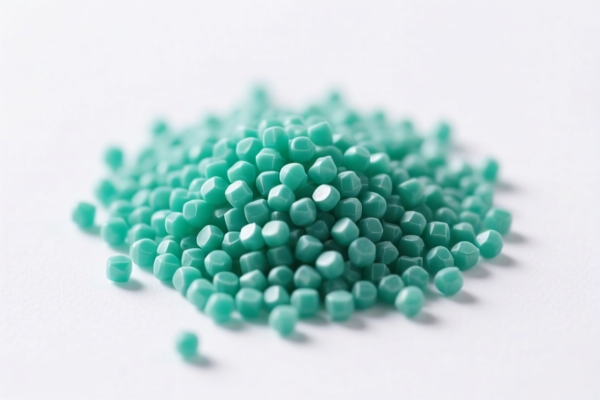
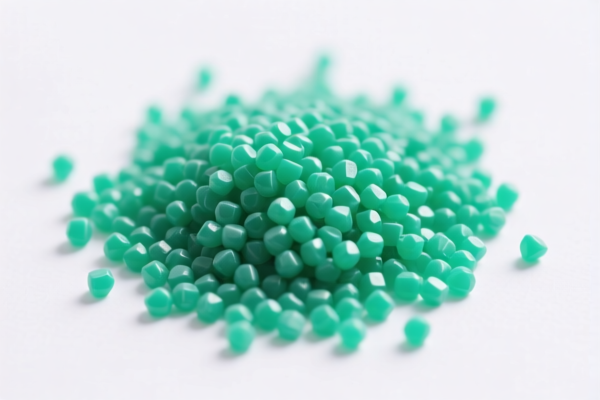
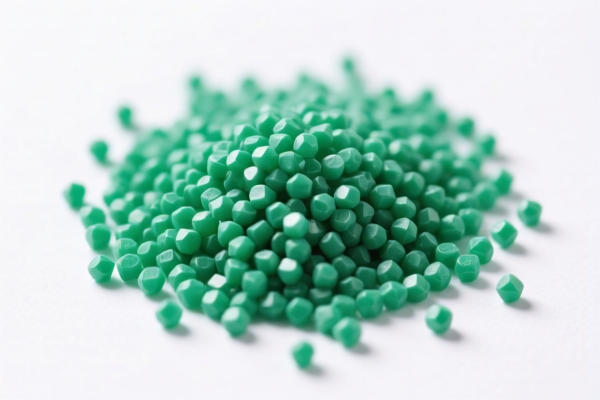
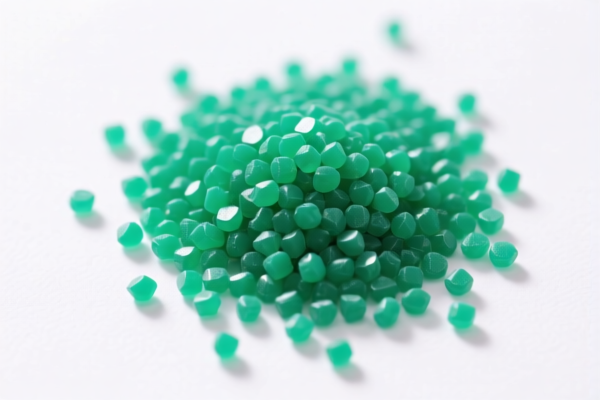
AI Analysis
🧪 Polylactic Acid (PLA) Granules – Primary Form
📦 HS Code 3907.70.00.00 | Lactic Acid Polymer | High-Tax Alert
🌐 HS Code Classification & Clearance Guide | 2026 Latest Tariff Analysis | Professional Customs Strategy
📌 One. Product Definition & Classification: Do You Really Understand "PLA Granules"?
Polylactic Acid (PLA) is a biodegradable and bioactive thermoplastic aliphatic polyester derived from renewable resources, such as corn starch, tapioca roots, chips or starch, or sugar cane. In international trade, when PLA is in the form of granules, pellets, or powders intended for primary processing (extrusion, injection molding, 3D printing, etc.), it falls under Chapter 39: Plastics and Articles Thereof.
Key Distinction: - Primary Forms (Granules/Powders): Unprocessed polymer resins → Classified under 3907.70.00.00. - Finished Articles (Filaments/Parts): If already shaped into filaments for 3D printing or manufactured into objects, classification may shift to Chapter 90 or 3926, etc. - Composite Materials: If blended with other plastics or fillers, classification depends on the essential character of the blend.
⚠️ Critical Note:
- The data provided specifically refers to "Poly(lactic acid)" in primary forms.
- This excludes PLA-based finished goods, composites, or blends where PLA is not the primary component.
📦 Two. HS Code Classification Details (2026 Latest Tariff Authority)
| HS Code | Product Description | Application Scenario | Physical Form |
|---|---|---|---|
3907.70.00.00 |
Poly(lactic acid) in primary forms | Biodegradable packaging, 3D printing filaments (raw), medical sutures (raw), cutlery (molding prep) | Granules, Pellets, Powder, Liquid Resin |
🔍 Key Reminder:
- Only raw PLA polymer in primary forms is classified under 3907.70.00.00.
- If the product is blended (e.g., PLA + PBAT), it may still be classified under 3907.70.00.00 if PLA is the principal material, but documentation must prove this.
- Finished PLA products (e.g., a PLA cup) are NOT covered here; they fall under Chapter 3926 or 9018, etc.
💰 Three. 2026 Latest Tariff Rate Details (Including Surcharges, Policy Add-ons)
✅ Applicable Country: United States (US)
✅ Country of Origin: China (CN)
✅ Effective Time: 2025/2026 (Based on provided data)
🎯 1. 3907.70.00.00 —— Poly(lactic acid), Primary Forms
| Item | Content |
|---|---|
| Base Tariff Rate | 6.5% (ad valorem) |
| Section 301 Surcharge | +25.0% (Additional Duty) |
| Total Tariff Rate | 31.5% |
| Tax Calculation | CIF Value × 31.5% |
| De Minimis Eligibility | ❌ Not Eligible (High tariff item) |
| Legal Basis Path | HTSUS:3907.70.00.00 → Section 301 Footnote → IEEPA/Trade Act |
📌 Explanation:
- The 6.5% base rate is the standard Most Favored Nation (MFN) rate for polyacetals and other polyethers in primary forms.
- The 25.0% additional duty is imposed under Section 301 of the Trade Act of 1974, targeting specific Chinese-origin goods, including certain plastics and chemical products.
- Total Tax: 31.5% is a significant cost factor. Importers must calculate this into their landed cost.
- No de minimis exemption: Unlike low-value shipments, this high-rate item does not benefit from the $800 de minimis rule (Form 8611/7501 exceptions still apply, but tax must be paid).
🛠️ Four. Customs Clearance Practical Advice (Real-World Pitfall Avoidance)
✅ 1. Documentation Checklist (Essential)
| Document | Required | Notes |
|---|---|---|
| ✅ Product Specification Sheet | ✔️ | Must state: "Poly(lactic acid), Primary Form, Granules/Pellets" |
| ✅ Material Safety Data Sheet (MSDS/SDS) | ✔️ | Confirms chemical composition and hazard class (usually non-hazardous) |
| ✅ Certificate of Origin (CO) | ✔️ | Proof of Chinese origin is critical for Section 301 assessment |
| ✅ Commercial Invoice | ✔️ | Clearly describe as "PLA Resin Granules, HS 3907.70.00.00" |
| ✅ Bill of Lading/Air Waybill | ✔️ | Ensure packaging details match invoice |
| ✅ Importer Security Filing (ISF) | ✔️ | File 10 days prior to arrival for ocean freight |
✅ 2. Declaration Tips (Key Mantras)
🔥 "Raw Resin, Not Finished Goods; PLA Primary Form, HS 3907.70!"
| Scenario | Correct Declaration | Wrong Practice |
|---|---|---|
| PLA Granules for 3D Printing | 3907.70.00.00 + "Raw Resin" |
Declaring as "3D Printing Filament" (may be misclassified) |
| PLA Mixed with Starch | 3907.70.00.00 (if PLA is principal) |
Declaring as "Composite Plastic" without proof |
| Finished PLA Cups | 3926.90.98.90 or similar |
Declaring as 3907.70.00.00 → Customs Seizure Risk |
| PLA Biodegradable Bags | 3926.90.98.90 |
Declaring as 3907.70.00.00 → Incorrect Classification |
✅ 3. Special Case Handling
| Situation | Handling Advice |
|---|---|
| Blended PLA (e.g., PLA/PBAT) | Provide blend ratio documentation. If PLA >50% by weight, still likely 3907.70.00.00. |
| Color Masterbatch in PLA | If masterbatch is pre-dispersed in granules, still 3907.70.00.00 if PLA is base. |
| Food-Grade PLA | Ensure FDA compliance documentation is available for food-contact applications. |
| Medical-Grade PLA | Provide 510(k) clearance or ISO 13485 certification if used in medical devices. |
🌍 Five. Global Market Comparison (2026 Latest)
| Country/Region | Recommended HS Code | Tariff Rate | Certification Requirements | Notes |
|---|---|---|---|---|
| 🇺🇸 United States | 3907.70.00.00 |
31.5% (China) | FDA (if food contact), RoHS | High tax due to Section 301 |
| 🇨🇳 China | 3907.70.00.00 |
0% (Import) | CCC (if applicable) | No additional surcharges |
| 🇪🇺 European Union | 3907.70.00.00 |
6.5% | REACH, RoHS, Biodegradability Cert | No Section 301 equivalent |
| 🇬🇧 United Kingdom | 3907.70.00.00 |
6.5% | UKCA, REACH (UK) | Post-Brexit rules apply |
| 🇯🇵 Japan | 3907.70.00.00 |
6.0% | FSC, JIS | Moderate tariff |
📌 Conclusion:
- The US imposes the highest effective tax (31.5%) on Chinese-origin PLA granules due to Section 301.
- EU and UK rates are lower (6.5%) but require strict compliance with environmental certifications (REACH, Biodegradability).
- China itself has 0% import duty on PLA, making it a hub for raw material storage or re-export.
📌 Six. Common Mistakes & Pitfall Guide (Blood Lessons)
❌ Mistake 1: Declaring PLA granules as "Biodegradable Packaging"
👉 Consequence: Customs may classify as finished goods → Higher duty or seizure.
✅ Fix: Declare as "PLA Resin, Primary Form."
❌ Mistake 2: Ignoring Section 301 for Chinese-origin PLA
👉 Consequence: Underpayment of 25% surcharge → Penalties + Interest.
✅ Fix: Ensure CO proves Chinese origin and apply 31.5% total rate.
❌ Mistake 3: Confusing PLA with other Polyesters (e.g., PET, PBT)
👉 Consequence: Wrong HS Code (e.g., 3907.60 for PET) → Classification error.
✅ Fix: Provide chemical analysis or supplier certificate stating "Poly(lactic acid)."
❌ Mistake 4: Failing to declare Food-Grade Status
👉 Consequence: FDA rejection if intended for food contact.
✅ Fix: Include FDA compliance statement and test reports.
🎯 Seven. Conclusion: Professional Declaration Saves Money!
🎯 Remember the Mantra:
🔹 "Raw PLA Resin, HS 3907.70.00.00"
🔹 "31.5% Total Tax for US-China Trade"
🔹 "Finished Goods ≠ Primary Forms"
📌 Tips:
- If your PLA is non-Chinese (e.g., from US, EU, India), check for 0% or reduced tariffs under free trade agreements.
- For US imports, consider tariff engineering or supply chain diversification to mitigate the 25% surcharge.
- Always retain supplier documentation to prove the chemical nature of the product.
📣 Immediate Action:
📞 Consult a licensed customs broker
📄 Request MSDS and Certificate of Origin
🚀 Ensure accurate HS Code declaration to avoid delays and penalties!
✨ Professional Customs Clearance Starts with Accurate Classification!
💼 Every Percent of Tax Matters!
Customer Reviews
About HS Code Classification
The Harmonized System (HS) is an internationally standardized nomenclature developed by the World Customs Organization (WCO) to classify traded products. Over 200 countries use the HS system as the basis for customs tariffs, trade statistics, and import/export regulations.
Each HS code follows a hierarchical structure:
- Chapter (2 digits) — Broad category of goods (e.g., Chapter 84: Machinery and Mechanical Appliances)
- Heading (4 digits) — More specific grouping within the chapter
- Subheading (6 digits) — Internationally standardized breakdown, used by all WCO member countries
- National subdivisions (8-10 digits) — Country-specific extensions for further classification, such as US HTSUS 10-digit codes
Correct HS code classification is essential for smooth customs clearance, accurate duty payment, and compliance with trade regulations. Misclassification can lead to customs delays, overpayment of duties, or penalties.
When importing from CN to US, the applicable tariff rates may include:
- Most-Favored-Nation (MFN) rate — The standard duty rate applied to WTO members
- General rate — Applied to countries without trade agreements
- Trade remedy duties — Additional tariffs such as Section 301 (anti-dumping), Section 232 (national security), or countervailing duties
The information provided on this page is for reference purposes only. For official classification, please consult with your local customs authority or a licensed customs broker.