Polylactic Acid Resin Custom Raw Material
CN → US| HS Code | Tariff Rate | Origin | Destination | Doc |
|---|---|---|---|---|
| 3907700000 | 41.5% | CN | US | Official Doc |
| 3907995050 | 41.5% | CN | US | Official Doc |
Product Images
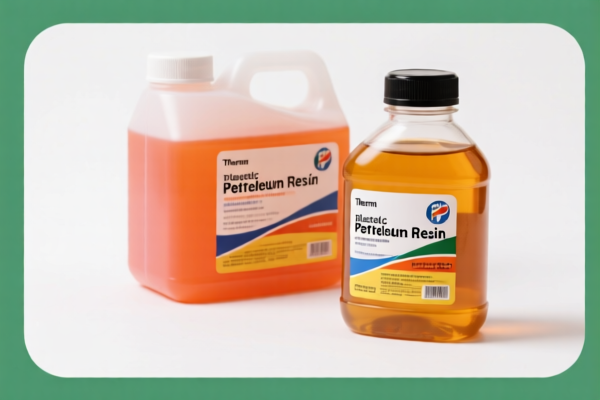
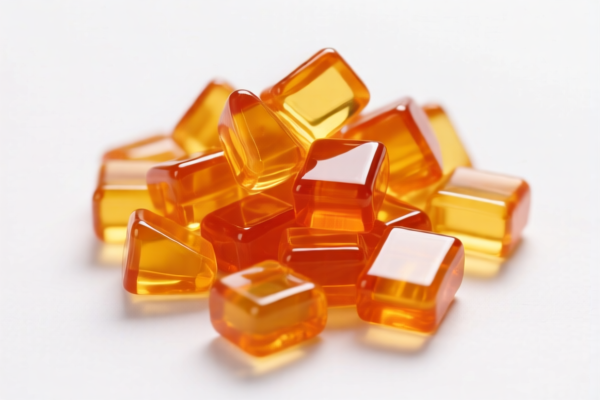
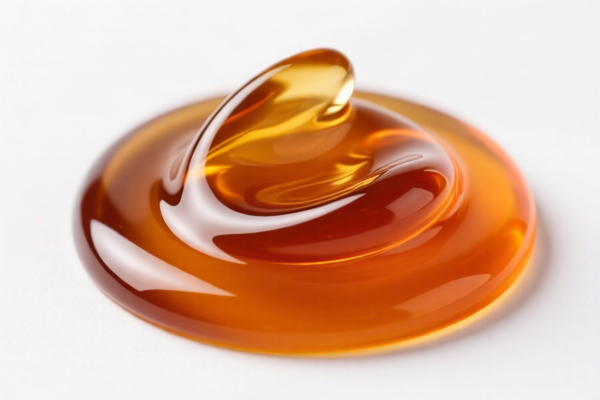
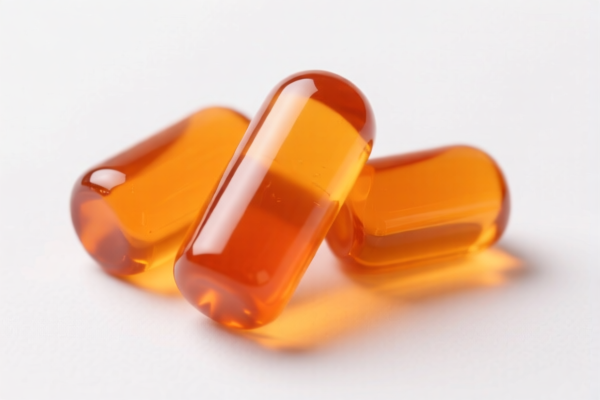
AI Analysis
🧪 Polylactic Acid (PLA) Resin Custom Raw Material
🌐 HS Code Reference & Customs Clearance Guide | 2026 Latest Tariff Analysis | Professional Compliance Strategy
📌 I. Product Definition & Classification: What Exactly is "PLA Resin"?
Polylactic Acid (PLA) is a biodegradable, bioactive thermoplastic aliphatic polyester derived from renewable resources, such as corn starch, tapioca roots, chips, or sugar cane. In international trade, it is classified under Chapter 39: Plastics and Articles Thereof.
Specifically, PLA falls under Heading 3907: "Polyacetals, other polyethers and epoxide resins, in primary forms; polycarbonates, alkyd resins, polyallyl esters and other polyesters, in primary forms."
⚠️ Critical Distinction:
- If the material is PLA in primary forms (granules, powder, flakes for molding), it belongs to 3907.70.00.00.
- If the material is a non-PLA polyester (e.g., PET, PBT, or other synthetic polyesters) in primary forms, it may fall under 3907.99.50.50.
- Note: The term "Custom Raw Material" implies it is in primary form (granules/powder) ready for manufacturing, NOT finished plastic articles.
📦 II. HS Code Classification Details (2026 Latest Tariff Authority)
Based on the provided data, here are the two most relevant HS Codes for raw polymer materials:
| HS Code | Product Description | Applicable Scenario | Key Classification Criteria |
|---|---|---|---|
3907.70.00.00 |
Poly(lactic acid) | Biodegradable PLA resins, corn-starch derived, in primary forms (pellets/granules) | ✅ Specifically PLA |
3907.99.50.50 |
Other polyesters: Other: Other | Non-PLA synthetic polyesters (e.g., PET, PBT, unsaturated polyesters) in primary forms | ❌ NOT PLA (Generic Polyester) |
🔍 Key Insight:
- If your raw material is truly Polylactic Acid (PLA): You MUST use3907.70.00.00. This is the specific subheading for PLA.
- If your material is a different polyester: You may use3907.99.50.50.
- Error Risk: Misdeclaring PLA as a generic polyester (3907.99) can lead to customs delays or reclassification, though the tariff rate in this specific dataset is identical. However, regulatory compliance (e.g., biodegradability certifications) may differ.
💰 III. 2026 Latest Tariff Rate Breakdown (Detailed Tax Clause Analysis)
✅ Applicable Country: United States (US)
✅ Origin: China (CN)
✅ Effective Time: Current rates as per provided data
🎯 1. 3907.70.00.00 — Polylactic Acid (PLA)
| Item | Content |
|---|---|
| Base Duty Rate | 6.5% (Ad Valorem) |
| Additional Duty (Section 301) | +25.0% (Retaliatory Tariffs on Chinese Goods) |
| Total Tax Rate | 31.5% |
| Tax Calculation | CIF Value × 31.5% |
| Exemption Status | ❌ No De Minimis Exemption (For shipments >$800) |
| Legal Basis | HTSUS 3907.70 + USITC Section 301 Footnotes |
📌 Explanation:
- The 6.5% is the standard Most Favored Nation (MFN) duty for polyesters.
- The 25% is the additional tariff imposed under Section 301 of the Trade Act of 1974 on goods originating in China.
- Total: 31.5%. This is a significant cost burden that must be factored into your pricing strategy.
🎯 2. 3907.99.50.50 — Other Polyesters
| Item | Content |
|---|---|
| Base Duty Rate | 6.5% (Ad Valorem) |
| Additional Duty (Section 301) | +25.0% (Retaliatory Tariffs on Chinese Goods) |
| Total Tax Rate | 31.5% |
| Tax Calculation | CIF Value × 31.5% |
| Exemption Status | ❌ No De Minimis Exemption |
| Legal Basis | HTSUS 3907.99 + USITC Section 301 Footnotes |
📌 Note:
- While the HS Code differs, the tariff rate is identical (31.5%).
- Therefore, the cost impact is the same, but the regulatory documentation may differ (e.g., PLA may require biodegradability claims, while generic polyester may not).
🛠️ IV. Customs Clearance Practical Advice (Avoid Pitfalls)
✅ 1. Required Documentation Checklist
| Document | Required | Purpose |
|---|---|---|
| Commercial Invoice | ✔️ | Must clearly state "Polylactic Acid (PLA)" or "Polyester Resin" and HS Code. |
| Packing List | ✔️ | Detail weight, quantity, and packaging type. |
| Product Specification Sheet | ✔️ | Include Melt Flow Index (MFI), molecular weight, and chemical composition. |
| Material Safety Data Sheet (MSDS/SDS) | ✔️ | Required for chemical transport and customs safety review. |
| Certificate of Origin (CO) | ✔️ | Essential for proving Chinese origin (to confirm applicability of Section 301). |
| Biodegradability Certification (If PLA) | ✔️ | Optional but recommended for PLA to prove its classification under 3907.70. |
✅ 2. Declaration Best Practices
🔥 “Be Specific, Avoid ‘Generic’ Terms”
| Scenario | Recommended Declaration | Risk if Incorrect |
|---|---|---|
| True PLA Resin | Polylactic Acid (PLA) Resin, Granules, Biodegradable |
Misclassification as generic polyester may raise suspicions of fraud if bio-tests are performed. |
| Non-PLA Polyester | Polyester Resin (e.g., PET), Primary Forms |
Over-classifying to 3907.70 (PLA) is incorrect and may lead to penalties. |
| Custom Blend | Polymer Blend, Primary Forms, Chemical Composition: XX% PLA, YY% Additive |
Must provide detailed composition to justify HS Code. |
✅ 3. Special Considerations for "Custom Raw Material"
- Blends/Mixtures: If the "custom" material is a blend of PLA and other polymers, determine the essential character or principal material. If PLA is the main component, it likely stays under 3907.70. If it’s a minor component, it might fall under 3907.99.
- Packaging: Ensure the material is in primary forms (granules, powders, flakes). If it is pre-formed into semi-finished products (e.g., preforms for bottles), it may fall under Chapter 39, Part II (articles), with different duties.
- Labeling: Clearly mark bags with "Made in China" to ensure proper Section 301 duty assessment. Hiding origin can lead to severe penalties.
🌍 V. Global Market Comparison (2026 Snapshot)
| Country/Region | HS Code | Base Duty | Additional Duty | Total Duty (China Origin) | Notes |
|---|---|---|---|---|---|
| 🇺🇸 United States | 3907.70 / 3907.99 |
6.5% | +25% | 31.5% | High tariff burden; Section 301 applies. |
| 🇨🇳 China (Import) | 3907.70 |
~6.5% | 0% | ~6.5% | Lower duty; focus on bio-material standards. |
| 🇪🇺 European Union | 3907.70 |
6.5% | 0% | 6.5% | No Section 301 equivalent; focus on REACH/Bio-plastic regulations. |
| 🇯🇵 Japan | 3907.70 |
5.0% | 0% | 5.0% | Generally low tariffs; focus on JIS standards. |
| 🇮🇳 India | 3907.70 |
7.5% | 0% | 7.5% | Check Anti-Dumping duties if applicable. |
📌 Conclusion:
- The US market is the most expensive due to the 25% Section 301 tariff.
- If possible, consider diversifying supply chains to countries not subject to Section 301 (e.g., Vietnam, India, Thailand) to reduce duties, though this may affect cost vs. quality.
📌 VI. Common Mistakes & Pitfalls (Lessons Learned)
❌ Mistake 1: Declaring PLA as "Plastic Granules" without specifying "PLA".
👉 Consequence: Customs may ask for chemical analysis, delaying clearance by weeks. If it turns out to be PLA, you must pay the correct duty, but the delay increases storage costs.
❌ Mistake 2: Ignoring Section 301 eligibility.
👉 Consequence: If you believe your product is excluded from Section 301 (e.g., via HSN Exclusion List), you must provide the Exclusion Number. If you don’t, you pay 31.5%. If you incorrectly claim exclusion, you face penalties and back taxes.
❌ Mistake 3: Confusing "Primary Forms" with "Finished Articles".
👉 Consequence: PLA straws or bags are not HS 3907; they are Chapter 39 articles (e.g., 3926.90). Misclassifying raw material as finished goods can lead to incorrect duty assessments.
✅ Correct Practice:
"Polylactic Acid (PLA) Resin, Biodegradable, Granules, Primary Form, Made in China, HS Code 3907.70.00.00"
🎯 VII. Conclusion: Professional Declaration for Cost Efficiency
🎯 Key Takeaways:
🔹 HS Code:
3907.70.00.00for PLA,3907.99.50.50for other polyesters.
🔹 Total Duty (US): 31.5% (6.5% Base + 25% Section 301).
🔹 Documentation: Be precise with chemical names and provide SDS/MSDS.
🔹 Strategy: Factor the 25% tariff into your pricing or explore supply chain diversification.
📌 Pro Tip:
If your PLA is sourced from a country other than China (e.g., NatureWorks USA, Total Corbion Netherlands), you may avoid the 25% Section 301 tariff, reducing the total duty to 6.5%. Always verify the Country of Origin on the production certificate.
📣 Immediate Action:
📞 Consult with your customs broker to confirm HS Code based on exact chemical composition.
📄 Request a Section 301 Exclusion if your specific PLA product is listed (rare, but possible).
📦 Ensure all shipping documents clearly state "Made in China" to avoid origin fraud allegations.
✨ Professional Customs Clearance Starts with Accurate Classification!
💼 Every Percentage Point in Duty Matters – Optimize Your Supply Chain!
Customer Reviews
About HS Code Classification
The Harmonized System (HS) is an internationally standardized nomenclature developed by the World Customs Organization (WCO) to classify traded products. Over 200 countries use the HS system as the basis for customs tariffs, trade statistics, and import/export regulations.
Each HS code follows a hierarchical structure:
- Chapter (2 digits) — Broad category of goods (e.g., Chapter 84: Machinery and Mechanical Appliances)
- Heading (4 digits) — More specific grouping within the chapter
- Subheading (6 digits) — Internationally standardized breakdown, used by all WCO member countries
- National subdivisions (8-10 digits) — Country-specific extensions for further classification, such as US HTSUS 10-digit codes
Correct HS code classification is essential for smooth customs clearance, accurate duty payment, and compliance with trade regulations. Misclassification can lead to customs delays, overpayment of duties, or penalties.
When importing from CN to US, the applicable tariff rates may include:
- Most-Favored-Nation (MFN) rate — The standard duty rate applied to WTO members
- General rate — Applied to countries without trade agreements
- Trade remedy duties — Additional tariffs such as Section 301 (anti-dumping), Section 232 (national security), or countervailing duties
The information provided on this page is for reference purposes only. For official classification, please consult with your local customs authority or a licensed customs broker.