Polymer Clay Set
CN → US| HS Code | Tariff Rate | Origin | Destination | Doc |
|---|---|---|---|---|
| 3407004000 | 10.0% | CN | US | Official Doc |
| 3407002000 | 10.0% | CN | US | Official Doc |
| 9503000073 | 10.0% | CN | US | Official Doc |
| 9503000071 | 10.0% | CN | US | Official Doc |
Product Images
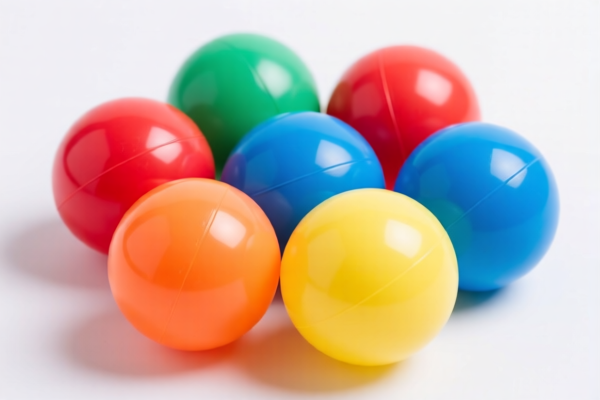
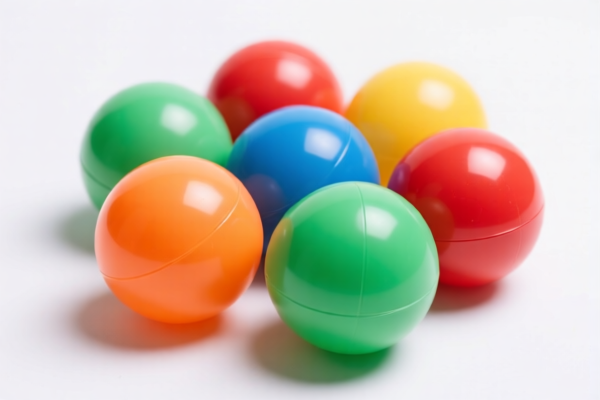
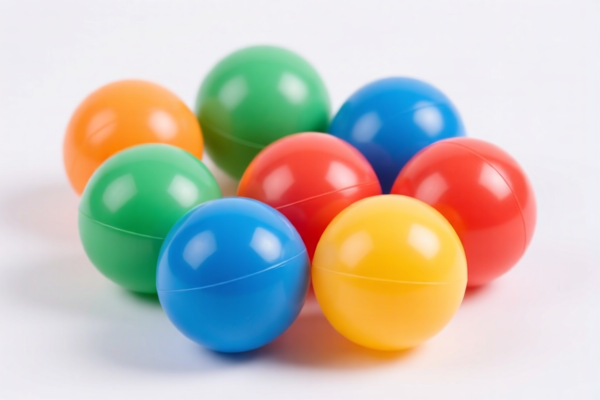
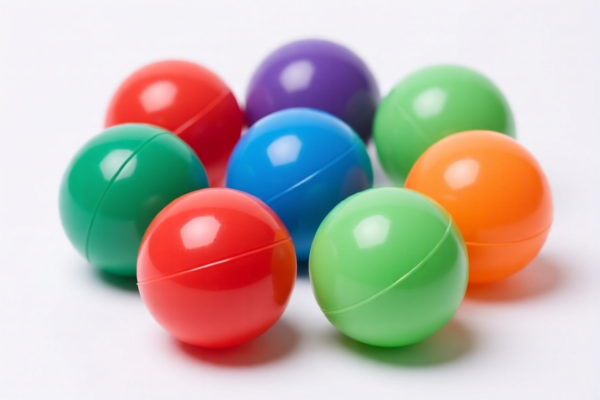
AI Analysis
🎨 Polymer Clay Set (Modeling Clay for Kids/Crafts)
🌐 HS Code Reference & Customs Clearance Guide | 2026 Latest Tariff Analysis | Professional Clearance Strategy
📌 I. Product Definition & Classification: Do You Really Understand "Polymer Clay"?
Polymer Clay Sets are widely used in children's handicrafts, art education, and DIY modeling. They typically consist of colored clay bars or dough packaged in retail boxes. In international trade, the classification depends heavily on whether the product is viewed as a "modeling paste/compound" (chemical/material category) or a "toy/model kit" (entertainment category).
Key Distinction Points: * If classified as "Modeling Paste/Paste": It falls under Heading 3407. This view emphasizes the material nature (plasticine, prepared clay, for modeling purposes). * If classified as "Toy/Model Kit": It falls under Heading 9503. This view emphasizes the function/usage (for children's play, artistic creation, or hobby modeling).
⚠️ Critical Note:
- If the packaging explicitly states "For Children" or "Toy," customs authorities are more likely to lean toward 9503.
- If the product is marketed as "Art Supply" or "Craft Material" without strong toy branding, 3407 is a strong candidate.
- No Material Conflict: Both classifications assume the clay is a plastic/plastic-based material, which aligns with standard polymer clay.
📦 II. HS Code Classification Details (2026 Latest Tariff Authority Comparison)
| HS Code | Product Description | Applicable Scenario | Classification Logic |
|---|---|---|---|
3407.00.40.00 |
Prepared modeling pastes, including "toy dough"; other goods of Heading 34.07 | Modeling paste, playdough, non-drying clay sets | ✅ Material-based: "Suitable for modeling by children" or similar forms. |
3407.00.20.00 |
Prepared modeling pastes, including "toy dough"; other goods of Heading 34.07 | Modeling paste, playdough, retail-packaged clay sets | ✅ Material-based: Fits the definition of "modeling paste" in retail packages. |
9503.00.00.73 |
Toys representing animals, non-human mammals, birds, reptiles; other toys; reduced-size ("scale") models | Artistic creation kits, modeling kits not elsewhere specified | ✅ Function-based: "Toys/models" category for handcrafting; material (clay) is non-metallic. |
9503.00.00.71 |
Tricycles, scooters, pedal automobiles, dolls' carriages; dolls; other toys; reduced-size ("scale") models | Toys/models for children under 3 or general children's play | ✅ Function-based: "Models/puzzles/toys" category; clay fits toy attributes for children. |
🔍 Key Reminder:
- Heading 3407 focuses on the substance (prepared pastes).
- Heading 9503 focuses on the use (toy/play).
- Customs may accept either, but 9503 is often preferred for consumer-facing "toy" products, while 3407 is used for industrial/art supply contexts.
- No Material Conflict: Polymer clay is a plastic-based material, consistent with both headings.
💰 III. 2026 Latest Tariff Rate Breakdown (Including Surcharge & Policy Additions)
✅ Applicable Country: United States (US)
✅ Country of Origin: China (CN)
✅ Effective Date: From November 10, 2025 (for subsequent imports)
🎯 1. 3407.00.40.00 & 3407.00.20.00 —— Prepared Modeling Pastes (Plasticine/Playdough)
| Item | Details |
|---|---|
| Base Tariff Rate | 0.0% (ad valorem) |
| USITC Surcharge (Section 301) | 0.0% |
| IEEPA Surcharge (Section 122/China-specific) | +10% |
| Total Tariff Rate | 10.0% |
| Tax Calculation | CIF Value × 10% |
| De Minimis Exemption Available? | ❌ No (Subject to strict scrutiny if under $800, but tariff applies if cleared normally) |
| Legal Basis Path | IEEPA:9903.01.25 → USITC:3407.00.40.00 / 3407.00.20.00 |
📌 Explanation:
- Base Rate: 0% for most plasticine/clay goods.
- IEEPA 10%: Additional 10% tariff on Chinese-origin goods under the International Emergency Economic Powers Act (often referred to as "Section 122" in some contexts, but technically IEEPA authority).
- Total: 10%. This is a moderate tariff, significantly lower than tech or steel products.
🎯 2. 9503.00.00.73 & 9503.00.00.71 —— Toys / Models / Art Kits
| Item | Details |
|---|---|
| Base Tariff Rate | 0.0% (ad valorem) |
| USITC Surcharge (Section 301) | 0.0% |
| IEEPA Surcharge (Section 122/China-specific) | +10% |
| Total Tariff Rate | 10.0% |
| Tax Calculation | CIF Value × 10% |
| De Minimis Exemption Available? | ❌ No |
| Legal Basis Path | IEEPA:9903.01.25 → USITC:9503.00.00.73 / 9503.00.00.71 |
📌 Explanation:
- Base Rate: 0% for most toys/models.
- IEEPA 10%: Additional 10% tariff on Chinese-origin goods.
- Total: 10%. Consistent with the 3407 classification.
- Note: While some toys may have different rates, polymer clay sets generally fall into this 0% base + 10% surcharge bracket.
🛠️ IV. Customs Clearance Practical Advice (Avoid Pitfalls)
✅ 1. Required Documentation Checklist
| Document | Mandatory? | Description |
|---|---|---|
| ✅ Product Spec Sheet | ✔️ | Must specify: "Polymer Clay," "Plasticine," "Modeling Paste," material composition (e.g., PVC-based), age recommendation (e.g., "Not for children under 3"). |
| ✅ Product Photos | ✔️ | Clear images of packaging showing "Toy" or "Art Supply" label, brand, and contents. |
| ✅ Commercial Invoice | ✔️ | Must clearly state: "Polymer Clay Set," "HS Code: 9503.00.00.73 (or 3407.00.40.00)," Value, Origin. |
| ✅ Packing List | ✔️ | Detail weight, dimensions, and number of units per carton. |
| ✅ Declaration of Composition | ✔️ | Confirm no hazardous materials (e.g., lead, phthalates) beyond safe limits. |
| ✅ Certification (if required) | ✔️ | CPSIA (Consumer Product Safety Improvement Act) compliance for toys; CE/RoHS for EU exports. |
✅ 2. Declaration Tips (Key Mantra)
🔥 "Clay is Toy or Paste, Declare Clearly, Tax is 10%!"
| Scenario | Correct Declaration | Wrong Action |
|---|---|---|
| Clay labeled as "Toy" | 9503.00.00.73 or 9503.00.00.71 |
Declare as "Chemical Raw Material" → Risk of misclassification. |
| Clay labeled as "Art Supply" | 3407.00.40.00 or 3407.00.20.00 |
Declare as "Toy" → May trigger stricter toy safety checks (CPSIA). |
| Retail Packaged Set | Use specific HS Code for "Retail Packaged" | Vague description "Clay" → Delays in customs. |
✅ 3. Special Considerations
| Situation | Handling Advice |
|---|---|
| Children's Toys (<3 years) | Must comply with CPSIA (ASTM F963). Provide CPSC (Children's Product Certificate). |
| Non-Child Use (Artists) | Declare as "Art Material" to avoid toy safety regulations, but ensure HS Code is 3407. |
| Multi-Pack Sets | Ensure each pack is clearly labeled as a separate unit if declared as multiple items. |
| Origin Declaration | Must clearly state "Made in China" to trigger the 10% IEEPA surcharge accurately. |
🌍 V. Global Market Customs Comparison (2026 Latest)
| Country/Region | Recommended HS Code | Tariff | Certification Requirements | Notes |
|---|---|---|---|---|
| 🇺🇸 USA | 9503.00.00.73 or 3407.00.40.00 |
10% (China Origin) | CPSIA (if toy), IEEPA 10% surcharge applies | 10% total tax. High clearance efficiency if docs are complete. |
| 🇨🇳 China | 3407.00.20.00 or 9503.00.00.73 |
0%~5% | CCC (if toy) | Low tax for imports into China. |
| 🇪🇺 EU | 3407.00.40.00 or 9503.00.00.73 |
0% | CE, EN71 (Toy Safety) | No IEEPA surcharge. CE marking essential. |
| 🇬🇧 UK | 3407.00.40.00 or 9503.00.00.73 |
0% | UKCA, EN71 | Post-Brexit rules apply. |
| 🇯🇵 Japan | 3407.00.40.00 or 9503.00.00.73 |
0%~3% | ST Mark (Toy Safety) | Low tariffs, strict safety standards. |
📌 Conclusion:
- USA imposes a 10% total tariff on polymer clay sets from China.
- EU/UK/JP have 0%~3% tariffs but require strict safety certifications (CE, UKCA, ST Mark).
- CPSIA Compliance is critical for the US market if marketed as a toy.
📌 VI. Common Mistakes & Pitfalls (Lessons Learned)
❌ Mistake 1: Declaring "Polymer Clay" as "Chemical Raw Material" without specifying "Modeling Paste"
👉 Consequence: Customs may reclassify or demand additional safety data sheets (SDS) → Delays.
❌ Mistake 2: Ignoring the "Toy" label on packaging when declaring under 3407
👉 Consequence: Mismatch between declaration and product appearance → Inspection or Penalty.
❌ Mistake 3: Failing to provide CPSIA compliance for "Toy" clay sets in the US
👉 Consequence: Customs Detention, Return, or Destruction of goods.
❌ Mistake 4: Using vague descriptions like "Clay Balls"
👉 Consequence: Ambiguity leads to higher duty assessment or audits.
✅ Correct Approach:
"Polymer Clay Set, Art Craft Material, Non-Toxic, Plastic-Based, Model: XYZ, HS Code: 9503.00.00.73 (or 3407.00.40.00), Origin: China"
🎯 VII. Conclusion: Precise Declaration, Smooth Clearance, Cost Control!
🎯 Remember the Mantra:
🔹 "Clay is 10% in US, Toy or Paste, Declare Clearly!"
🔹 "CPSIA for Toys, CE for EU, Safety First!"
🔹 "HS Code Defines Tax, 10% is Standard, Avoid Delays!"
📌 Pro Tip:
- If your polymer clay set is not marketed for children (e.g., professional artist grade), consider declaring under 3407 to potentially avoid strict toy safety regulations (CPSIA), but ensure the description matches.
- For US exports, always provide CPSIA compliance if there is any ambiguity about age group.
- Apply for Advance Ruling if you are unsure about the distinction between
3407and9503for your specific product packaging.
📣 Immediate Action:
📞 Contact a professional customs broker + Provide Product Photos + Declare Accurately
🚀 Let your Polymer Clay Set clear smoothly, stay compliant, and maximize profit!
✨ Professional Clearance Starts with Accurate Classification!
💼 Every Dollar Saved is a Dollar Earned!
Customer Reviews
About HS Code Classification
The Harmonized System (HS) is an internationally standardized nomenclature developed by the World Customs Organization (WCO) to classify traded products. Over 200 countries use the HS system as the basis for customs tariffs, trade statistics, and import/export regulations.
Each HS code follows a hierarchical structure:
- Chapter (2 digits) — Broad category of goods (e.g., Chapter 84: Machinery and Mechanical Appliances)
- Heading (4 digits) — More specific grouping within the chapter
- Subheading (6 digits) — Internationally standardized breakdown, used by all WCO member countries
- National subdivisions (8-10 digits) — Country-specific extensions for further classification, such as US HTSUS 10-digit codes
Correct HS code classification is essential for smooth customs clearance, accurate duty payment, and compliance with trade regulations. Misclassification can lead to customs delays, overpayment of duties, or penalties.
When importing from CN to US, the applicable tariff rates may include:
- Most-Favored-Nation (MFN) rate — The standard duty rate applied to WTO members
- General rate — Applied to countries without trade agreements
- Trade remedy duties — Additional tariffs such as Section 301 (anti-dumping), Section 232 (national security), or countervailing duties
The information provided on this page is for reference purposes only. For official classification, please consult with your local customs authority or a licensed customs broker.