Polymer Modified Flame Retardant
CN → US| HS Code | Tariff Rate | Origin | Destination | Doc |
|---|---|---|---|---|
| 3812399000 | 40.0% | CN | US | Official Doc |
| 3812396000 | 41.5% | CN | US | Official Doc |
| 3907995050 | 41.5% | CN | US | Official Doc |
| 3907992000 | 35.0% | CN | US | Official Doc |
| 2932999090 | 13.7% | CN | US | Official Doc |
Product Images
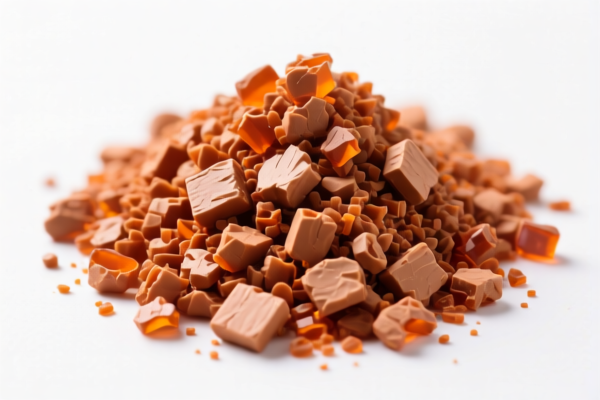
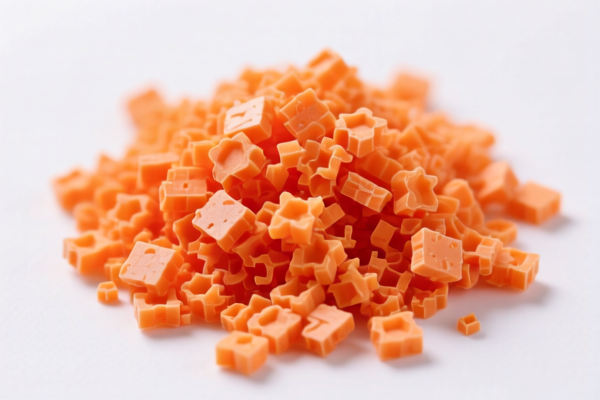
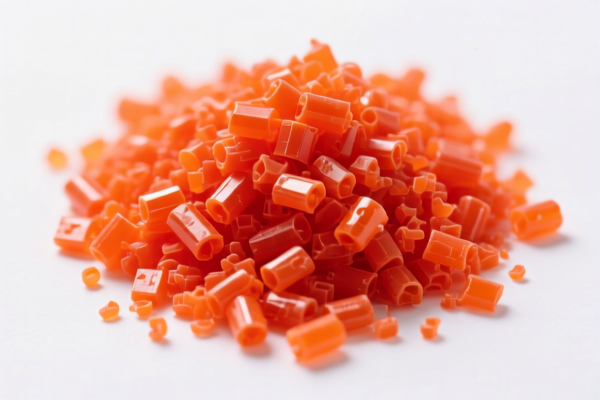
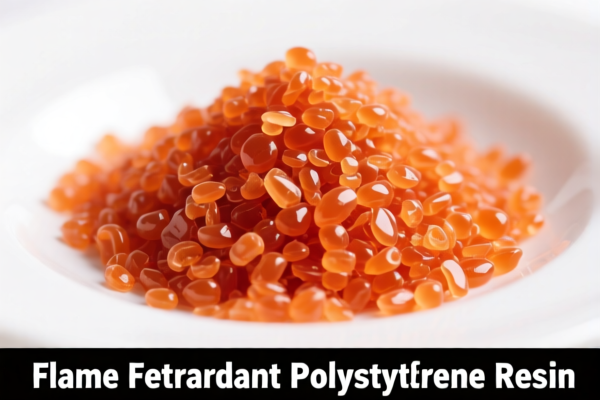
AI Analysis
🔥 Polymer Modified Flame Retardants (PMFRs)
🌐 HS Code Reference & Customs Clearance Guide | 2026 Latest Tariff Analysis | Professional Level Strategy
📌 I. Product Definition & Classification: What Exactly Are "Polymer Modified Flame Retardants"?
Polymer Modified Flame Retardants are a specialized class of chemical additives designed to improve the fire resistance of plastic and rubber materials. Unlike standard flame retardants, these are chemically bonded or physically mixed with polymer matrices to ensure dispersion stability and durability within the final plastic/rubber product.
In international trade, they are typically classified based on their chemical nature and function:
- Antioxidants & Stabilizers (Chemical Additives): If the product’s primary function is to prevent polymer degradation (oxidation) while providing some flame-retardant synergy, it often falls under Chapter 38 (Miscellaneous Chemical Products).
- Polymeric Flame Retardants: If the core component is a polyester or other polymer backbone with flame-retardant groups, it may fall under Chapter 39 (Plastics and Articles Thereof).
- Organic Heterocyclic Compounds: If the flame retardant is based on specific organic molecules with oxygen/nitrogen heteroatoms (e.g., phosphazenes, phosphonates), it may fall under Chapter 29 (Organic Chemicals).
⚠️ Key Distinction Point:
- If the product is primarily an antioxidant/stabilizer for plastics/rubber → Look at HS 3812.
- If the product is a polymer itself (e.g., halogenated polyester) → Look at HS 3907.
- If the product is a specific organic chemical compound (not a polymer blend) → Look at HS 2932.
📦 II. HS Code Classification Details (2026 Latest Tariff Authority Cross-Reference)
| HS Code | Product Description | Matching Logic | Applicable Scenario |
|---|---|---|---|
3812.39.90.00 |
Polymer-Modified Antioxidants (Primary: Oxidation Prevention) |
Matches logic: Polymer modification targets plastic/rubber; antioxidant meets usage requirements. | Additives for PP, PE, Rubber to prevent thermal degradation during processing. |
3812.39.60.00 |
Polymer-Modified Antioxidants (Aromatic Structure Focus) |
Matches logic: Polymer modification & aromatic chemical logic consistency; material & usage meet requirements. | Aromatic-based stabilizers for high-performance engineering plastics. |
3907.99.50.50 |
Polymer-Modified Products (Polyester Category) |
Matches logic: Core component belongs to polyester or similar polymers; meets material attributes. | Halogenated polyesters or polymer-bound flame retardants with polyester backbones. |
3907.99.20.00 |
Other Polyesters (Modified Components) |
Matches logic: Highly correlated with polyester category; modified component under other polyesters. | Modified polyester-based flame retardants where the polymer structure is dominant. |
2932.99.90.90 |
Other Organic Chemicals (Heterocyclic Compounds) |
Matches logic: Contains oxygen heteroatoms; fits the category of heterocyclic compounds containing only oxygen heteroatoms. | Specific organic flame retardant molecules (e.g., phosphonates, oximes) that are not polymers. |
🔍 Key Reminder:
- "Antioxidant" vs. "Flame Retardant": Many "flame retardants" are chemically classified as antioxidants/stabilizers (HS 3812) if their primary chemical function is stabilization. Do not assume "Flame Retardant" always goes to Chapter 29 or 39.
- Polymer vs. Chemical: If the product is a polymer (macromolecule), use HS 3907. If it is a small molecule additive, use HS 3812 or HS 2932.
💰 III. 2026 Latest Tariff Rate Breakdown (Including Additional Taxes, Policy Surcharges)
✅ Applicable Country: United States (US)
✅ Country of Origin: China (CN)
✅ Effective Date: From November 10, 2025 (including subsequent imports)
🎯 1. 3812.39.90.00 —— Polymer-Modified Antioxidants (Plastic/Rubber Focus)
| Item | Content |
|---|---|
| Basic Tariff | 5.0% (ad valorem) |
| USITC Additional Tariff | +25.0% (Under Section 301) |
| 122 Clause Tariff | +10.0% (Specific Chinese Import Surcharge) |
| Total Tariff Rate | 40.0% |
| Tax Calculation | CIF Value × 40% |
| De Minimis Exemption | ❌ Not Applicable (deny_de_minimis) |
| Legal Basis Path | Base: 5% + 301: 25% + Clause 122: 10% |
📌 Explanation:
- This is a high-tariff category for chemical additives from China.
- The "122 Clause" refers to specific enforcement measures targeting certain chemical inputs.
- Total 40% is significant and must be factored into landed cost calculations.
🎯 2. 3812.39.60.00 —— Polymer-Modified Antioxidants (Aromatic Chemical Logic)
| Item | Content |
|---|---|
| Basic Tariff | 6.5% (ad valorem) |
| USITC Additional Tariff | +25.0% |
| 122 Clause Tariff | +10.0% |
| Total Tariff Rate | 41.5% |
| Tax Calculation | CIF Value × 41.5% |
| De Minimis Exemption | ❌ Not Applicable |
| Legal Basis Path | Base: 6.5% + 301: 25% + Clause 122: 10% |
📌 Note:
- Slightly higher base rate (6.5%) than the general antioxidant category.
- Same surcharges apply. High cost barrier for aromatic-based stabilizers.
🎯 3. 3907.99.50.50 —— Polymer-Modified Products (Polyester Category)
| Item | Content |
|---|---|
| Basic Tariff | 6.5% (ad valorem) |
| USITC Additional Tariff | +25.0% |
| 122 Clause Tariff | +10.0% |
| Total Tariff Rate | 41.5% |
| Tax Calculation | CIF Value × 41.5% |
| De Minimis Exemption | ❌ Not Applicable |
| Legal Basis Path | Base: 6.5% + 301: 25% + Clause 122: 10% |
📌 Note:
- Classified as a plastic/polymer product.
- High tariffs due to Section 301 and Clause 122.
- Suitable for halogenated polyesters or polymer-bound flame retardants.
🎯 4. 3907.99.20.00 —— Other Polyesters (Modified Components)
| Item | Content |
|---|---|
| Basic Tariff | 0.0% (ad valorem) |
| USITC Additional Tariff | +25.0% |
| 122 Clause Tariff | +10.0% |
| Total Tariff Rate | 35.0% |
| Tax Calculation | CIF Value × 35.0% |
| De Minimis Exemption | ❌ Not Applicable |
| Legal Basis Path | Base: 0% + 301: 25% + Clause 122: 10% |
📌 Note:
- Lowest total tariff (35%) among the polyester categories.
- Eligible for 0% base rate, but surcharges still apply.
- Best option if the product can be classified as a modified polyester component.
🎯 5. 2932.99.90.90 —— Other Organic Chemicals (Heterocyclic Compounds)
| Item | Content |
|---|---|
| Basic Tariff | 3.7% (ad valorem) |
| USITC Additional Tariff | 0.0% |
| 122 Clause Tariff | +10.0% |
| Total Tariff Rate | 13.7% |
| Tax Calculation | CIF Value × 13.7% |
| De Minimis Exemption | ❌ Not Applicable |
| Legal Basis Path | Base: 3.7% + Clause 122: 10% |
📌 Key Advantage:
- Lowest total tariff (13.7%).
- No Section 301 (25%) surcharge applies to this specific subheading under current enforcement interpretations for certain organic chemicals.
- Only 122 Clause (10%) applies.
- Ideal for specific organic flame retardant molecules (e.g., phosphonates, oximes) that fit the "heterocyclic compound" definition.
🛠️ IV. Customs Clearance Practical Advice (Combat Pitfall Avoidance Guide)
✅ 1. Required Documentation Checklist (None Can Be Omitted)
| Document | Mandatory | Description |
|---|---|---|
| ✅ Technical Data Sheet (TDS) | ✔️ | Shows chemical structure, molecular weight, and functional groups. Critical for determining if it’s a polymer or small molecule. |
| ✅ MSDS/SDS | ✔️ | Must match TDS. Highlights hazard classifications (e.g., flammable, corrosive). |
| ✅ Product Formula/Composition | ✔️ | Detailed breakdown of active ingredients vs. carriers. Needed to distinguish between "Polymer" (Ch 39) and "Additive" (Ch 38/29). |
| ✅ Structure Diagram | ✔️ | For HS 2932 and 3907, proving heterocyclic rings or polymer chains is essential. |
| ✅ Commercial Invoice | ✔️ | Must clearly state "Polymer Modified Flame Retardant" or specific chemical name. Avoid vague terms like "Additive." |
| ✅ Certificate of Origin (CO) | ✔️ | Required for 122 Clause enforcement. |
| ✅ Third-Party Test Report | ✔️ | GC-MS or NMR reports to confirm chemical structure. |
✅ 2. Declaration Tips (Key Mantras)
🔥 “Structure Determines Code, Function Follows Structure! High Tariff Alert: Chapter 38 & 39 are Heavy!”
| Scenario | Correct Declaration | Wrong Approach |
|---|---|---|
| Halogenated Polyester | 3907.99.50.50 or 3907.99.20.00 |
Misdeclaring as "Additive" → 40-41.5% |
| Organic Molecule (e.g., Phosphonate) | 2932.99.90.90 |
Misdeclaring as "Polymer" → 35-41.5% |
| Antioxidant/Stabilizer Blend | 3812.39.90.00 |
Misdeclaring as "Flame Retardant" alone → May trigger deeper chemical review |
| General Plastic Additive | 3812.39.60.00 |
Vague "Plastic Additive" → Risk of detention |
✅ 3. Special Situation Handling
| Situation | Handling Advice |
|---|---|
| OEM Custom Flame Retardant | Provide customer’s technical specification to prove "Polymer Modification" purpose. |
| Product with Multiple Functions | If it’s both a flame retardant AND antioxidant, declare based on primary chemical structure. If it’s a polymer, use Ch 39. If small molecule, use Ch 29/38. |
| Low-Volume Samples | No De Minimis Exemption! All these codes are subject to strict enforcement. Do not rely on $800 exemption. |
| Chemical Name Ambiguity | Always provide the IUPAC name or CAS number alongside the trade name to avoid misclassification. |
🌍 V. Global Main Market Customs Clearance Comparison (2026 Latest)
| Country/Region | Recommended HS Code | Tariff (China Origin) | Certification Requirements | Remarks |
|---|---|---|---|---|
| 🇺🇸 USA | 2932.99.90.90 |
13.7% (Lowest) | TSCA Compliance | High tariffs for Ch 38/39. Ch 29 offers savings. |
| 🇨🇳 China | 3907.99.20.00 |
~5-10% (Varies) | CCC (if applicable) | Base rates lower. |
| 🇪🇺 EU | 3907.99.20.00 |
~0-6.5% | REACH Registration | No 301/122 surcharges. REACH compliance critical. |
| 🇦🇺 Australia | 3907.99.20.00 |
~5-10% | AICIS Notification | Standard MFN rates apply. |
| 🇯🇵 Japan | 3907.99.20.00 |
~0-5% | JIS Standard | Low base tariffs. |
📌 Conclusion:
- USA is the most challenging market due to Section 301 and Clause 122 surcharges.
- HS 2932.99.90.90 is the most cost-effective for US imports (13.7% vs. 40%+).
- EU/Asia markets are much friendlier, with base tariffs often 0-10% and no punitive surcharges.
📌 VI. Common Mistakes & Pitfall Avoidance (Blood-Learned Lessons)
❌ Mistake 1: Declaring "Polymer Modified Flame Retardant" as a generic "Chemical Additive" (HS 3812) when it’s actually a polyester (HS 3907).
👉 Consequence: Misclassification risk, potential back-tariffs of 1.5-5.5% difference + delays.
❌ Mistake 2: Assuming all flame retardants are subject to Section 301.
👉 Consequence: Missing the opportunity to classify under HS 2932 (13.7%) to save ~26-28% in tariffs.
❌ Mistake 3: Providing vague trade names without CAS numbers or structures.
👉 Consequence: Customs will detain for chemical review → Delays of 2-4 weeks.
❌ Mistake 4: Ignoring the "122 Clause" surcharge.
👉 Consequence: Unexpected 10% additional cost on top of 301 tariffs.
✅ Correct Approach:
“Phosphonate/Oxime (Small Molecule) → HS 2932 (13.7%)”
“Halogenated Polyester (Polymer) → HS 3907 (35-41.5%)”
“Antioxidant/Stabilizer Blend → HS 3812 (40-41.5%)”
🎯 VII. Conclusion: Professional Declaration, Save Costs, Ensure Compliance!
🎯 Remember the Mantra:
🔹 “Structure First, Tariff Second! Small Molecules Win (13.7%), Polymers Burn (41.5%)!”
🔹 “No De Minimis for Chemicals! Always Declare Fully!”
📌 Pro Tip:
If your flame retardant can be chemically justified as a heterocyclic organic compound (e.g., containing phosphorus-oxygen-nitrogen rings), prioritize HS 2932.99.90.90 for US imports to achieve the 13.7% rate.
For EU/Asia, focus on REACH/JIS compliance rather than tariff optimization.
📣 Immediate Action:
📞 Consult with a customs broker + Provide CAS Number + Confirm Chemical Structure
🚀 Ensure your Polymer Modified Flame Retardant clears customs smoothly and profitably!
✨ Professional Customs Clearance Starts with Accurate Classification!
💼 Every percentage point in tariff matters!
Customer Reviews
About HS Code Classification
The Harmonized System (HS) is an internationally standardized nomenclature developed by the World Customs Organization (WCO) to classify traded products. Over 200 countries use the HS system as the basis for customs tariffs, trade statistics, and import/export regulations.
Each HS code follows a hierarchical structure:
- Chapter (2 digits) — Broad category of goods (e.g., Chapter 84: Machinery and Mechanical Appliances)
- Heading (4 digits) — More specific grouping within the chapter
- Subheading (6 digits) — Internationally standardized breakdown, used by all WCO member countries
- National subdivisions (8-10 digits) — Country-specific extensions for further classification, such as US HTSUS 10-digit codes
Correct HS code classification is essential for smooth customs clearance, accurate duty payment, and compliance with trade regulations. Misclassification can lead to customs delays, overpayment of duties, or penalties.
When importing from CN to US, the applicable tariff rates may include:
- Most-Favored-Nation (MFN) rate — The standard duty rate applied to WTO members
- General rate — Applied to countries without trade agreements
- Trade remedy duties — Additional tariffs such as Section 301 (anti-dumping), Section 232 (national security), or countervailing duties
The information provided on this page is for reference purposes only. For official classification, please consult with your local customs authority or a licensed customs broker.