Polymer Plastic Insulating Sheet
CN → US| HS Code | Tariff Rate | Origin | Destination | Doc |
|---|---|---|---|---|
| 8547200000 | 35.0% | CN | US | Official Doc |
| 8547900010 | 89.6% | CN | US | Official Doc |
| 3920992000 | 39.2% | CN | US | Official Doc |
| 3919905030 | 40.8% | CN | US | Official Doc |
| 3919102020 | 40.8% | CN | US | Official Doc |
| 3920991000 | 41.0% | CN | US | Official Doc |
Product Images
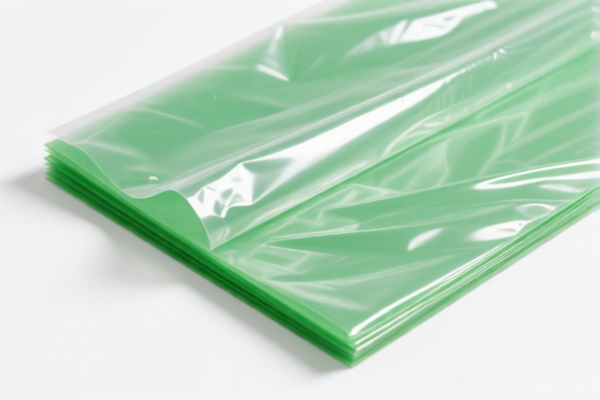

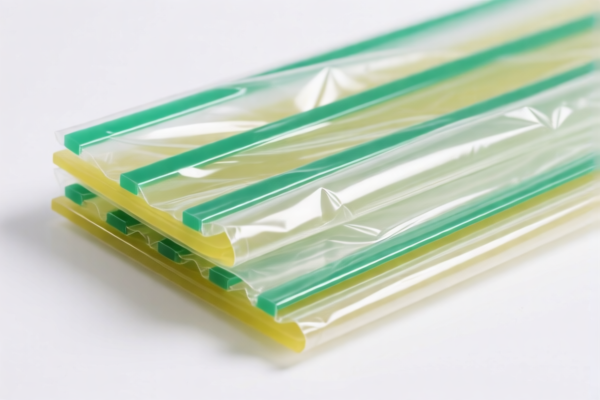
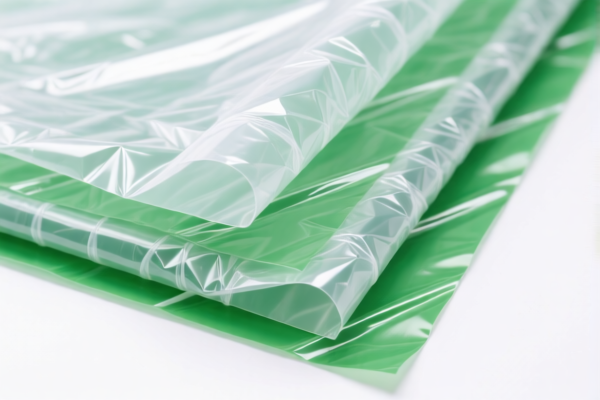
AI Analysis
🧱 Polymer Plastic Insulating Sheets (Plastic Insulating Film/Sheets)
🌐 HS Code Reference & Customs Clearance Guide | 2026 Latest Tariff Analysis | Professional Clearance Strategy
📌 1. Product Definition and Classification: Do You Really Know "Plastic Insulating Sheets"?
Polymer Plastic Insulating Sheets are critical components in electrical and electronics industries, providing insulation, protection, and structural support. In international trade, they are classified based on their material composition, physical form (film, sheet, plate), and specific application (e.g., self-adhesive, rigid, flexible).
Key Distinction Points: - Insulation vs. Structural: If the primary function is electrical insulation, it may fall under Chapter 85 (Electrical machinery). If it is primarily a plastic article with incidental insulation properties, it falls under Chapter 39 (Plastics). - Form Factor: "Film" (thin, flexible) vs. "Sheet/Plate" (thicker, rigid). - Adhesiveness: Self-adhesive sheets have specific HS codes distinct from non-adhesive ones.
⚠️ Critical Differentiator:
- If the item is explicitly described as an "Insulating Accessory" for electrical equipment, it may be classified under 8547.
- If it is a generic plastic film/sheet used for insulation (but not specifically designed as an accessory), it falls under 3920 (Plastic sheets/films) or 3919 (Plastic adhesive tapes/films).
- Misclassification Risk: Classifying a generic plastic sheet as "Insulating Accessory" (8547) when it doesn't meet the specific "accessory" definition can lead to audits. Conversely, classifying a specialized insulating part as generic plastic may miss higher duties.
📦 2. HS Code Classification Details (2026 Latest Tariff Authority Comparison)
| HS Code | Product Description | Applicable Scenario | Tax Rate (China Origin to US) |
|---|---|---|---|
8547.20.00.00 |
Insulating fittings of ceramics, glass, etc., including plastic insulating films classified as insulating accessories | Specialized insulating parts, bushings, spacers specifically designed for electrical assemblies | 35.0% |
8547.90.00.10 |
Other insulating fittings (plastic film as "other insulating accessory") | Plastic films that do not fit specific ceramic/glass categories but are recognized as insulating fittings | 89.6% |
3920.99.20.00 |
Other plates, sheets, film, foil and strip, of plastics, non-cellular, non-reinforced, laminated, supported or similarly combined with other materials | General-purpose plastic insulating films/sheets, flexible, non-adhesive | 39.2% |
3919.90.50.30 |
Self-adhesive plates, sheets, film, foil, tape, strip and other flat shapes of plastics, in rolls or rectangular/square (including square) shapes, of a width exceeding 20 cm | Plastic insulating films that are self-adhesive and in rolls/sheets >20cm wide | 40.8% |
3919.10.20.20 |
Other self-adhesive plates, sheets, film, foil, tape, strip and other flat shapes of plastics | Self-adhesive insulating films in narrower rolls or specific shapes | 40.8% |
3920.99.10.00 |
Other plates, sheets, film, foil and strip, of plastics, not elsewhere specified | Generic plastic sheets/films used for insulation, falling under "Other" category | 41.0% |
🔍 Key Reminder:
- HS 8547 is for specialized insulating accessories. If your product is a simple plastic sheet used for general insulation (e.g., wrapping, backing), HS 39xx is more appropriate.
- HS 3919 applies specifically to self-adhesive products. If the sheet has adhesive backing, it cannot go to HS 3920.
- HS 8547.90.00.10 carries a very high tax rate (89.6%) due to additional tariffs on steel/aluminum-related tariffs (note: this may be a system-specific classification nuance; verify with customs broker). Most generic plastic insulating sheets will NOT go here unless specifically defined as "other insulating fittings."
💰 3. 2026 Latest Tariff Rate Breakdown (Including Additional Tariffs, Policy Surcharges)
✅ Applicable Country: United States (US)
✅ Origin: China (CN)
✅ Effective Date: 2025/2026 (Current Trade Policy)
🎯 1. 8547.20.00.00 —— Plastic Insulating Accessories
| Item | Content |
|---|---|
| Base Duty Rate | 0.0% |
| Section 301 Additional Duty | +25.0% |
| Section 122 Additional Duty | +10.0% |
| Total Duty Rate | 35.0% |
| Calculation | CIF Value × 35% |
| De Minimis Exemption | ❌ Not Available |
| Legal Basis Path | USITC:8547.20.00.00 → SECTION_301:8547.20.00.00 → SECTION_122:8547.20.00.00 |
📌 Explanation:
- This classification is for insulating accessories. The 0% base rate is offset by significant trade war tariffs.
- 35% Total is moderate compared to other classifications.
- Advantage: If your product qualifies as a dedicated "insulating accessory," this is a competitive rate.
🎯 2. 8547.90.00.10 —— Other Insulating Fittings (Plastic)
| Item | Content |
|---|---|
| Base Duty Rate | 4.6% |
| Section 301 Additional Duty | +25.0% |
| Section 122 Additional Duty | +10.0% |
| Steel/Aluminum/Copper Products Additional Duty | +50.0% (Note: Check if this applies to your specific plastic item; often a system default for "other") |
| Total Duty Rate | 89.6% |
| Calculation | CIF Value × 89.6% |
| De Minimis Exemption | ❌ Not Available |
| Legal Basis Path | USITC:8547.90.00.10 → SECTION_301 → SECTION_122 → METALS_TARIFF |
📌 Warning:
- This is an extremely high tax rate.
- Avoid this classification unless your product is explicitly defined as "other insulating fittings" and the metal tariff surcharge is applicable or incorrectly applied.
- Strategy: Try to classify under Chapter 39 (Plastics) to avoid this penalty.
🎯 3. 3920.99.20.00 —— Plastic Plates, Sheets, Film, Foil, Strip (Other)
| Item | Content |
|---|---|
| Base Duty Rate | 4.2% |
| Section 301 Additional Duty | +25.0% |
| Section 122 Additional Duty | +10.0% |
| Total Duty Rate | 39.2% |
| Calculation | CIF Value × 39.2% |
| De Minimis Exemption | ❌ Not Available |
| Legal Basis Path | USITC:3920.99.20.00 → SECTION_301 → SECTION_122 |
📌 Explanation:
- This is the most common classification for general-purpose plastic insulating films.
- 39.2% Total is manageable.
- Requirement: The product must be non-cellular, non-reinforced, and flexible film/sheet.
🎯 4. 3919.90.50.30 & 3919.10.20.20 —— Self-Adhesive Plastic Sheets
| Item | Content |
|---|---|
| Base Duty Rate | 5.8% |
| Section 301 Additional Duty | +25.0% |
| Section 122 Additional Duty | +10.0% |
| Total Duty Rate | 40.8% |
| Calculation | CIF Value × 40.8% |
| De Minimis Exemption | ❌ Not Available |
| Legal Basis Path | USITC:3919.xx.xx.xx → SECTION_301 → SECTION_122 |
📌 Explanation:
- Applies to self-adhesive insulating films.
- 40.8% Total is slightly higher than non-adhesive films due to higher base duty.
- Key: Must be in rolls or sheets, with adhesive backing.
🎯 5. 3920.99.10.00 —— Other Plastic Sheets/Films (Bottom Category)
| Item | Content |
|---|---|
| Base Duty Rate | 6.0% |
| Section 301 Additional Duty | +25.0% |
| Section 122 Additional Duty | +10.0% |
| Total Duty Rate | 41.0% |
| Calculation | CIF Value × 41.0% |
| De Minimis Exemption | ❌ Not Available |
| Legal Basis Path | USITC:3920.99.10.00 → SECTION_301 → SECTION_122 |
📌 Explanation:
- "Catch-all" for plastic sheets not specified elsewhere.
- 41.0% Total is the highest among Chapter 39 options.
- Use only if the product doesn't fit3920.99.20.00.
🛠️ 4. Customs Clearance Practical Advice (Combat Pitfall Guide)
✅ 1. Required Documentation Checklist
| Document | Mandatory | Notes |
|---|---|---|
| ✅ Product Specification Sheet | ✔️ | Must clearly state: Material (e.g., PE, PP, PVC), Thickness, Width, Length, Insulation Properties (Dielectric Strength). |
| ✅ Product Photos | ✔️ | Show front, back, edges, and any adhesive backing. |
| ✅ Commercial Invoice | ✔️ | Description should be precise: "Polymer Plastic Insulating Film, Non-Adhesive, Roll, 0.5mm Thick" |
| ✅ Packing List | ✔️ | Detail dimensions and weight. |
| ✅ Certificate of Origin | ✔️ | For any potential FTA benefits (if applicable, though US-China has limited FTA). |
| ✅ Technical Data Sheet (TDS) | ✔️ | Proves insulation properties and material composition. |
✅ 2. Declaration Tips (Key Mantra)
🔥 "Form Determines Code, Adhesiveness Defines Chapter, Function Matters for 8547!"
| Scenario | Correct HS Code | Incorrect Code | Consequence |
|---|---|---|---|
| Non-adhesive, flexible film for general insulation | 3920.99.20.00 (39.2%) |
8547.20.00.00 |
Risk of audit if not a dedicated accessory. |
| Self-adhesive film for insulation | 3919.90.50.30 (40.8%) |
3920.99.20.00 |
Misclassification due to ignoring adhesive property. |
| Dedicated insulating bushing/spacer (plastic) | 8547.20.00.00 (35.0%) |
3920.99.20.00 |
Underpayment if it qualifies as accessory. |
| Generic plastic sheet mislabeled as "Insulating Accessory" | 3920.99.20.00 |
8547.90.00.10 |
Avoid 89.6% penalty! |
📌 Key Strategy:
- Prioritize Chapter 39 for generic plastic films.
- Use Chapter 8547 only if the product is a specifically designed insulating component (e.g., insulating washers, bushings, spacers) and not just a raw material sheet.
- Avoid8547.90.00.10unless absolutely necessary due to its 89.6% rate.
✅ 3. Special Cases
| Case | Handling Advice |
|---|---|
| OEM Custom Insulating Films | Provide customer design specs. If it's a standard sheet, use 3920. If it's a custom-molded insulating part, consider 8547. |
| Multi-layer Laminated Films | Check if reinforced. If reinforced, it may not fall under 3920.99.20.00. |
| Electrical Tape vs. Insulating Film | Tape (narrow, self-adhesive) → 3919. Film (wide, roll/sheet) → 3920 or 8547. |
| High-Temperature Insulating Films | May qualify for specific subheadings. Provide material data (e.g., PTFE, Kapton) to justify classification. |
🌍 5. Global Market Clearance Comparison (2026 Latest)
| Country/Region | Recommended HS Code | Duty Rate | Certification Required | Notes |
|---|---|---|---|---|
| 🇺🇸 USA | 3920.99.20.00 |
39.2% | No special | 89.6% risk if misclassified. |
| 🇨🇳 China | 3920.99.20.00 |
~5-8% | RoHS (if exported back) | Low duty for domestic use. |
| 🇪🇺 EU | 3920.99.89 |
6.5% | REACH, RoHS | No Section 301/122 equivalent. |
| 🇬🇧 UK | 3920.99.90 |
6.5% | UKCA, RoHS | Post-Brexit rules apply. |
| 🇯🇵 Japan | 3920.99.90 |
6-8% | PSE (if electrical) | No major trade war tariffs. |
📌 Conclusion:
- USA has the highest effective duty rate due to Section 301 and Section 122 tariffs.
- EU/UK/Japan have standard duties but may require environmental certifications (REACH/RoHS).
- Strategy: For US exports, ensure precise classification to avoid the 89.6% penalty. Consider sourcing from non-China origins if duty burden is too high.
📌 6. Common Mistakes & Pitfall Guide (Lessons Learned)
❌ Mistake 1: Classifying all plastic insulating products under 8547
👉 Consequence: If not a dedicated accessory, customs may reclassify to 3920 and assess penalties, or worse, misclassify to 8547.90.00.10 with 89.6% tax.
❌ Mistake 2: Ignoring the adhesive property
👉 Consequence: Self-adhesive sheets declared as non-adhesive → Misclassification → Duty underpayment + fines.
❌ Mistake 3: Using vague descriptions like "Plastic Sheet"
👉 Consequence: Customs cannot determine classification → Delayed clearance + additional inspection.
❌ Mistake 4: Not distinguishing between film and sheet
👉 Consequence: Different subheadings may apply based on thickness and form.
✅ Correct Approach:
"Polymer Plastic Insulating Film, Non-Adhesive, Polyethylene, Roll, 0.3mm Thickness, for Electrical Insulation"
🎯 7. Conclusion: Professional Classification, Cost Optimization!
🎯 Remember the Mantra:
🔹 "General Film → 3920 (39.2%), Self-Adhesive → 3919 (40.8%), Dedicated Accessory → 8547 (35%), Generic Accessory → 8547.90 (89.6% - AVOID!)"
🔹 "HS Code Saves Money, Mistakes Cost Thousands!"
📌 Tips:
- If your product is a standard plastic film, always choose 3920.99.20.00.
- If it's self-adhesive, choose 3919.90.50.30.
- Only use 8547 if the product is a specifically designed insulating component (not just a raw material).
- Avoid 8547.90.00.10 at all costs unless explicitly advised by a customs broker.
📣 Immediate Action:
📞 Contact a Professional Customs Broker + Provide Product Specs + Apply for Pre-Ruling if unsure.
🚀 Ensure Smooth Clearance, Minimize Duties, Maximize Profit!
✨ Professional Clearance Starts with Accurate Classification!
💼 Every Cent of Cost Deserves Precise Calculation!
Customer Reviews
About HS Code Classification
The Harmonized System (HS) is an internationally standardized nomenclature developed by the World Customs Organization (WCO) to classify traded products. Over 200 countries use the HS system as the basis for customs tariffs, trade statistics, and import/export regulations.
Each HS code follows a hierarchical structure:
- Chapter (2 digits) — Broad category of goods (e.g., Chapter 84: Machinery and Mechanical Appliances)
- Heading (4 digits) — More specific grouping within the chapter
- Subheading (6 digits) — Internationally standardized breakdown, used by all WCO member countries
- National subdivisions (8-10 digits) — Country-specific extensions for further classification, such as US HTSUS 10-digit codes
Correct HS code classification is essential for smooth customs clearance, accurate duty payment, and compliance with trade regulations. Misclassification can lead to customs delays, overpayment of duties, or penalties.
When importing from CN to US, the applicable tariff rates may include:
- Most-Favored-Nation (MFN) rate — The standard duty rate applied to WTO members
- General rate — Applied to countries without trade agreements
- Trade remedy duties — Additional tariffs such as Section 301 (anti-dumping), Section 232 (national security), or countervailing duties
The information provided on this page is for reference purposes only. For official classification, please consult with your local customs authority or a licensed customs broker.